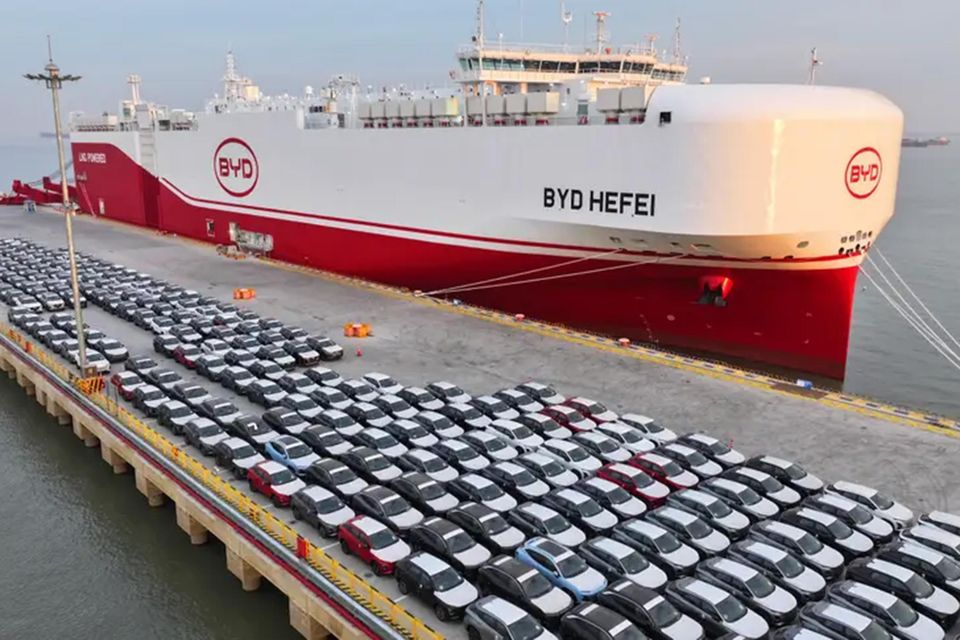
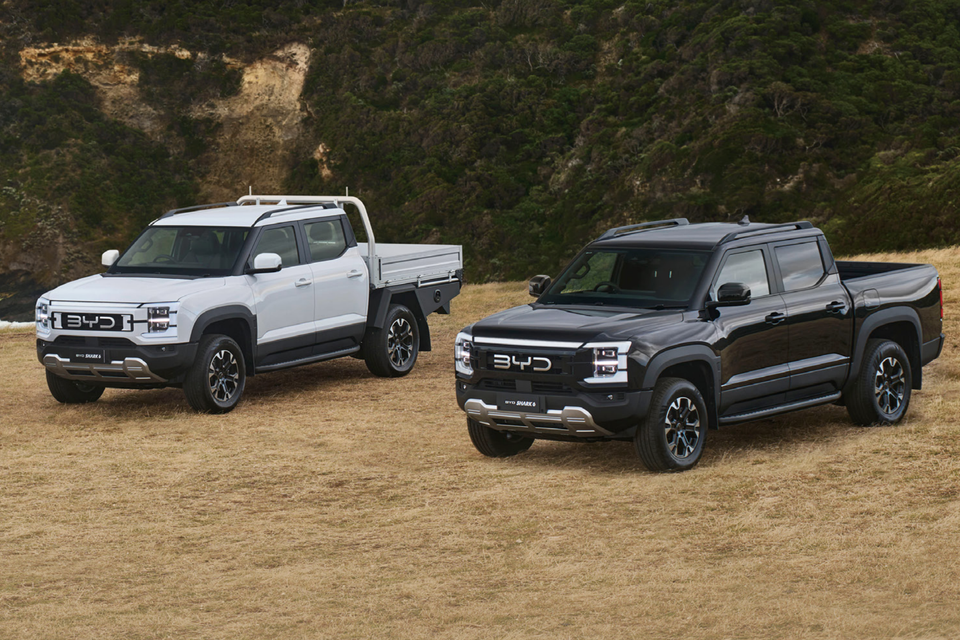
The chairman of BYD says the Chinese automaker can overtake Toyota as the world's largest car manufacturer, even without entering the US – the world's biggest new-vehicle market outside China.
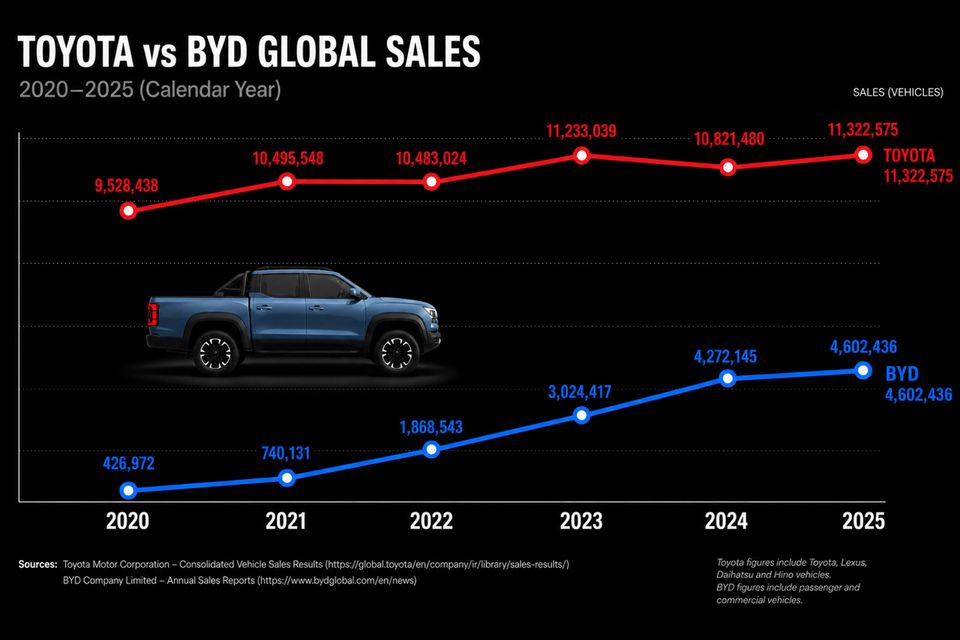
BYD founder Wang Chuanfu recently said the company plans to overtake Toyota within five years, an ambitious target given China's largest automaker sold half as many vehicles as the Japanese giant last year. BYD sold 4.5 million vehicles in 2025 compared to Toyota's 10.5 million.
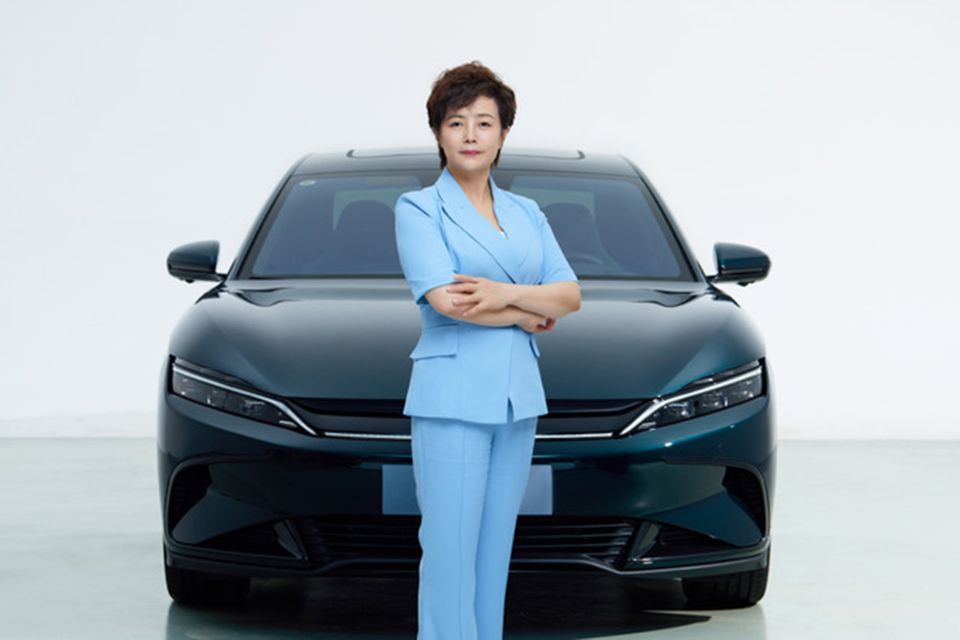
Speaking to the Financial Times, BYD chair Stella Li said the plan to become the world's biggest automaker could be achieved despite current trade barriers, including being blocked from selling passenger vehicles in the US.
"I think he [Mr Chuanfu] made this ambitious target [to achieve] with our own organic growth," Ms Li, who heads BYD's international operations, told the Financial Times. "We don't need the US market to achieve that."
The US is the world's largest new-vehicle market outside China, with more than 16 million vehicles sold in 2025. By comparison, around 13 million new vehicles were sold in Europe last year, while Australians bought a record 1.24 million new vehicles in 2025.
Ms Li's comments also suggest BYD aims to become the world's largest automaker without acquiring other brands to boost overall sales.
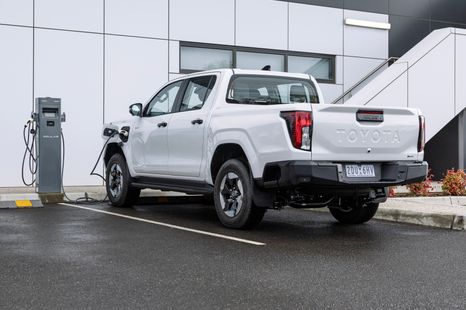
Toyota has been the world's best-selling automaker since 2020, with combined sales from the Toyota, Lexus, Daihatsu and Hino brands helping it reclaim the crown from the Volkswagen Group after four years.
While Toyota remains the global leader, it has seen the rapid rise of Chinese brands place pressure on its pricing and profitability in key markets, despite continuing to sell more vehicles than any rival.
Meanwhile, the Volkswagen Group, which battled Toyota to become the first automaker to surpass 10 million annual sales more than a decade ago, is attempting to revive its fortunes with factory closures and job cuts as part of a broad restructuring program.
The German giant has even been the subject of speculative reports suggesting it could be an acquisition target for BYD, though such claims remain unsubstantiated and appear even less likely given Ms Li's emphasis on BYD's "organic" growth.
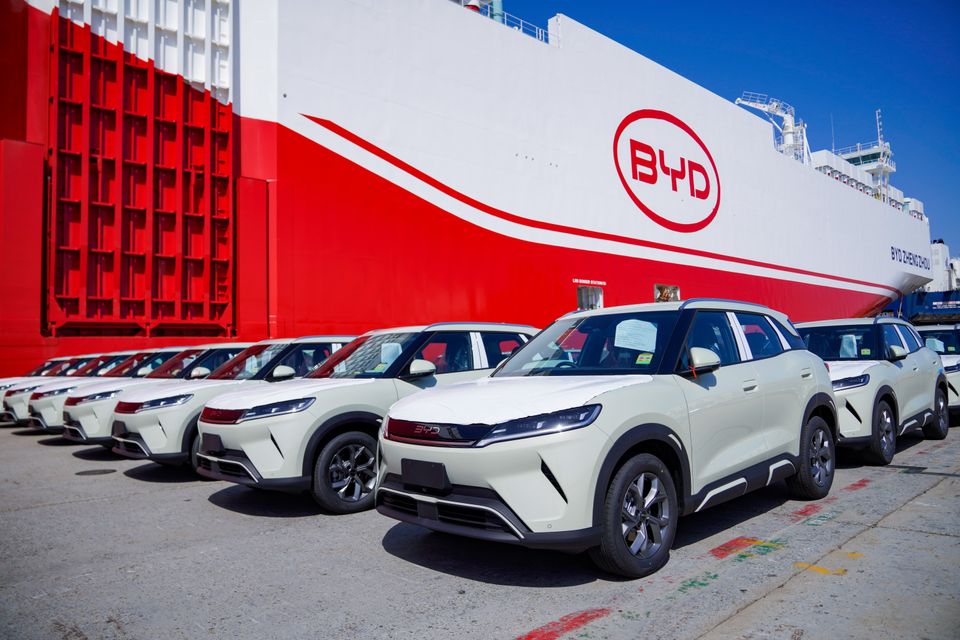
BYD is also increasingly relying on exports as growth in the Chinese domestic market slows.
According to BYD, it sold 1,808,511 'new energy' vehicles globally in the first half of 2026, of which a record 792,256 were delivered overseas.
While BYD is the world's largest Chinese automaker, it still ranks well behind the biggest global manufacturers, although complete sales figures for several of its rivals in the first half of 2026 are yet to be published.
Toyota is yet to announce its first-half 2026 sales results, though company figures show it sold 4,463,796 vehicles worldwide between January 1 and May 31, 2026, a 3.1 per cent decline year-on-year.
Toyota remains the global leader, ahead of the Volkswagen Group and the Hyundai Motor Group in third.
China's automotive export ambitions have increasingly been challenged by tariff disputes with both the US and European Union, with new vehicles becoming part of broader trade tensions.
This has included an effective ban on Chinese-made connected vehicles in the US, where national security concerns and efforts to prioritise domestic manufacturing have been cited as key reasons.
The changing trade landscape has even seen Toyota begin selling US-built versions of the Tundra, Highlander (Kluger in Australia) and Camry in Japan.
In July 2026, US Congress proposed the Protecting America from Chinese Cars Act, which according to the Financial Post would ban connected vehicles made or owned by automakers linked to what it describes as "adversarial nations".
Announced in Michigan, the home of Ford and General Motors (GM), the proposal followed Canada's decision to allow up to 49,000 Chinese-built vehicles onto its roads annually, subject to a 6.1 per cent tariff.
If passed, the legislation would prevent motorists from driving affected Chinese-made vehicles from Canada into the US.
The first shipment of almost 3000 Chinese-built vehicles arrived in Canada in May 2026. While the brands were not officially confirmed, reports suggested they included Tesla, Polestar and Volvo vehicles.
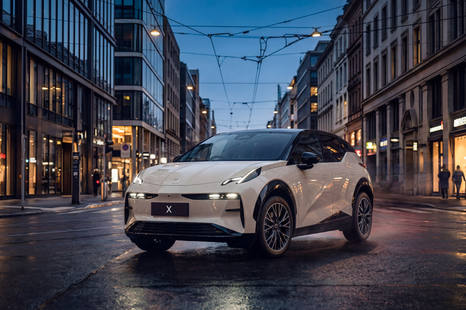
Polestar was banned from selling vehicles in the US in June 2026 despite sister brand Volvo, which is also owned by China's Geely, continuing to operate there. The decision came despite Polestar establishing a manufacturing base in the US.
The US restrictions remain despite calls from some American automotive industry leaders for greater cooperation with Chinese manufacturers, with Ford CEO Jim Farley advocating joint ventures between US and Chinese companies.
The proposal represents a reversal of China's earlier automotive policy, under which foreign manufacturers were permitted to build vehicles there only through joint ventures with local companies.



 Showroom
 Car Chooser
 Compare
 Car Specifications