

 Showroom
 Car Chooser
 Compare
 Car Specifications

William Stopford
Would you pay $363k for "the real last HSV V8"?
HSV wanted to put a V8-powered Ranger Raptor rival into production but only ended up building one. Now you can buy it.
13 Hours Ago
BYD's new plug-in hybrid SUV attempts to bring things back to basics.
Where expert car reviews meet expert car buying – CarExpert gives you trusted advice, personalised service and real savings on your next new car.
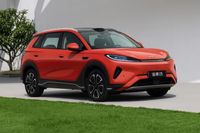
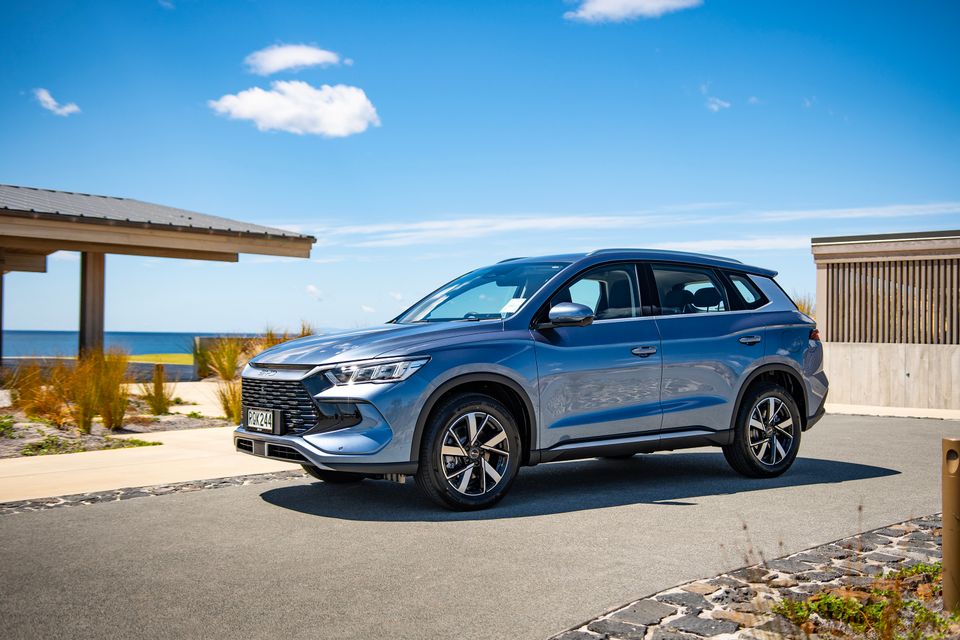
You’re probably seeing this BYD Sealion 5 article and thinking one of two things. “Oh, joy of joys, another mid-size SUV to add to the most crammed, busiest segment on the market,” could be thought number one, likely chased by thought number two — “doesn’t BYD already make something that’s kind of the same thing?”
On the first point, the Sealion 5 does have a pretty tasty hook built into its premise. This is one of the cheapest plug-in hybrids on the market. Not only that, but it’s one of these newfangled Chinese ‘super hybrids’, meaning it packs a fairly handy pure electric range and a combined range of more than 1000km to a tank.
As for the second observation? Well, you might have a bit of a point there. The Sealion 5 seems to have a bit of overlap with its Sealion 6 cousin. Just 37mm in length and 30mm in width separates the two (the 6 is larger). But, the pair have different motives.
Whilst the 6 is a bit more plush and premium, the 5 is intended to be a bit more to-the-point and straightforward. A more mainstream player made to primarily woo company fleets, and priced more affordably to suit. We took a Sealion 5 for a quick drive through the Auckland countryside to see what it’s like.
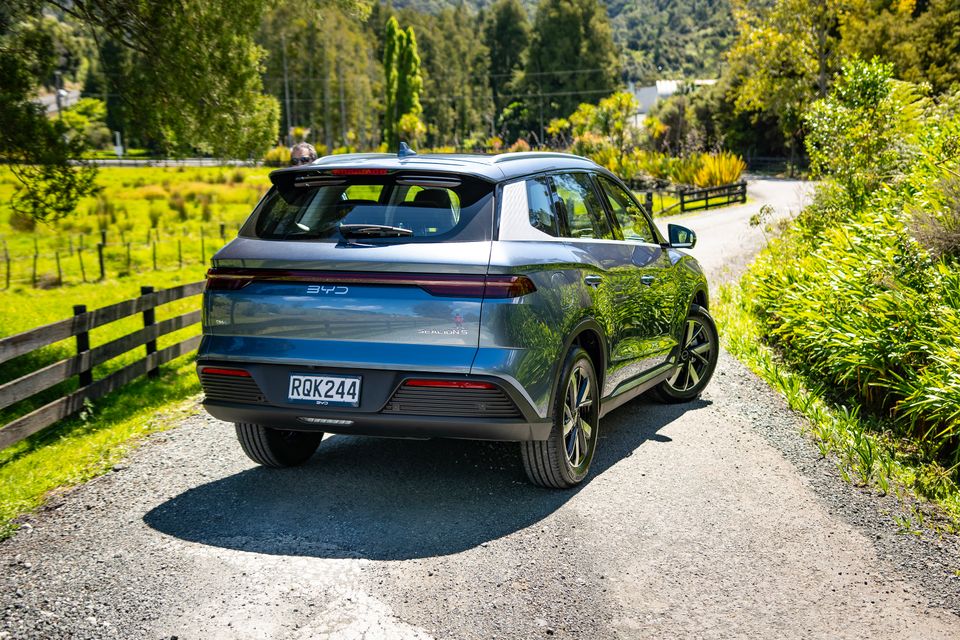
BYD launched the Sealion 5 with exceptionally sharp introductory pricing; $39,990 for the base Essential trim and $45,990 for the flagship Premium. Those prices only applied to the first 200 units in the country, so you may need to check in with your nearest dealer to see if they still apply.
Model | Introductory price not including ORC | Price not including ORC |
|---|---|---|
BYD Sealion 5 Essential | $39,990 | $42,990 |
BYD Sealion 5 Premium | $45,990 | $48,990 |
No matter, the standard pricing (a $3000 premium) still puts the 5 at the top of the plug-in hybrid pile with respect to value. I should say, it’s at the equal top of the pile. At $42,990 it shares the title with the Chery Tiggo 7 Super Hybrid — which ironically itself is currently subject to an end-of-financial-year sale, temporarily lowering its base price down to $39,990.
Both models inevitably undercut the segment’s most established pure combustion and conventional hybrid entries by thousands of dollars. The Kia Sportage and Toyota RAV4 both start at $49,990 (plus on-roads, in the case of the Kia).
There isn’t much in the way of options for the Sealion 5. But, if you want it in any colour other than white, it’s a $990 extra.
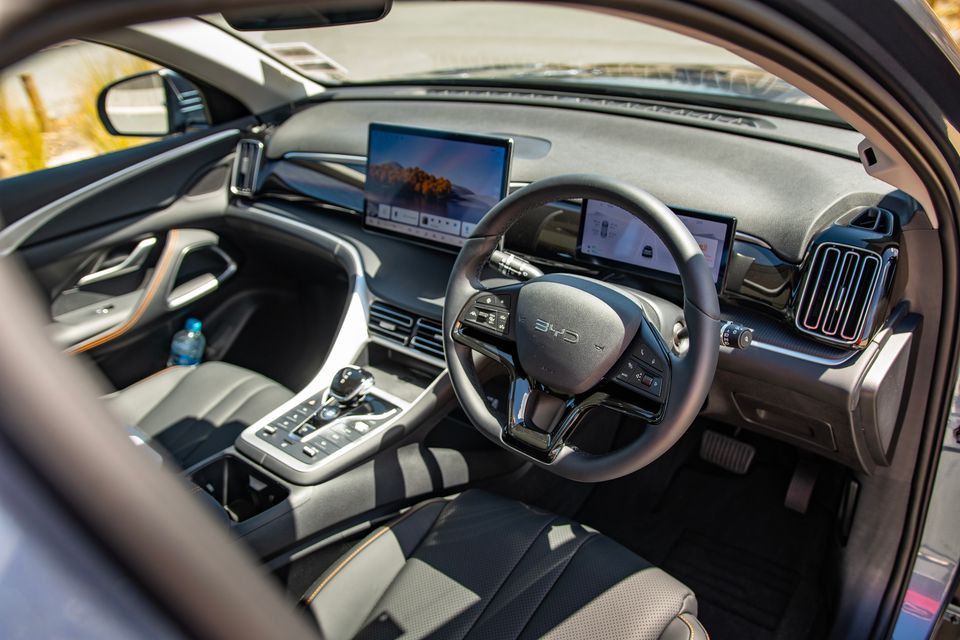
All that earlier talk of ‘company fleets’ might’ve got you thinking the Sealion 5 is a mess of grey hard plastics and blanked off buttons, but I’m pleased to report that it’s a fairly pleasant car to sit in.
All models come with a comprehensive suite of safety kit that includes adaptive cruise control and traffic sign recognition (the Sealion 5 boasts a 5-star ANCAP safety rating), vehicle-to-load functionality, an 8.8-inch digital cluster, dual-zone climate control wireless Apple CarPlay and Android Auto, and faux-leather upholstery.
Key upgrades added when you opt for the Premium (which is what we sampled, and what’s shown in these images) includes a larger 12.8-inch touchscreen, a 360-degree camera, a panoramic sunroof, a wireless device charger, and a heated and cooled driver seat.
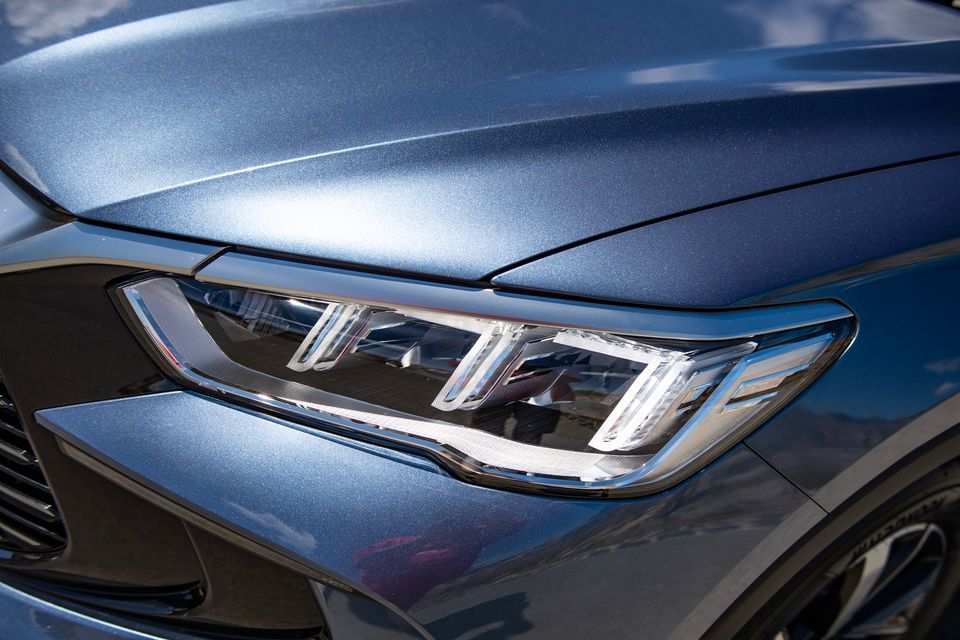
It’s fairly pleasant inside, but it also feels a tiny touch dated in the front of the Sealion 5. That’s largely because whilst this is a new model to us New Zealanders, it’s essentially been on the market in its homeland since 2023.
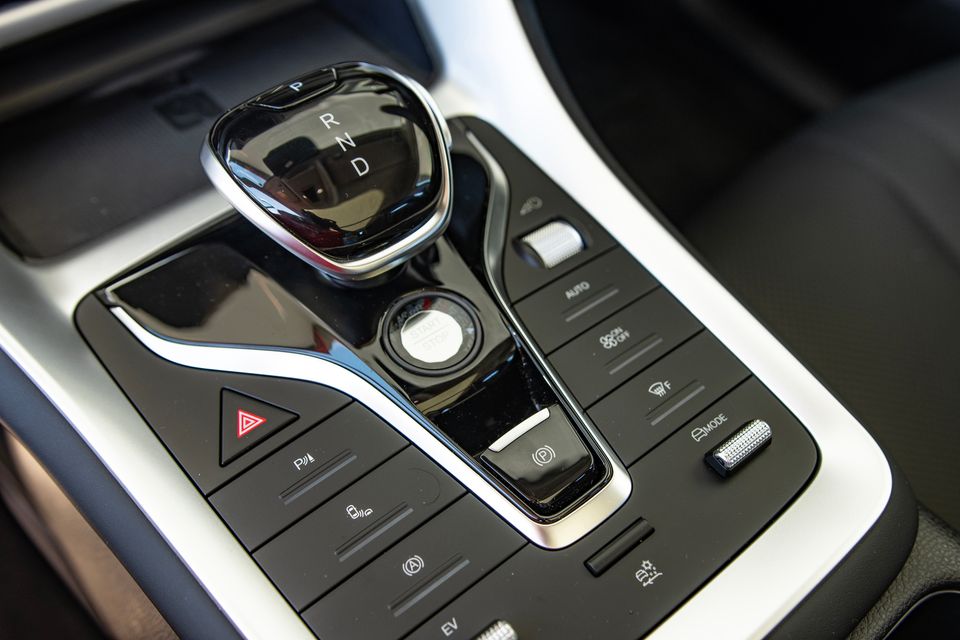
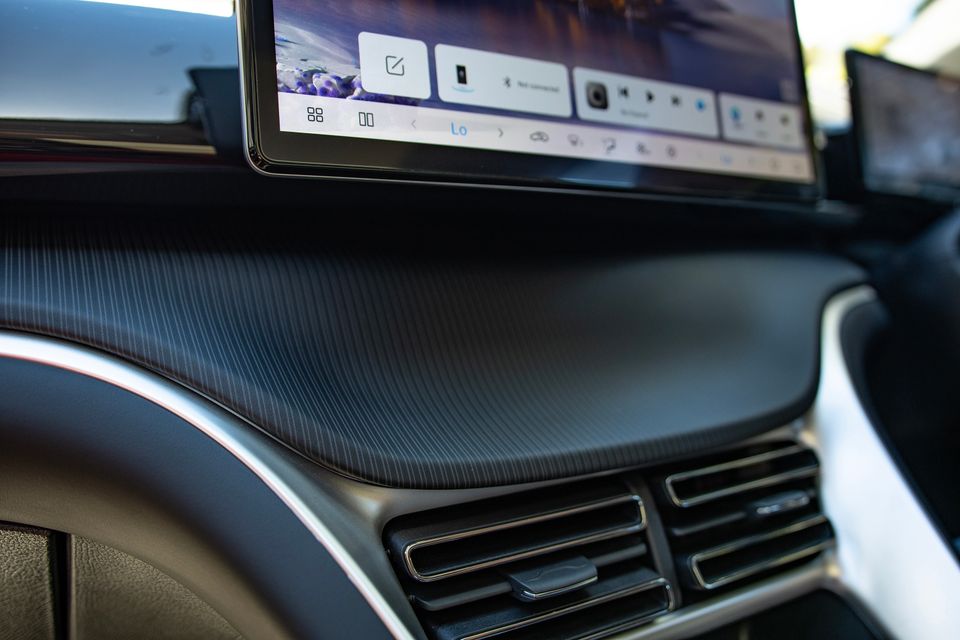
Its presentation inside is largely quite impressive, although there are some interesting quirks — like the stripey, oddly textured soft surface panel beneath the touchscreen. Although most features are integrated solely into the touchscreen, BYD has deployed a good amount of physical controls just under the gear lever for things like climate control, the demister, drive modes, a volume scroll wheel, and more.
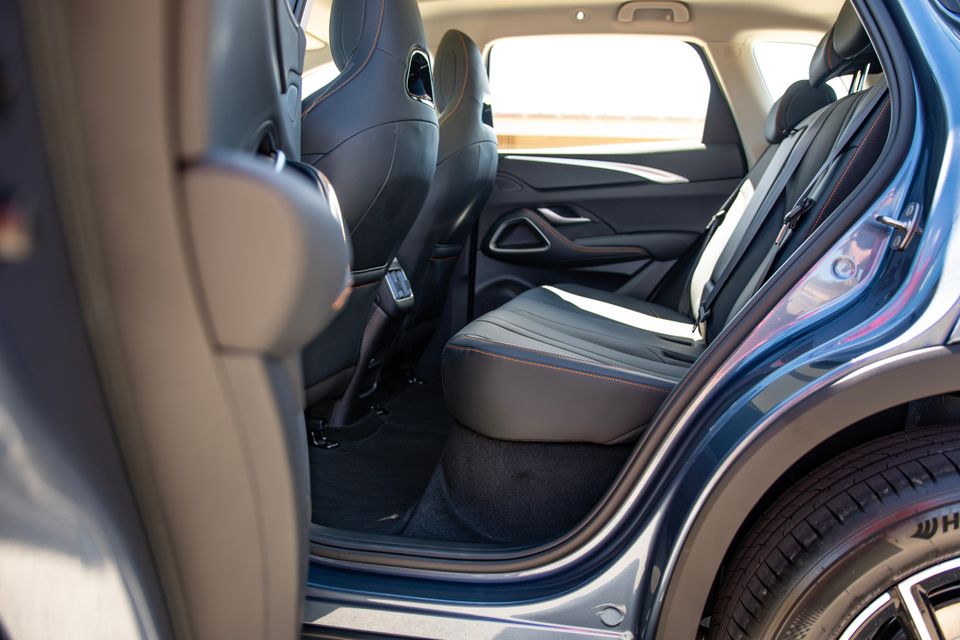
In the back seat, space and comfort is quite impressive. The seats have decent headroom and legroom, there’s no unsightly transmission tunnel hump in the centre ruining the fifth passenger’s space, and the seat backs are nicely reclined. The boot, meanwhile, offers a decent if unspectacular 463-litres of cargo space with the seats all up, and 1410-litres if the second row is folded flat.
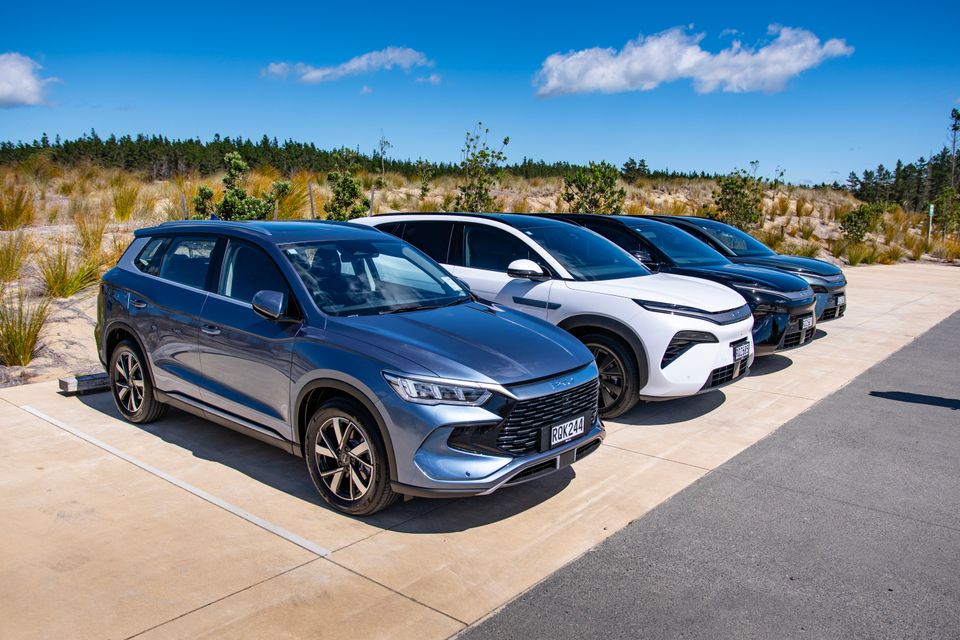
Motivation for the BYD Sealion 5 will have quite a familiar ring to it for those well read on this ‘super hybrid’ craze.
Both trims come with a 1.5-litre 4-cylinder petrol engine developing 72kW of power and 122Nm of torque. This is paired to a front-mounted electric motor, ensuring a combined output of 145kW and 300Nm — identical output to the front-wheel drive Sealion 6 (there is no all-wheel drive option for the Sealion 5).
The Sealion 5 Essential and Premium split off a little when we get to battery details. The former gets a 12.9kWh unit with an NEDC-rated pure electric range of 71km, whilst the latter ups the ante with an 18.3kWh battery and an NEDC-rated range of 100km to a charge. BYD notes a claimed combined fuel economy of 4.5L/100km (Essential) or 4.6L/100km (Premium), which drops to 1.2L/100km (Essential) and 1.3L/100km (Premium) when driven with more than 25% battery capacity in reserve.
It’s worth noting that although the cheapest Sealion 5 runs neck-and-neck with the cheapest Tiggo 7 Super Hybrid for pricing, the Tiggo 7 gets the same large 18.4kWh battery across its whole line-up. No smaller unit for the base grade, as with its BYD rival.
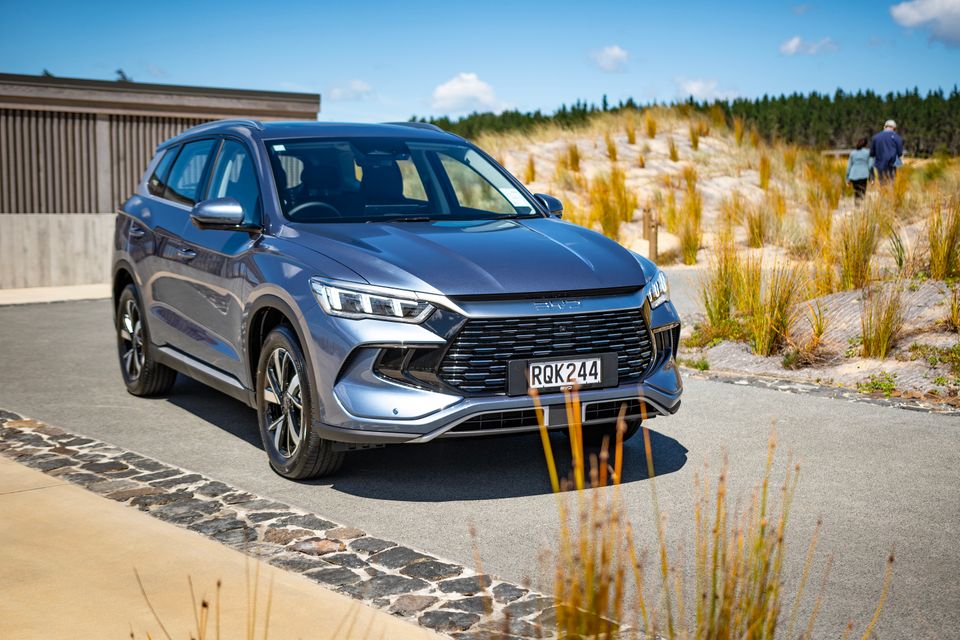
Our on-road rip in the Sealion 5 was the inverse of our drive of the larger Sealion 8, meaning we took it from Te Arai links back to central Auckland. So, the mid-size plug-in took on a few bits of twisty rural road, as well as some (thankfully not too traffic-affected) motorway stretches.
The Sealion 5 drives like a perfectly acceptable A-to-B family wagon, with reasonable refinement thanks to the powertrain’s electrified leanings, and ride quality that isn’t out to offend. I’ll note that the BYD has a more comfortable ride overall than the aforementioned Tiggo 7, has controls that are nice and light, and is pleasantly subdued with its driver assist warnings.
Its plug-in hybrid powertrain also produces a fair amount of performance. Not quite the urgency of some rivals like the GWM H6 PHEV (it accelerates to 100kph in either 7.7 seconds or 8.1 seconds, depending on if you get the small battery or the large battery), but more than enough pep for the majority shopping in this segment.
The Sealion 5 loses points when it comes to how it tackles corners. It’s fine when you’re tootling along at regulation speeds, but as your speeds ratchet upwards, there’s quite a bit of understeer from the vague front end. It feels half a step behind the likes of the Mazda CX-5, Mitsubishi Outlander, and Kia Sportage in terms of chassis polish. The model also has a curious amount of wind noise, seemingly stemming from its wing mirrors.
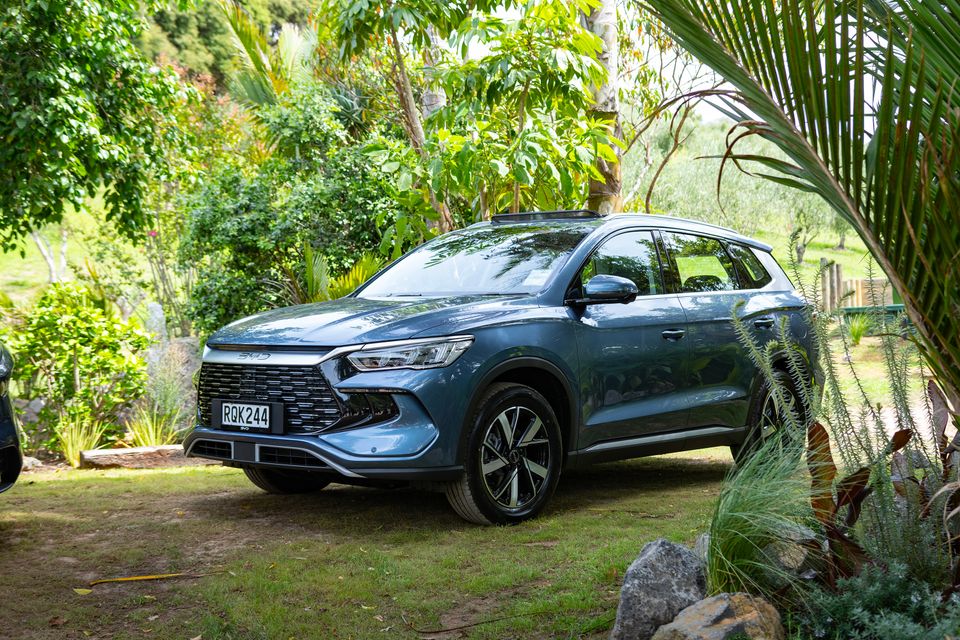
The Sealion 5’s two grades are both fairly well equipped, with the base model Essential being relatively loaded for its humble asking price.
What’s missing? Well, the base model makes do with manual front seats, a smaller 10.1-inch touchscreen, no seat heating, and no 360-degree camera. The most egregious omission from the base model’s spec is probably the lack of front parking sensors, which thankfully make an appearance in the Premium.
The other feature not present in either Sealion 5 model is DC fast charging, with both models only getting AC charging. This shouldn’t be a big deal for most customers given the relatively small size of the batteries in each model.
BYD Sealion 5 Essential equipment highlights:
Sealion 5 Premium adds:
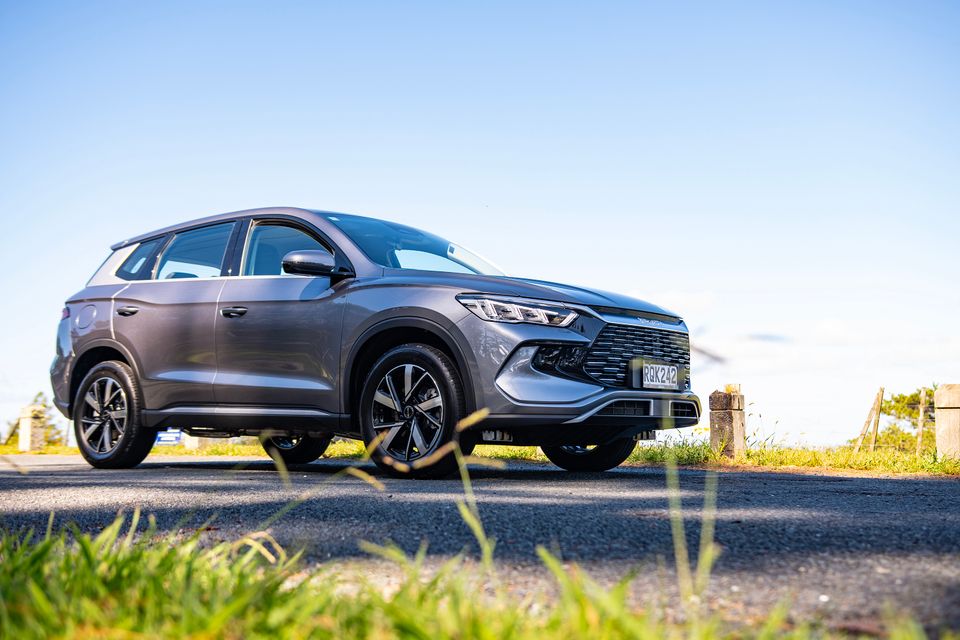
The BYD Sealion 5 is a unique and interesting fixture within BYDs line-up as one of the brand’s first attempts to offer a more conventional, more ‘basic’ SUV option that swaps out some of the quirky tech and quirkier styling for mainstream approachability and a cheaper price.
We’re keen to get a longer go behind the wheel to dive deeper into how the Sealion 5 drives. But beyond its dynamic shortcomings and its middling styling, BYD’s latest SUV is a solid — and surely very tempting — entry into the country’s most competitive segment.
Where expert car reviews meet expert car buying – CarExpert gives you trusted advice, personalised service and real savings on your next new car.
2025
$39,990
2025
$45,990
Matthew Hansen co-founded motorsport outlet Velocity News, worked as a freelance photographer for various race teams, and was a specialist journalist for NZ Autocar Magazine and Driven at the NZ Herald. Most recently, he was Editor of Motoring at Stuff.co.nz.
Add CarExpert as a Preferred Source on Google so your search results prioritise writing by actual experts, not AI.
William Stopford
13 Hours Ago

Dave Kavermann
14 Hours Ago

Damion Smy
14 Hours Ago
Dave Kavermann
1 Day Ago

Dave Kavermann
1 Day Ago
Damion Smy
1 Day Ago
Add CarExpert as a Preferred Source on Google so your search results prioritise writing by actual experts, not AI.
† Displayed prices exclude on-road costs such as delivery charges, registration fees, number plates, insurance and applicable road taxes. These prices are subject to change without notice and may not reflect current market pricing or dealer offers.
 Automotive Vehicle Spec Data & 4K images Powered by JATO Dynamics Ltd