

 Showroom
 Car Chooser
 Compare
 Car Specifications

CarExpert
2026 CarExpert Choice Awards: Best Luxury EV
This award category covers premium electric vehicles that combine electrification with luxury, advanced technology, and performance.
14 Days Ago
It's old, but the sharp-shooting Mazda CX-5 is still well worth considering in 2026.
Where expert car reviews meet expert car buying – CarExpert gives you trusted advice, personalised service and real savings on your next new car.
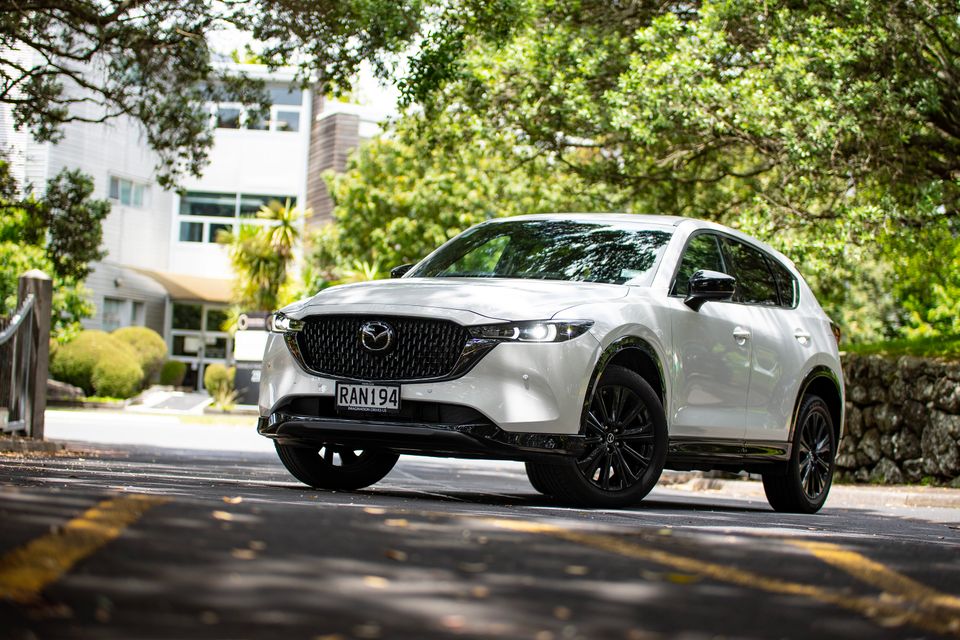
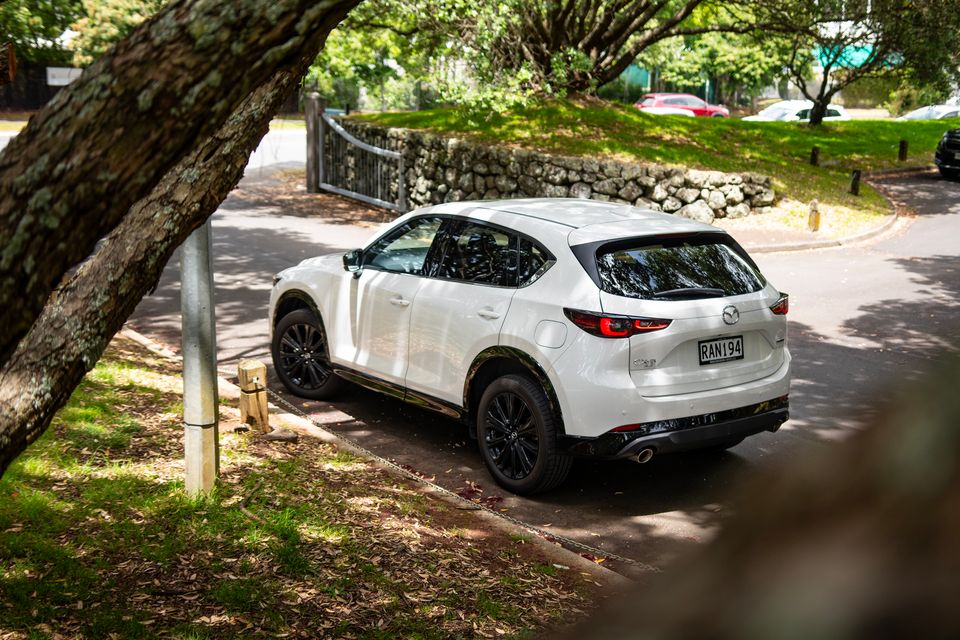
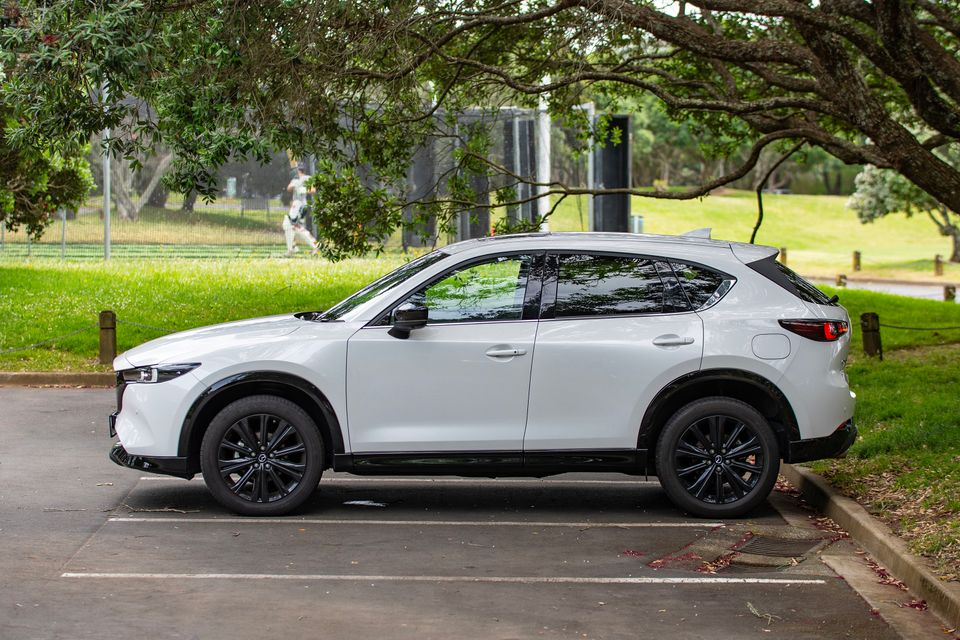
It’s been on the market for eight years, but the current generation Mazda CX-5 remains not only the Japanese carmaker’s best-selling model in New Zealand, but also a lingering go-to choice in the cut-throat medium SUV class.
As Mazda prepares to launch an all-new replacement for the CX-5 in late 2026, the outgoing generation is likely to go through the familiar runout sales rigmarole. Is it a worthwhile punt for those wanting a new wagon?
How much does the Mazda CX-5 cost?
Given the CX-5’s latent local popularity, don’t expect the model to be subject to big discounts until later in the year.
The current CX-5 line-up comprises five variants with three different powertrain options and either front-wheel drive or all-wheel drive. The CX-5’s achilles heel is arguably the lack of electrified variants. This will remain the case all the way until late 2027, when the nameplate’s first hybrid is scheduled to be revealed.
Models | Price before on-road costs |
|---|---|
Mazda CX-5 GLX FWD 2.0 | $44,290 |
Mazda CX-5 GSX FWD 2.0 | $47,090 |
Mazda CX-5 GSX AWD 2.0 | $50,290 |
Mazda CX-5 Limited AWD 2.5 | $61,190 |
Mazda CX-5 Takami AWD 2.5T | $67,890 |
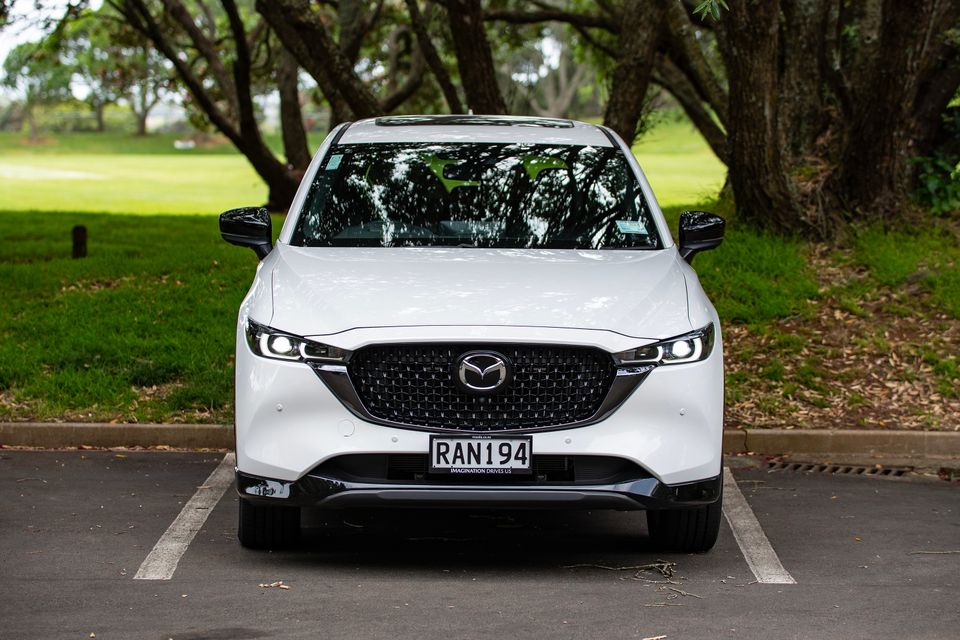
From what is perhaps the biggest segment of cars on the market today, the CX-5’s main rivals are the Toyota RAV4, Mitsubishi Outlander, and Kia Sportage. The Outlander is the sole nameplate here with a cheaper starting price than the entry-level CX-5 ($43,990 for the LS grade).
Whilst the RAV4 and Sportage are more expensive, their base models also come with more fuel-frugal hybrid powertrains. The cheapest RAV4 still on the market (an all-new one is due in the coming months) also features all-wheel drive. The Outlander, meanwhile, has its own quirk of an additional row of seats in the $48,990 XLS and upwards.
What’s the Mazda CX-5 like on the inside?
If the current CX-5 shows its age anywhere, it’s with the styling of its cabin. But, that might not be such a grating negative for some punters.
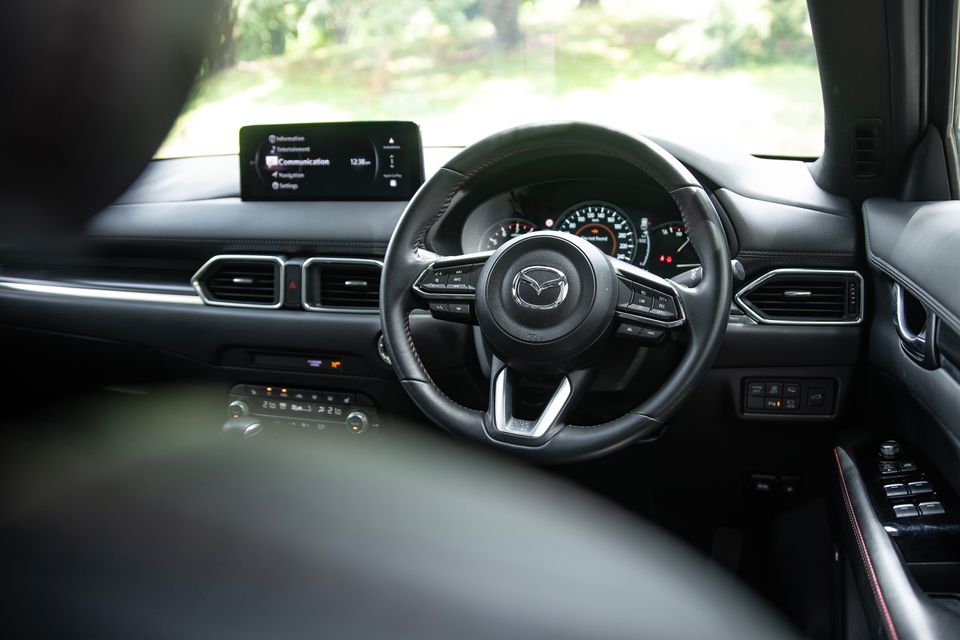
Hopping into a CX-5 after all these years feels like a time warp. And for some, that might be a little bit refreshing. There’s no big rectangular dual-screen unit bolted to the top of the dash, there are plenty of clicky buttons, and you won’t find any cameras monitoring the driver.
There isn’t a huge amount of variance with interior spec inside the CX-5 between the different trims. The model we got to test here was the Limited, as evidenced by its leather upholstery and red contrast stitching. The base GLX gets cloth seats, whilst the GSX gets synthetic leather.
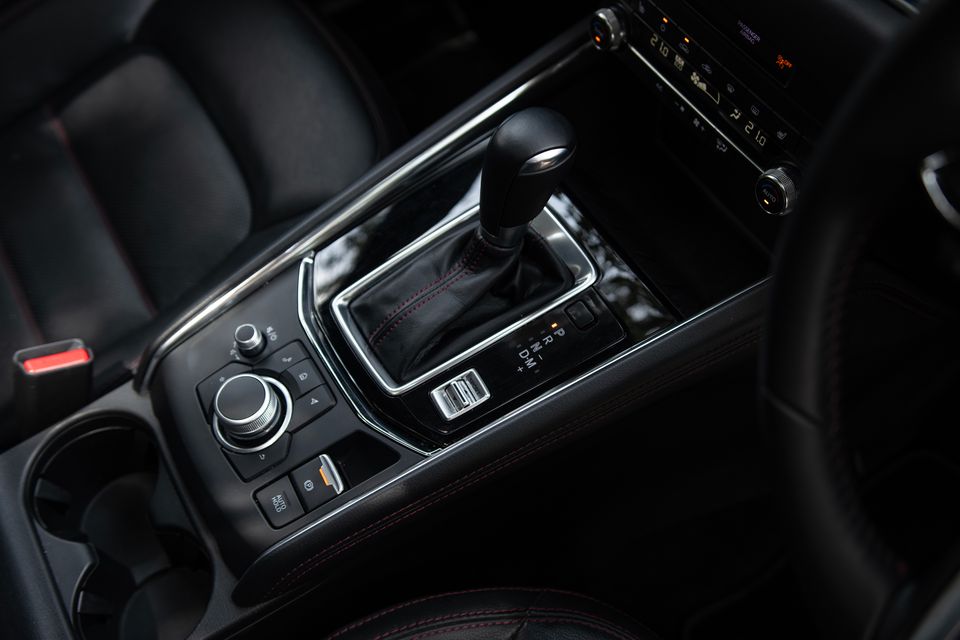
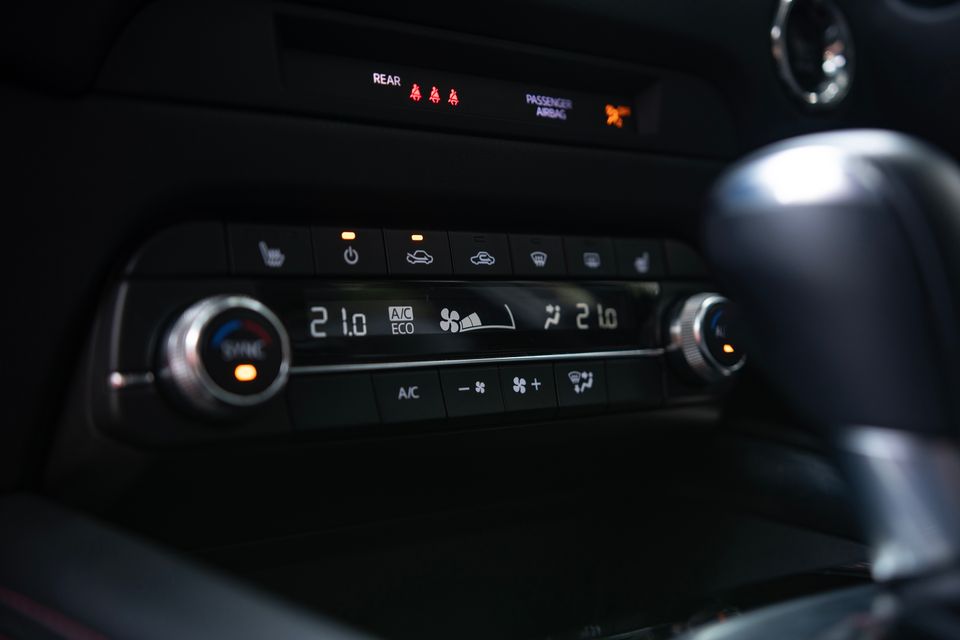
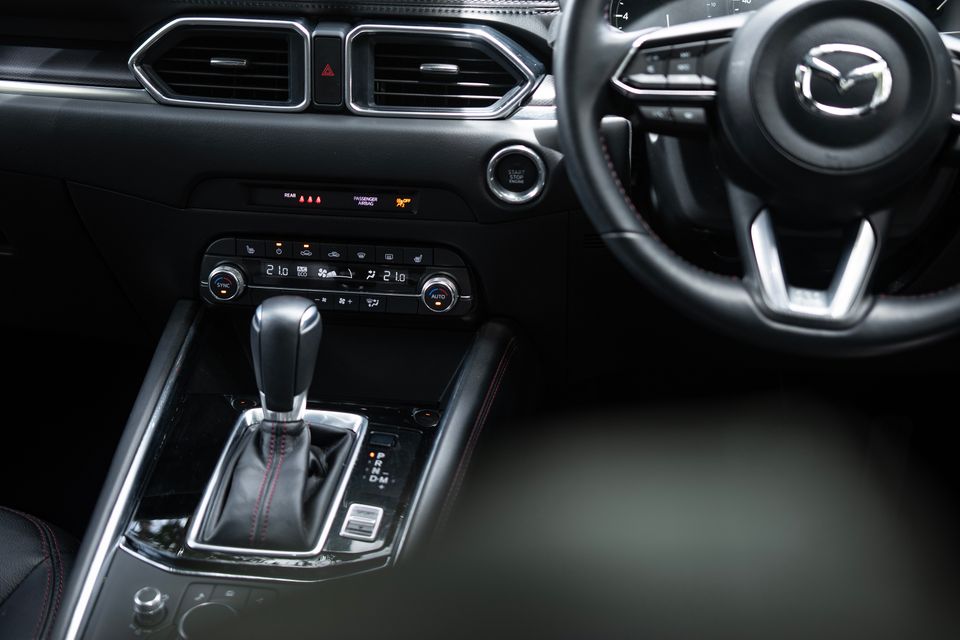
Build quality has long been a core CX-5 strong suit. All of the major touchpoints throughout the cabin are lined with soft-touch materials, and the tasteful silver trim around the climate vents, steering wheel and transmission lever looks convincingly like proper metal.
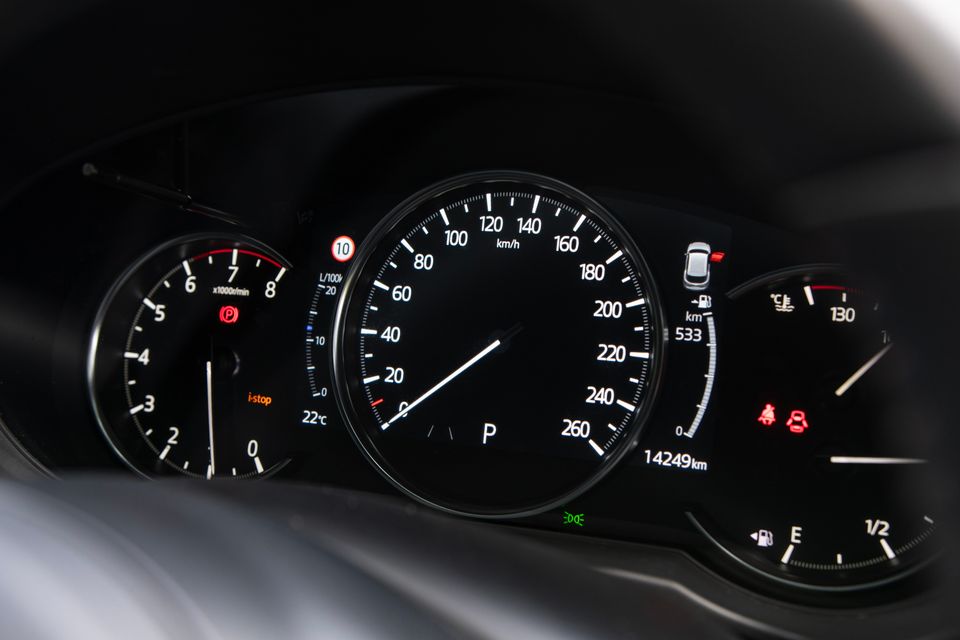
The CX-5 we drove was a well broken-in unit with almost 15,000km on the clock, and it still looked factory fresh inside … apart from the pesky panel of piano black atop the transmission tunnel. It had accrued numerous minor scuffs, which is always a potential result when manufacturers use this material in vulnerable places.
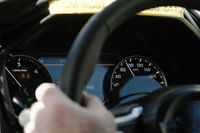
At the centre of the CX-5’s cabin is a somewhat quirky 10.25-inch infotainment screen. Standard in all CX-5 grades, it comes with wireless Apple CarPlay and Android Auto and built-in satnav. The pictured Limited (as well as the flagship Takami) pairs this screen to a partially digital cluster behind the steering wheel.
I say quirky because the CX-5’s display isn’t a touchscreen, unless you activate phone mirroring. Those who won’t use Apple CarPlay or Android Auto will control the screen via the central dial between the front seats — a classic Mazda feature. But if you activate Apple CarPlay or Android Auto (both of which are easy to pair and work great), the screen can be controlled via touch.
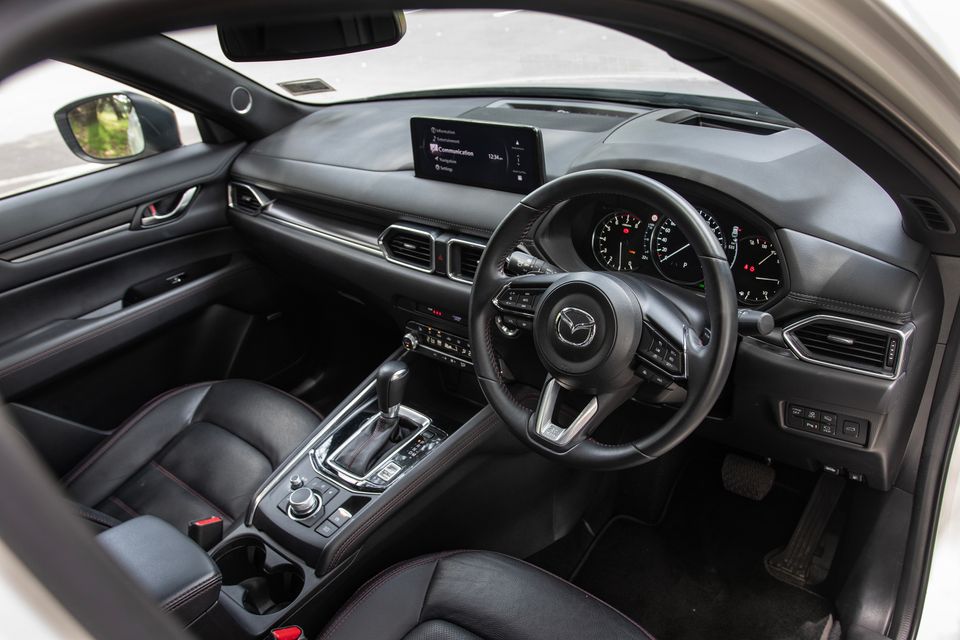
The software powering the CX-5’s dual screens is a little basic, but I appreciate its slick and minimalist presentation. The no frills white-text-on-black looks timeless compared to some other software interfaces, and it flows quickly from menu to menu. In addition, the CX-5’s cameras are fairly clear (the Limited and Takami add a 360-degree camera).
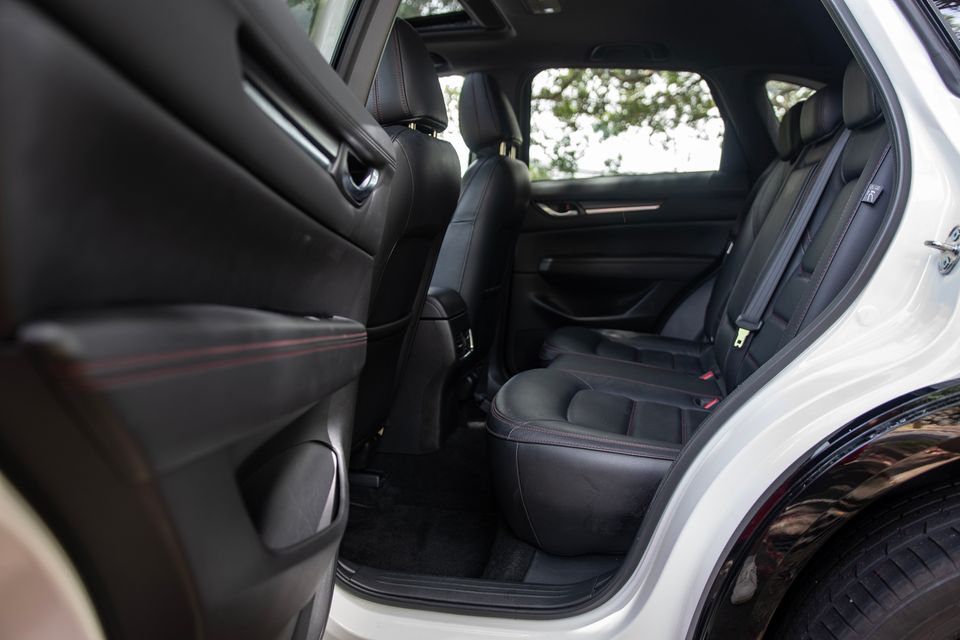
The CX-5 is often quoted as being a little less spacious and practical than its core rivals. And both in raw numbers and in person, it’s true. But, that’s not to say the CX-5 isn’t still a very handy family hauler.
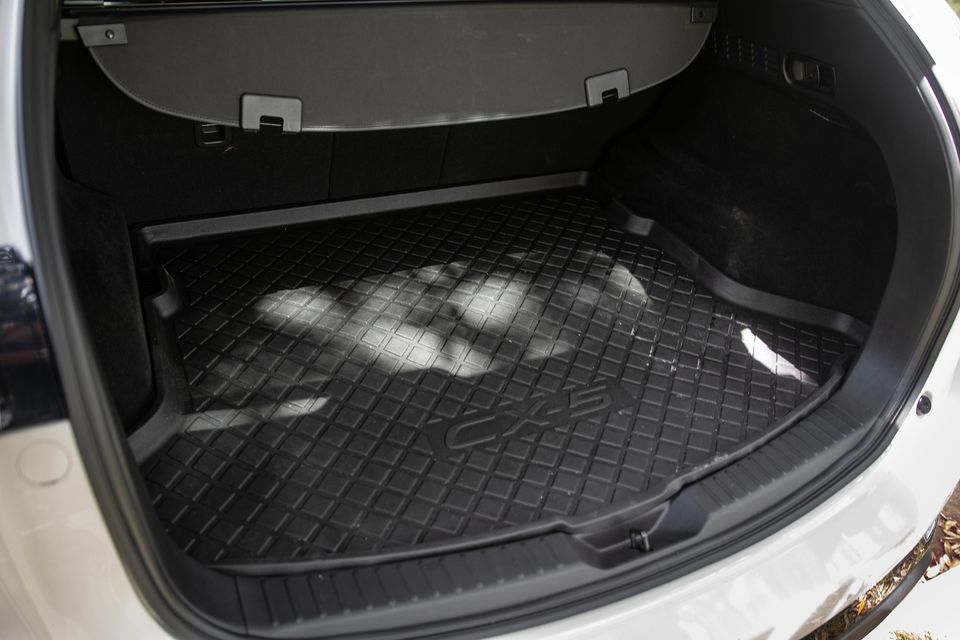
Open the tailgate (which is power operated in the case of the Limited), and you’re greeted with a 438-litre load area. This opens up to a 1340-litre space when the back seats are lowered. The majority of the CX-5’s rivals boast well over 500-litres of luggage capacity in the back, with the Outlander offering more than 650-litres if the sixth and seventh seats are flat.
This is valuable intel if you’re someone who’s constantly out and about filling your boot to capacity, or perhaps if you’re often carting around something awkward like a bicycle. But for most buyers, the Mazda’s boot will be more than adequate for the majority of daily tasks. I drove one of these whilst on holiday in Melbourne last year, and it swallowed up two full-size suitcases, a small suitcase, and a duffel bag. No dramas.
What’s under the bonnet?
The current CX-5 comes with three different engine options. Well, technically there’s two powertrains — but the flagship adds a turbocharger and a bunch of extra grunt.
Our tester sits in the middle with the naturally aspirated version of Mazda’s 2.5-litre petrol 4-cylinder, sending 140kW of power and 252Nm of torque to its four corners via a conventional torque-converted 6-speed automatic transmission. It makes 35kW/52Nm more than the base 2.0-litre engine, and 30kW/198Nm behind the 2.5T in the Takami.
As we’ve mentioned, none of the CX-5’s engines have a hybrid element. No surprise then that the Mazda’s fuel economy figures aren’t particularly standout. This Limited has a combined claimed figure of 8.1L/100km, a fair chunk more spend than the mid-fours and mid-fives you can get out of a RAV4 of Sportage.
To give the CX-5 some credit, in our experience the brand’s fuel economy claims are easy to replicate in real-world driving. And the deficit between it and its hybrid rivals does reduce if you’re only talking about motorway returns.
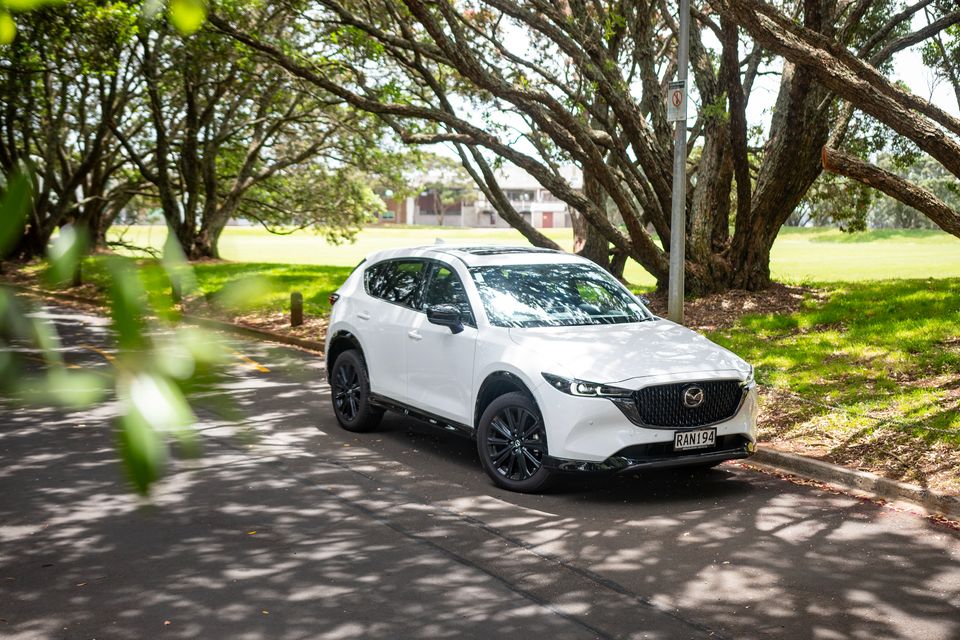
How does the Mazda CX-5 drive?
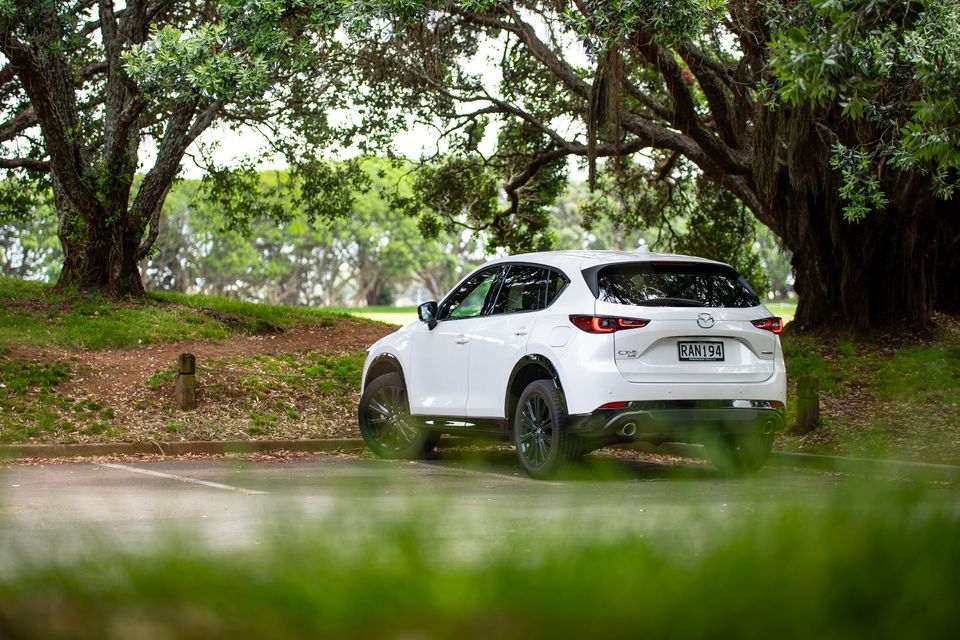
When it first arrived on the scene, the CX-5 instantly impressed with its handling chops. More than a decade on, and Mazda’s mid-sizer is still arguably the benchmark in the segment for driver engagement. A nice bonus to have next time you come upon a fun piece of road in the middle of a family roadie.
Mazda is of course well known for ensuring that even its most humdrum models handle. In recent times its all-new ‘large product group’ platform has been given plenty of praise for the amount of rear-bias and chuckability it’s instilled on models like the CX-60.
That said, I think the CX-5 is still the brand’s best-driving SUV. Its platform feels dynamic and its front end feels sharp. Balanced, grippy, surprisingly fun. I actually think it’s still a better driver’s car than the aforementioned CX-60, mostly I suspect because it’s about 400kg lighter on the scales.
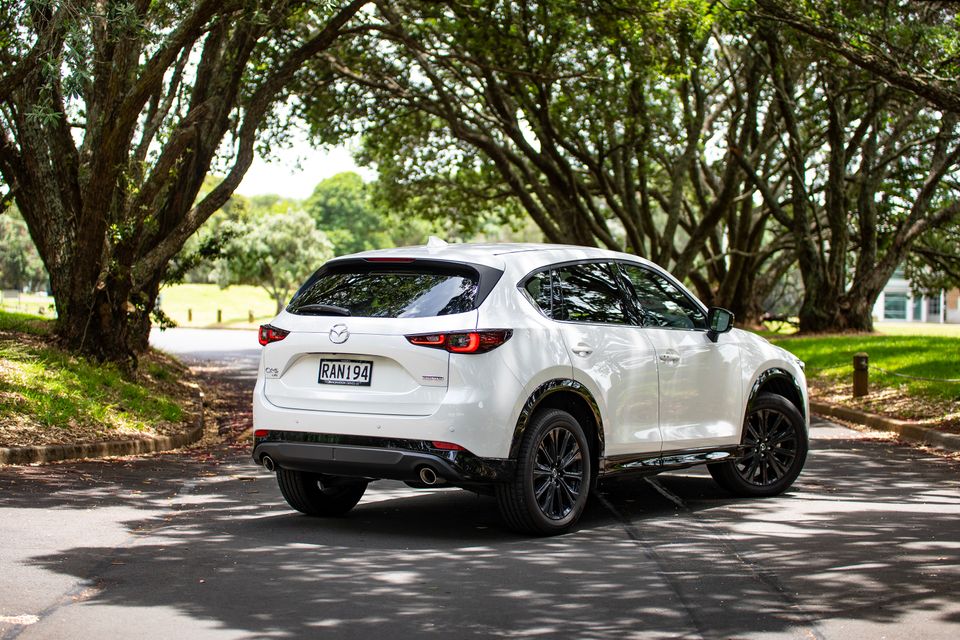
The best powertrain for unlocking the CX-5’s fun factor is the flagship turbocharged 2.5-litre in the Takami. Granted it is easily shamed by most electric powertrains in straightline performance these days, it’s still a pretty potent package capable of a surprising amount of fizz.
The naturally aspirated 2.5-litre in this Limited grade is a fair performer, but given it takes just over nine seconds to reach 100kmh, it’s considerably less explosive than its turbo sibling. Still, it offers decent mid-range performance when required on the motorway, and generally feels quite understressed and refined.
At lower speeds, the CX-5 is a no frills experience. Its steering is perhaps a little more heavy than some others, but I’d call that a worthwhile trade off for improved handling. Outward visibility out either windscreen is good, and the CX-5 also rides bumps well. Admittedly, its damping isn’t quite as plush as what you get from an Outlander.
The CX-5’s 6-speed automatic isn’t as sophisticated as the dual-clutches found in some rivals, but it makes up for this with its predictability and reasonably sharp response times. A traditional torque-converted 6-speed will be just the antidote for those wanting to steer clear of a noisy CVT at all costs. The lack of high gears is perhaps only an issue when it comes to the 2.5’s middling fuel economy figures.
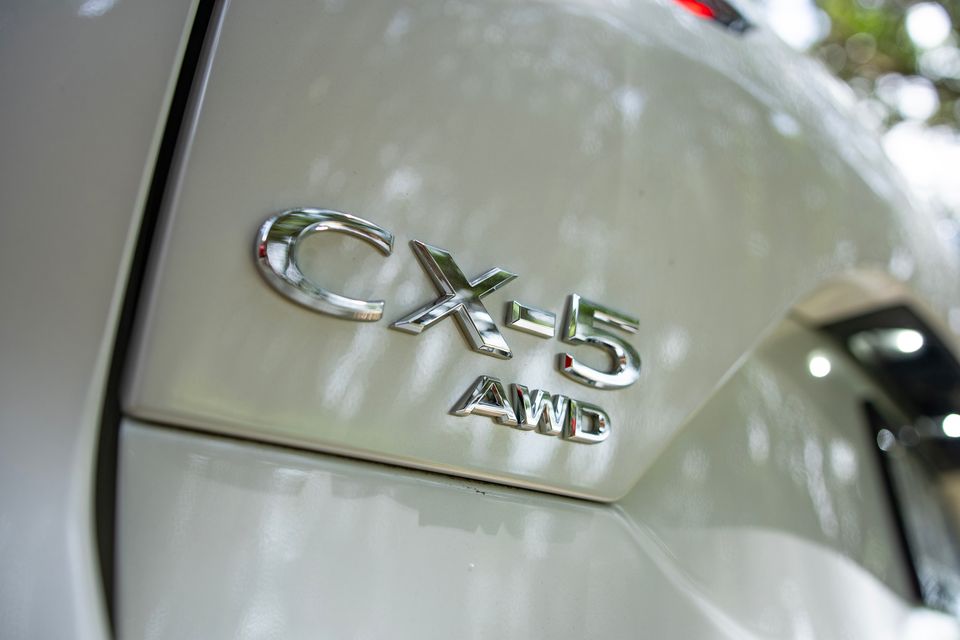
What do you get?
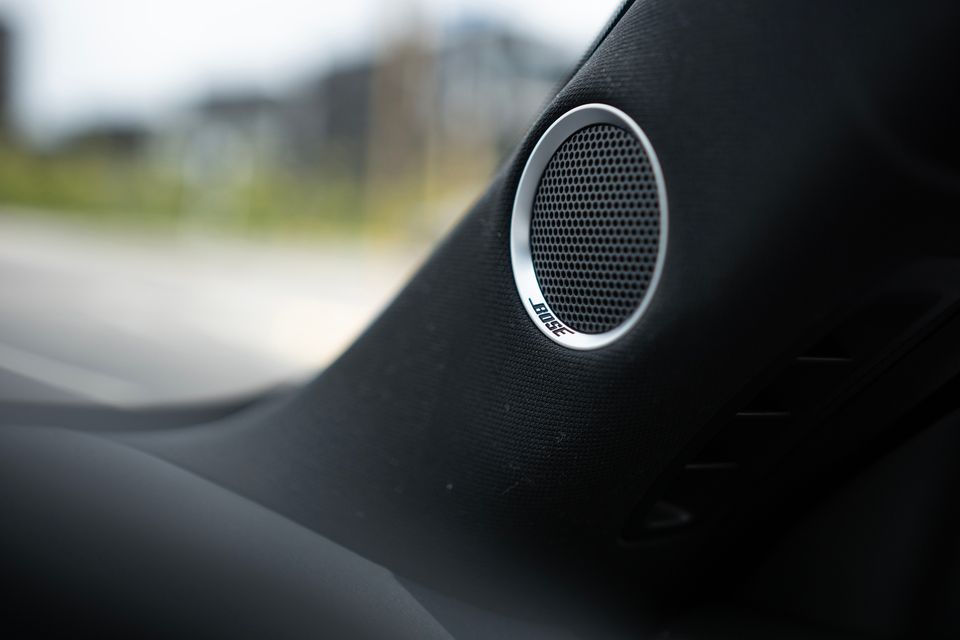
The Limited comes with a fairly healthy spec list, with the likes of a 360-degree camera, a 10-speaker Bose sound system, power tailgate, and a sunroof giving it a flagship feel.
Mazda CX-5 GLX equipment highlights:
CX-5 GSX adds:
CX-5 Limited adds:
CX-5 Takami adds:
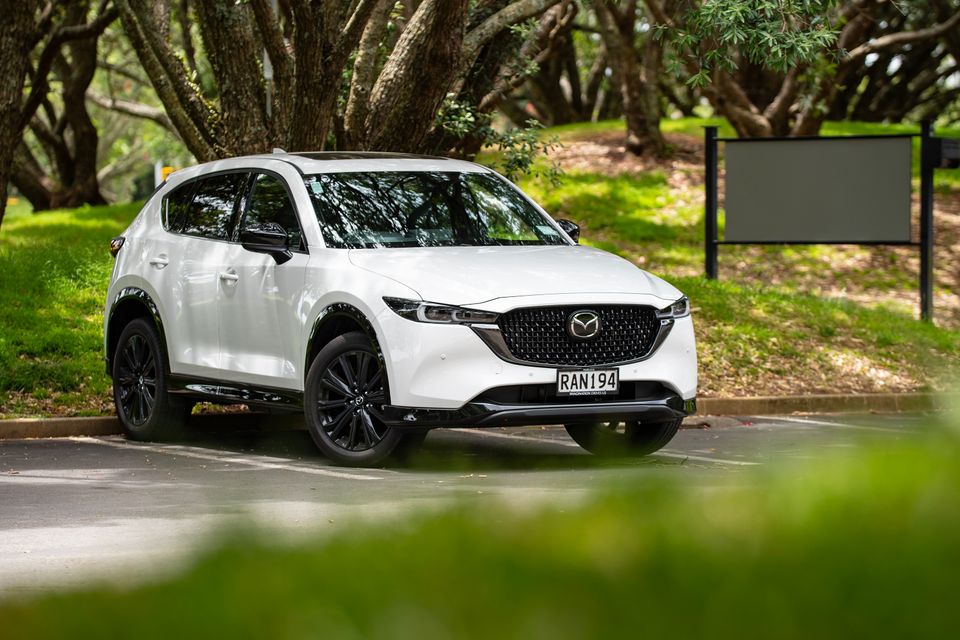
CarExpert’s take on the Mazda CX-5 Limited
If you’re after the absolute latest and greatest in mid-size SUVs … well, most likely you won’t have made it to the end of this story. It’s hardly controversial to point out that there are plenty of more high-tech options on the market than the CX-5.
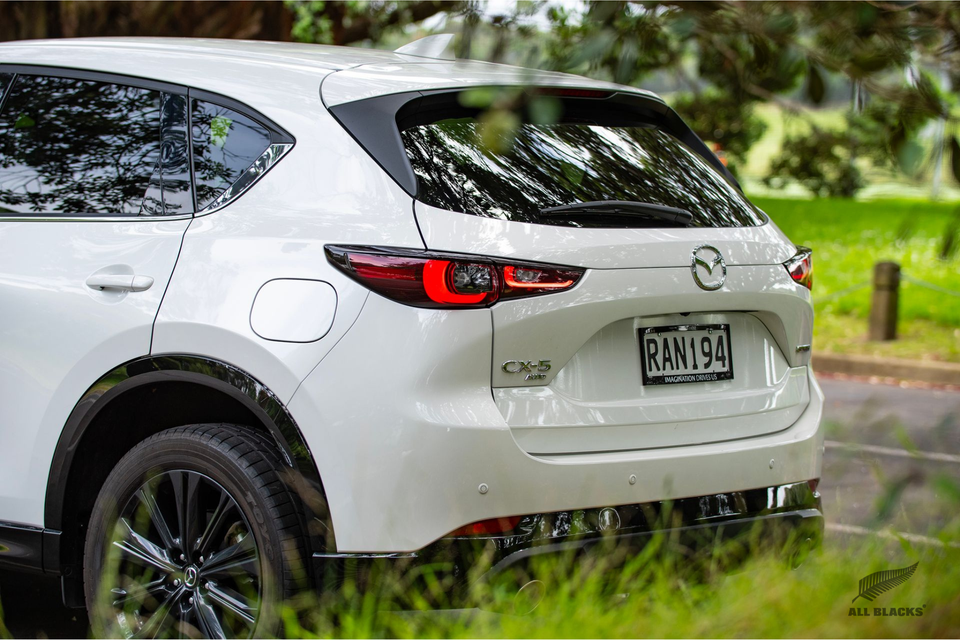
But whilst everyone is rolling out tech-crammed family wagons, the CX-5’s analogue charm is becoming something of a rarity. It’s still the best driver’s car in its class, not to mention it’s also arguably still one of the most handsome.
When it comes to the CX-5 Limited specifically, we think it’s a better value proposition than the Takami flagship — unless you want that turbocharged 2.5-litre engine. The Takami is only worth the upgrade if you crave the additional poke and character.
The current CX-5’s life clock is ticking, and its replacement will have massive shoes to fill.
Where expert car reviews meet expert car buying – CarExpert gives you trusted advice, personalised service and real savings on your next new car.
Quickly see how this car stacks up against its competition. Select any benchmark to see more details.
2024
$44,290
2026
$46,490
2024
$47,090
2026
$49,990
2026
$57,990
2026
$61,990
2024
$67,890
Matthew Hansen co-founded motorsport outlet Velocity News, worked as a freelance photographer for various race teams, and was a specialist journalist for NZ Autocar Magazine and Driven at the NZ Herald. Most recently, he was Editor of Motoring at Stuff.co.nz.
Add CarExpert as a Preferred Source on Google so your search results prioritise writing by actual experts, not AI.
CarExpert
14 Days Ago

Matthew Hansen
19 Days Ago
Matthew Hansen
19 Days Ago

Damion Smy
19 Days Ago

Dave Kavermann
21 Days Ago
CarExpert
24 Days Ago
Add CarExpert as a Preferred Source on Google so your search results prioritise writing by actual experts, not AI.
† Displayed prices exclude on-road costs such as delivery charges, registration fees, number plates, insurance and applicable road taxes. These prices are subject to change without notice and may not reflect current market pricing or dealer offers.
 Automotive Vehicle Spec Data & 4K images Powered by JATO Dynamics Ltd