

 Showroom
 Car Chooser
 Compare
 Car Specifications

CarExpert
2026 CarExpert Choice Awards: Best Luxury EV
This award category covers premium electric vehicles that combine electrification with luxury, advanced technology, and performance.
6 Days Ago
Updated Tesla Model Y proves it's New Zealand's most popular new EV for a reason.
Where expert car reviews meet expert car buying – CarExpert gives you trusted advice, personalised service and real savings on your next new car.
Despite all the best efforts of the world’s legacy carmakers (and its CEO’s penchant for binge posting on social media), the Tesla Model Y largely remains triumphant. In a year of stormy seas at Tesla, it still wound up as New Zealand’s best-selling electric car of 2025.
A big piece of the puzzle when it comes to the Model Y’s success last year was the much anticipated arrival of its ‘Project Juniper’ second-generation update. Beyond its semi-Cybertruck styling, what is it that makes this pure plug-in so popular?
How much does the Tesla Model Y cost?
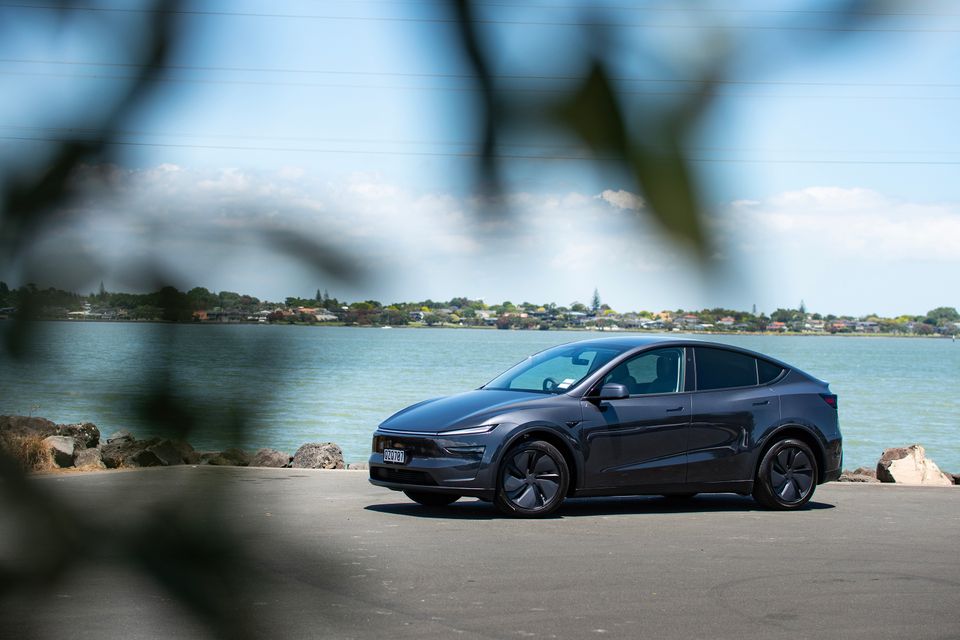
Tesla has kicked off the new year by rolling out new naming conventions across its Model 3 and Model Y line-ups. Its standard variants are now branded as ‘Premium’, including the Long Range shown here. The name change is purely skin deep, changing nothing about the model’s specifications.
The switch is perhaps the precursor to a lower spec model entering our market. Up to this point, Tesla’s local offices have said there are no plans to bring the recently unveiled ‘Standard’ base grade to our region.
Model | Price not including on-road costs |
|---|---|
Tesla Model Y Premium RWD | $67,900 |
Tesla Model Y Premium Long Range AWD | $77,900 |
Tesla Model Y Performance AWD | $100,900 |
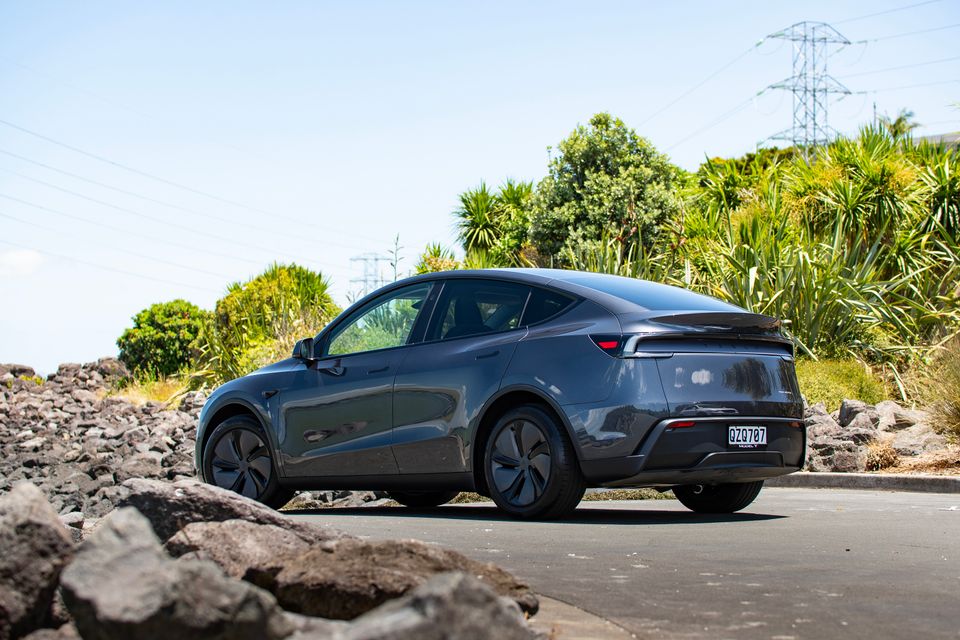
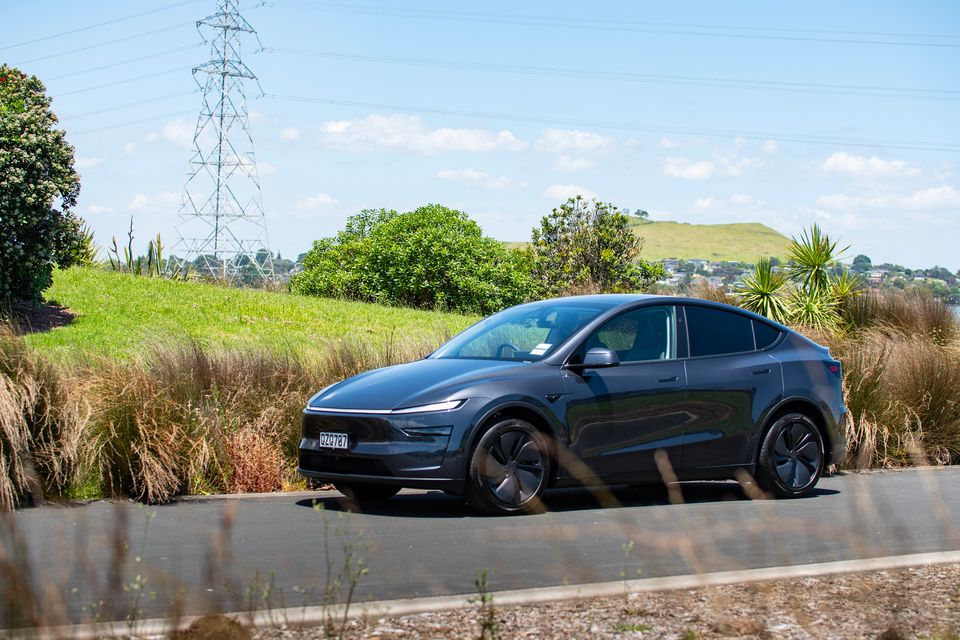
Tesla has of course been known for its chaotic price changes across its line-up in recent years. But the wider trend is that Model Y prices in New Zealand have crept downwards. Once priced deep into the 70s, the base model (with its smaller 62.5kWh battery) starts at $67,900 plus on-roads, whilst the 80kWh battery Long Range sits just under 80 grand.
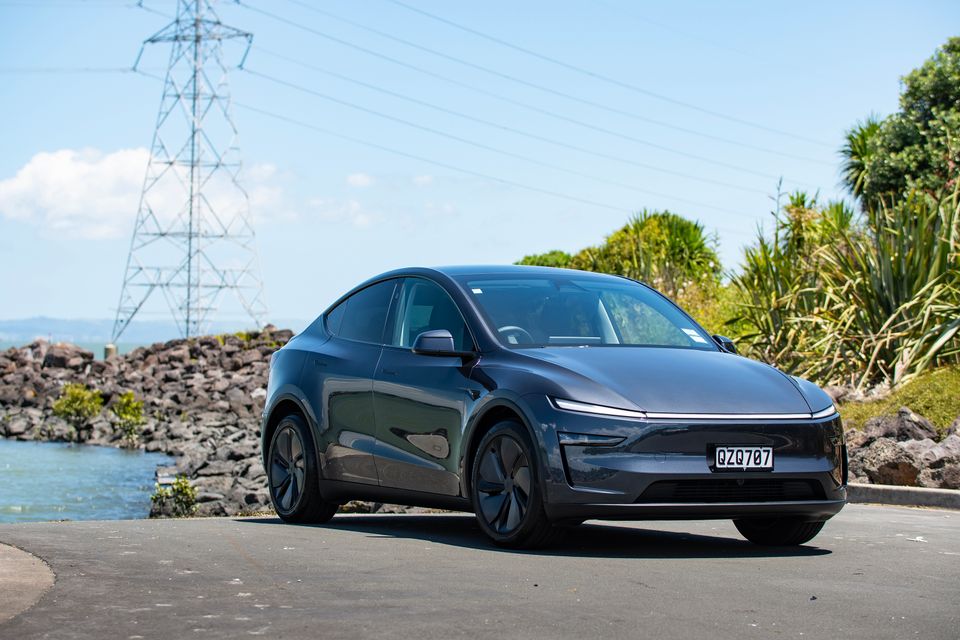
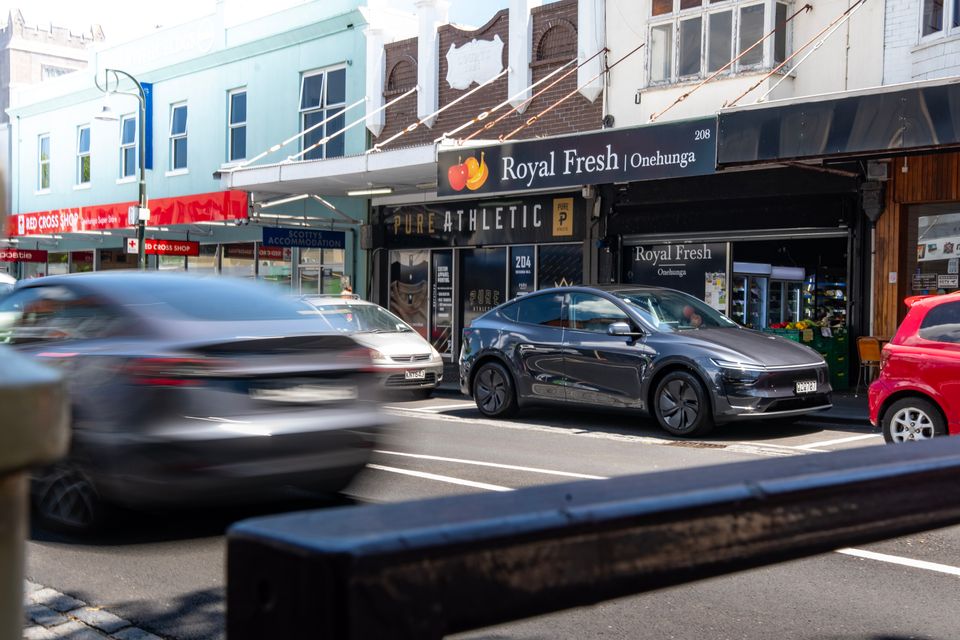
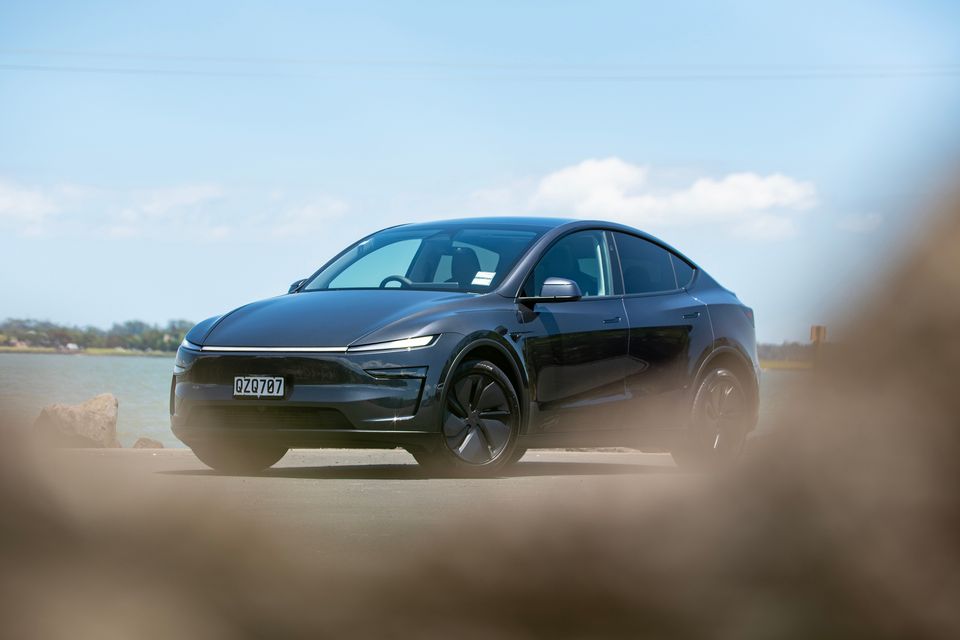
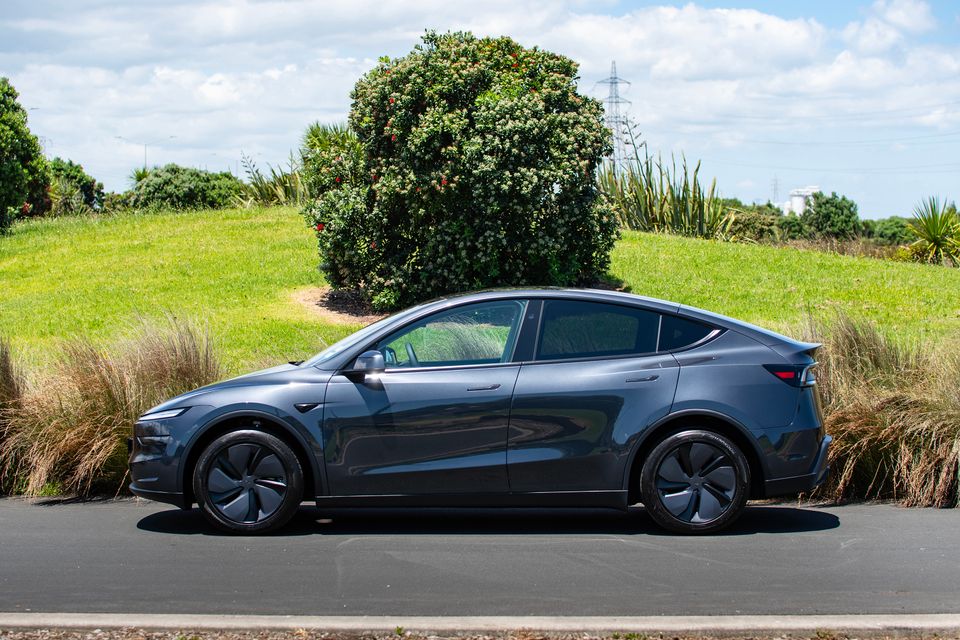
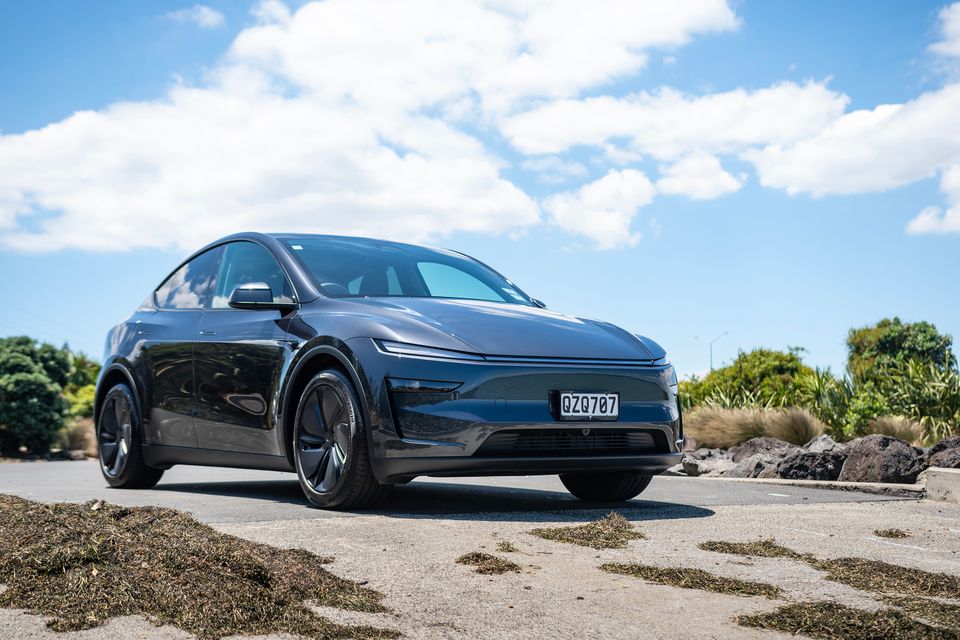
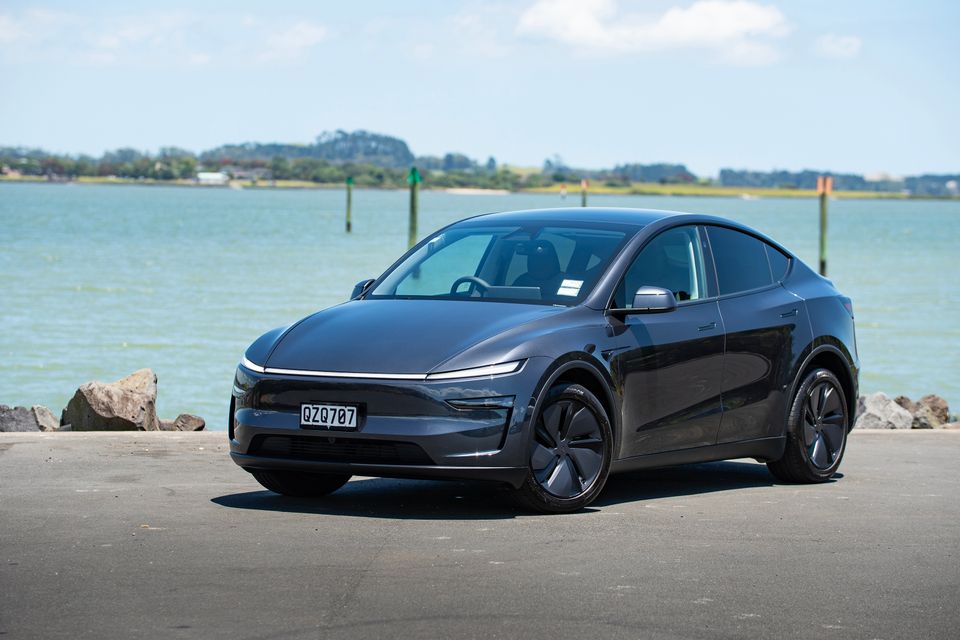
Tesla is fairly transparent about its on-road fees, which are quite hefty relative to some of their peers, tallying up to an additional $2324 at the time of writing. The attached pricing also only applies if you opt for a Tesla in white. All other colours are an optional extra, ranging between $1700 for black or blue, $2300 for the pictured Stealth Grey, or $3000 for the hero silver and red hues. If you find yourself wondering why so many Teslas on the road are wrapped, well … now you know.
The other notable option is Tesla’s Full Self Driving (Supervised) system. There’s talk that Tesla may scrap the one-off payment structure, but that option still exists to Kiwi customers at a cost of $11,400. We suspect most are going to instead buy FSD in subscription form, at a price of $159 per month. More on the self-driving stuff later.
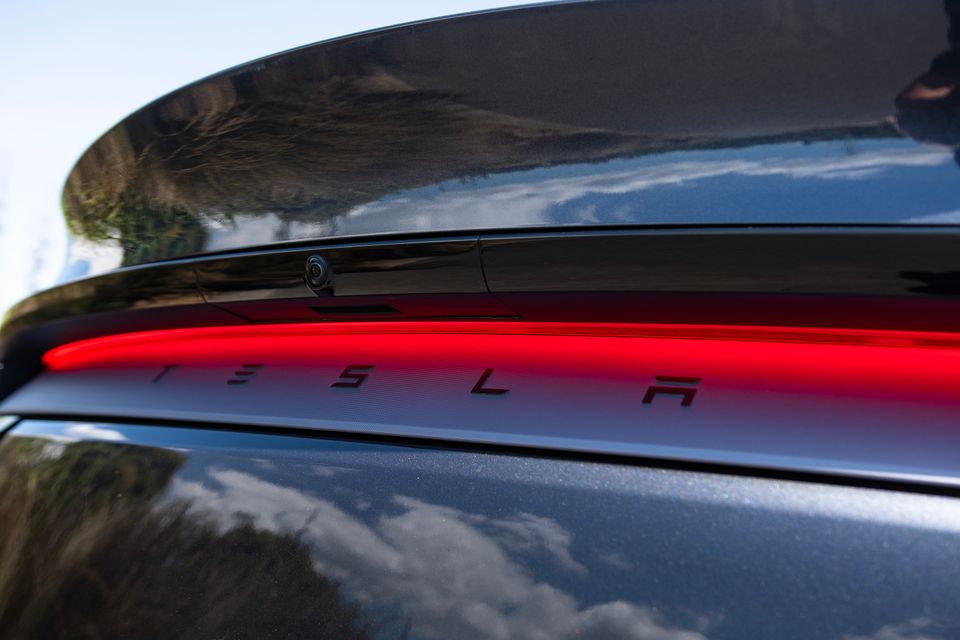
Even in the midst of a cooling off of the electric vehicle market, the Model Y still has a wide range of rivals. There are a swag of legacy brand alternatives, ranging from the Kia EV6 and Hyundai Ioniq 5 to the Ford Mustang Mach-E, Volkswagen ID.4 and Toyota bZ4X. There’s also a growing number of Chinese rivals that are on target to give those legacy competitors a serious shakedown. I’m talking about the BYD Sealion 7, Zeekr 7X, Leapmotor C10, and Xpeng G6 — but the list grows by the day.
According to the sales charts, the Sealion 7 is the Model Y’s closest competitor. It’s priced between $67,990–$79,990, and both flavours come with an 82kWh battery — a fraction more kilowattage than you get from a Model Y, but a smaller range claim.
What is the Tesla Model Y like on the inside?
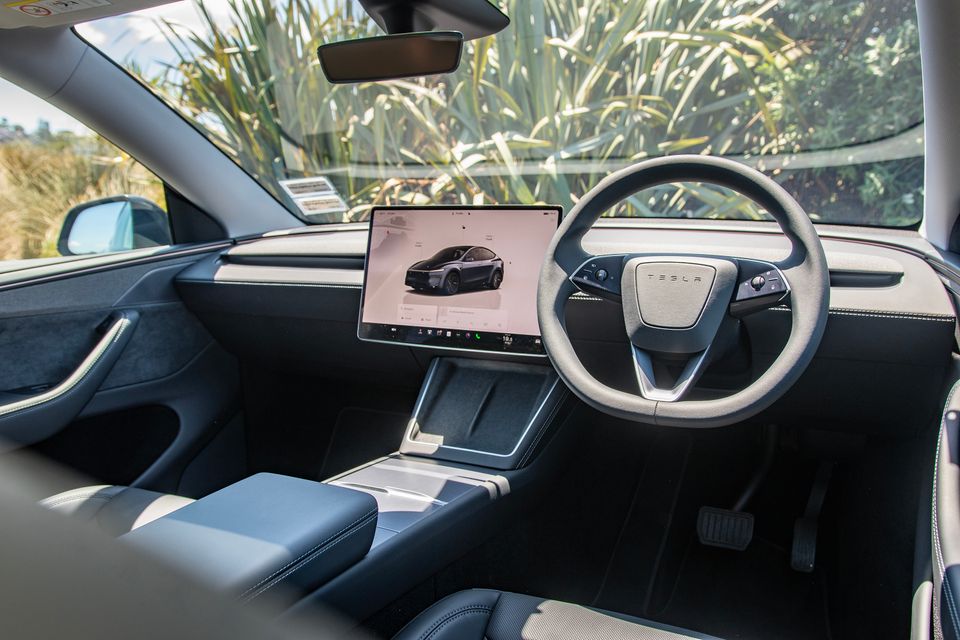
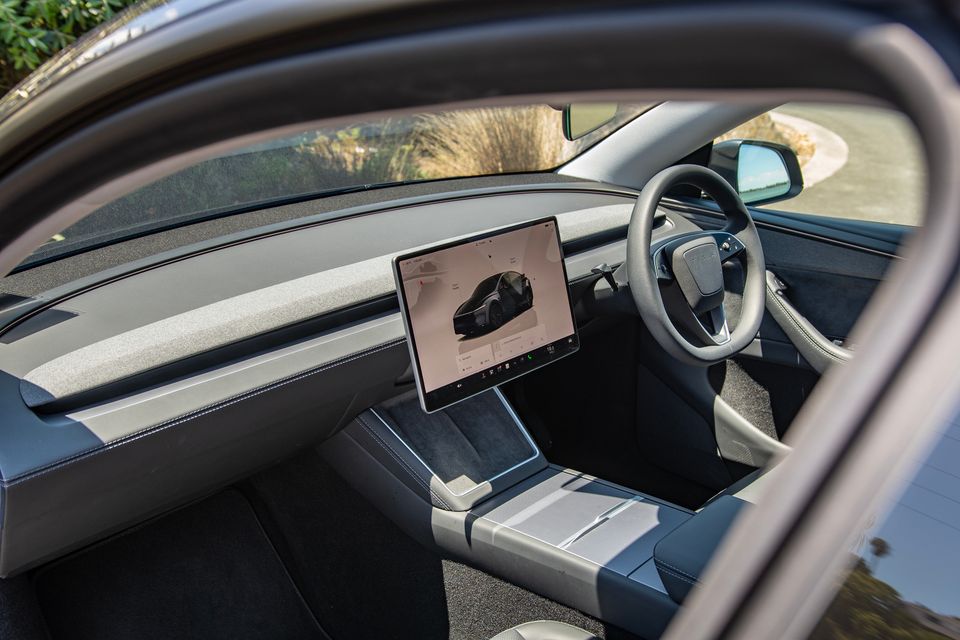
You could be forgiven for thinking that Tesla has made absolutely no changes inside the Model Y since it first launched. After all, there’s not really a lot to look at in there. You’ve got a large 15.4-inch screen, a flat, minimalist dashboard, and not a heck of a lot else. But, Tesla’s actually made plenty of changes with the latest update.
For starters, the dashboard is wrapped in a more plush soft-touch material. The dash itself also looks a little more integrated and welcoming thanks to the way it wraps around the base of the windscreen and how that arc neatly continues into the front door cards.
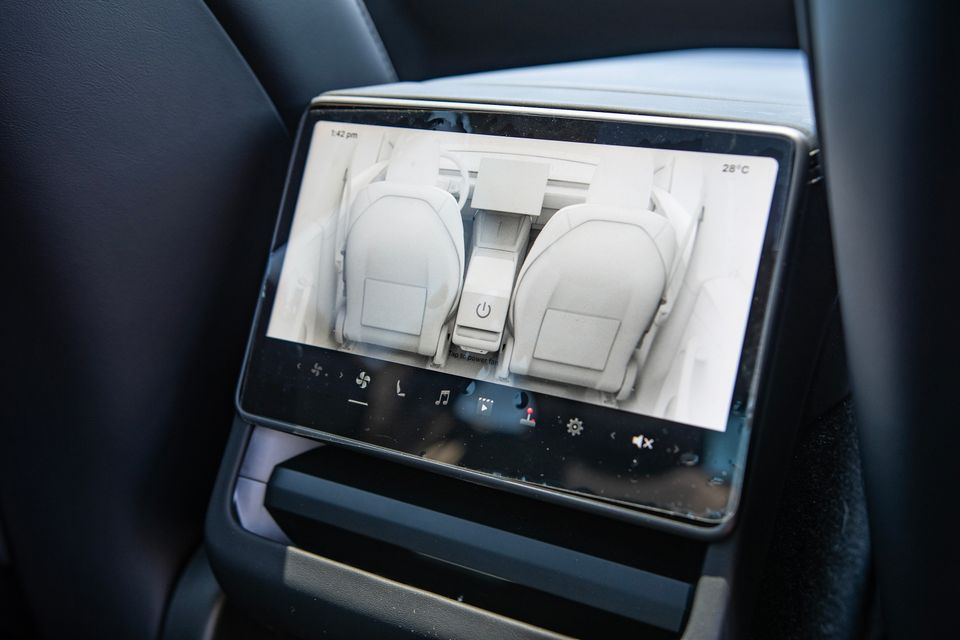
The new Y took on a range of additions previously seen in the updated ‘Project Highland’ Model 3, led by a touchscreen mounted on the back of the centre console for those in the back seats to stream video (ideal for keeping kids entertained when you’re parked up at a public charger). Plenty of us pundits were curious to see whether Tesla would implement the second-gen Model 3’s two most controversial interior changes in the new Model Y. Thankfully, Tesla went down the sensible route. Mostly.
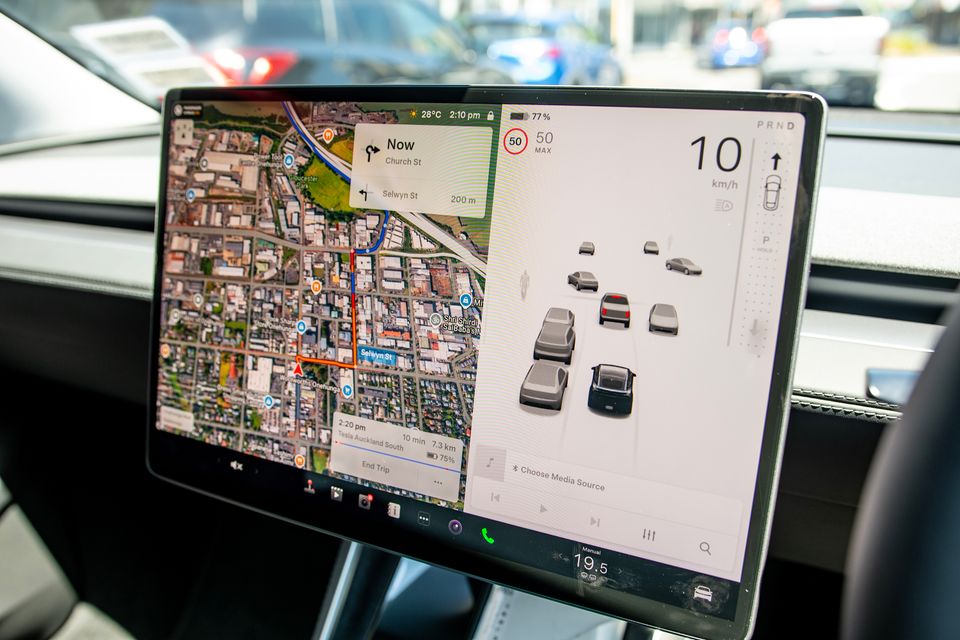
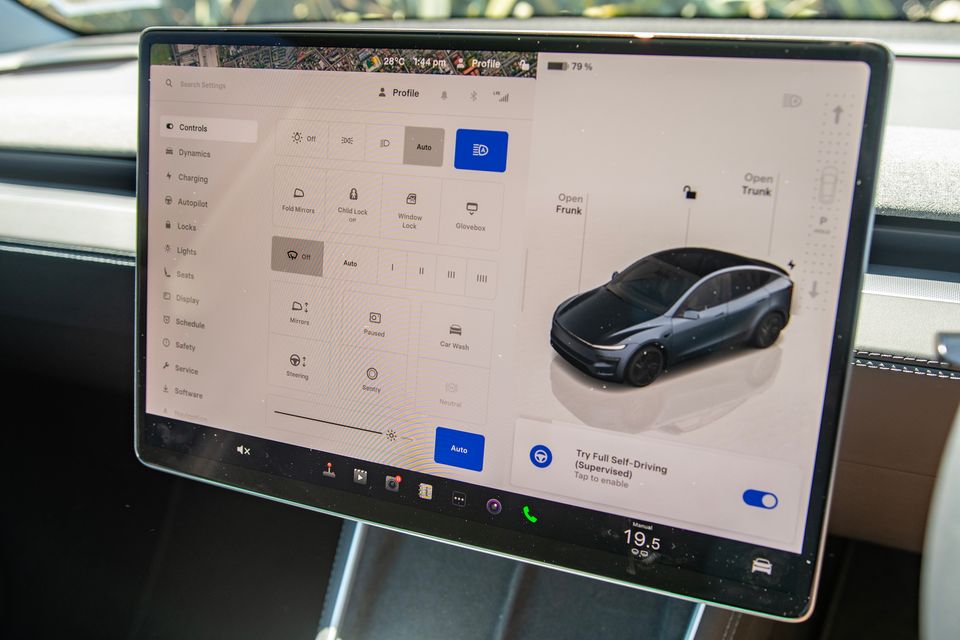
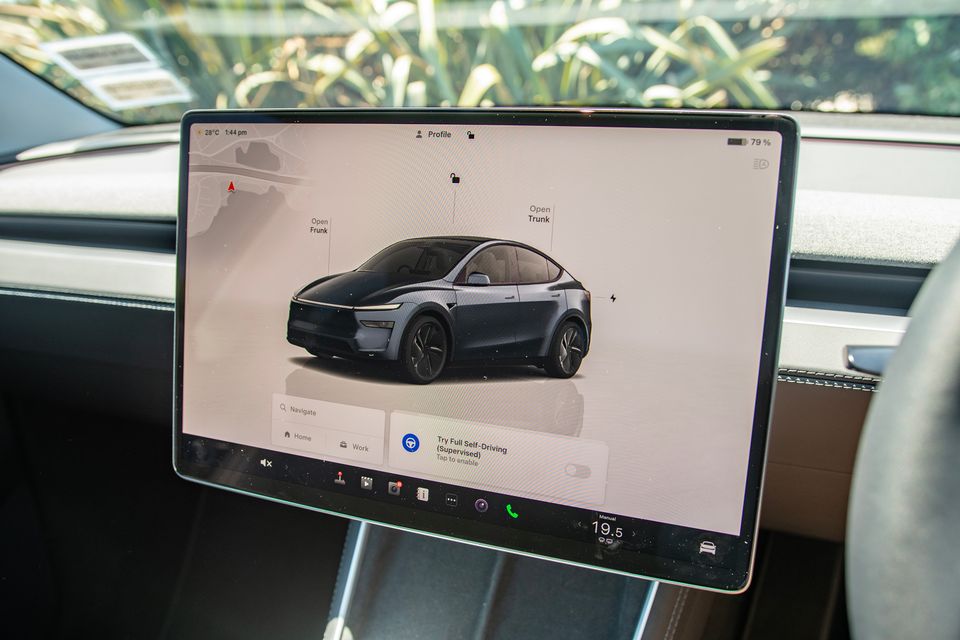
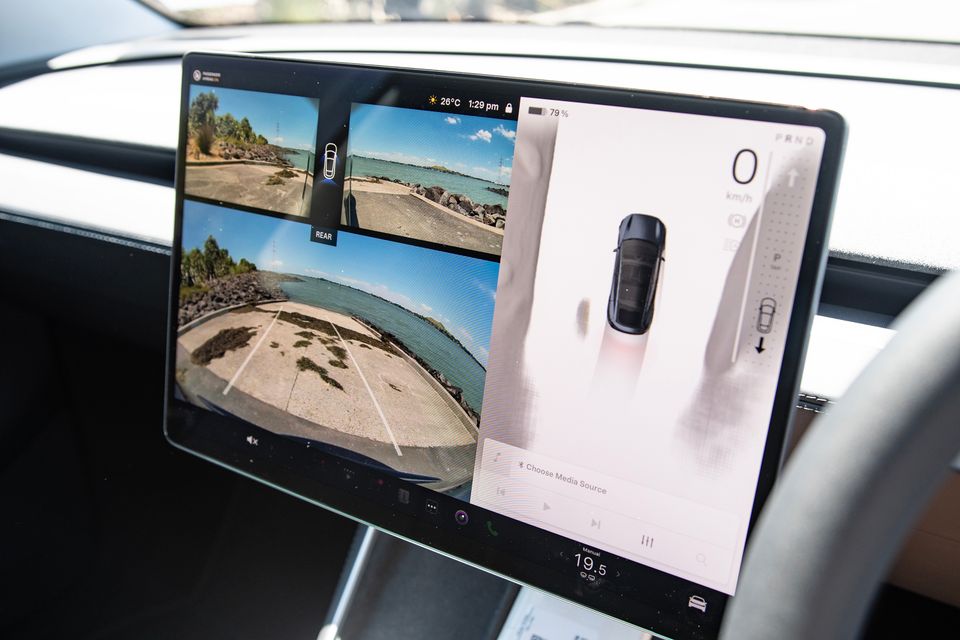
The Y does come with its drive selector on the touchscreen — meaning you need to swipe on the screen to engage ‘drive’ or ‘reverse’, as opposed to using a conventional gear lever. This was widely poo-poo’d on first reveal to the masses, but most reviewers and owners have given the feature positive reception since it arrived.
A feature that didn’t get such a glowing review was the Model 3’s indicator system. Instead of being accessible via an indicator stalk (as is the case in virtually every other car made in the last 80 years), the indicators were activated via buttons on the left spoke of the steering wheel. The change was roundly lambasted — particularly in markets like New Zealand where it is the law to indicate out of roundabouts (executing a successful flash of the indicators on roundabout exit required a quite complex series of arm movements mid-turn). Tesla has dumped this change, and brought back the indicator stalk for both the new Model Y and for later iterations of the second-gen Model 3. Thank goodness.
It’s ironic that buttons in the Tesla Model Y have been such a talking point as there are just so very few of them. The dashboard doesn’t feature a single button, with the only buttons instead being the handful on the steering wheel, the aforementioned indicator stalk, and the window controls and opener switches on the doors. Everything else is in the touchscreen, from the menu where you adjust your wing mirror angles and steering wheel positon, to the button for opening the glovebox, to climate control adjustments. Want to change the aim of the air conditioning vents? Yup, that’s done on the screen too.
For some people, cramming everything onto the screen will sound like an ergonomics nightmare, and consider myself a card carrying lifelong member of the ‘bring back buttons’ brigade. So, I should despise the Model Y’s commitment to its screen. There are times where that’s certainly the case — like when I wanted to adjust the air conditioning — but I can see how owners get used to it. Credit to Tesla, its screens remain the most intuitive and snappiest on the market. This is the glue that holds the driving experience of this car together. If the screen were powered by lesser software, I’d be driving it off the end of the nearest pier.
We could spend this whole article talking about the Model Y’s screen and all the tech it possesses, but instead I’ll boil it down to a few highlights and lowlights. The cameras are fantastic and crystal clear, but I’m less of a fan of the complex camera-powered ‘Tesla Vision’ top-down 360-degree view system. I found myself wishing it had a simple 360-degree camera and some basic sensors. Tesla’s built-in satellite navigation system is beautiful, and makes FSD all the more easy to use (again, more on that soon). And of course, you have to tip your hat to dog mode. A fantastic feature more brands should look to emulate.
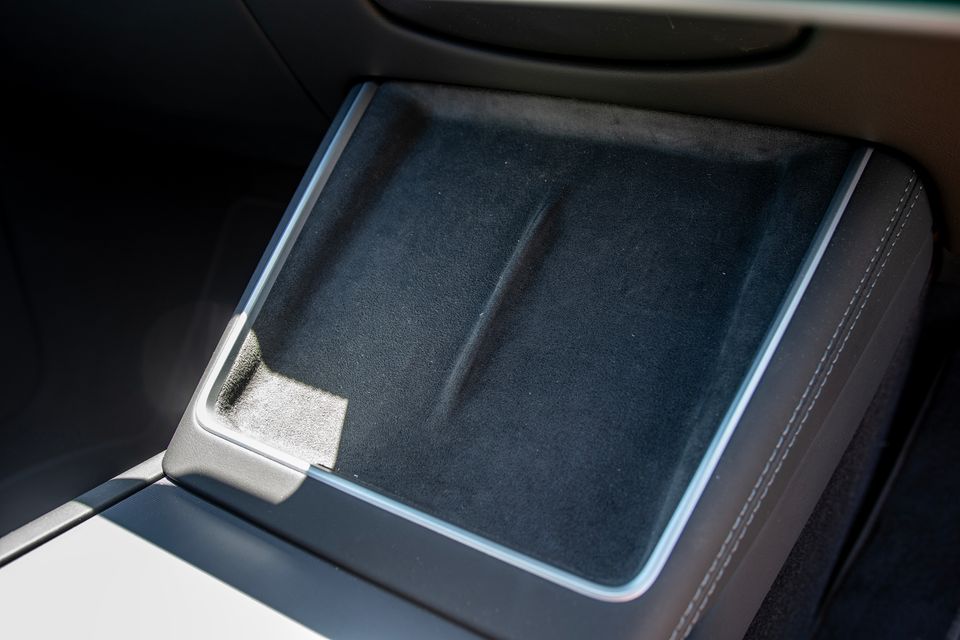
Other notables? You get dual wireless chargers in the centre console, which is nice. One acts as the receiver for Tesla’s card-based access and ignition key, although most owners instead unlock and turn on their Teslas via the brand’s mobile phone app. This essentially turns your phone into the car’s proximity key. The roof is predominantly made up of one huge piece of curved glass. It’s stunning, but does mean the Y often gets pretty hot inside if parked in the elements.
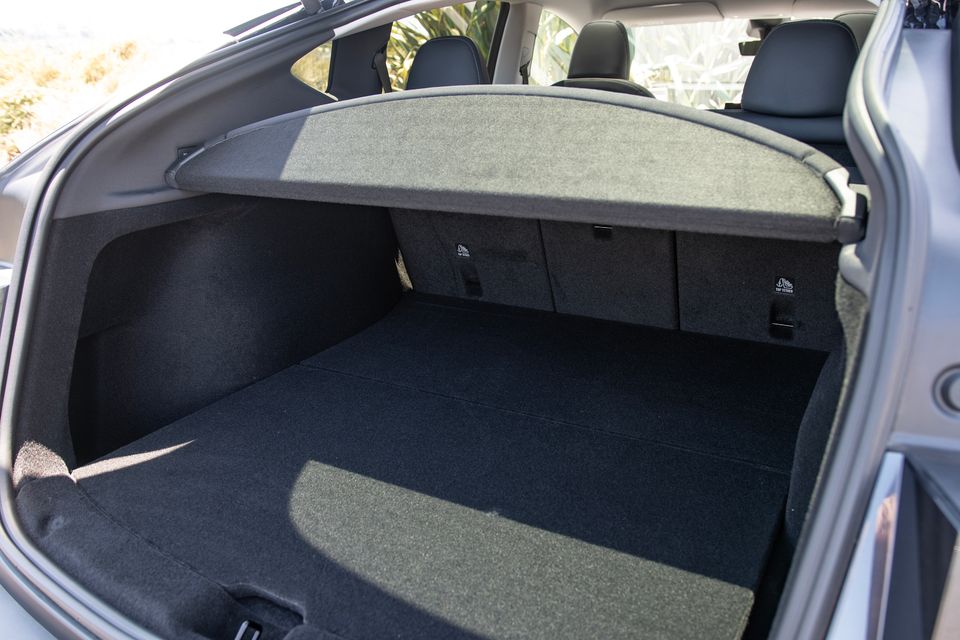
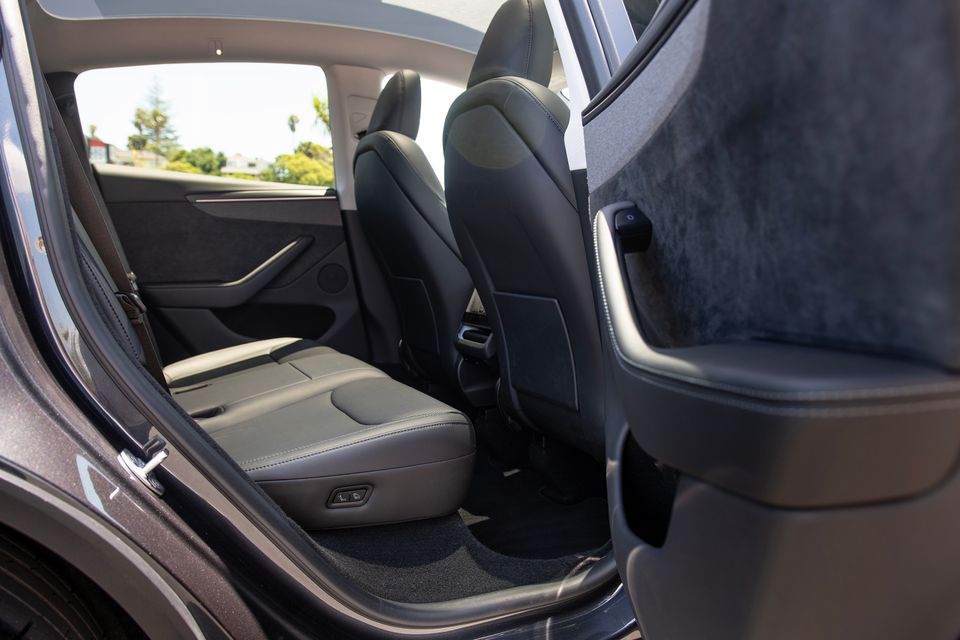
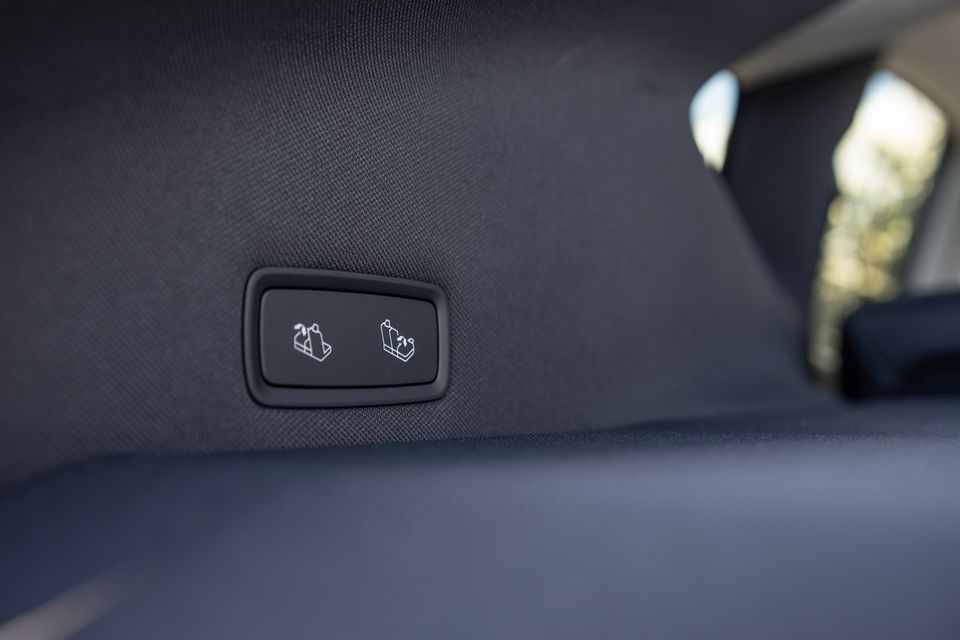
Space and storage is mostly very good. Up front you get one of the deepest centre console cubbies I’ve ever seen, and out back there’s a healthy 845-litre boot space. If you want more space, the back seats can be folded flat. They fold electrically, either via buttons in the boot, buttons on the edge of each seat, or buttons in the touchscreen up front. Rear legroom is excellent, and supported by surprisingly solid headroom.
What’s under the bonnet?
A big bit of plastic, a 117-litre frunk, and not a lot else actually.
In terms of what’s underneath the rest of the Model Y’s aero-friendly bodywork, things are obviously led by Tesla’s cracking battery technology. The base rear-wheel drive model (since it’s called the ‘Premium’, I’m probably not allowed to refer to it as ‘base’ anymore) comes with a 62.5kWh lithium iron phosphate battery with a claimed range of 466km on the WLTP-3 cycle. The Long Range we tested ups the ante with an 80kWh nickel manganese cobalt battery and a 551km range. Plug one of these into a Supercharger for 15 minutes, and you’ll get more than 235km worth of energy in return.
Along with having different batteries, the base model and Long Range also have a different motor count. The former gets a single rear-mounted unit with a 220kW output and rear-wheel drive, and this Long Range gets dual motors churning out 336kW/639Nm. The Model Y Performance ramps up its power and torque count to 343kW/741Nm.
Regardless of which Model Y you drive, you’re getting a pretty quick car. The base model accelerates to 100kph in just 5.9 seconds. This Long Range dual motor sharpens that figure to 4.3 seconds, whilst the top dog Performance lowers the bar to just 3.5 seconds.
Beyond all the powertrain stuff, the biggest change Tesla implemented to the Model Y last year was a much improved suspension tune. This mainly comes with the addition of frequency-adaptive dampers on each corner, which the brand boasts gives the new Y a much more composed ride than its predecessor.
How does the Tesla Model Y drive?
Whilst I will concede that the fresh dampers ensure that the new Model Y is more plush and polished over bumpy road than the last, it’s not what I’d call a luxurious ride. You do still feel most of the road’s corrugations, particularly when it comes to big surface changes or speed bumps. It’s comfortable enough to be sure, but you get a more mature ride from a BYD Sealion 7 or a Volkswagen ID.4.
The natural flipside to this is that the Model Y happens to be one of the best steers in this mid-size electric SUV segment. Most of them are fairly capable on a wiggly road of course, the aforementioned BYD and Volkswagen included. But few feel quite as connected and agile as the Model Y. The front end is numb, but more positive and precise than you’d imagine. The only peer in its company that has a more enjoyable chassis would be the Ford Mustang Mach-E.
The Model Y is also, obviously, very quick. Slot in Sport mode (after swiping through a few touchscreen menus) and stab the throttle, and you’re violently slammed into the back of the seat with little more than a slightly more high pitched hum from the powertrain and maybe a brief chirp from the tyres if it’s wet. It’s a ferocious amount of ability from a car primarily designed for family duties. A true ultimate sleeper.
Underneath the novelty off the Model Y’s straight-line party trick is a very practical and usable electric SUV — so long you’re okay with all the touchscreen stuff. It is inevitably cheap to run, and a piece of cake to charge publicly via Tesla’s Supercharger network (although an increasing number of these are being opened up to non-Tesla cars).
Yes, it’s a bit firm and some of its features are a chore to access through the screen, but most everything else about the Model Y is light and easy. There’s plenty of visibility from the driver’s seat thanks to its airy cabin, and all of the controls (the steering wheel that is, there aren’t really any other physical controls) are light.
A curious topic is range. Tesla was once widely recognised as a world leader for battery tech, and that reputation perhaps still stands in some circles. But China has very quickly caught up, and arguably has Tesla’s measure when it comes to real-world range abilities. Having previously driven both the Standard Range and the Long Range Model Y, in my experience both fell around 60km short of achieving their claimed range in real-world driving. As always, your results may vary depending on your driving habits, the weather, what side of the bed you woke up on, and a raft of other factors.
We also need to talk about the Full Self Driving (Supervised) system, which I’ll refer to as FSD from here on. I first experienced this system in Australia late last year, and have since toyed with it in three Teslas on local roads since. I often consider myself to be a Tesla sceptic, an opinion driven predominantly by the track record of Elon Musk’s various promises over the years. So, believe me when I say that FSD is maybe the most impressive and compelling piece of tech I’ve seen in a car, ever.
It’s dead easy to use. Key in your destination in the car’s satnav, then hit the ‘Start FSD’ button at the top of the screen, and the semi-autonomous system kicks into life. Whilst Tesla calls the system ‘supervised’, it can do pretty much everything. It stops and starts for traffic lights, it changes lanes, it adjusts the car’s speed according to speed limits — and it can do this without you laying a finger on the steering wheel.
You’ve likely seen videos over the years of FSD fails and near misses. Many of these come from the United States and show earlier iterations of the system. What we get in New Zealand makes considerably fewer mistakes than what I’ve seen of FSD’s performance overseas.
That’s not to say that it’s infallible. During my first drive in Australia, it drove through a red light — quite a big issue there. And in my first local week of driving it made a few wrong turns. On a few occasions, upon seeing a queue of traffic for an onramp or offramp I wanted to take, it dipped out of the correct line to try and ‘pass’ the waiting cars. A bold move to make when it makes this decision at 100kph just a few hundred metres away from an offramp, I can assure you.
FSD is not quite good enough to pass a driving test in my view but, as Tesla would state, it’s meant to be used with considerable supervision from the driver. Tesla has already made a wee change since launch — adding a warning that the driver should have their hands on the wheel at all times. Just how many FSD users will actually use the system as Tesla instructs them to is maybe a question for another day …
What do you get?
Given that we currently only get the Premium and Performance Model Y grades, levels of equipment across the range are very high. The amount of tech wizardry is endless, and all models are also loaded with active and passive safety equipment. In fact, the Model Y was recently rated as the safest car on sale today by ANCAP.
Where expert car reviews meet expert car buying – CarExpert gives you trusted advice, personalised service and real savings on your next new car.
Tesla Model Y Premium equipment highlights:
Model Y Premium Long Range adds:
Model Y Performance adds:
CarExpert’s take on the Tesla Model Y
The Tesla Model Y was already a cutting edge entry in the electric SUV segment before the brand launched its second-generation version last year.
Make no mistake, rivals from China are rapidly closing in on the Model Y — offering comparable battery technology, similar (often Tesla-inspired) touchscreen-forward interfaces, and rapid performance. And, perhaps the biggest problem of all for Tesla, is that these new rivals are often cheaper to boot.
Up to this point, Tesla has relied on over-the-air updates to keep its models ahead of the key legacy brand competition. But given the speed at which the technology is being developed in the East, the American carmaker might need to rethink how it keeps its line-up fresh.
All of that said, the Model Y remains the straightforward segment pick. A tech masterclass that’s capable of both bowel-shifting performance off the line and completely quiet, serene motorway commuting. If the execution of these latest changes is anything to go by, the Model Y will most likely once again be the country’s most popular new EV in 2026.
Where expert car reviews meet expert car buying – CarExpert gives you trusted advice, personalised service and real savings on your next new car.
Quickly see how this car stacks up against its competition. Select any benchmark to see more details.
2026
$67,900
2026
$77,900
2026
$83,900
2026
$100,900
Matthew Hansen co-founded motorsport outlet Velocity News, worked as a freelance photographer for various race teams, and was a specialist journalist for NZ Autocar Magazine and Driven at the NZ Herald. Most recently, he was Editor of Motoring at Stuff.co.nz.
Add CarExpert as a Preferred Source on Google so your search results prioritise writing by actual experts, not AI.
CarExpert
6 Days Ago

Derek Fung
7 Days Ago

Matthew Hansen
11 Days Ago
Matthew Hansen
11 Days Ago

Damion Smy
11 Days Ago

Dave Kavermann
13 Days Ago
Add CarExpert as a Preferred Source on Google so your search results prioritise writing by actual experts, not AI.
† Displayed prices exclude on-road costs such as delivery charges, registration fees, number plates, insurance and applicable road taxes. These prices are subject to change without notice and may not reflect current market pricing or dealer offers.
 Automotive Vehicle Spec Data & 4K images Powered by JATO Dynamics Ltd