

 Showroom
 Car Chooser
 Compare
 Car Specifications

CarExpert
2026 CarExpert Choice Awards: Best Luxury EV
This award category covers premium electric vehicles that combine electrification with luxury, advanced technology, and performance.
6 Days Ago
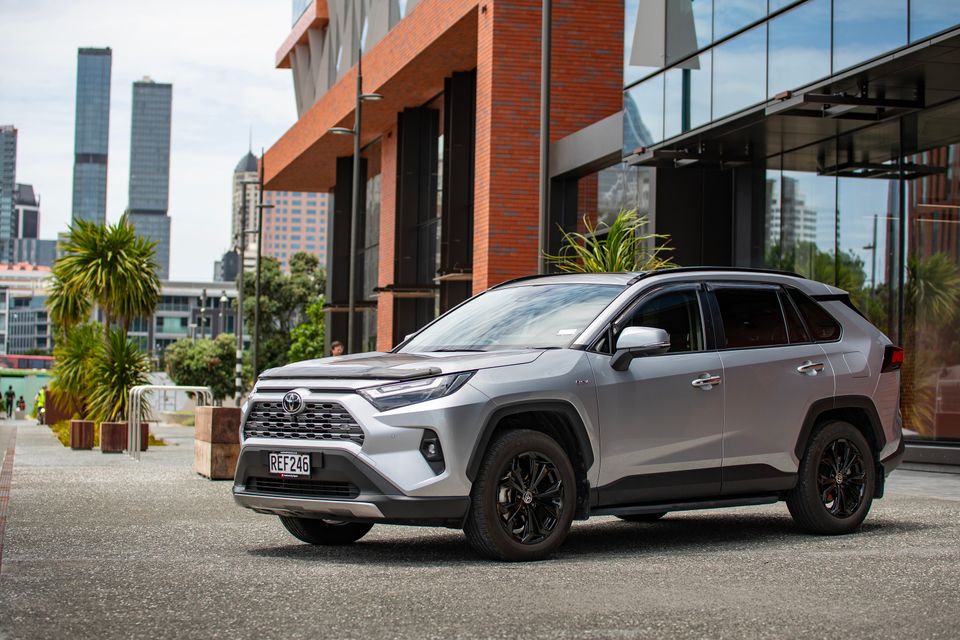
One last meeting with the world's best-selling car; the fifth-generation Toyota RAV4.
Where expert car reviews meet expert car buying – CarExpert gives you trusted advice, personalised service and real savings on your next new car.
As Toyota prepares to launch its new RAV4 in New Zealand, you would think the magic and interest in the outgoing model would have well and truly cooled down at this point. But, the truth has been anything but.
In its sixth year on sale here, the fifth-gen RAV4 did the unthinkable — it finally ended the decade-long reign of the Ford Ranger to steal the mantle of New Zealand’s most popular car. And it did this despite the arrival of numerous competitive rivals and the imminent launch of its replacement.
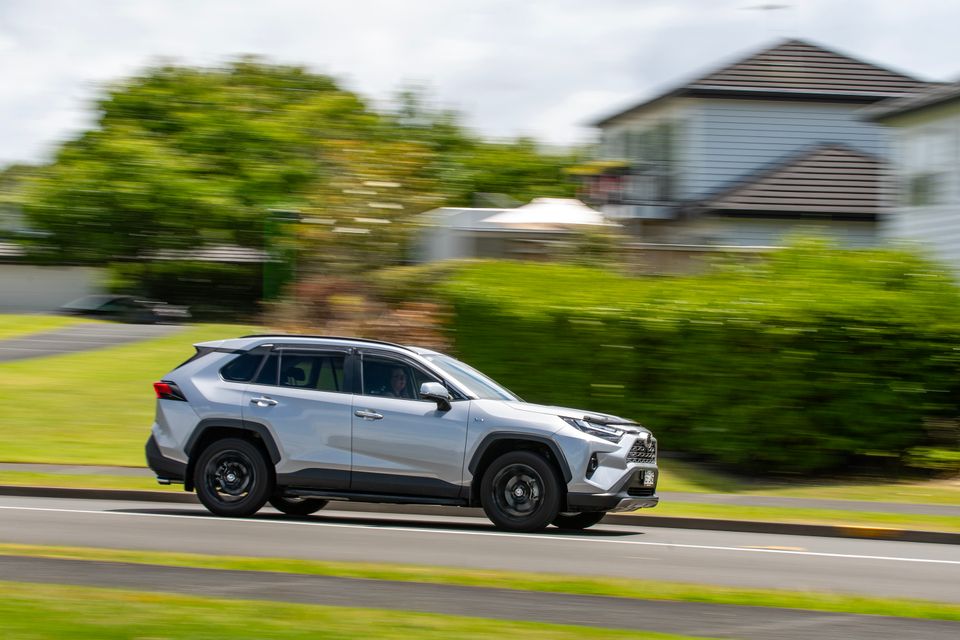
With a new RAV4 just around the corner, is the old one still the hybrid mid-size SUV benchmark. And perhaps more to the point, is it worth snapping one up on a sweet runout deal before they’re gone?
How much does the Toyota RAV4 cost?
The outgoing RAV4 has officially gone on runout, meaning Toyota has incrementally shaved down its pricing. The marque had already begun rationalising the RAV4 line-up down to a core set of all-wheel drive variants.
Model | Price |
|---|---|
Toyota RAV4 GX Hybrid AWD | $48,790 |
Toyota RAV4 GXL Hybrid AWD | $51,990 |
Toyota RAV4 XSE Hybrid AWD | $55,990 |
Toyota RAV4 Limited Hybrid AWD | $59,990 |
Toyota RAV4 Adventure Hybrid AWD | $59,990 |
Toyota RAV4 Adventure Hybrid AWD (two tone) | $60,990 |
On first glance, the RAV4’s pricing might not look particularly impressive. Particularly with emerging brands like Chery now launching mid-size SUVs in the sub-$40k bracket. But, remember that this line-up is exclusively constructed of all-wheel drive grades. And, every model comes with an electrified 2.5-litre 4-cylinder hybrid petrol powertrain. Toyota phased out all of its pure petrol RAV4 variants a few years ago.
Comparing hybrid to hybrid, the RAV4’s closest rival is the Kia Sportage HEV, which is priced from $54,990 in Light spec. There’s also the recently updated Haval H6 to consider, which you can get in all-wheel drive Ultra HEV trim from $47,490. The RAV4 we got on test was a Limited, one of the most popular grades outside of the ‘company car favourite’ GX.
Toyota recently announced pricing for the forthcoming RAV4, which is also worth taking note of here. Most notably, the brand is bringing back the more affordable front-wheel drive options, whilst also adding a plug-in hybrid alongside its tried and true traditional hybrid. Keep an eye out, as we will be hopping behind the wheel of the new RAV4 in the coming months.
MY2026 Toyota RAV4 pricing
Model | Price |
|---|---|
Toyota RAV4 GX Hybrid FWD | $49,990 |
Toyota RAV4 GXL Hybrid FWD | $52,990 |
Toyota RAV4 GX Hybrid AWD | $52,990 |
Toyota RAV4 GXL Hybrid AWD | $55,990 |
Toyota RAV4 GXL Plug-in Hybrid AWD | $57,990 |
Toyota RAV4 Adventure Hybrid AWD | $60,990 |
Toyota RAV4 XSE Plug-in Hybrid AWD | $61,990 |
Toyota RAV4 Limited Hybrid AWD | $62,990 |
Toyota RAV4 GR Sport Plug-in Hybrid AWD | $66,990 |
What’s the Toyota RAV4 like on the inside?
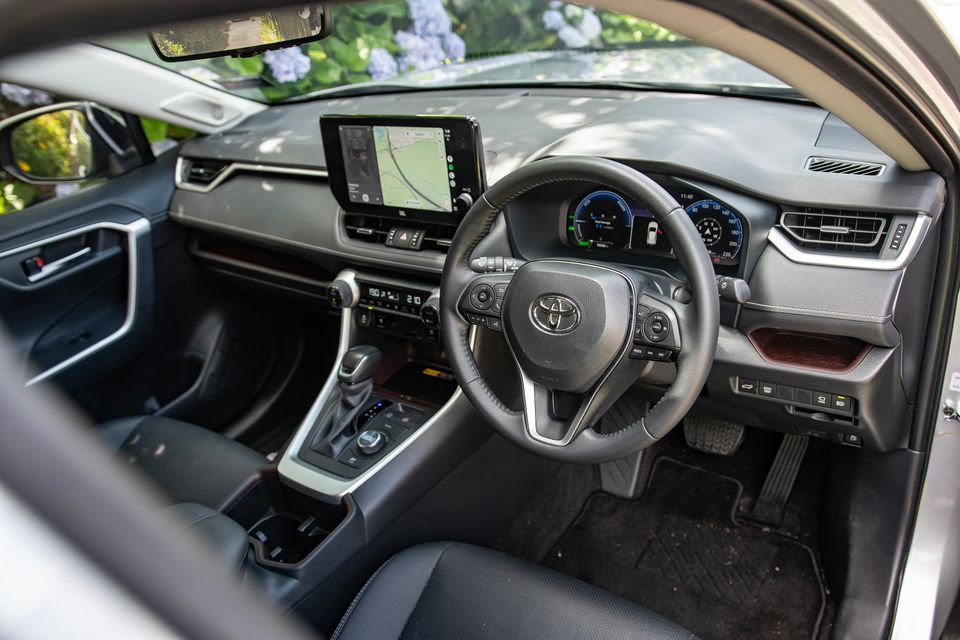
Back to the old RAV4, then. The interior of the fifth-gen family favourite has always been one of its big strengths, with its gains in practicality and size drawing plenty of comparisons with the much larger three-row Highlander when it first arrived on the scene.
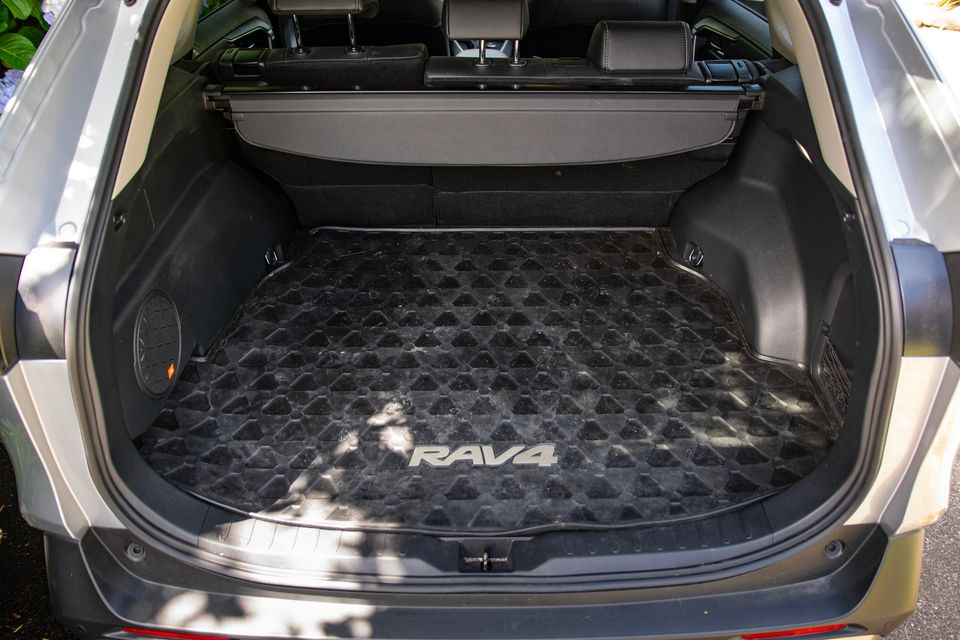
Six years on, and the RAV4 remains one of the most spacious and versatile mid-size SUVs in its segment. The 542L boot space is actually a smidge smaller than its predecessor, but that’s largely thanks to the additional hybrid hardware under the floorboards. In terms of the actual usability of the space, the wide and square opening makes it easy to pop in awkwardly shaped items like bicycles or strollers.
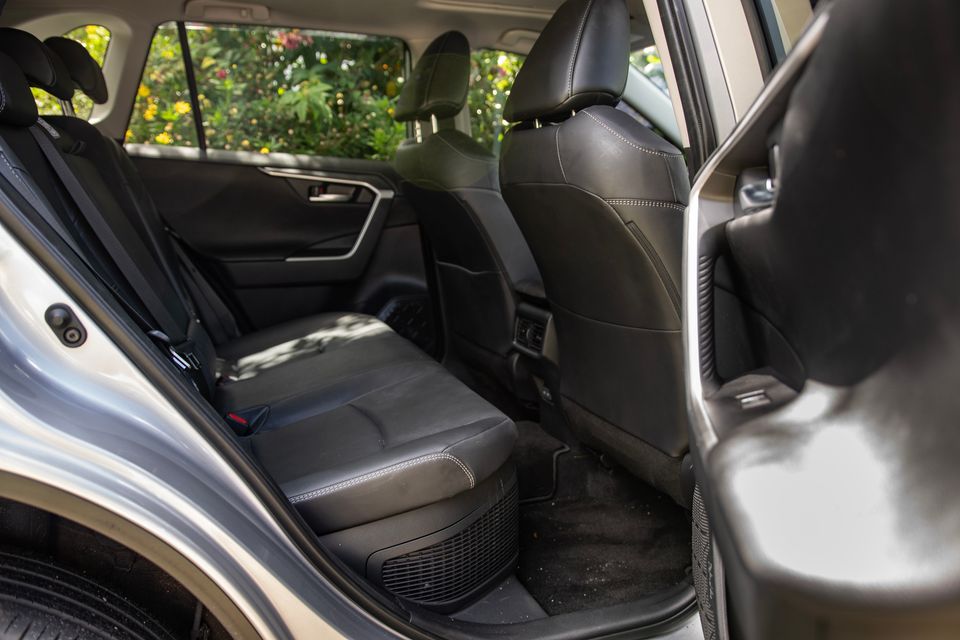
There’s close to segment-best amounts of legroom and headroom in the second row, with the seats themselves also being quite comfortable to sit in. Toyota has also crammed the cabin with plenty of storage cubbies. We particularly appreciate the shelf that spans the width of the dashboard at waist height.
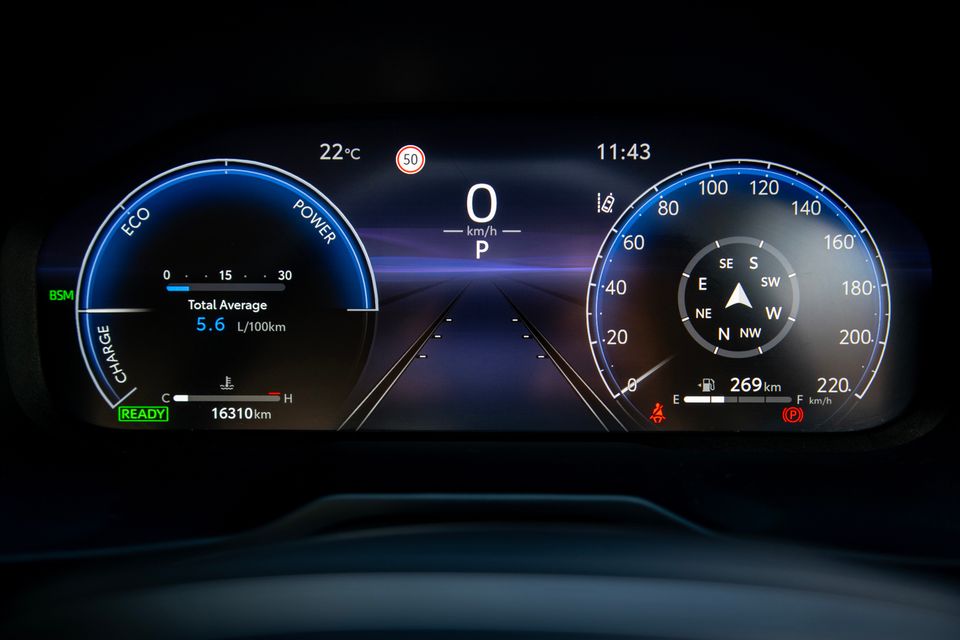
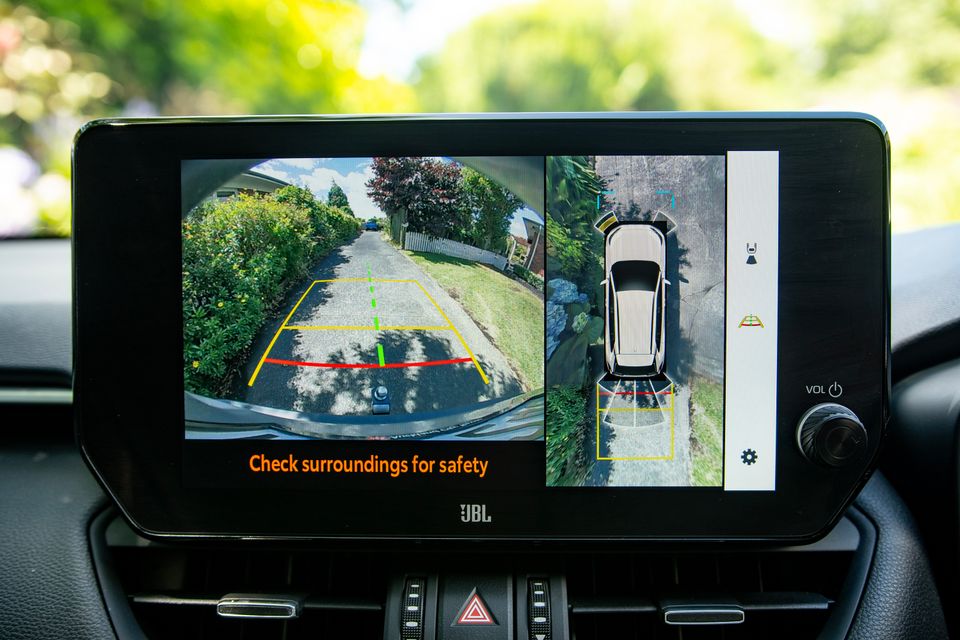
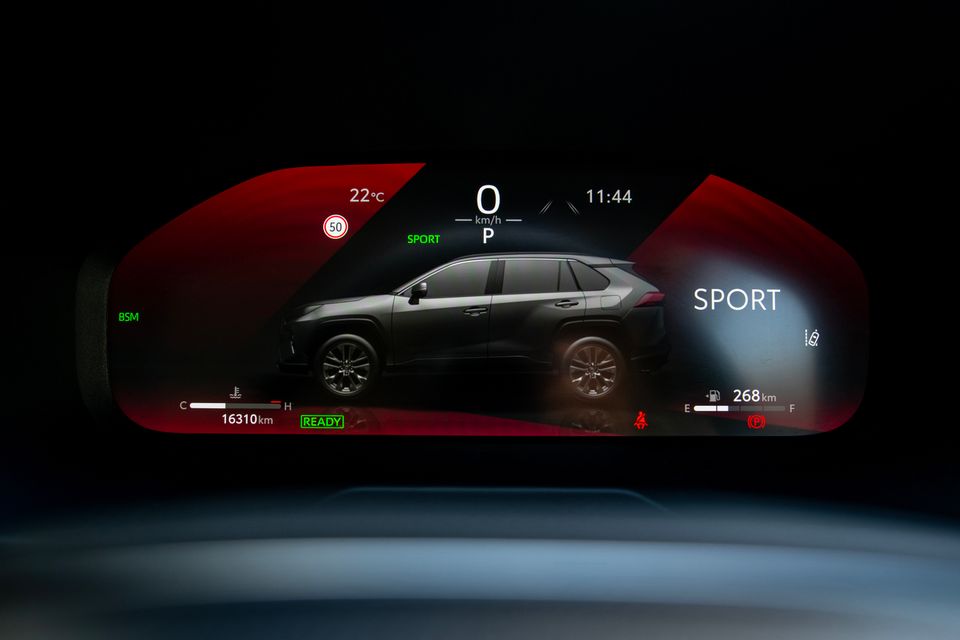
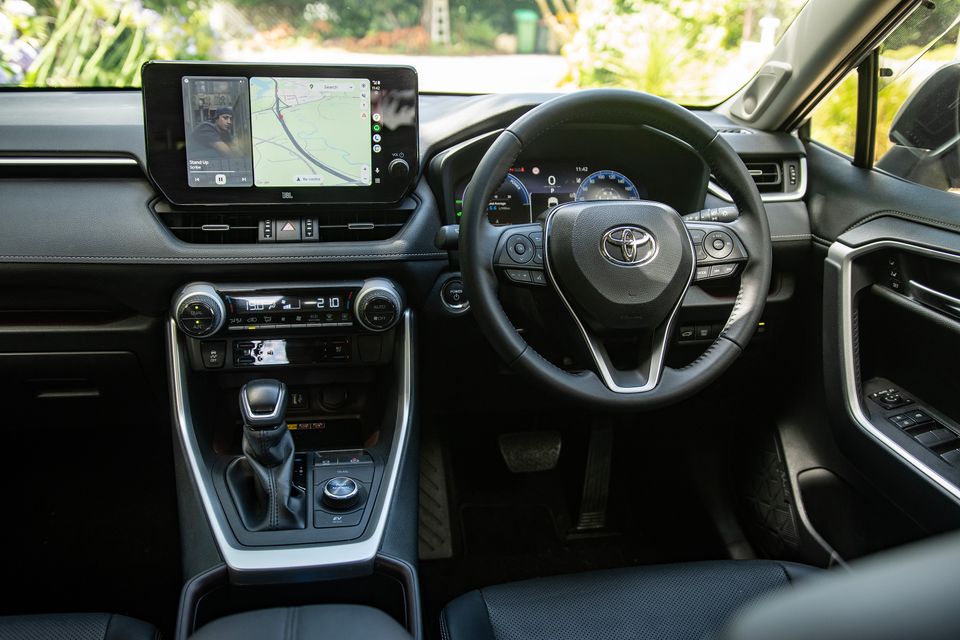
The outgoing RAV4 benefited from a mild mid-life update a few years ago. Not a lot actually changed, with the main upgrade being revitalised software. The touchscreen (8.0-inches in base models, 10.5-inches in this Limited spec) got bigger, it inherited better cameras, and gained wireless Android Auto and Apple CarPlay.
I’ve heard some over the years label the cabin of the RAV4 as being a little bit ‘plasticy’, but I can’t agree. This may be more true in a base GX spec, but in the likes of the Limited there’s plenty of much appreciated soft-touch materials. I appreciate the faux-rugged rubber touches, too, like the textured outer sleeves on the climate and audio control knobs. It’s not a shade on a Lexus of course, but the RAV4’s cabin quality is strong all the same.
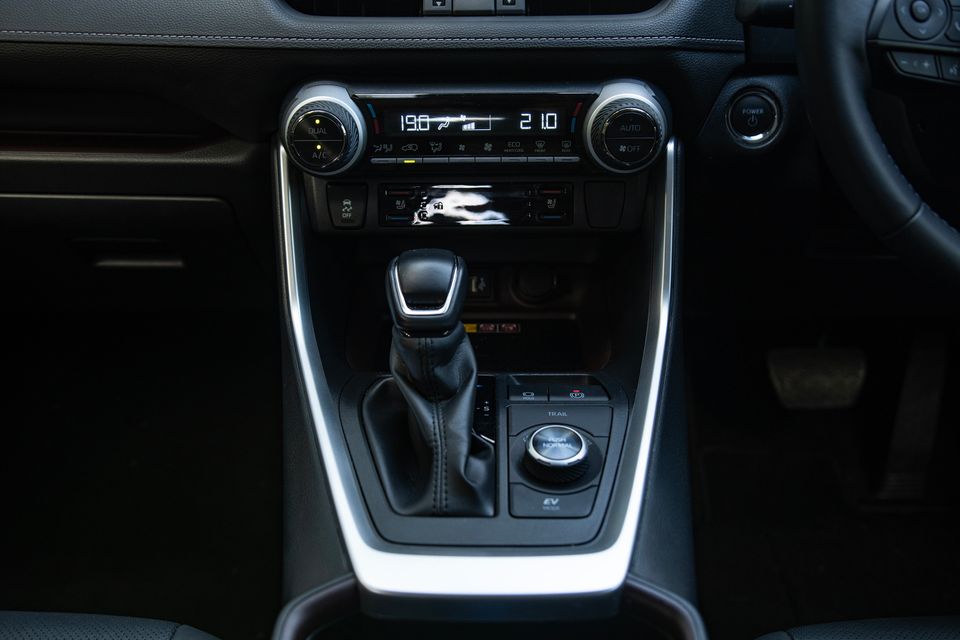
Speaking of knobs, there’s a plethora of physical controls in here. The touchscreen absorbs a lot of features of course, but everything you would expect to see represented by an easy to find and click button or switch is exactly that. Climate control adjustment gets its own display separate to the touchscreen and separate controls — something we’d mandate in all cars if we were ‘dictator of the industry’ for a day.
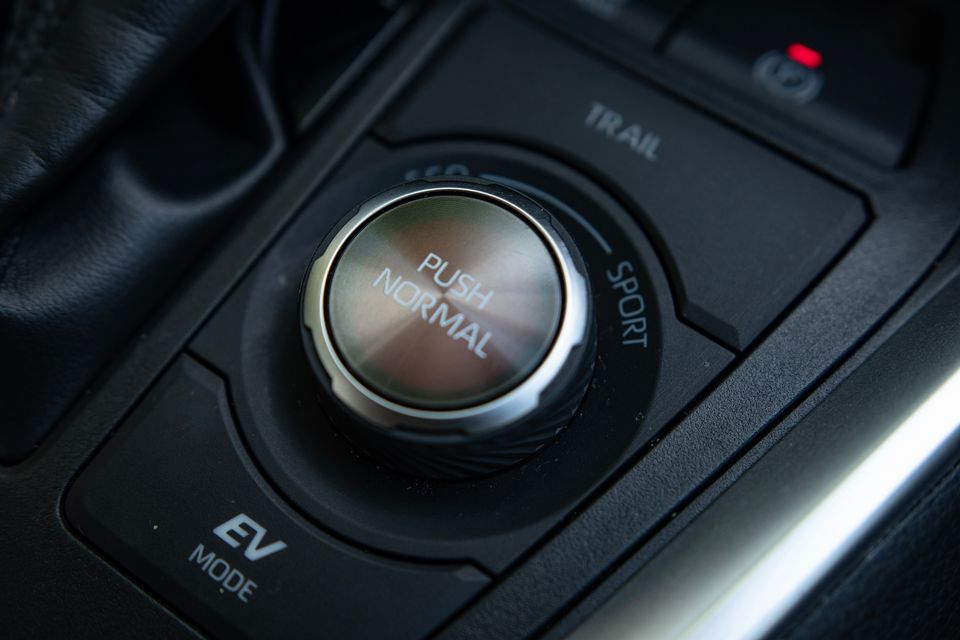
Negatives? Well, whilst it’s very practical and logical inside the fifth-gen RAV4, it’s not especially exciting. There aren’t many of those ‘surprise and delight’ details that have become commonplace in most tech-filled Chinese rivals in this segment. Ambient lighting, puddle lights, headlights with LEDs that do the Macarena every time you turn the car on — all absent.
What’s under the bonnet?
All outgoing RAV4s are equipped with Toyota’s much respected 2.5-litre 4-cylinder hybrid powertrain, paired with an electric motor and churning out a combined 163kW of power and 221Nm of torque.
All models also come with E-Four all-wheel drive, meaning the two rear wheels are solely powered by the rear-mounted electric motor. Whilst this means the Toyota’s AWD has some power-split limitations, it also removes the need for a mechanical driveshaft between the axles.
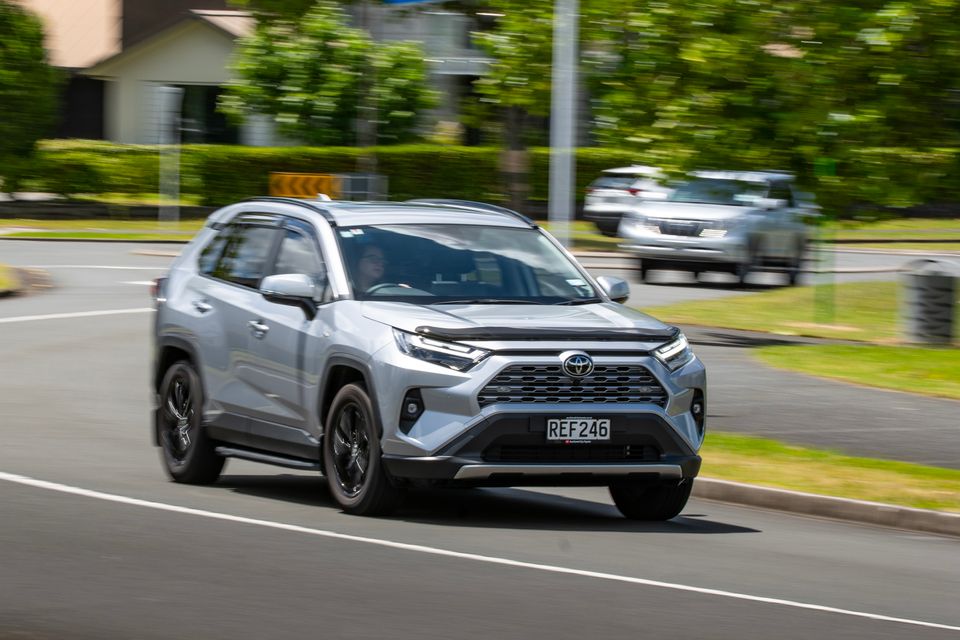
This in turn helps save weight, no doubt contributing to the RAV4 Hybrid’s excellent fuel economy figures. Toyota’s official figure is 5.3L/100km — a number that was the benchmark back in 2019 and remains the benchmark for a traditional hybrid SUV of this size in 2026. The new RAV4 hybrid, for reference, trims this figure down to 5.1L/100km.
If you wish to tow with it, the RAV4 Hybrid is rated for 1500kg braked, or 750kg unbraked.
How does the Toyota RAV4 drive?
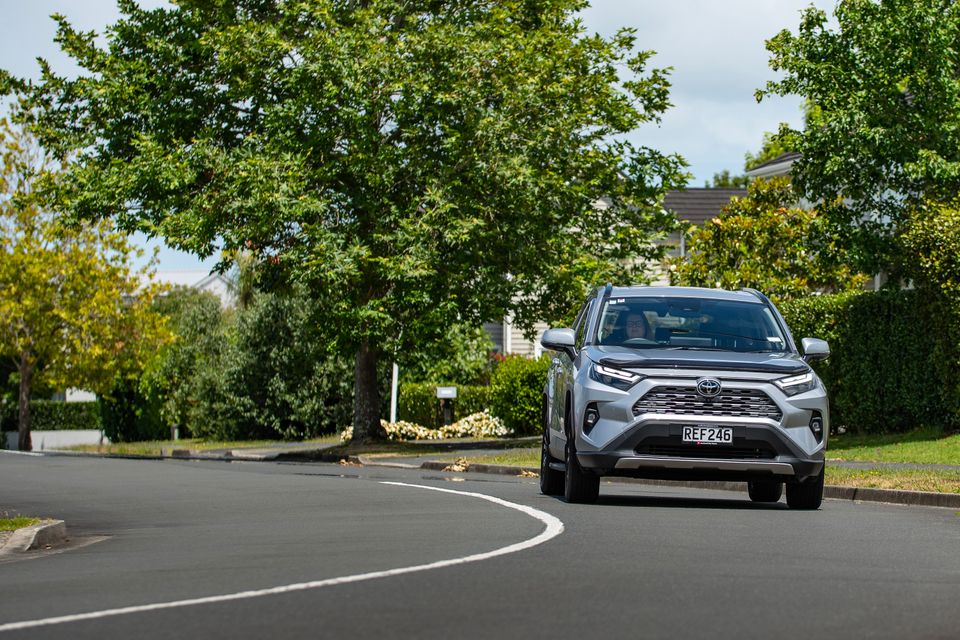
After driving a raft of high-tech EVs, hopping into a Toyota RAV4 is a palette cleanser. In true Toyota fashion the focus is clearly on ease of use, comfort, and no surprises.
The RAV4’s strongest attribute when it comes to how it drives is the ease in which anyone can achieve — and sometimes eclipse — Toyota’s claimed fuel economy figures. In our recent drive of the platform, we saw 5.0L/100km indicated on the instrumentation. In previous drives, I’ve personally achieved between 4.5–4.8L/100km. These figures remain the best in the segment, and can only be beaten by plug-in hybrids.
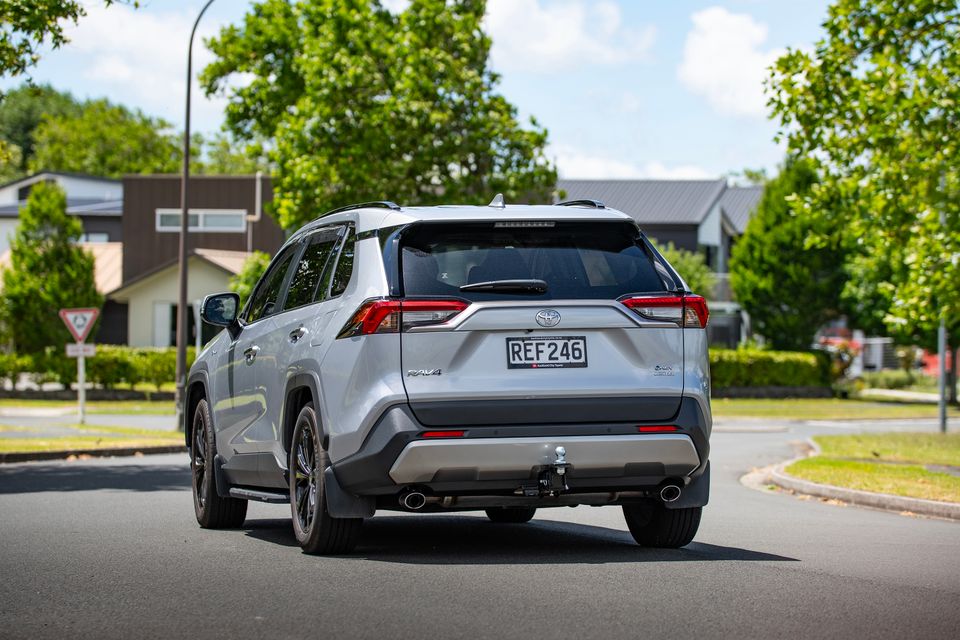
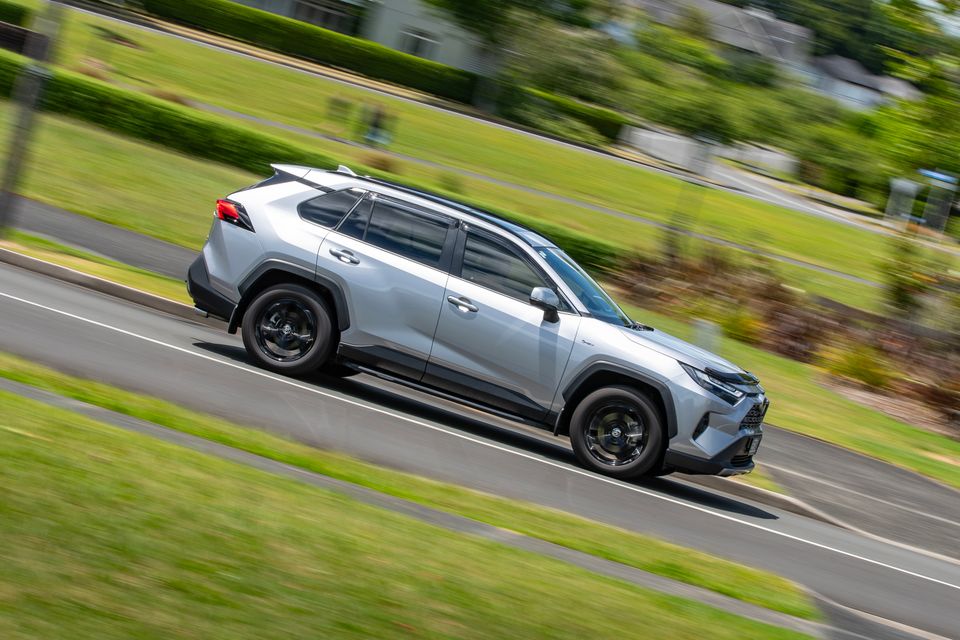
Out and about, the RAV4 is a largely refined and anonymous cruiser. At operating speeds, its petrol engine idles quietly in the background, happily letting the electric motor deal with most of the propulsion. Its ride quality is well managed, perhaps not quite as soft as some other SUVs but effective when it comes to ironing out surfaces changes and speed bumps. There’s very little unwanted rebound, and not a lot of bodyroll either.
One of the popular model’s shortcomings is its performance. Whilst the 2.5-litre is as quick as it needs to be for most customers, it’s admittedly not a patch on plug-in hybrid rivals like the Haval H6 and Chery Tiggo 7 when it comes to outright poke. One interesting observation, too, is that it’s actually quite a raucous engine by today’s hybrid standards. Whether you’re giving the throttle a bit of a stab or the car has opted to favour the petrol engine to help charge the engine, the 2.5 can be a little bit droning.
Interestingly, I don’t recall having this observation when I first drove the fifth-gen RAV4 Hybrid several years ago. I can only assume that this is in part because the likes of the Kia Sportage HEV have moved the game on when it comes to sound refinement, whilst PHEV rivals of course don’t make any engine noise at all the majority of the time.
The RAV4 is also not necessarily a handling powerhouse, either. The model is a famously average performer when it comes to the illustrious ‘moose test’ — something that I’ve always found perplexing given it’s based on the same very capable TNGA platform as the Corolla and Camry (albiet a different version) and its weighty hybrid hardware should ensure a low centre of gravity.
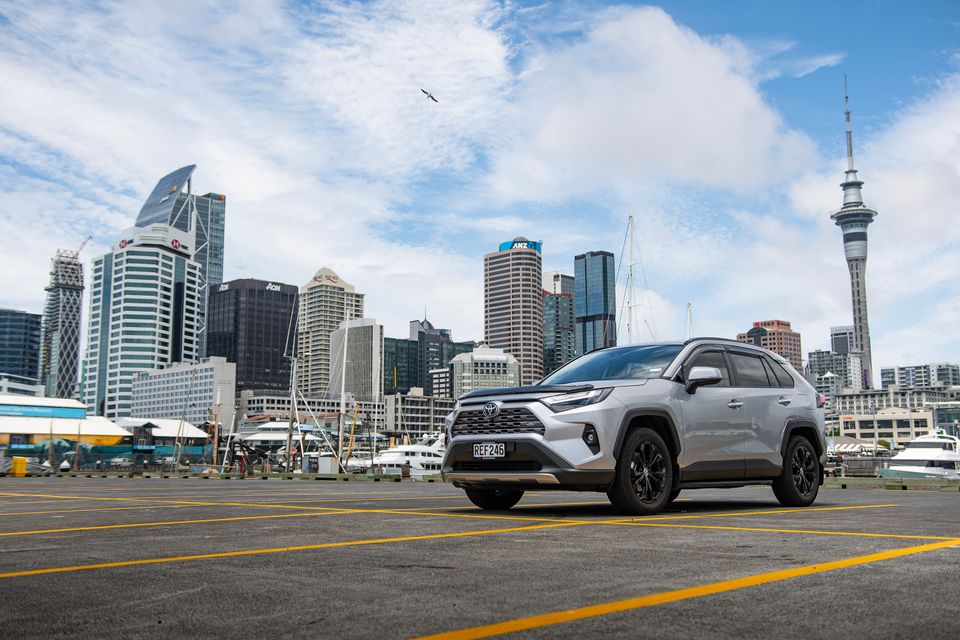
What do you get?
Thanks to its semi-recent update, the RAV4 is a fairly well optioned car for its age. I have particular praise for the model’s safety suite, which is standardised in full across every variant.
2026 Toyota RAV4 GX Hybrid AWD equipment highlights:
GXL Hybrid adds:
XSE Hybrid adds:
Limited Hybrid adds:
Adventure Hybrid adds:
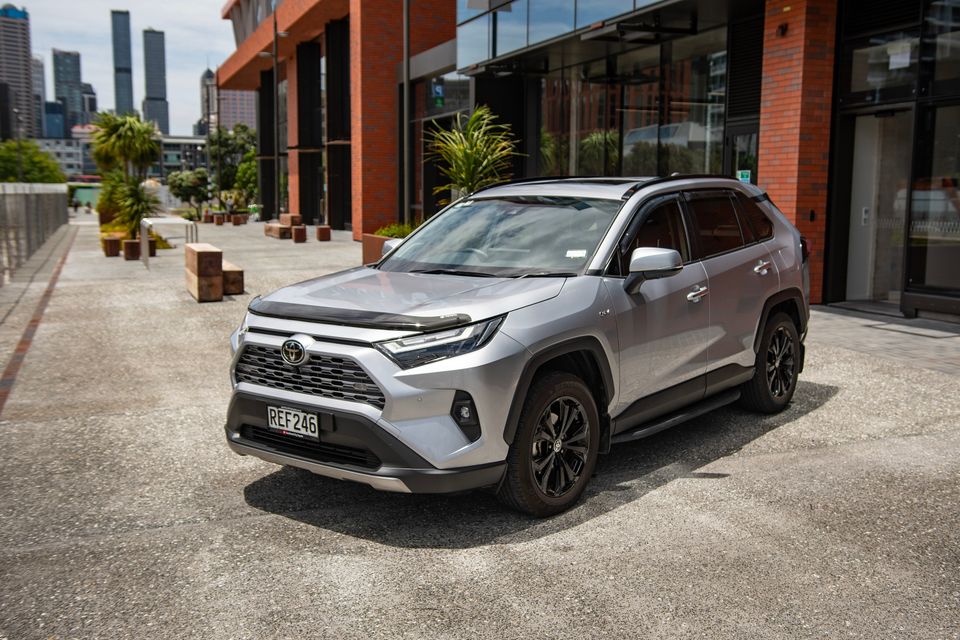
CarExpert’s take on the Toyota RAV4
A new RAV4 might be mere weeks from hitting the New Zealand market, but that isn’t to say that the outgoing fifth-generation model isn’t worth a look for anyone after fuss-free family motoring.
The RAV4’s ongoing sales success goes considerably deeper than rental fleet popularity, sharp pricing, and the reputation of the badge mounted on the grille. This is a mid-size SUV that is arguably just as competitive within its class today as it was when it first arrived six years ago — a class that has only become more crowded in recent years.
The long awaited arrival of a plug-in hybrid option combined with a welcomed styling refresh inside and out will help guide customers into the new sixth-gen RAV4. In all likelihood, it will be the best-selling new car on the market in 2026. But, there’s still plenty of life and reason to investigate its predecessor.
Where expert car reviews meet expert car buying – CarExpert gives you trusted advice, personalised service and real savings on your next new car.
Quickly see how this car stacks up against its competition. Select any benchmark to see more details.
2026
$50,990
2026
$54,990
2025
$55,990
2026
$61,990
2026
$62,990
2026
$65,990
2026
$66,990
Matthew Hansen co-founded motorsport outlet Velocity News, worked as a freelance photographer for various race teams, and was a specialist journalist for NZ Autocar Magazine and Driven at the NZ Herald. Most recently, he was Editor of Motoring at Stuff.co.nz.
Add CarExpert as a Preferred Source on Google so your search results prioritise writing by actual experts, not AI.
CarExpert
6 Days Ago

Dave Kavermann
11 Days Ago

Matthew Hansen
11 Days Ago
Matthew Hansen
11 Days Ago

Damion Smy
11 Days Ago
Dave Kavermann
13 Days Ago
Add CarExpert as a Preferred Source on Google so your search results prioritise writing by actual experts, not AI.
† Displayed prices exclude on-road costs such as delivery charges, registration fees, number plates, insurance and applicable road taxes. These prices are subject to change without notice and may not reflect current market pricing or dealer offers.
 Automotive Vehicle Spec Data & 4K images Powered by JATO Dynamics Ltd