

 Showroom
 Car Chooser
 Compare
 Car Specifications

CarExpert
CarExpert Choice Awards: Best Luxury Small Car
This Choice Awards category recognises premium small cars that offer the perfect blend of city-friendly size and luxury refinement and appointments.
3 Days Ago
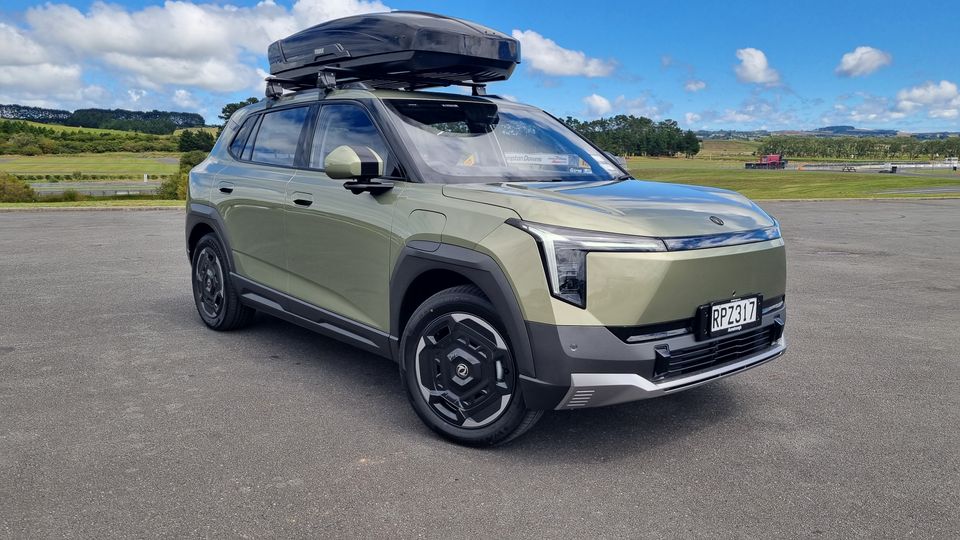
Just another SUV? Not quite, there’s more to the Dongfeng Vigo than a high roofline and aggressive pricing.
Where expert car reviews meet expert car buying – CarExpert gives you trusted advice, personalised service and real savings on your next new car.
Surprise, it’s another new Chinese electric SUV.
But please, don’t click away just yet. There’s a lot more going on with the Dongfeng Vigo than just a high roofline and aggressive pricing.
The Vigo is a small (Dongfeng would say ‘compact’) SUV so it now joins one of the most competitive new-car segments in the country. Launched alongside the 007 sedan, Dongfeng now has three models in the New Zealand market, yet the company isn’t just gearing up to compete with other electric vehicle brands, they want to attract internal combustion owners, too.
Dongfeng’s explicit aim in New Zealand is to achieve “true ICE/EV parity”, offering vehicles that can go toe-to-toe with electric or petrol vehicles at the same price point. The Vigo is now their core volume product in that fight, slotted in between the urban-focused Box, launched in late 2025, and 007 sedan.
At $37,990 + on-road costs and offering 340km of range, the Vigo undercuts everything its size in the EV market and becomes the cheapest way to get into a brand new electric SUV here in New Zealand. There’s only one model at launch and they’ve packed it with all the features Dongfeng can offer.
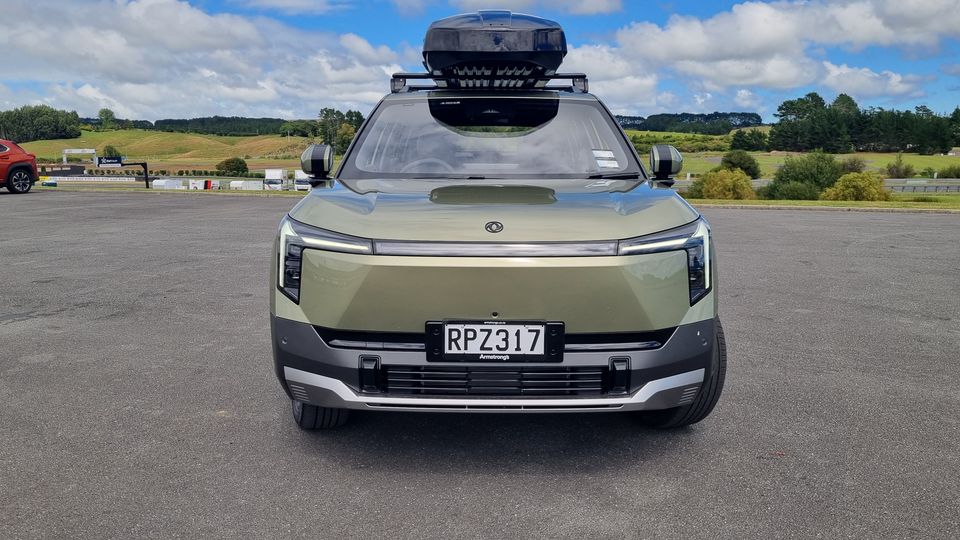
While the Box is aimed to tackle urban environments, the Vigo is designed to go further, offering slightly more range, a lot more space, and arguably, style.
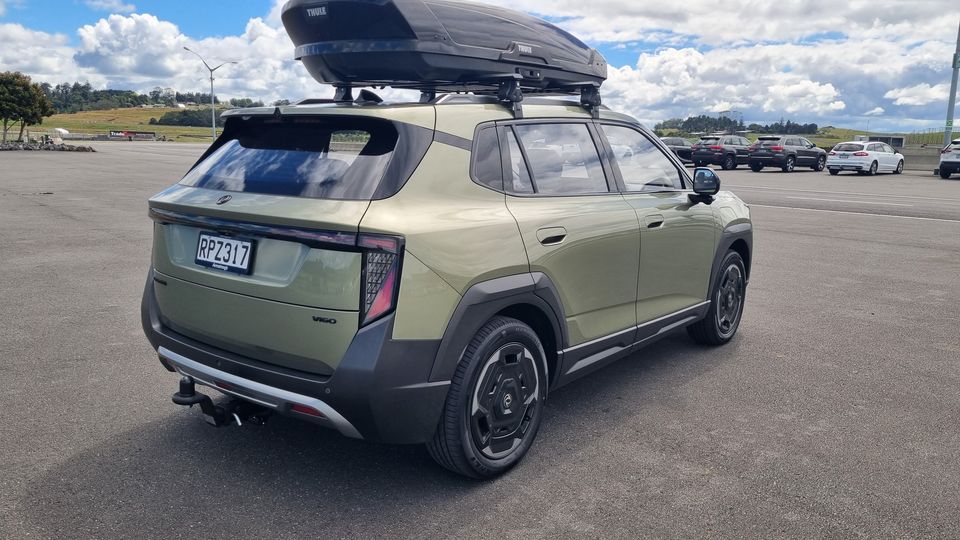
Despite its pricing, the Vigo doesn’t skimp on quirks and features. At 4.3 metres long and with a comparatively long wheelbase of 2.7 meters, the Vigo packs a lot of interior space for a small car. This space has been designed thoughtfully with livability and lifestyle in mind.
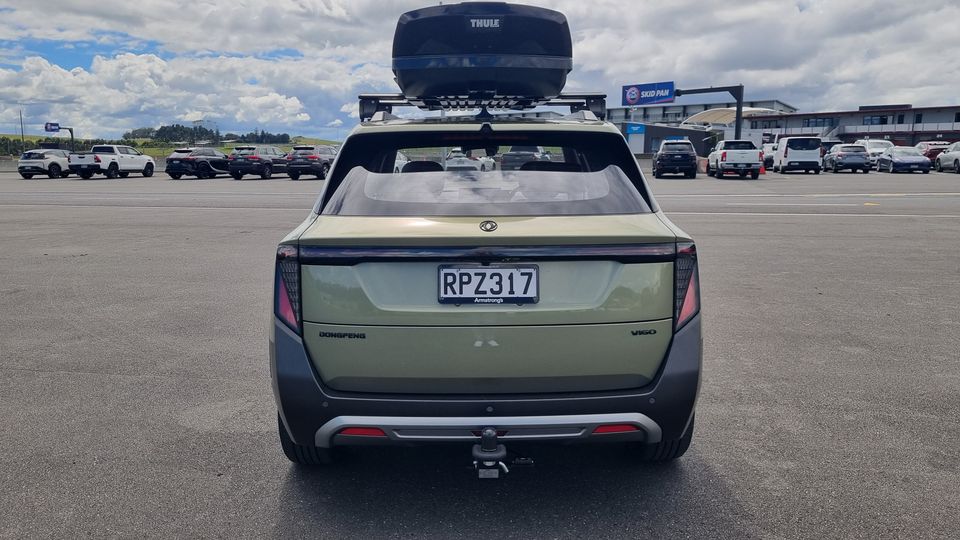
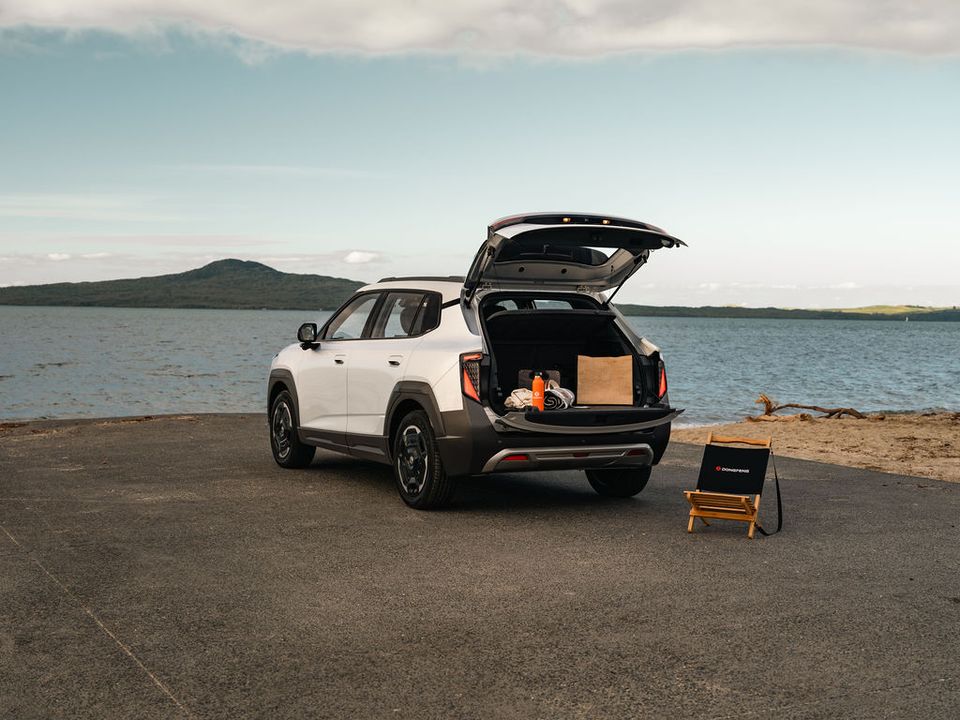
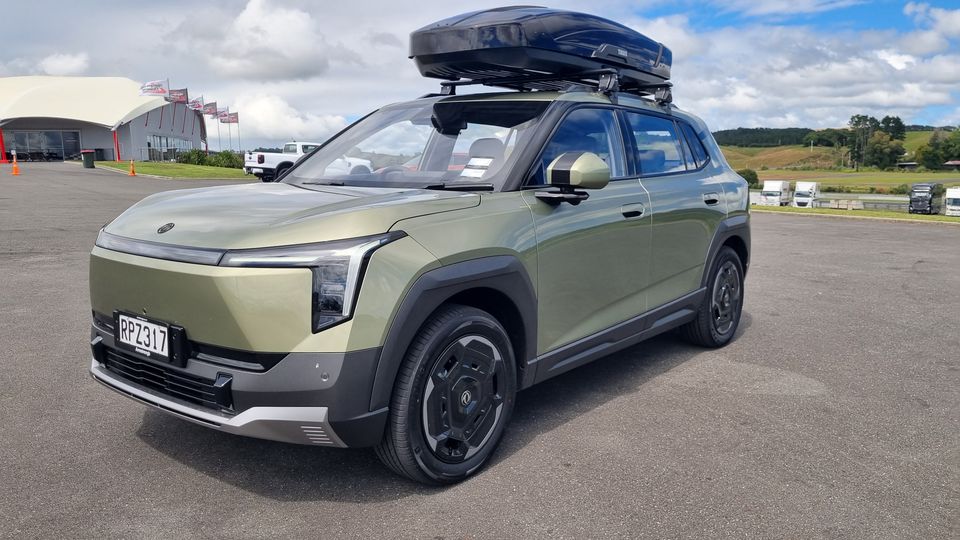
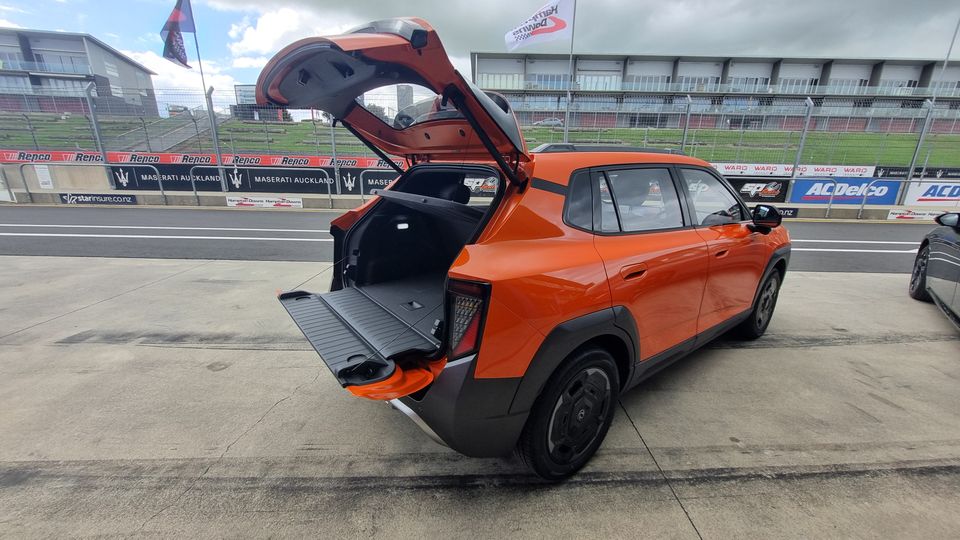
Unique to its class is a Range Rover-like split tailgate that you can actually use as a seat (150kg load rating), flat-fold rear seats to place a mattress in the back (more on that later) and a dedicated 'Camp Mode' for weekend adventures.
Is this just another cheap Chinese SUV? Or is there value beyond the price tag?
How much does the Dongfeng Vigo cost?
I let it slip early, but if you just skipped to this part - $37,990 + ORC.
What I haven’t said is that’s introductory pricing until the end of April. Until then, a limited number of early customers will also get a free panoramic sunroof upgrade valued at $1500. True retail is $39,990. As far as introductory pricing goes, that’s as aggressive as it gets in 2026.
In this class, the closest competitor to the Vigo is the BYD Atto 2 that’s priced at $39,990. The two models are nearly identical in terms of length and width, while the Atto 2 stands 21mm taller. The claimed range of the two models is also within 5km of each other.
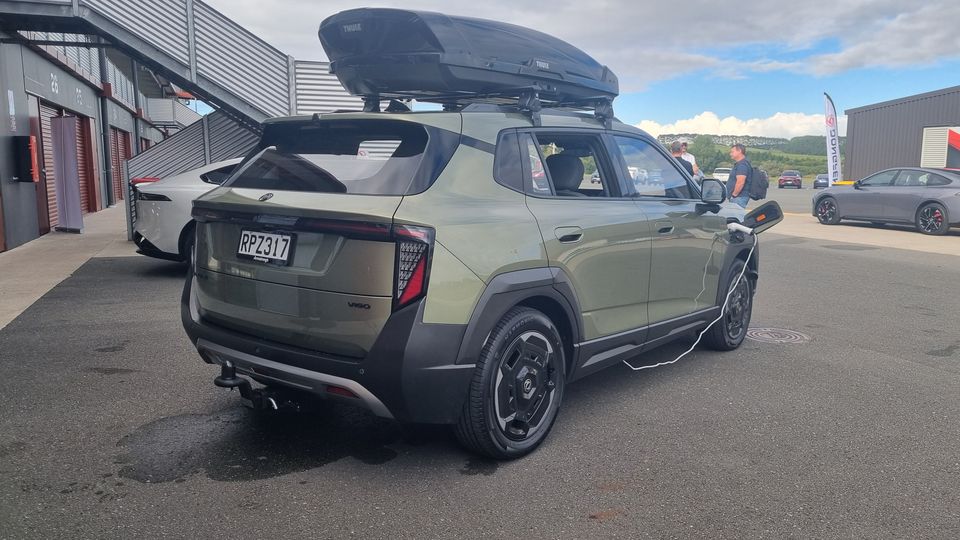
Six colours are available and every one except white is a $499 option. We’re told ‘Wild Green’ has been the most popular choice so far.
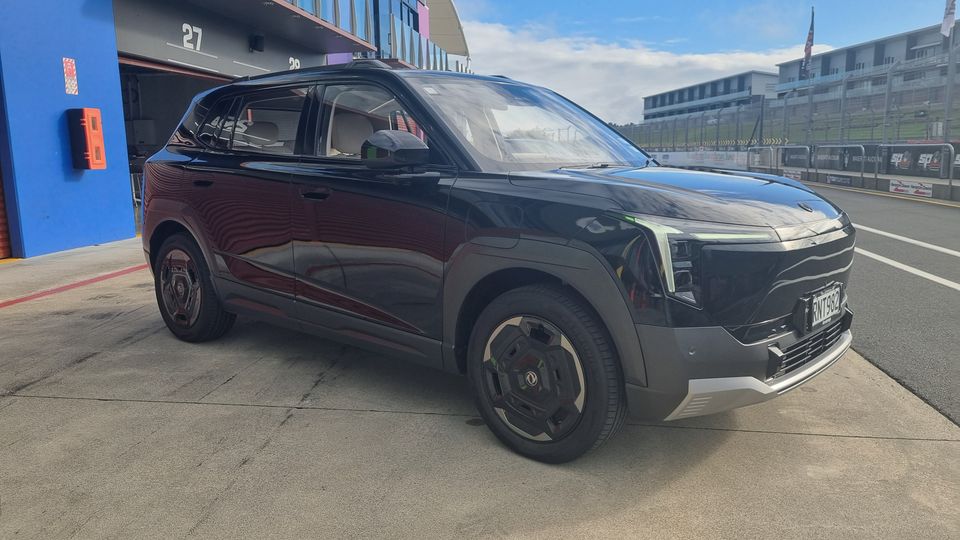
Finally, I have to mention the Vigo accessory list which is the most interesting I’ve seen in awhile. There’s the usual boot mat, panoramic roof shade and eclectic tailgate options you might expect. But if you’re a fan of the outdoors, you can also opt for a roof rack ($560), roof box (price TBC), edging awning ($250) and a mattress ($440).
Why would you opt for a factory mattress? Because the Vigo has a first-in-class dedicated ‘Camp Mode’. The idea being you fold the second row flat, install the mattress and hey presto, you’ve just set up camp.
Dongfeng says Camp Mode optimises energy use while stationary, allows the car to maintain a constant temperature while you sleep, power appliances and provide continuous power when you lock and leave the vehicle.
There’s also an external speaker hidden behind the front bumper to play music in camp. It won't challenge your wheeled party speaker in terms of quality but it is loud enough to fill a camp space … or annoy your camp neighbours. This feature doesn’t work on the move, so you can’t use it to blast messages at fellow motorists on your commute. Maybe in the next update?
What is the Dongfeng Vigo like inside?
In a word, minimalist.
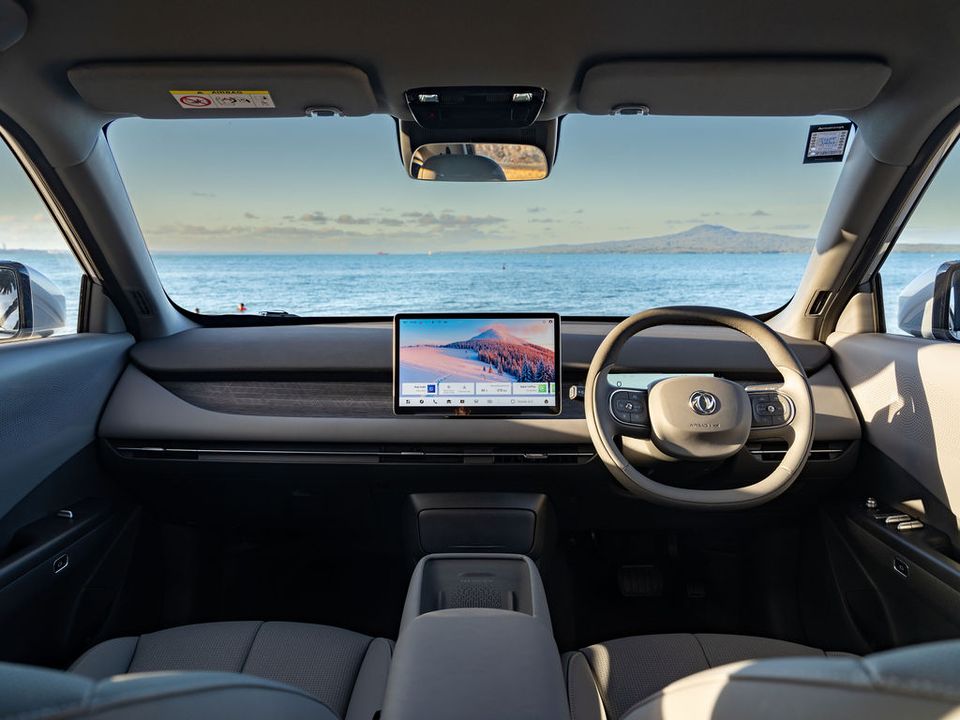
Like many other Chinese brands, there is a total lack of buttons on the dashboard, which itself has been carved out to create even more space and a sense of openness in the front row.
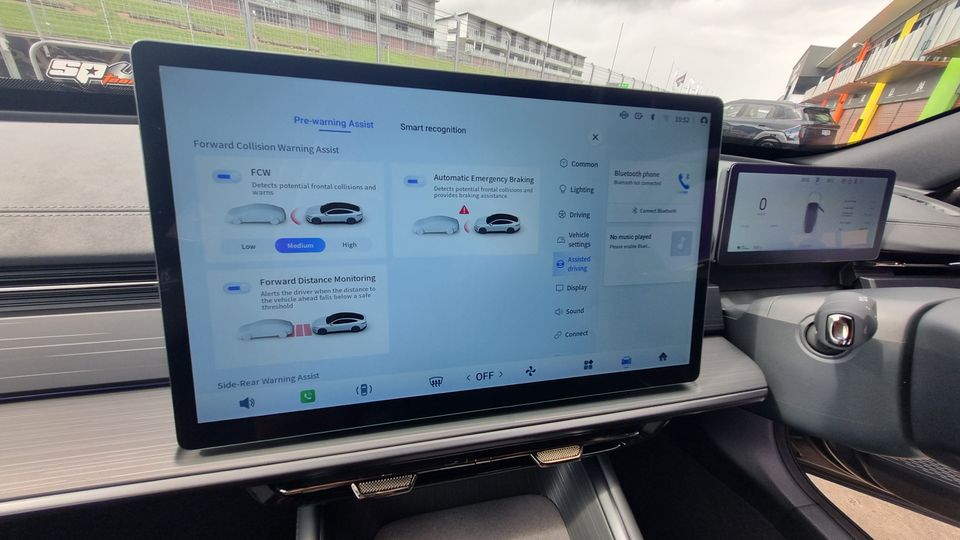
Controls for the HVAC and hazard lights have all been placed into the 12.8-inch infotainment screen. The only physical buttons you’ll find are on the steering wheel, and traditional window, door lock and mirror adjustments on the doors.
Wireless Apple CarPlay is standard, however Android Auto is a $390 optional extra. According to Dongfeng, this requires extra software and a physical adapter. They’re working on a fix for this but there’s no timeline on its arrival. Both can still benefit from the 50W wireless and ventilated phone charger on the centre console.
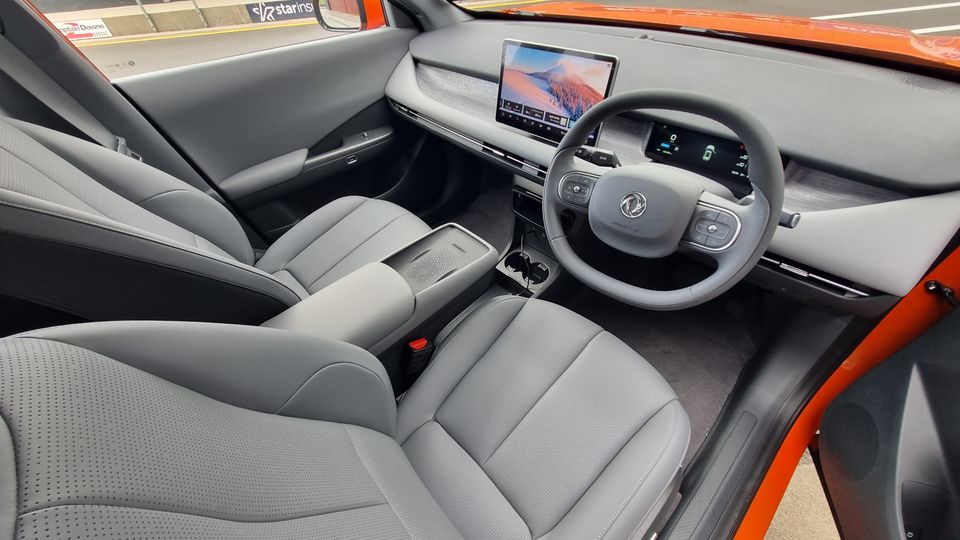
Thankfully the infotainment screen is very responsive and in our short time with the Vigo, logically laid out and easy to navigate through menus, fine tuning drive modes (there’s also a quick select button on the steering wheel), cabin temperature and the heated/ventilated seats.
Speaking of which, in the cabin Dongfeng have worked hard to offer a premium interior at a competitive price, and on first appearances they’ve achieved it. The leatherette upholstery feels expensive and wraps the seats, most of the door cards and even half the dashboard.
All Vigos will come with a grey and black leatherette interior as standard, but those that opt for ‘Cyber Black’ paint will be able to choose a beige and black colourway as an option.
The 6-way electric adjustment front seats don’t offer a lot in the way of lateral support but are comfortable to sit in. Along with heating and ventilation in the front row, the driver seat has memory functions.
There’s also a good amount of storage space up front. The main centre console under the armrest is deep and pairs with another storage area inbuilt to the dashboard where AC buttons would be. Below that are a pair of cupholders, potentially a bit too close to the USB-C and 12v port, and the door bins are big enough for a large water bottle.
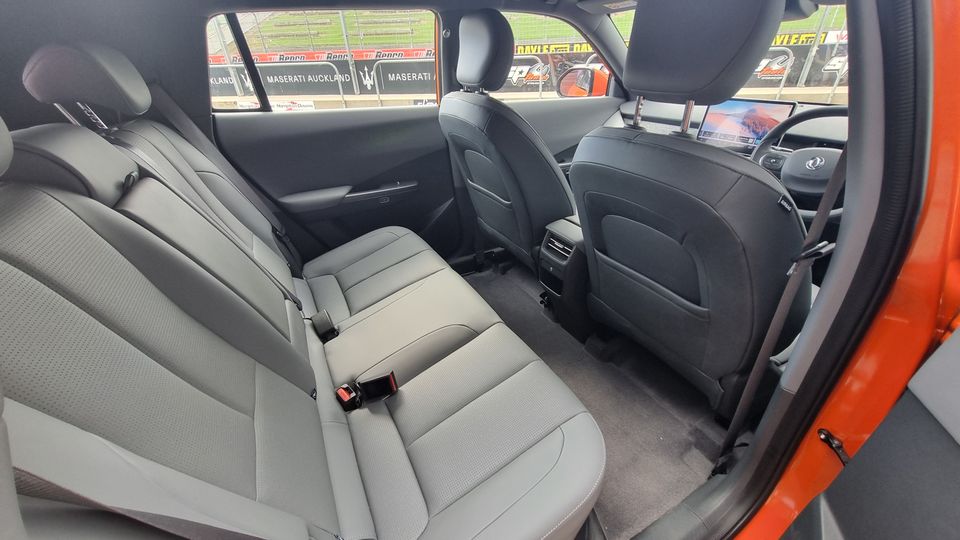
In the rear row there is ample leg and headroom for a small SUV. Two fully grown adults will have no problem getting comfortable with centre armrests, rear ventilation outlets and USB-C ports.
The boot might be Vigo's biggest selling point. The aforementioned split tailgate is a nice touch. It’s manual operated, but can be electrically powered for $1690. With a 150kg load rating, you can use it as your next picnic stop. There are even two indents in the corners to place drinks, but I wouldn’t trust them to hold your cup as you get up.
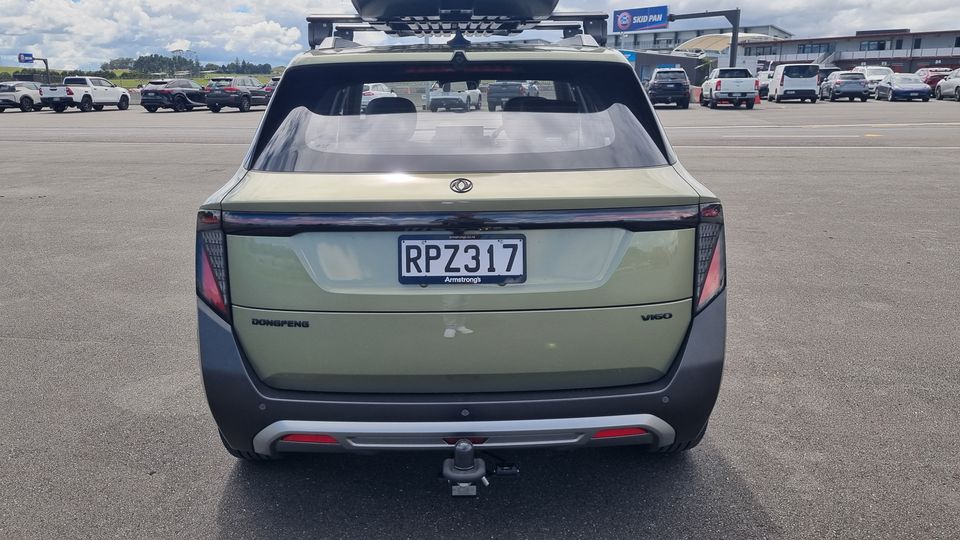
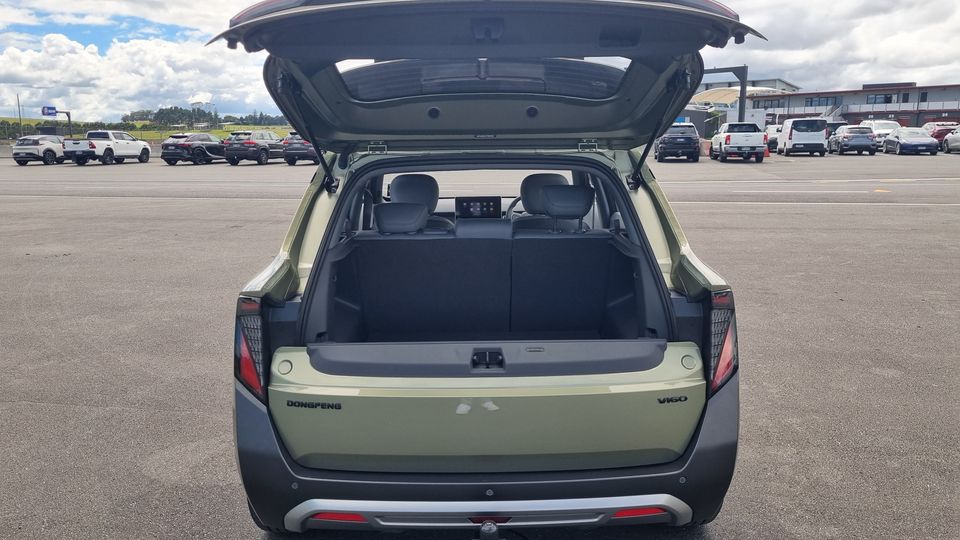
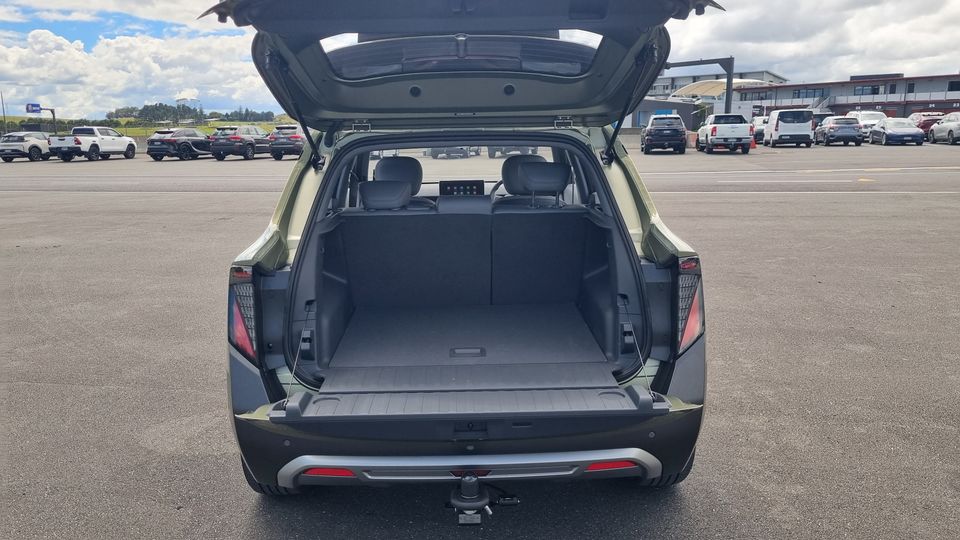
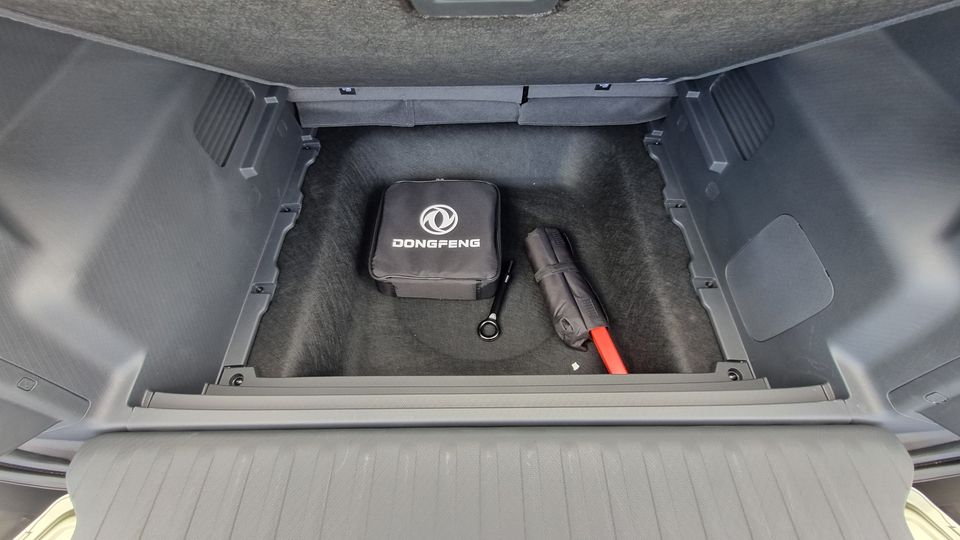
Once open, you’ll find 500-litres of boot space, but you don’t get it all in one hit. The top layer is 313-litres, open the floor and you’ll find 115-litres and yes, there’s another compartment underneath with the final 72-litres.
If you fold the rear row flat, the space grows to 1040 litres. Seemingly enough to camp in. I can’t confirm if we’ll test this for ourselves down the line.
What’s under the bonnet?
A handy frunk. Dongfeng won’t say just how big it is, but it's certainly enough for charging cords and a few shopping bags.
Under that is a front-mounted electric motor sending drive to the front wheels. The motor can deliver 120kW of power and 230Nm of torque. 0–100km/h is taken care of in 7.8 seconds and the top speed is 150km/h.
There’s only one model in the range, for now at least, so the Vigo is only available in front-wheel drive. Energy is stored in a 51.87kWh lithium-iron phosphate battery that can provide 340km of range on the WLTP cycle.
The Vigo is capable of 167kW max DC charging that can recharge from 30%-80% in 18 minutes. Vehicle-to-load functions are also possible with an optional $440 extension cable.
How does the Dongfeng Vigo drive?
Our first experience in the Vigo was leaving the pitlane at Hampton Downs Raceway and things went better than expected.
Accelerating to 70km/h and performing an emergency stop before turn two on a greasy surface showed the Vigo has enough braking performance to support its 1572kg mass.
Out of the dipper we had the chance to open the gas properly. With 120kW/230Nm, its 0-100km/h time of 7.8 actually feels slightly conservative, but you won’t be winning many races. That said, power and torque delivery, even in Sport mode, is smooth and linear hinting at what this SUV is really geared towards.
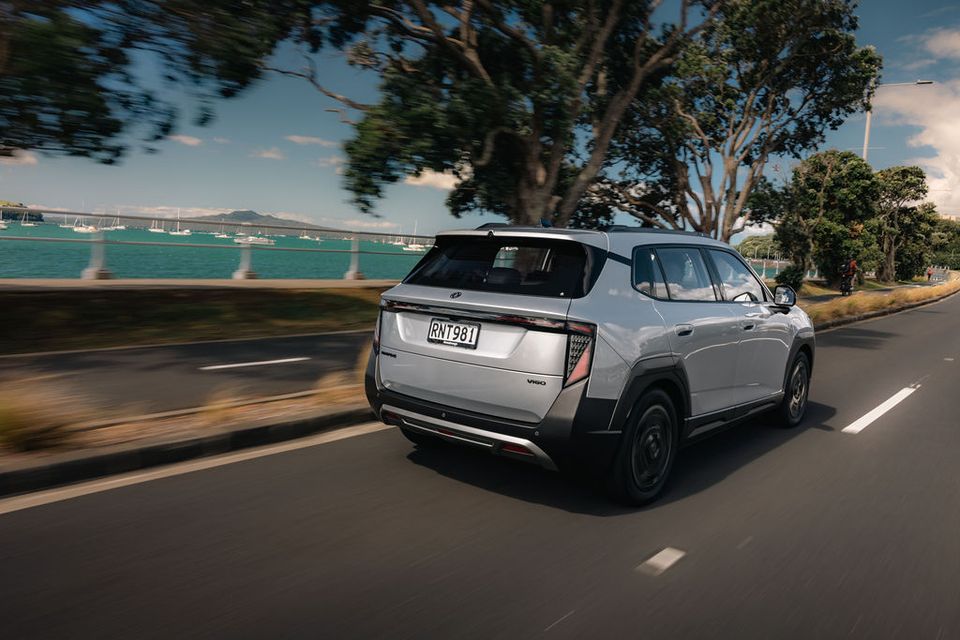
In a slalom test, the Vigo exhibited more roll than I expected and in the wet, the limit of front traction was found below 80km/h. My inputs were aggressive and track conditions were far from ideal so take this with a pinch of salt. We had drizzle during the test and the track was much oilier than conditions you’d expect to find on our roads.
However, leaving the circuit and heading out on the open road revealed more of the same. The sun had come out by this point but the front was still the limiting factor when driving hard.
The steering doesn’t offer a lot in the way of feedback but you can be accurate on turn in. The key is to get all your braking done before the apex, let the Vigo settle in the middle of the corner, and power out when you see the exit. Trail braking is not advised as the 215 section tyres don’t have the hold to support this.
But take your racer hat off, put the Vigo in its normal drive mode and I found it to be a perfectly capable cruiser on country roads. The rear suspension is a fairly simple torsion-beam so it can struggle to deal with rolling bumps found on our rural roads, but the McPherson Strut front feels much more comfortable.
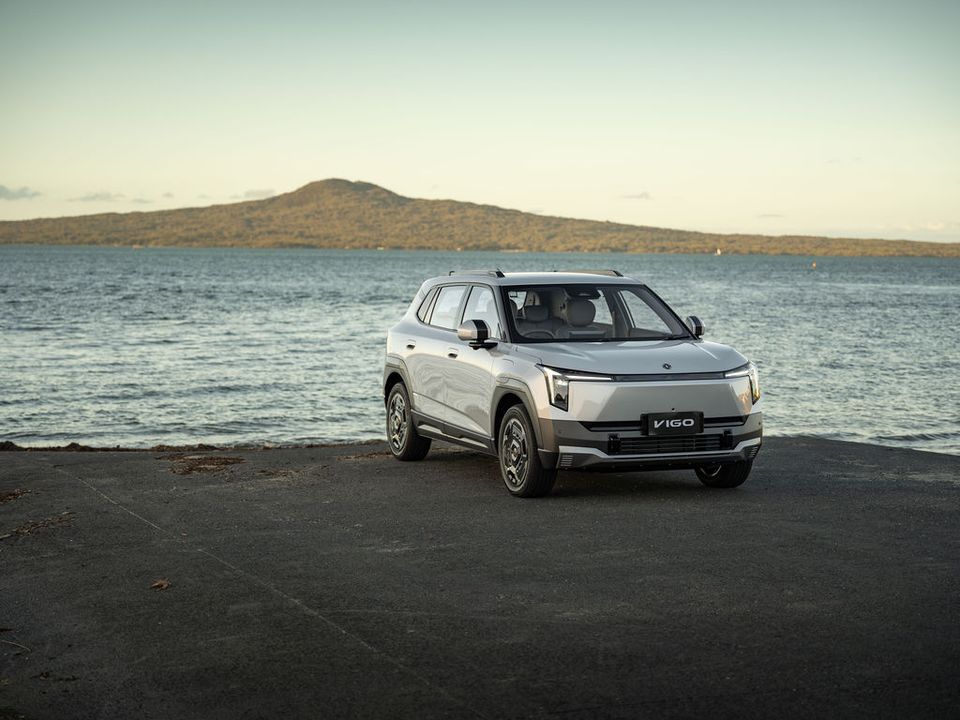
The suspension does feel on the softer side, so this is no sport SUV, however the ride is comfortable, even on uneven chipseal roads. It does feel floaty at times, so we’re going to have to test this more in the future.
Noise and vibration levels are consistent with the Vigo’s pricepoint. On those chipseal roads, noise in the cabin was noticeable, though during a quick motorway blast those sounds were dulled.
The Dongfeng Vigo arrives with a full suite of active safety systems and a 5-star Vehicle Safety Risk Rating (VSRR), ANCAP testing is due in the near future.
What do you get?
Only one Vigo model with all the goodies Dongfeng can manage for the price is available for now.
Dongfeng Vigo equipment highlights include:
CarExpert’s take on the Dongfeng Vigo
Unique-to-its-class features like the split tailgate, dedicated camp mode and external speaker make the Vigo stand out for more reasons than price alone.
Despite its small size, Dongfeng has done a fantastic job of creating a spacious and feature-packed cabin. It’s a comfortable place to be whether you're in the front or rear row, and the 500 litres of boot space, though split between three layers, is nothing to sniff at.
Where expert car reviews meet expert car buying – CarExpert gives you trusted advice, personalised service and real savings on your next new car.
As such, I wouldn’t describe the Vigo as just another econo box for our roads. Its packaging and features give it a character of its own. It also hits a new use case, we haven’t seen an EV this size geared for weekend adventures.
Font-wheel drive, a 51kWh battery and 340km of advertised range could limit just how far those adventures stretch, though this is a new kind of SUV for Kiwi buyers to push.
For now, I’ll reserve judgement on road manners and suspension tuning until we get the chance to test this thoroughly. Our experience on-track with the Vigo was a real test for a small SUV given the conditions. And our on-road time was limited and mixed.
My initial takeaway isn’t the price of the Vigo, it’s the small SUV’s capabilities.
New Zealand now has a small electric SUV that wants to go on adventures. On paper, it should fit the lifestyle of many Kiwis. With Vigos on dealership floors right now, we’ll find out quickly if the masses agree.
Where expert car reviews meet expert car buying – CarExpert gives you trusted advice, personalised service and real savings on your next new car.
Dave is a Kiwi motoring journalist with experience in motorcycle racing, new car sales, radio and communications.
Add CarExpert as a Preferred Source on Google so your search results prioritise writing by actual experts, not AI.
CarExpert
3 Days Ago

Dave Kavermann
3 Days Ago


Alborz Fallah
3 Days Ago
Dave Kavermann
3 Days Ago
Dave Kavermann
3 Days Ago

Matthew Hansen
4 Days Ago
Add CarExpert as a Preferred Source on Google so your search results prioritise writing by actual experts, not AI.
† Displayed prices exclude on-road costs such as delivery charges, registration fees, number plates, insurance and applicable road taxes. These prices are subject to change without notice and may not reflect current market pricing or dealer offers.
 Automotive Vehicle Spec Data & 4K images Powered by JATO Dynamics Ltd