


 Showroom
 Car Chooser
 Compare
 Car Specifications

CarExpert
2026 CarExpert Choice Awards: Best Affordable Mid-Size SUV
For many Kiwi families, the mid-size SUV is the ultimate ‘do everything’ vehicle. Here are what we think are the best options on sale today.
11 Hours Ago
The Ferrari 12Cilindri Manuale is a supercar you can't 'money shift' – but you can still stall it. Here's how.

Journalist
Journalist
Just a month after dividing opinion with the all-electric Ferrari Luce, the Italian marque has answered one of enthusiasts' longest-running demands by putting a gear lever and clutch pedal back into one of its flagship models.
Sort of.
The new Ferrari 12Cilindri Manuale is the Italian brand's first factory-built three-pedal model since the California. Only three gated-manual Californias were made before the option was quietly dropped after the 2012 model year.
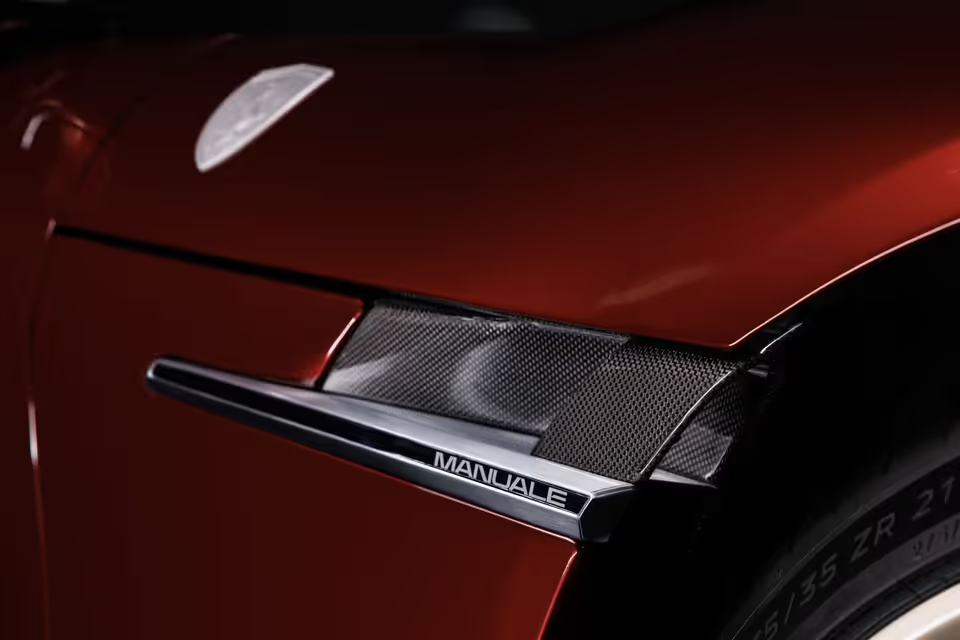
After 14 years of paddle-shift-only Ferraris, the manual has returned – albeit in a very different form.

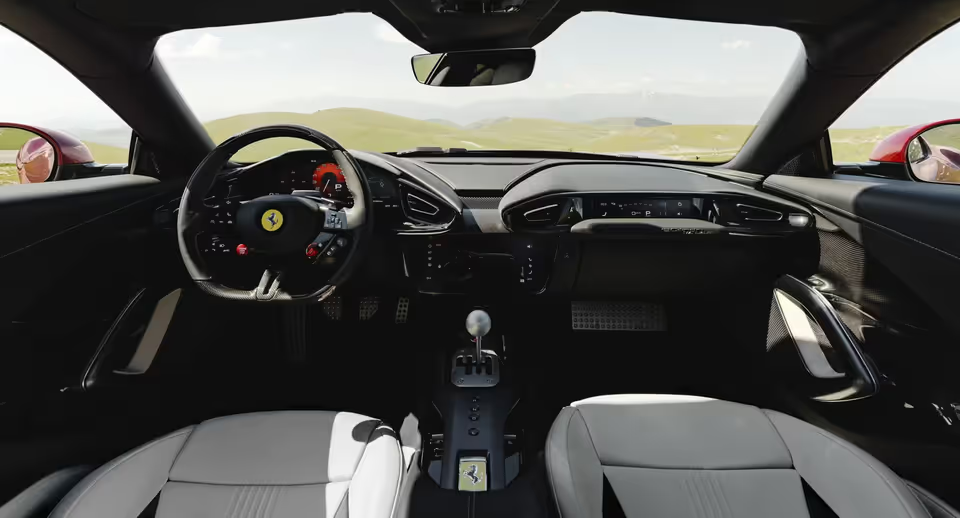
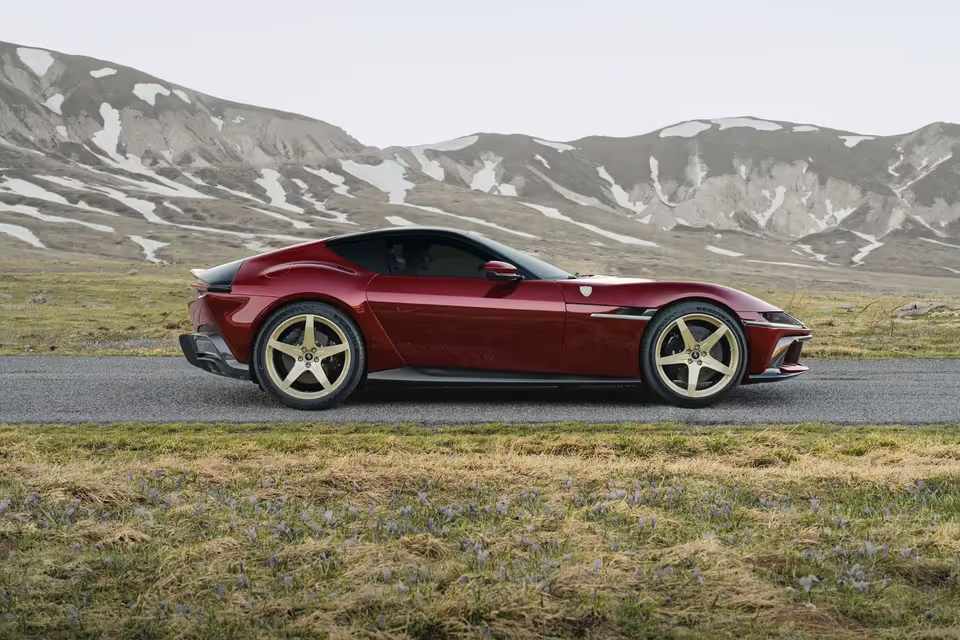
The 12Cilindri Manuale is limited to 1499 examples worldwide and priced from €590,000 (~NZ$1.2 million) in Europe. That's around NZ$500,000 more than the standard 12Cilindri, which starts from just over $700,000 in New Zealand.
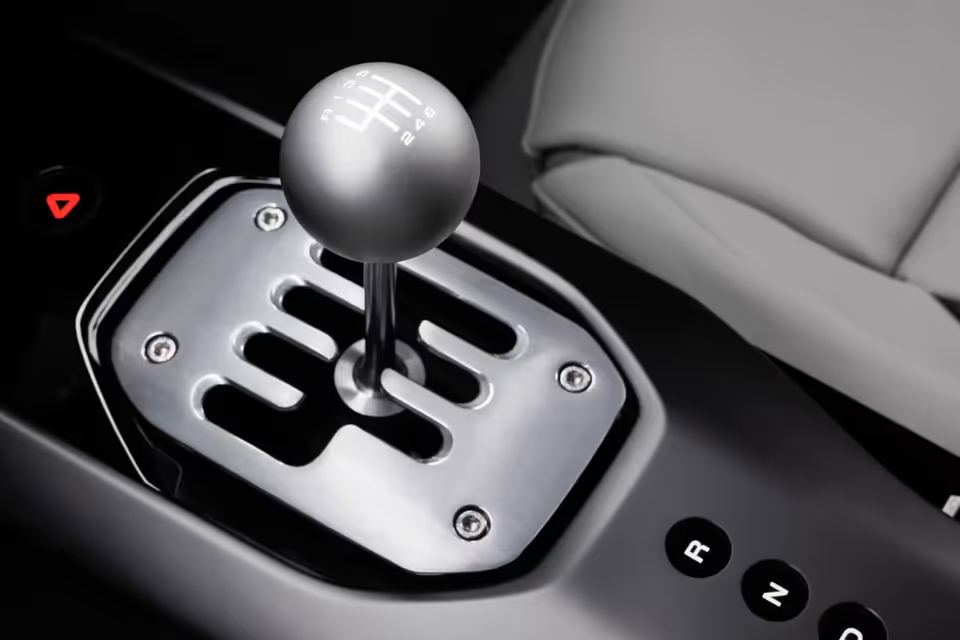
Rather than engineering a new H-pattern gearbox, Ferrari has created what it calls a 'Manuale By-Wire' system. It combines a traditional-looking gated gear lever and clutch pedal with the company's existing eight-speed dual-clutch automatic transmission.
The 619kW/678Nm naturally aspirated 6.5-litre V12 and gearbox are unchanged. Instead, Ferrari has focused on calibrating the electronic shifter and clutch to mimic the feel and operation of a conventional manual.
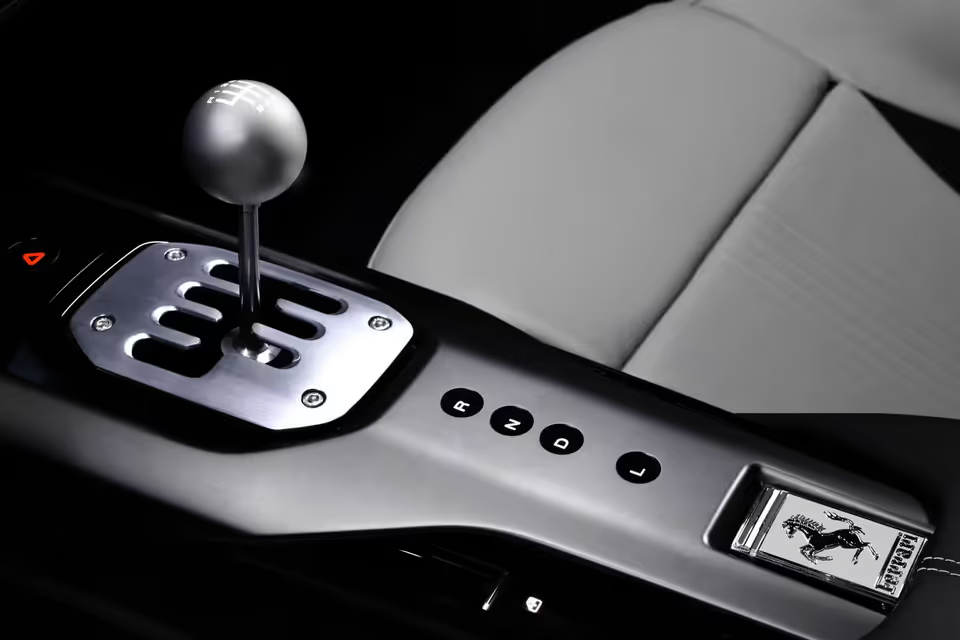
Unlike a conventional manual gearbox, there are no mechanical selector forks, selector rods or synchromesh connected directly to the gear lever. Likewise, the clutch pedal isn't physically linked to the clutch assembly.
Instead, both are electronic interfaces controlling software.
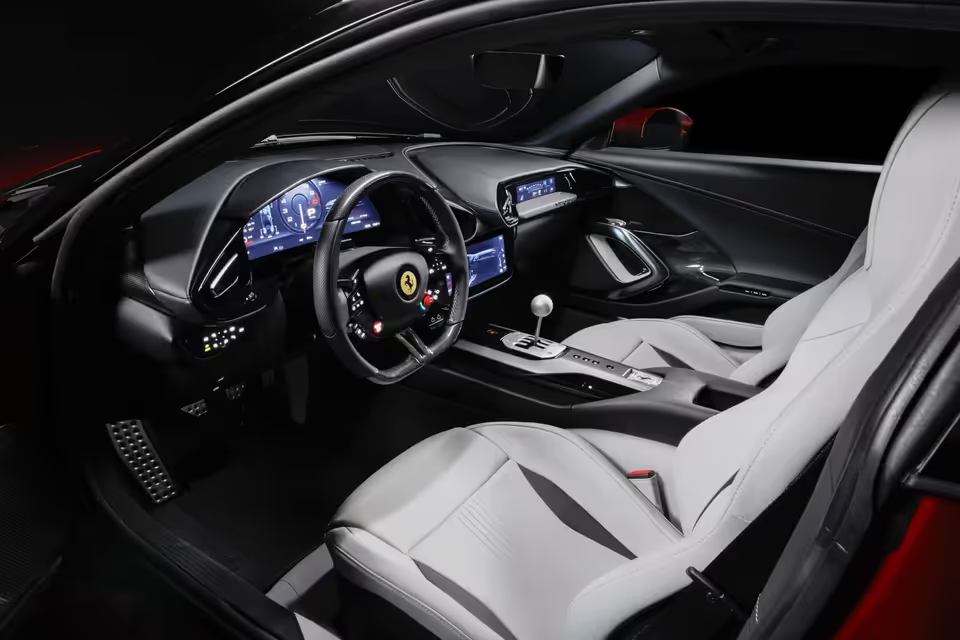
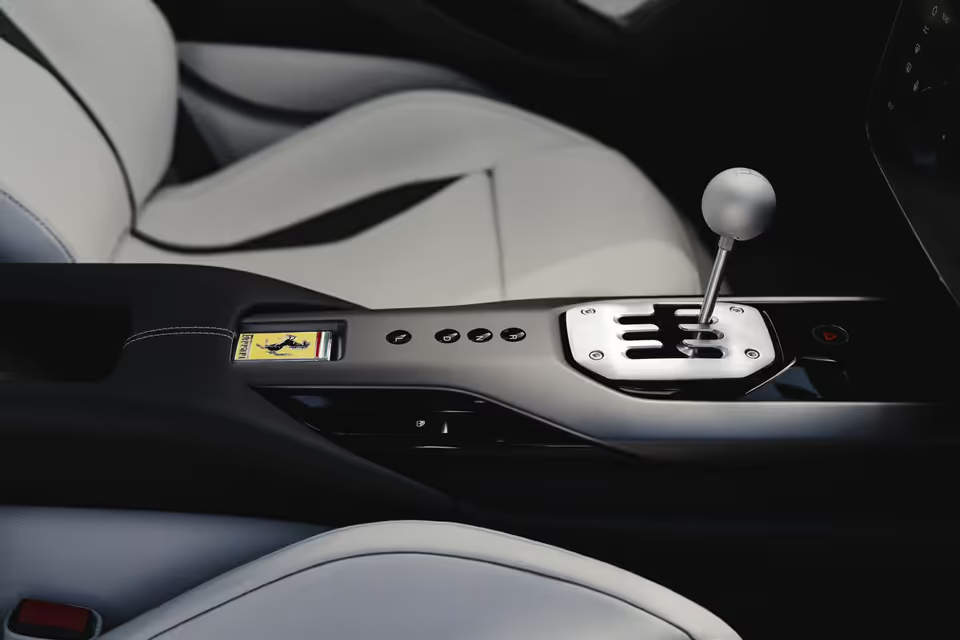
The gear lever and housing, machined from solid aluminium and steel, moves through a traditional gated six-speed pattern and uses a series of cams, springs, rollers and rotating drums to recreate the weight, resistance and tactile clicks of a manual box.
Ferrari says considerable effort even went into engineering the sounds the mechanism makes while shifting.
Internally, two Hall-effect angle sensors monitor the lever's position, converting every shift into an electronic command sent to the transmission control unit.
However, the biggest departure from tradition is arguably the clutch.
Rather than hydraulically operating a clutch release bearing, the pedal measures the driver's input using position sensors before sending a digital signal to the transmission control unit. Software then controls the dual-clutch gearbox's clutch packs.
Ferrari says the pedal reproduces the progressive resistance of a conventional clutch using its own arrangement of springs, cams, and rollers.
In other words, your left foot never directly controls the clutch – it simply tells the car how much clutch engagement you want.
So could you mis-shift – or worse, 'money shift' – a 12Cilindri Manuale?
According to Ferrari, no.
A push-pull solenoid physically locks the gear lever if the driver attempts a shift the transmission won't allow. For example, if the clutch pedal isn't depressed, the gear lever won't engage a new gear.
But Ferrari says incorrect pedal timing still has consequences.
Release the clutch too quickly and the system can deliberately produce jerky take-offs or even stall the engine, mimicking the behaviour of a conventional manual transmission.
Likewise, smooth shifts still depend on correctly managing the clutch, throttle and gear lever. Heel-and-toe downshifts are said to be supported.
However, because the transmission itself is unchanged, drivers can switch the Ferrari 12Cilindri Manuale into Auto mode if they tire of shifting themselves, allowing it to operate as a conventional eight-speed dual-clutch automatic.
That raises the inevitable question: is this actually a manual?
Purists will argue no. After all, the gear lever and clutch pedal aren't mechanically connected
But dismissing it outright also misses the point. Ferrari isn't claiming to have revived the traditional manual gearbox. Instead, it's trying to recreate the experience enthusiasts miss, while eliminating the drawbacks it says led to the manual's demise in the first place.
Whether that's enough to win over purists will ultimately come down to one thing: whether it feels like the real deal from behind the wheel.
Dave is a Kiwi motoring journalist with experience in motorcycle racing, new car sales, radio and communications.
CarExpert
11 Hours Ago

Dave Kavermann
1 Day Ago
Dave Kavermann
1 Day Ago
Dave Kavermann
1 Day Ago

Dave Kavermann
1 Day Ago

Matthew Hansen
10 Days Ago
Add CarExpert as a Preferred Source on Google so your search results prioritise writing by actual experts, not AI.