

 Showroom
 Car Chooser
 Compare
 Car Specifications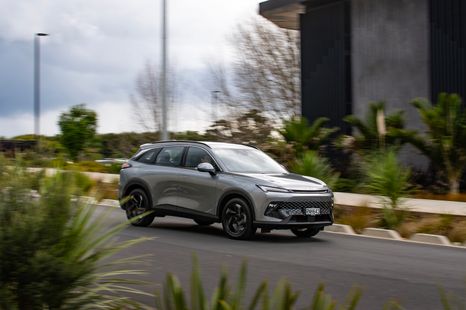

Matthew Hansen
2026 BAIC X55 review
The BAIC X55 is one of the cheapest family SUVs on the market. Is there a catch?
11 Minutes Ago
The BAIC X55 is one of the cheapest family SUVs on the market. Is there a catch?
Where expert car reviews meet expert car buying – CarExpert gives you trusted advice, personalised service and real savings on your next new car.
We all love getting a good deal. And in the world of motoring, the BAIC X55 might be the best deal going right now.
Founded 16 years ago, BAIC — or ‘Beijing Automotive Industry Corporation’ — produces 1.7 million cars a year. It also has joint ventures with the likes of Hyundai and Mercedes-Benz, and sibling brand ArcFox arrives later this month. It’s been operating in New Zealand for most of 2026, keen to take advantage of the car industry’s current momentum, as well as the upswing in interest for affordable cars from China.
We recently reviewed the BAIC B30 — a chunkily styled mid-size SUV with an available hybrid and all-wheel drive. And, we quite liked it. It wasn’t without its faults, but nevertheless impressed us with its smooth drive and practicality.
The X55 is similar to the B30 in some respects. It’s smaller, but can also claim to be a mid-size SUV, and it’s generously loaded up with equipment. But, the X55 is also quite different to the B30. Its rounder shape draws tighter comparisons with other mid-size SUVs. More to the point, it swerves the hybrid conversation entirely. Yes, it’s one of the only crossovers of its size offered here without any form of electrification under the bonnet.
There’s another thing, too. And it’s the X55’s big kicker … the price.
In the not-so-distant past, if you had 40 grand in your pocket you could afford all manner of mid-size SUVs in their base trims. That’s sadly not the case today, with most heavy hitters starting in the $45,000–$50,000 bracket. The recent influx of contenders from China means there’s now a bunch of players in this space. And, the X55 is amongst the very cheapest.
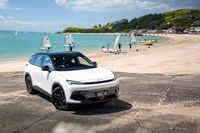
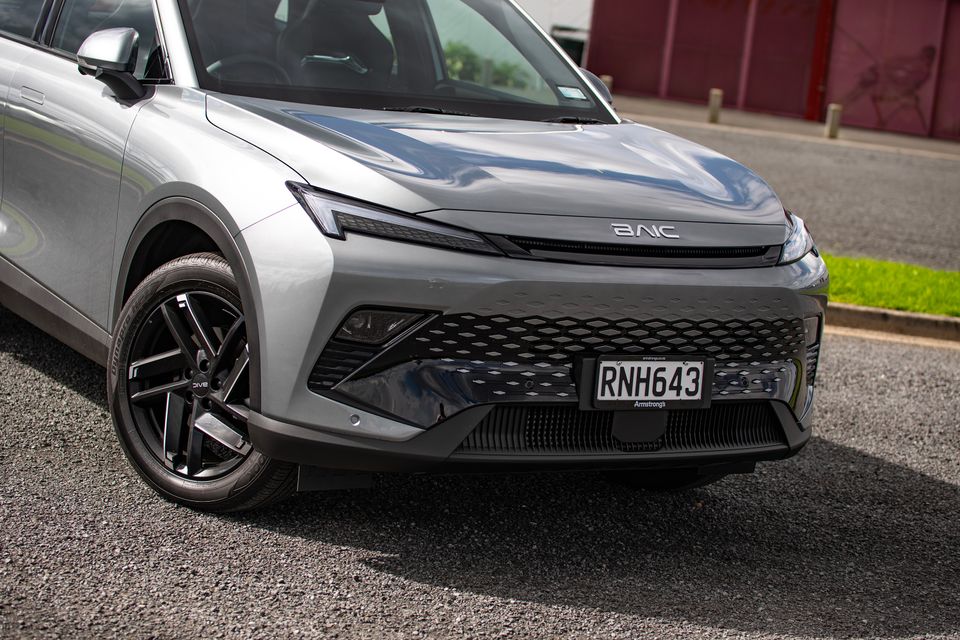
The X55 was introduced earlier this year in a single trim level, the Premium [pictured], with an introductory price of $34,990 plus on-road costs and a regular price of $37,990. The brand recently introduced the Premium Plus, which currently sports a $35,990 introductory price. It will essentially replace the Premium as the X55’s sole variant as initial stock sells out.
Model | Introductory price not including on-road costs | Regular price not including on-road costs |
|---|---|---|
BAIC X55 Premium | $34,990 | $37,990 |
BAIC X55 Premium Plus | $35,990 | $37,990 |
The X55 comes with a 7-year unlimited kilometre warranty with roadside assist, with service intervals set every 12 months or 10,000km.
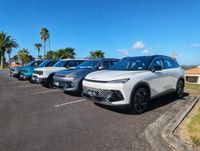
For a brief period, the X55 was the cheapest mid-size SUV in class but that recently came to an end with Chery knocking a few grand off the price of its most affordable Tiggo 7 variant, which is now priced from a faintly believable $32,990. That’s Toyota RAV4 size and practicality for less than a base model Yaris.
The bargain priced X55 and the Tiggo 7 are obviously rivals for the likes of the RAV4, Kia Sportage, and Mazda CX-5. But in reality, given their price, they’re much more likely to be seen as direct rivals for the smaller but similarly priced Mitsubishi ASX and Kia Seltos. The idea being that those shopping in this weight division are going to see the value in being able to hop into a much bigger and better equipped car for about the same money.
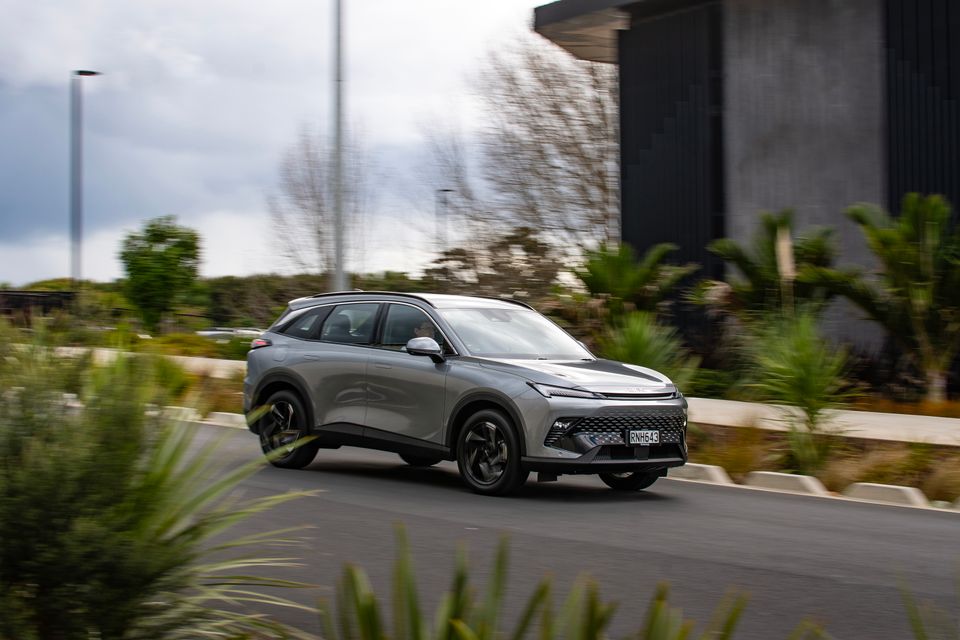
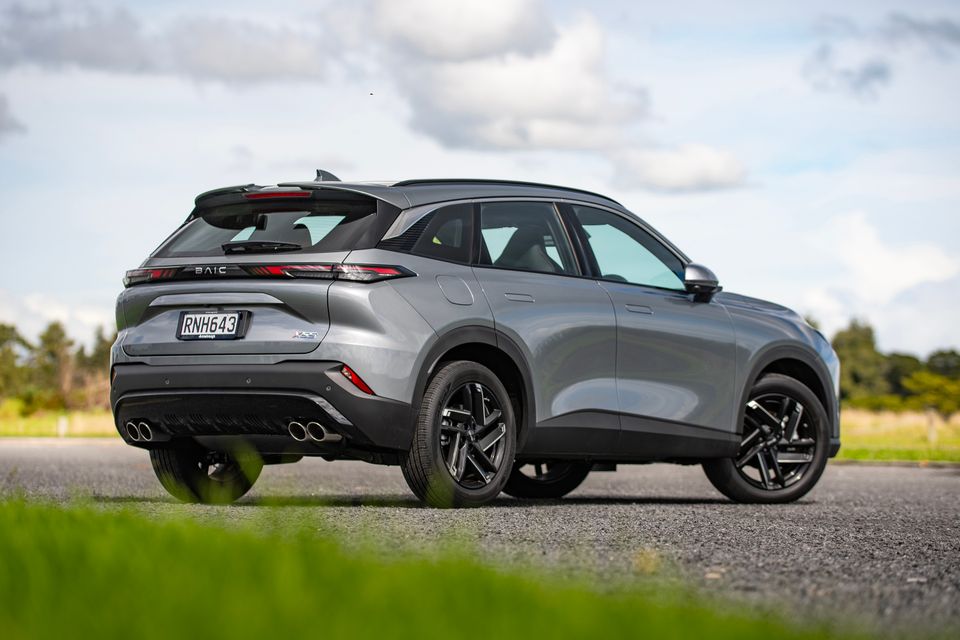
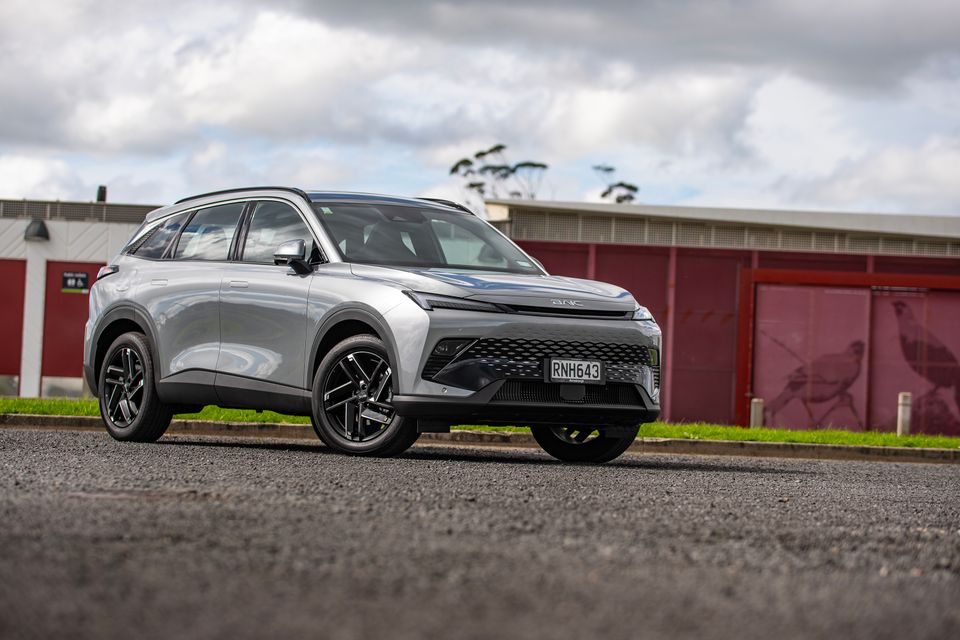
The X55’s soft, rounded edges make it look smaller in photos than it actually is. It’s 20mm longer and 6mm wider than the new RAV4, which inevitably means it packs a pretty solid amount of practicality inside.
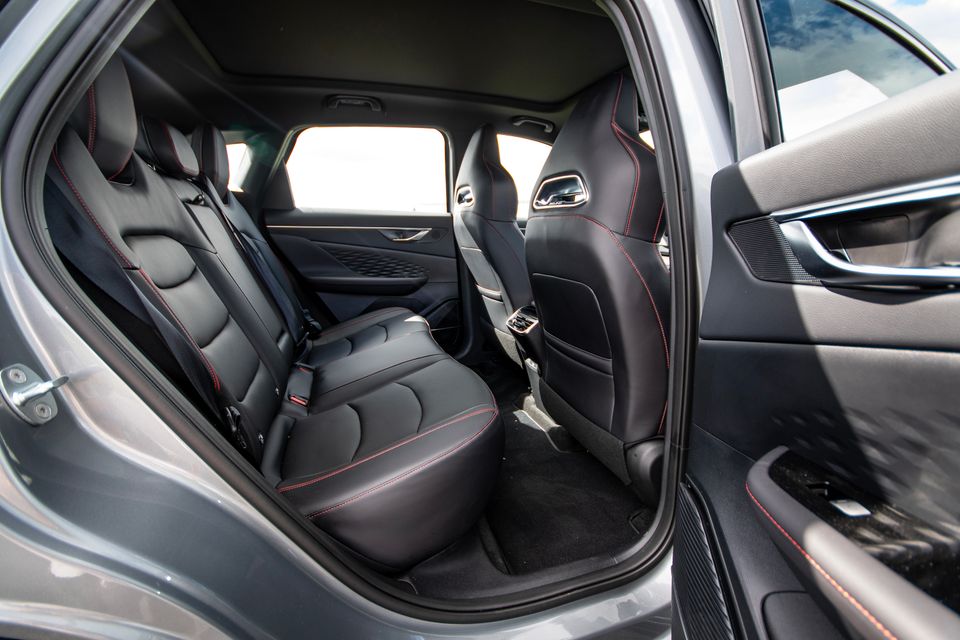
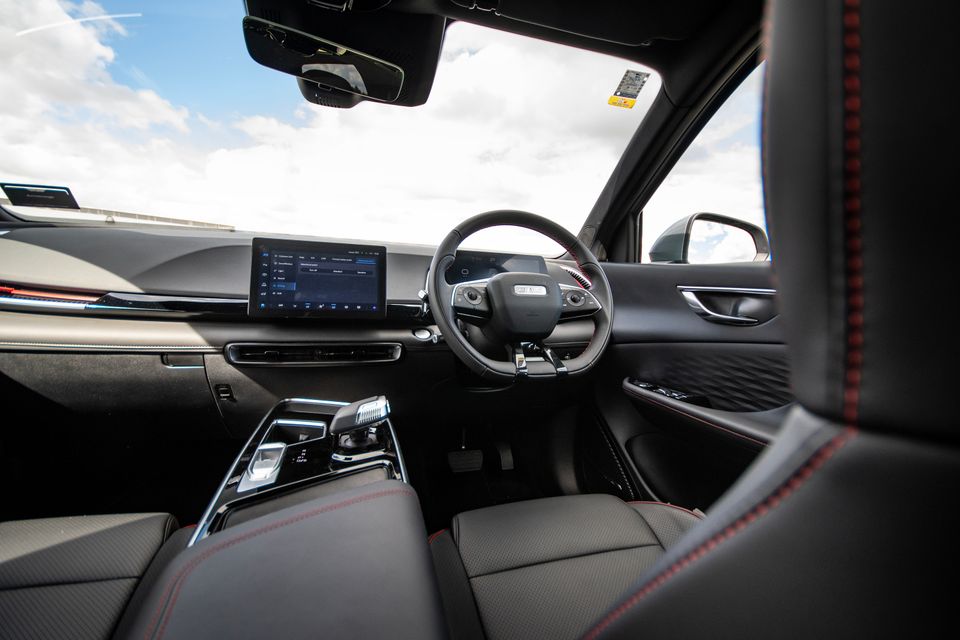
Cabin space is amongst its strongest suits, with a good amount of room up front (spoiled slightly by the width of the floating centre console) and an even more impressive amount of legroom and headroom in the second row. The relatively mild transmission hump in the centre of the floor means your fifth passenger has actually got somewhere to put their feet, and both outer back seats are equipped with ISOFIX points.
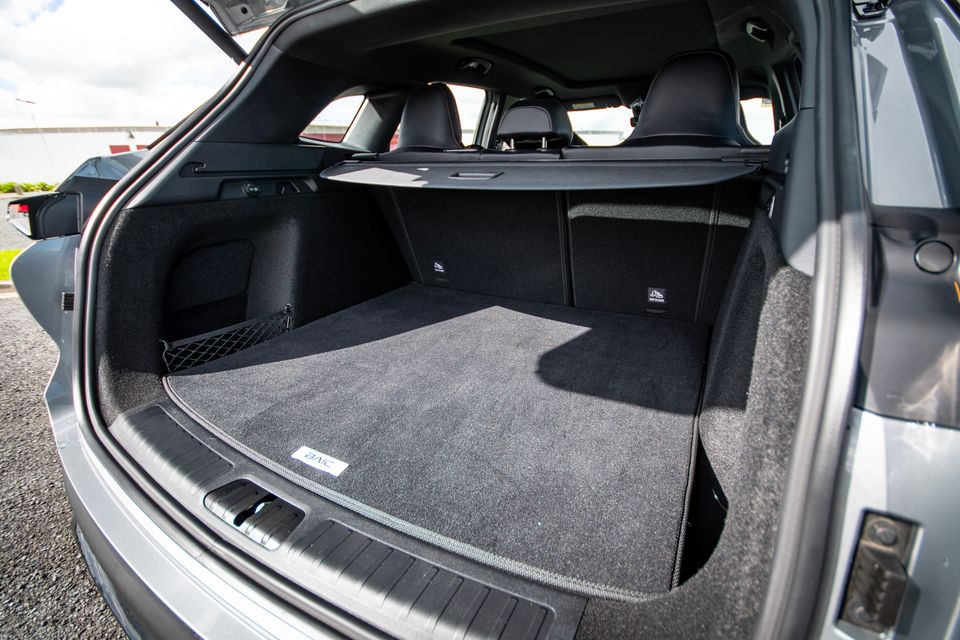
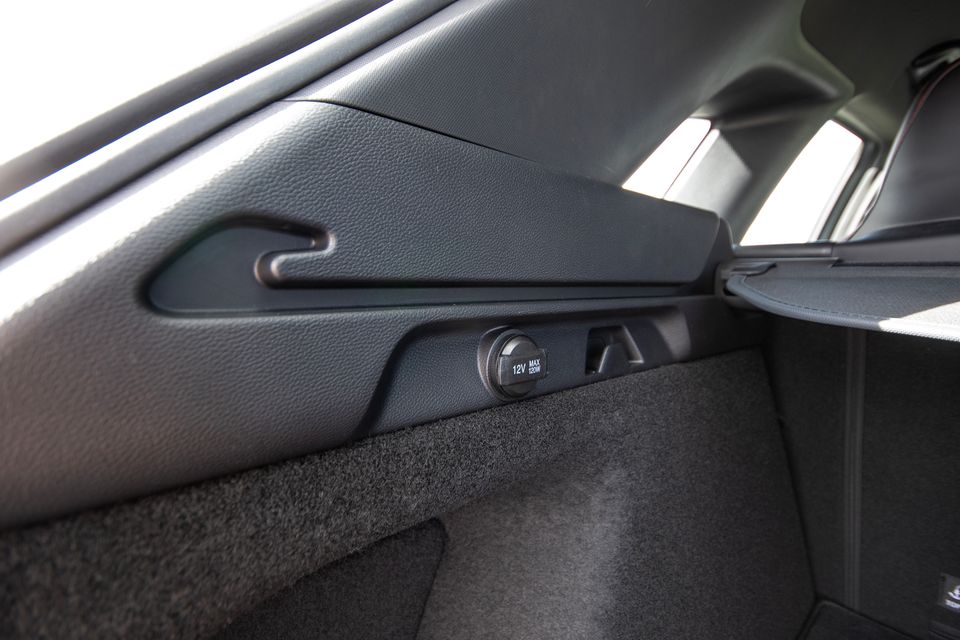
As we noted at the X55’s local launch earlier this year, its boot isn’t quite so impressive. Its on-paper capacity of 350-litres with all the seats up falls well short of what you would expect for this segment. The way the space is shaped around the wheel arches, wider items like the kids mountain bikes might be tougher to fit. Still, you can fit a pretty decent amount of stuff back there, the parcel shelf is detachable and removable, and there’s a 12-volt socket available.
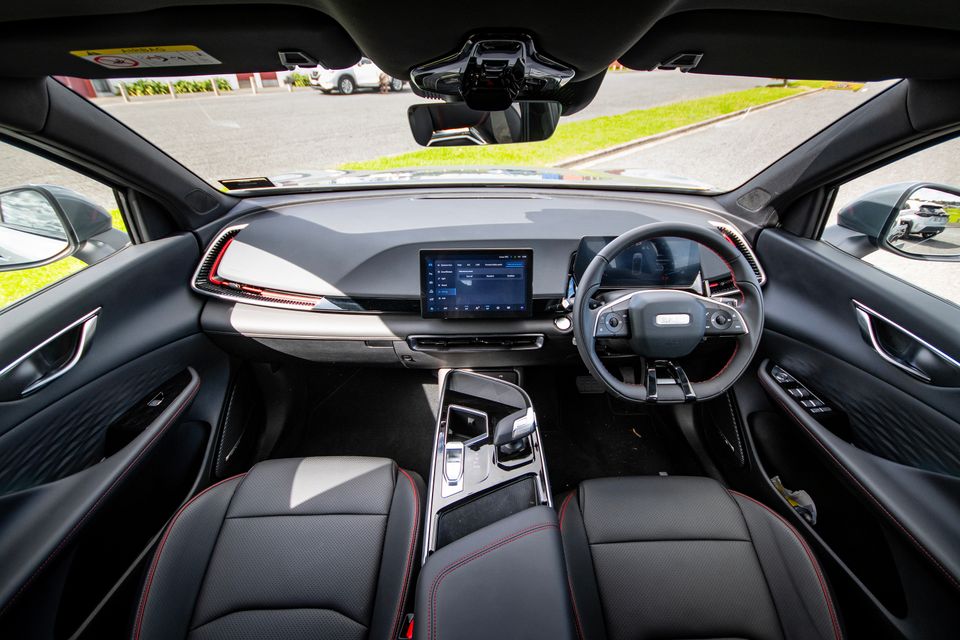
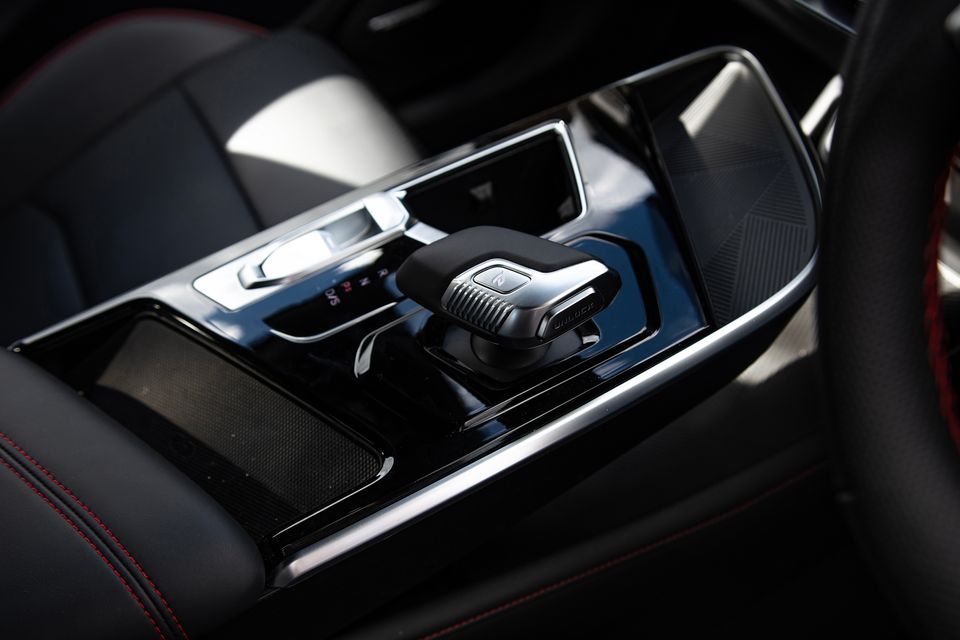
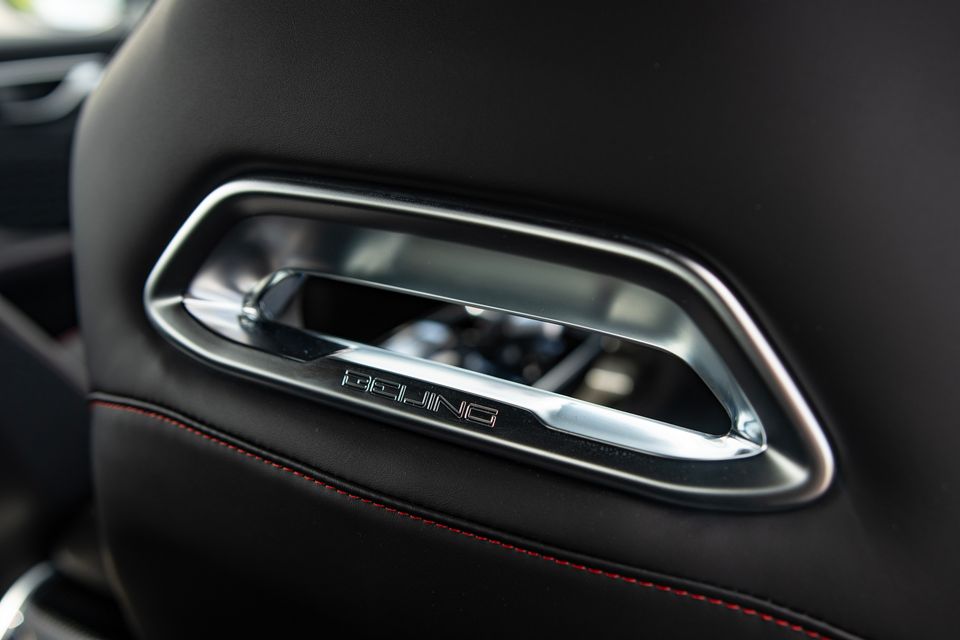
The styling of the X55’s interior is a bit out there, particularly if you’re used to all of the homogenous, minimalist, ‘Tesla-inspired’ interiors fitted to some of its peers. It’s a pretty refreshing look, and I quite like the floating centre console area — complete with wireless charge pad, a separate rubberised pad where you can chuck another phone or a wallet, and a big hidden storage space underneath. The red contrast stitching, black faux-leather upholstery (a pretty common colour combo amongst these SUVs from China), and bucket-like front seats give the interior sporty aesthetics.
It might not look all too Tesla-like, but the X55’s dashboard commits a signature cardinal sin in its lack of physical buttons for climate control adjustment. Instead all of these functions sit on the touchscreen. I appreciate the presence of a permanent shortcut button to the climate menu on the screen, but it’s still a chore to use.
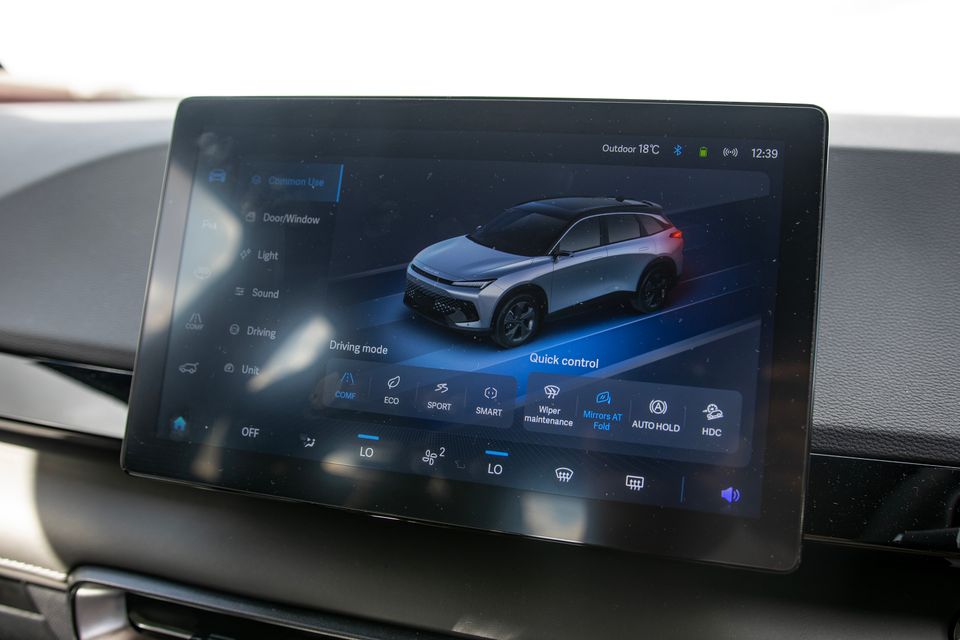
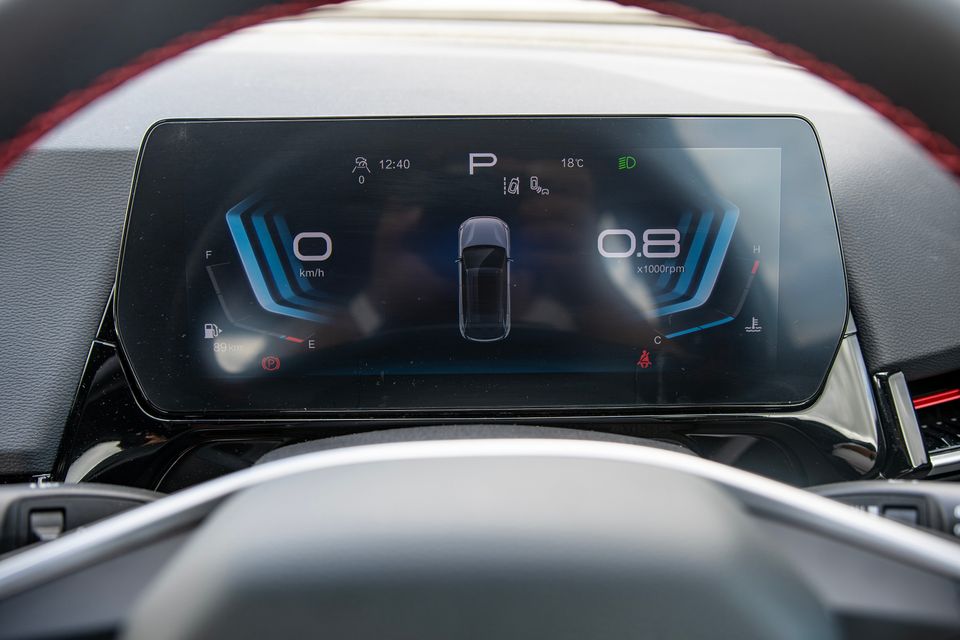
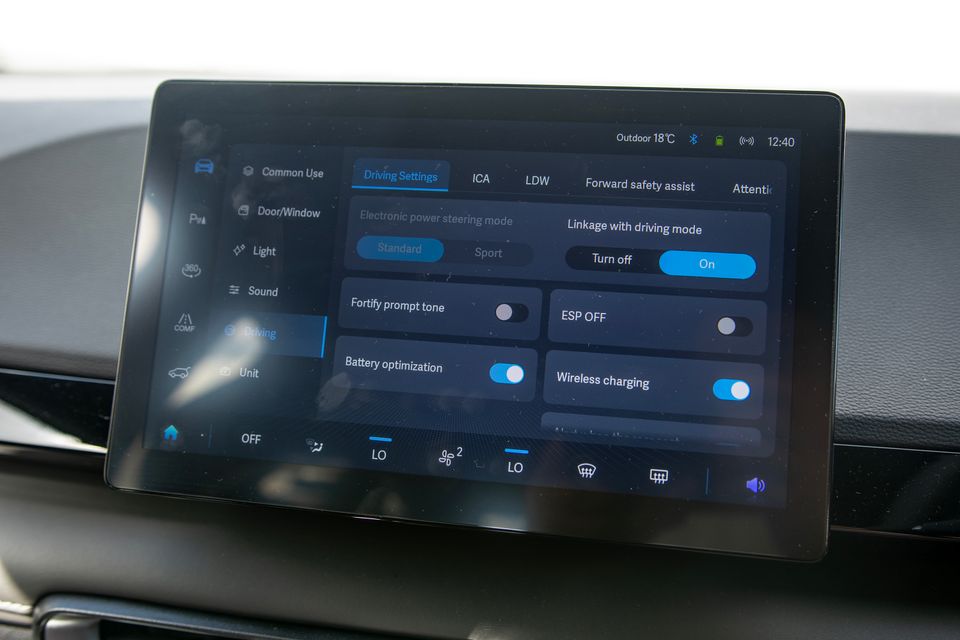
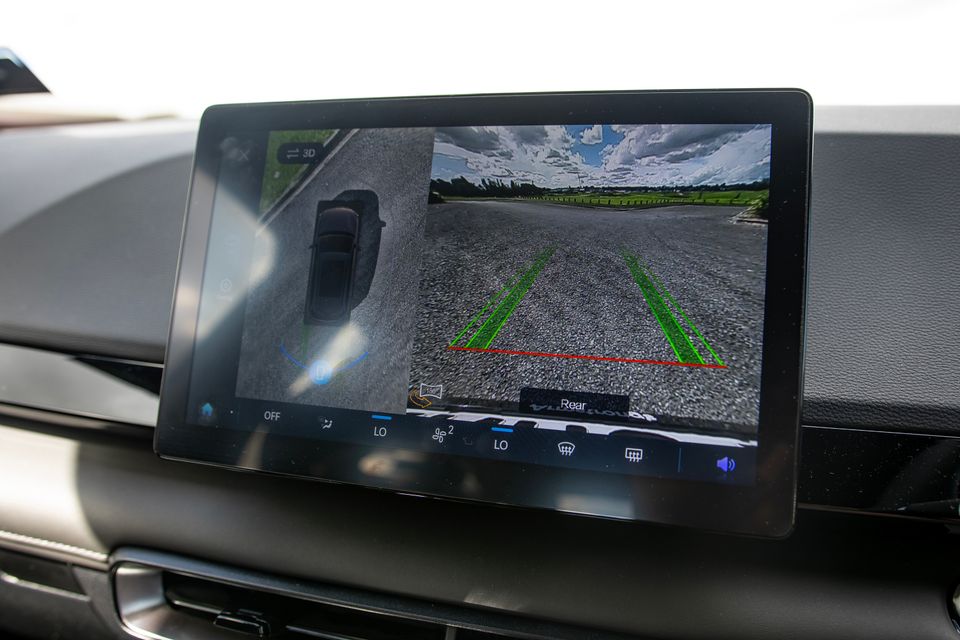
The same largely goes for the rest of the X55’s software. It all looks nice enough, the cameras are very good, and I appreciated the simple layout of the digital cluster (big speedometer, big sign up top showing what gear you’re in), but the menus themselves can be a little hard to navigate. Disappointingly, there’s also no Android Auto — wireless or wired. Apple users get wireless CarPlay at least.
Perhaps more of a disappointment (depending on who you ask, I suppose), is the X55’s safety specs. This is where we can get into the differences between the X55 Premium we tested here, and the Premium Plus.
The Premium misses out on a host of active safety features. These include lane departure and lane keep assist. And while the Premium does come with autonomous emergency braking, it only works for other cars and does not work for pedestrians. The Plus rectifies some of this, adding in lane-keep tech, AEB with pedestrian detection, and intelligent adaptive cruise control with ‘stop and go’ functionality in traffic. The Plus also adds a larger central touchscreen (15.6-inches versus 10.0-inches) and larger digital cluster (10.25-inches versus 10.0-inches).
These additions complement an admittedly already loaded equipment list. Regardless of the trim you opt for, the X55 comes with heated and cooled front seats with electric adjustment, a panoramic sunroof, a 360-degree camera, wireless phone charging, and plenty more.
With the Plus set to become the default spec for the X55, it gives the model a better chance at success when it eventually gets crash tested by ANCAP. But, those shopping for an X55 should be wary about which variant they buy. The lack of lane-keep systems might be a point of endearment for customers that detest the tech, but for everyone else the Plus is clearly the way to go.
The X55 has one other interesting quirk, too, and that’s regarding its power tailgate. An impressive feature to have on a car this cheap, no question. But, if you walk away from the car whilst the tailgate is open and you’ve got the key fob in your pocket, its alarm goes off. It’s a quirk we certainly didn’t appreciate coming home late at night with a big load of groceries in the boot.
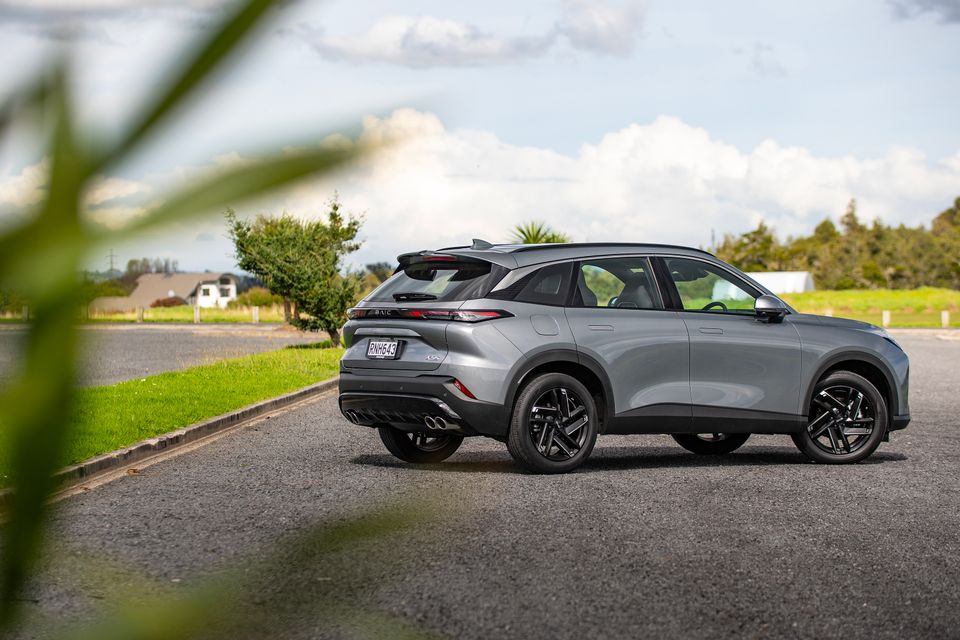
The X55 is one of the only SUVs on sale that doesn’t have any kind of hybrid or EV powertrain under the bonnet. Instead it makes use of a turbocharged 1.5-litre 4-cylinder petrol engine developing 138kW of power and 305Nm of torque. The lack of a hybrid draws easy comparisons between this and the Mitsubishi ASX and current Kia Seltos (the next-gen Seltos gets a hybrid).
On paper, the output from the 1.5-litre is pretty compelling. It makes 26kW/85Nm more than the ASX and 28kW/125Nm more than the current Seltos. Most of this power deficit comes from its turbo, with the ASX and Seltos still relying on naturally aspirated propulsion.
Rightcar quotes a fuel economy figure of 8.1L/100km for the X55, which is fairly considerable in today’s day and age when a similarly sized Toyota RAV4 is almost twice as good. The aforementioned ASX and Seltos claim 8.5L/100km and 7.7L/100km, respectively.
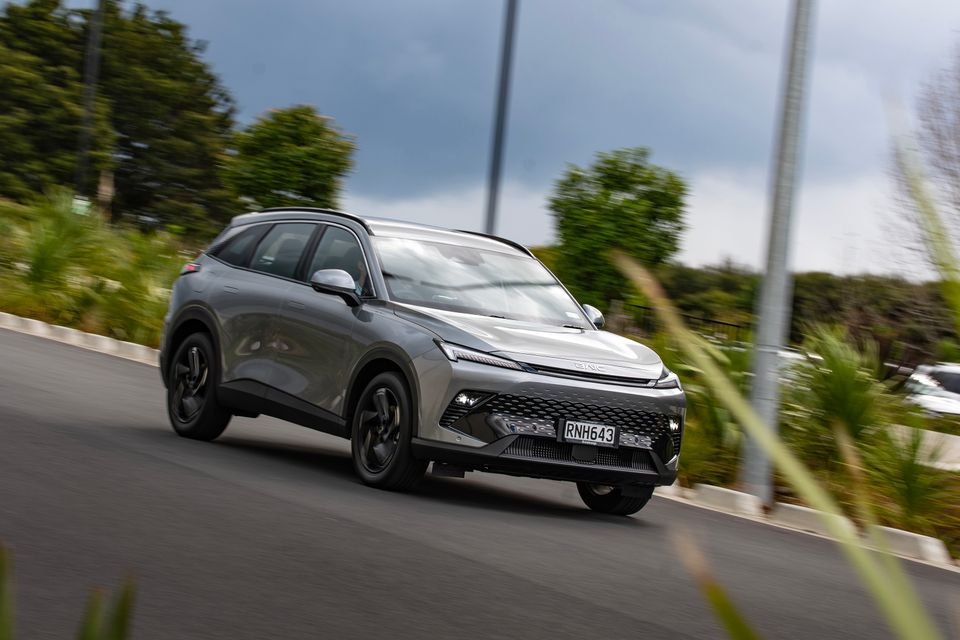
Here’s where things take a bit of a turn for the X55, as its driving chops represent arguably its biggest achilles heel.
Our initial drive of the X55 at the national launch was a very brief 15 minute drive on rural roads, and in that setting, the X55 is fairly solid. It rides bumps quite well, the 1.5-litre is pretty quiet and gets up to speed quickly enough, and the lack of ADAS intervention made for a pleasant first impression. But that impression soured a little over our seven day test with the X55.
There are things I still think the BAIC does fairly well. Its ride comfort is fair for the segment, and its cabin is fairly quiet once you’re at operating speed. And whilst the X55’s fuel economy claims aren’t much to call home about, they are at least pretty representative as we saw a return of 8.9L/100km during our week with it.
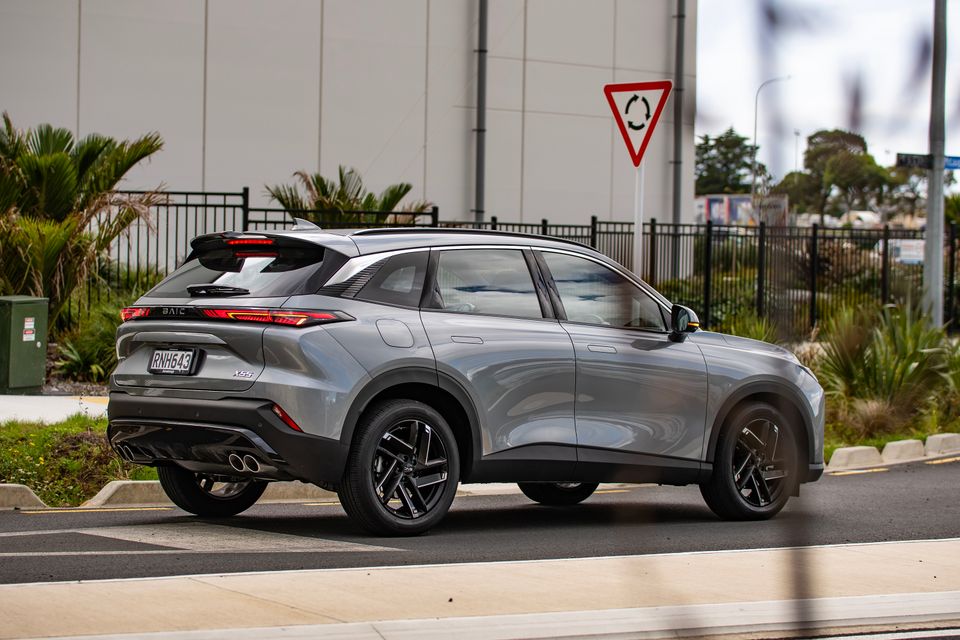
The X55’s transmission and powertrain both left a lot to be desired, particularly at low speeds and during general commuting in traffic.
The BAIC uses a 7-speed dual-clutch transmission. Now, DCTs typically aren’t as smooth as conventional torque converted automatics in typical stop-start daily driving conditions, and that phenomena is usually emphasised the cheaper the car is. But the X55’s unit seems to struggle especially. It often takes a long time to shift from Drive to Reverse and vice versa, which can go from ‘mild annoyance’ to ‘hazard’ if you’re trying to do a quick U-turn or parallel park.
There seems to be a wider problem with the X55’s drivetrain calibration. It requires an oddly high amount of throttle pedal pressure and revs to make it move from a standstill. It almost feels like a hybrid or plug-in hybrid petrol car, but all the electric bits that do the heavy lifting at low speeds are unplugged. So despite the engine producing quite a bit of power on paper, in practice it can often feel a little lethargic. Still more punchy than what you get from an ASX, but the Seltos feels more urgent.
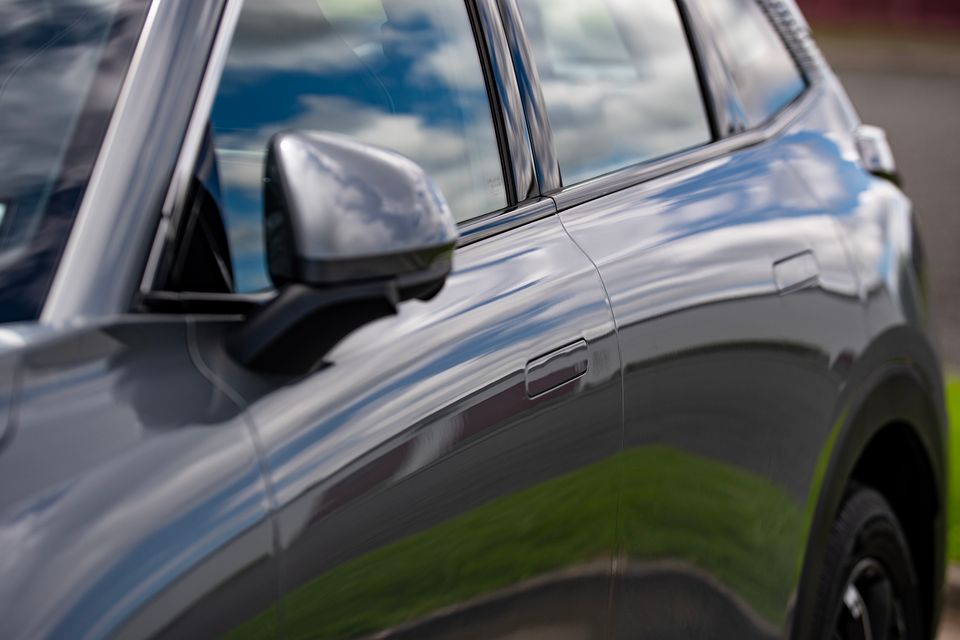
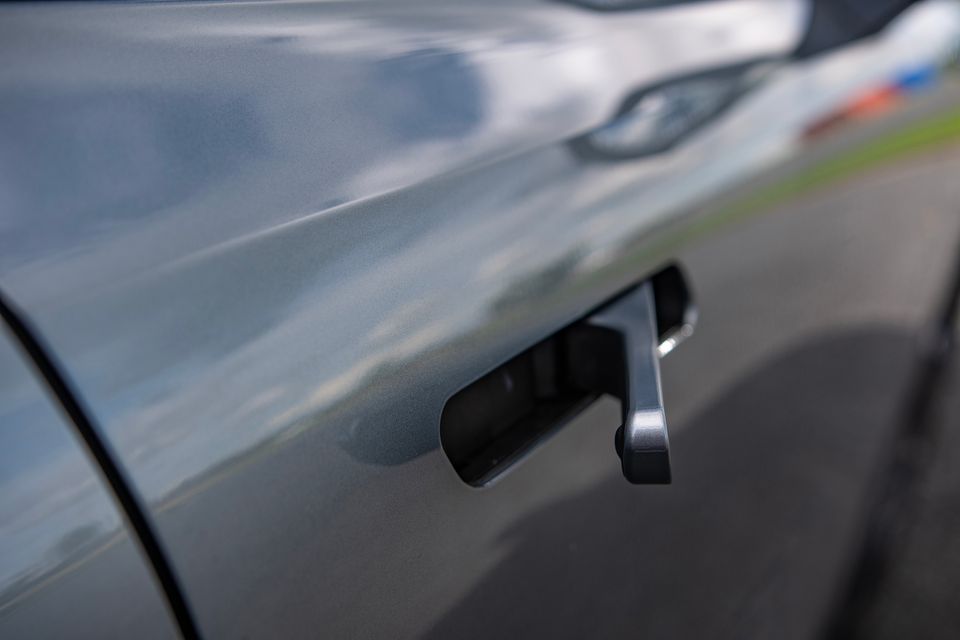
Things get a bit better in the corners where the X55 is reasonably adept, if completely unremarkable. There’s an elasticity to its surprisingly heavy steering that makes it feel like an older car than it actually is, and not in a particularly good way. It does at least handle better than the ASX. Although, given the ASX remains one of the best selling SUVs on the market, handling ability shouldn’t be top priority.
Visibility out of the X55 is reasonable and the sharpness of the cameras made it a piece of cake to park. On the flip side, the nice looking front seats weren’t very comfortable on longer journeys — at least in my case.
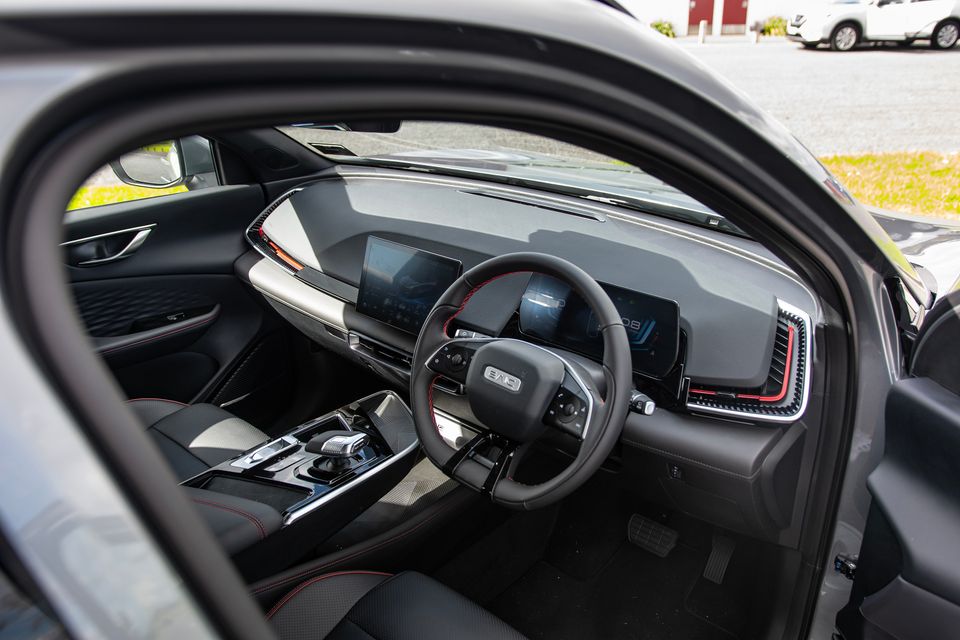
The X55’s equipment list is generally very impressive for a car this size and price, with the power tailgate, panoramic sunroof, 360-degree camera, 19-inch wheels, and ambient lighting all being particularly impressive features in a sub-$40k SUV.
But by the same token, the Premium variant’s missing safety gear is a point of concern. I am encouraged that BAIC has taken steps to swap out this model with a more generously equipped replacement.
BAIC X55 Premium equipment highlights:
X55 Premium Plus adds:
Where expert car reviews meet expert car buying – CarExpert gives you trusted advice, personalised service and real savings on your next new car.
You can’t say that BAIC’s one-two punch SUV line-up isn’t unique, with the B30 and X55 both defying several mid-size SUV market norms. And X55’s pricing makes it a particularly intriguing prospect in the segment.
There’s some positives here. The X55 is a handsome looking thing, with a mountain of kit and an eye-popping price. Unfortunately, the X55’s powertrain has several core issues that make this crossover feel a little unfinished — both to drive with and to live with.
Where expert car reviews meet expert car buying – CarExpert gives you trusted advice, personalised service and real savings on your next new car.
Matthew Hansen co-founded motorsport outlet Velocity News, worked as a freelance photographer for various race teams, and was a specialist journalist for NZ Autocar Magazine and Driven at the NZ Herald. Most recently, he was Editor of Motoring at Stuff.co.nz.
Add CarExpert as a Preferred Source on Google so your search results prioritise writing by actual experts, not AI.
Matthew Hansen
11 Minutes Ago

Dave Kavermann
2 Hours Ago


Damion Smy
2 Hours Ago

Damion Smy
2 Hours Ago
Damion Smy
3 Hours Ago
Dave Kavermann
19 Hours Ago
Add CarExpert as a Preferred Source on Google so your search results prioritise writing by actual experts, not AI.
† Displayed prices exclude on-road costs such as delivery charges, registration fees, number plates, insurance and applicable road taxes. These prices are subject to change without notice and may not reflect current market pricing or dealer offers.
 Automotive Vehicle Spec Data & 4K images Powered by JATO Dynamics Ltd