

 Showroom
 Car Chooser
 Compare
 Car Specifications

CarExpert
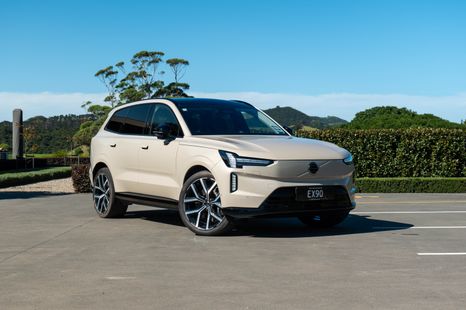
2026 CarExpert Choice Awards: Best Luxury EV
This award category covers premium electric vehicles that combine electrification with luxury, advanced technology, and performance.
10 Hours Ago

Journalist
It has finally happened.
After months of teasers, a steady drip-feed of official details, and one of the most hotly debated interior reveals in automotive history, Ferrari has officially become an electric car manufacture.
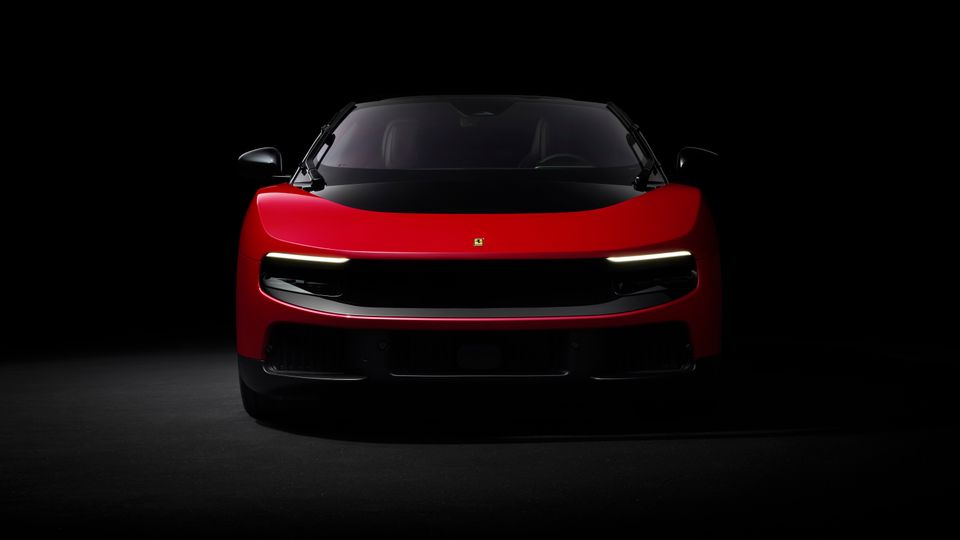
Ferrari has pulled the covers off the Ferrari Luce, bringing years of rumours, speculation, and endless arguments about whether the brand from Maranello should even build a battery-electric car to an end.
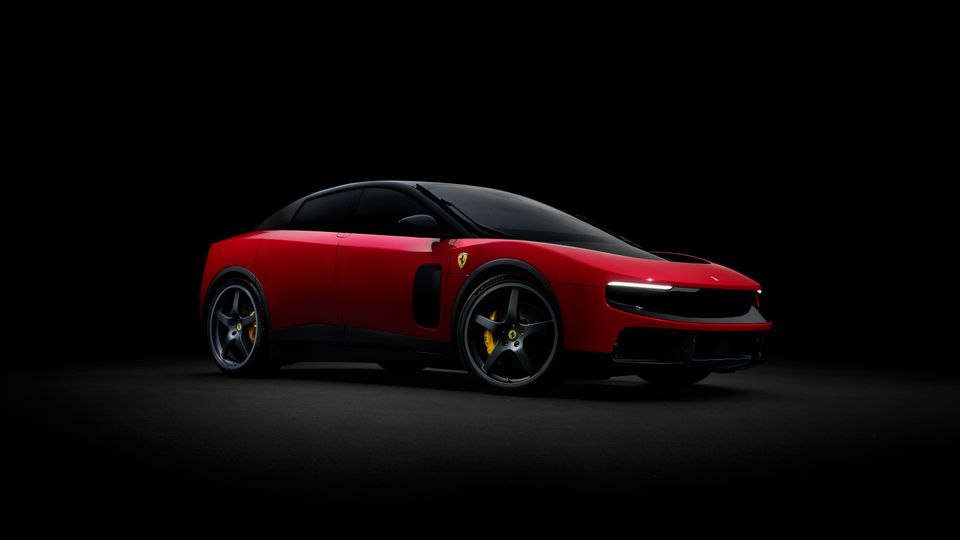
Unveiled overnight in Rome, Italy, the Luce doesn’t replace anything in Ferrari’s current lineup, nor is it simply an electric version of an existing model. Instead, Ferrari says it has created an entirely new type of Prancing Horse.
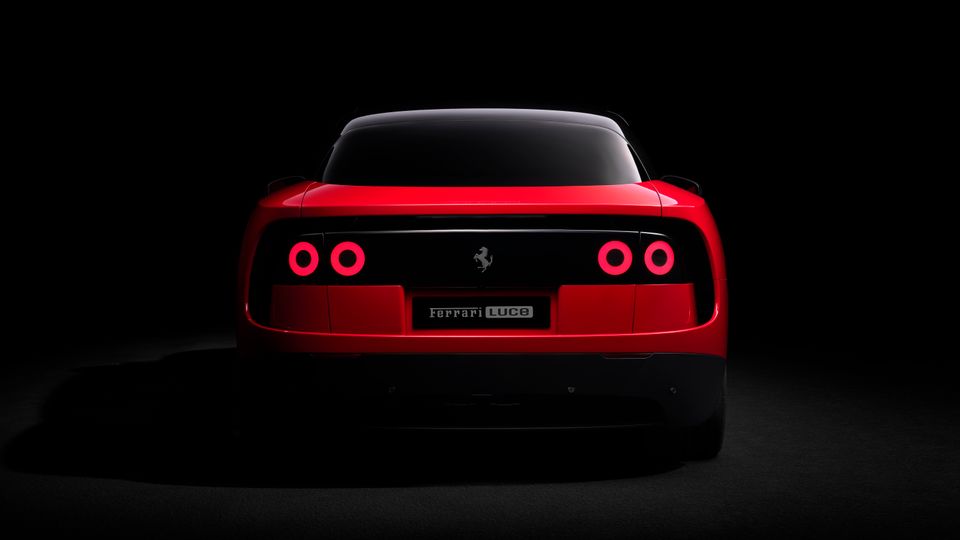
The Italian automaker marked the occasion with a brief livestream, an exclusive preview for select media – including CarExpert’s Paul Maric – alongside a sprawling press release stretching almost 11,000 words detailing the thinking behind its first EV.
There’s a lot to unpack here. Paul has already done the heavy lifting on the ground in his FIRST LOOK video below. But with so much information to process, we’ve rounded up 30 things you should know about Ferrari’s first electric car.
1. Expect it to become New Zealand’s first $1 million EV
While official pricing hasn’t been announced for New Zealand yet, we do know the Luce will start from €550,000 (~NZ$1.03 million) in Europe and US$640,000 (~NZ$1.05 million) in America. Both figures already push beyond the million-dollar mark before options, and buyers at this end of the market can easily add another 20 to 50 per cent, depending on how exclusive they like their paint and leather.
Although we can’t confirm exact pricing at this stage, expect the Ferrari Luce to be more expensive than the NZ$750,000 Rolls-Royce Spectre and become the most expensive EV offered new in New Zealand.
2. Luce means ‘light’
Ferrari doesn’t hand out names randomly. Luce translates from Italian as ‘light’, but Ferrari says it’s intended to represent more than just low weight. The company describes it as symbolising clarity, vision, and a new direction for the brand.
There’s also a deliberate message behind it: Ferrari doesn’t want the Luce viewed as simply ‘the electric Ferrari’. It sees it as an entirely new Ferrari with its own identity.
3. V8s and V12s aren’t dead
Anyone worried Ferrari’s famous engines are heading for extinction can relax. The Luce isn’t a replacement for combustion-powered Ferraris, and Ferrari says petrol models remain central to its future plans.
Instead, the company is pursuing a multi-powertrain strategy, with combustion, hybrid, and battery-electric vehicles all sharing showroom space. The arrival of the Luce widens Ferrari’s portfolio rather than narrowing it.
4. Jony Ive had a hand in it
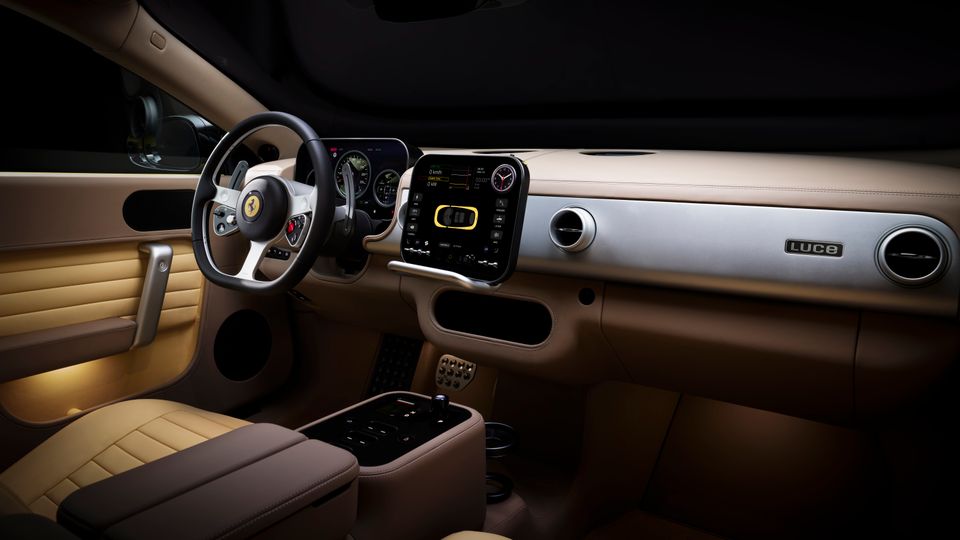
Ferrari made one of its boldest decisions in decades by bringing in LoveFrom – the design collective founded by former Apple design chief Sir Jony Ive and Marc Newson.
Rather than simply styling the car, LoveFrom worked on the overall experience, including the cabin and interface design. Considering Ive helped create products such as the iPhone and iMac, this might explain why the Luce feels dramatically different from previous Ferraris.
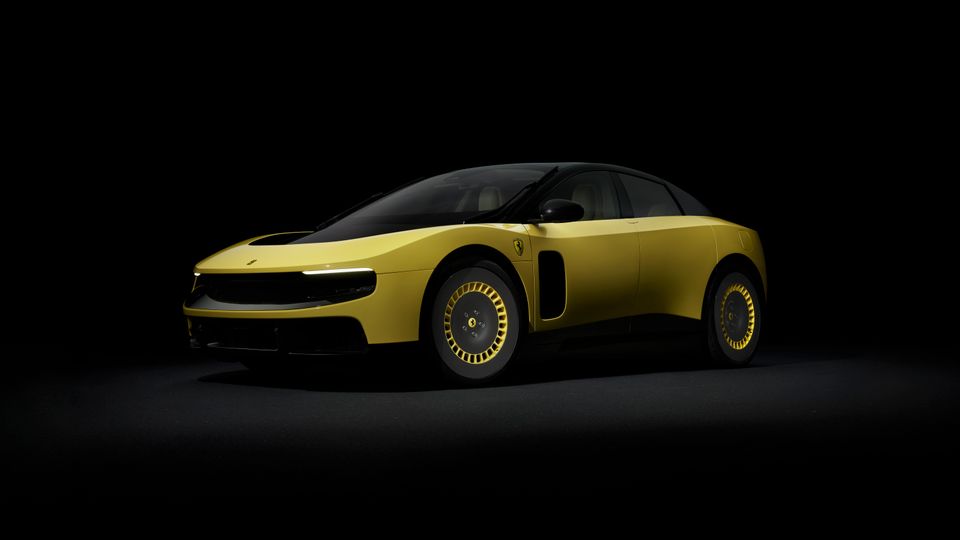
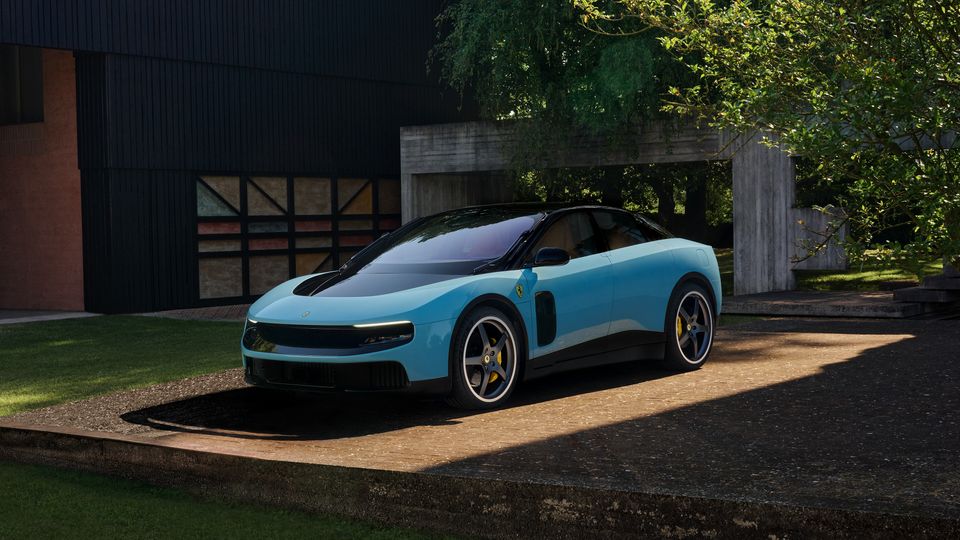
5. The giant glass canopy steals the show
Every Ferrari has a signature design detail. The Luce’s is its enormous wraparound glasshouse.
Instead of a traditional roofline and side structure, the canopy stretches around occupants to create a cocoon-like appearance. Ferrari says the design reduces visual clutter and creates a cleaner shape than anything the company has previously built.
It gives the Luce a futuristic look without resorting to overly aggressive styling tricks.
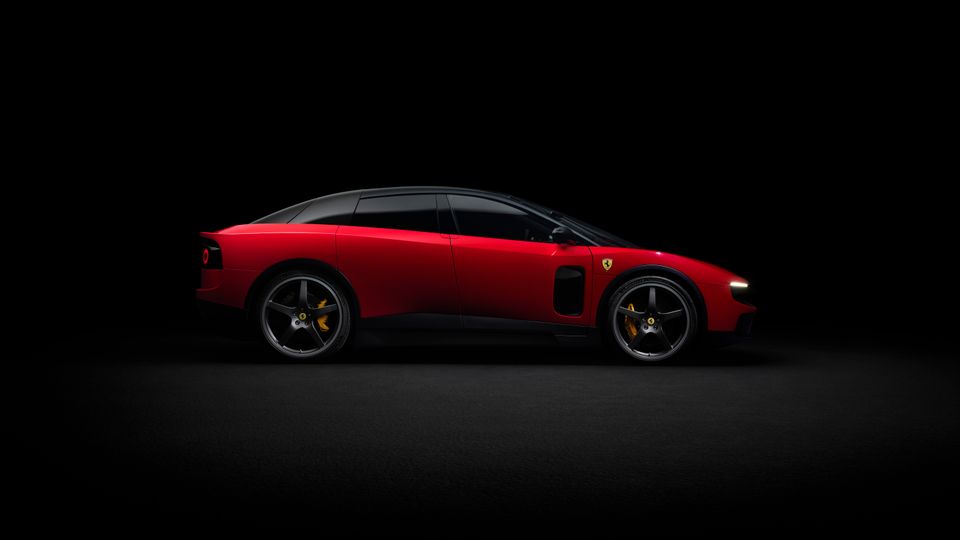
6. The wheels are enormous
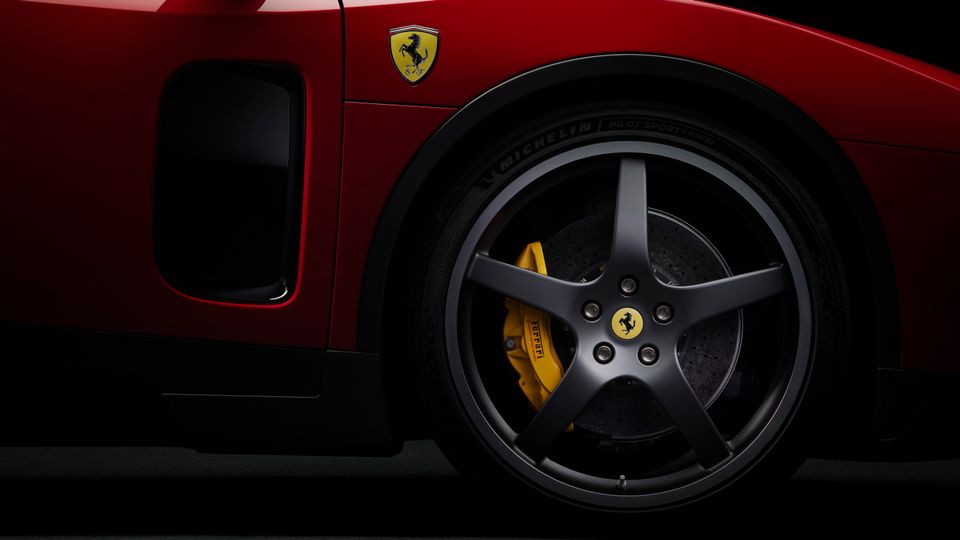
The Luce wears 23-inch wheels at the front and 24-inch items at the rear – the biggest wheels ever fitted to a production Ferrari.
Ferrari says they’re surprisingly lightweight despite their size and even developed aerodynamic wheel designs to reduce drag. Still, it’s hard not to wonder how they’ll feel on New Zealand’s often coarse-chip roads and less-than-perfect rural surfaces.
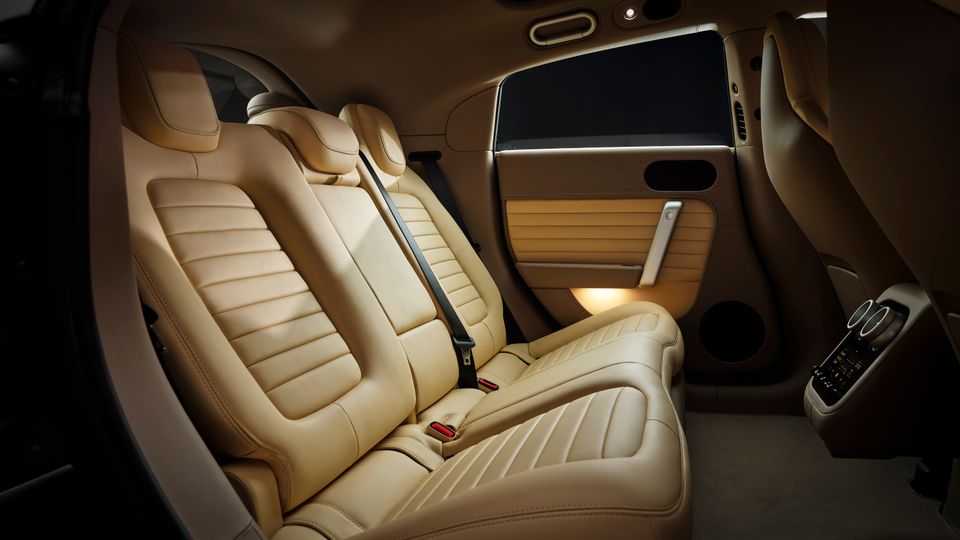
7. It has five seats – a Ferrari first
Ferrari has built a four-door vehicle before with the Purosangue, but the Luce becomes the first production Ferrari capable of carrying five occupants.
The EV layout frees up packaging space because there’s no engine or transmission tunnel taking up cabin room. Ferrari says it has created a genuinely spacious interior without sacrificing sports car proportions.
8. It’ll hit 100km/h in 2.5 seconds
The Luce claims a 0-100km/h time of just 2.5 seconds.
That’s despite weighing around 2260kg and offering seating for five people plus luggage. Ferrari says launch control combines all four motors with a temporary power boost from the battery for maximum acceleration.
Ferrari say the Luce isn't just quick for a practical car – it’s quick by hypercar standards.
9. The 0-200km/h time is even crazier
The headline sprint figure grabs attention, but 0-200km/h often tells a more complete story.
Ferrari claims the Luce reaches 200km/h in only 6.8 seconds. That suggests this thing doesn’t just leap off the line before running out of steam. It keeps delivering acceleration long after most electric cars begin tapering off.
10. Top speed exceeds 310km/h
Yes, it’s a five-seat family Ferrari. Yes, it’ll exceed 310km/h.
Naturally, that’s not something anyone will be exploring on New Zealand roads. Still, there’s something wonderfully ridiculous about a practical Ferrari being capable of speeds once reserved for extreme supercars.
12. There’s 772kW on tap
Power comes from four electric motors producing a combined 772kW of power, equivalent to around 1050hp.
That’s enough output to embarrass many dedicated two-door supercars, including the brand's current 296. Ferrari says the system draws heavily from knowledge developed in Formula 1 and its World Endurance racing programmes.
17. Claimed range is more than 530km
Ferrari says the Luce can travel more than 530km on a charge, and that's a 'usable number' rather than an unrealistic laboratory figure.
For local context, an Auckland–Hamilton return trip would be easy, while Christchurch to Queenstown could likely be managed with one short charging stop. Auckland to Wellington would still require at least one charge along the way.
The Luce supports DC fast charging at up to 350kW, and Ferrari claims it can recover around 70kWh in roughly 20 minutes.
27. Recycled aluminium is everywhere
Around 70 per cent of the Luce’s weight incorporates recycled aluminium.
Ferrari says the material appears across the structure and key components to reduce production-related emissions without compromising strength.
28. Seven years of servicing is included
Ferrari’s Genuine Maintenance programme covers routine servicing for the first seven years.
Scheduled checks occur every 20,000km or annually, whichever comes first. For exotic EV car ownership, that’s a meaningful inclusion to support early customers.
29. The electric hardware gets an eight-year warranty
The battery pack, charging system, and electric drive hardware are covered by an eight-year warranty.
Given long-term battery concerns remain one of the biggest talking points around EV ownership, Ferrari clearly wants buyers to feel comfortable.
30. Ferrari Luce is a new segment - not a compromise
Perhaps that’s the biggest takeaway from all of this.
Ferrari says the Luce wasn’t built because regulations forced its hand. Instead, it believes only a dedicated EV platform could deliver something combining supercar performance, genuine practicality, long-distance comfort, and advanced technology in a single package.
Whether traditional Ferrari buyers embrace it remains to be seen. But on paper at least, the Prancing Horse hasn’t gone quietly electric – it has instead found a new way to go very, very fast.
Where expert car reviews meet expert car buying – CarExpert gives you trusted advice, personalised service and real savings on your next new car.
Dave is a Kiwi motoring journalist with experience in motorcycle racing, new car sales, radio and communications.
CarExpert
10 Hours Ago

Derek Fung
11 Hours Ago

Matthew Hansen
13 Hours Ago
Dave Kavermann
13 Hours Ago
Matthew Hansen
14 Hours Ago
Derek Fung
16 Hours Ago
Add CarExpert as a Preferred Source on Google so your search results prioritise writing by actual experts, not AI.