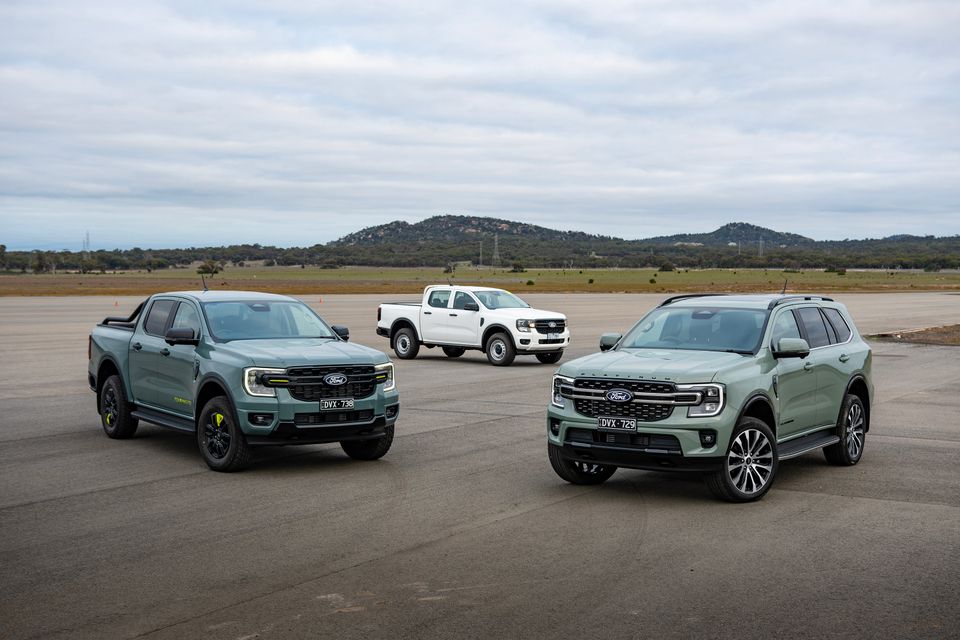
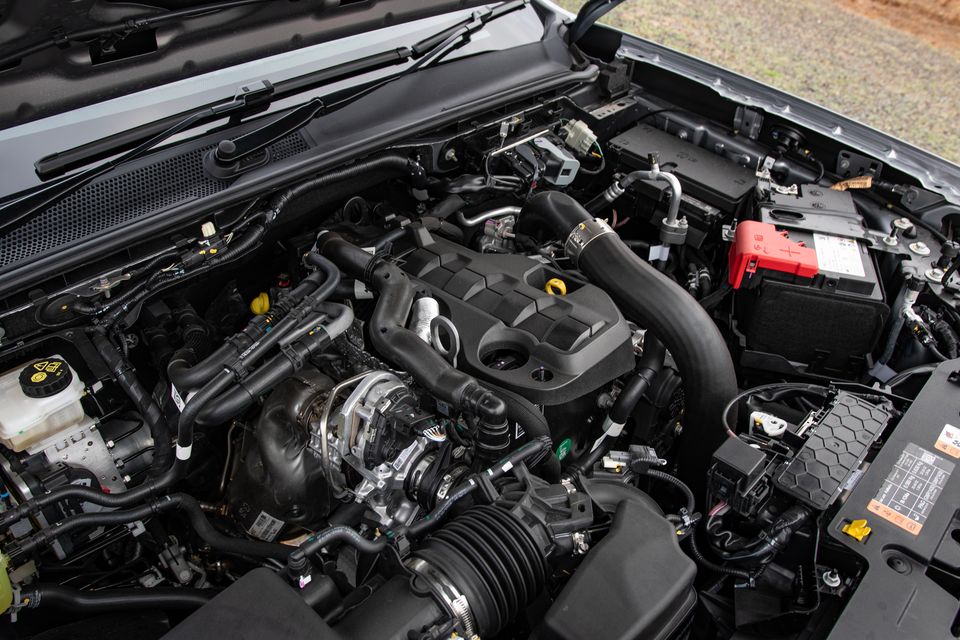
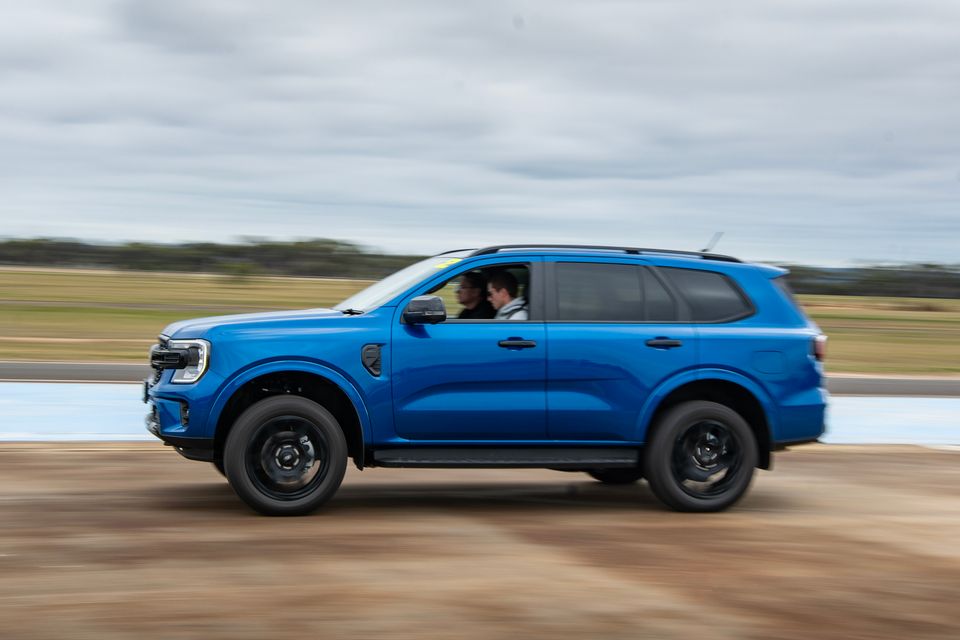
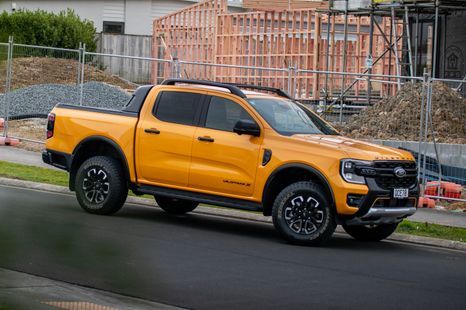
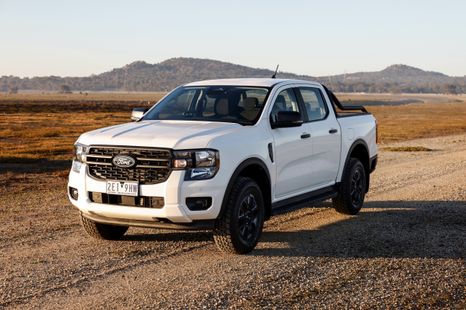
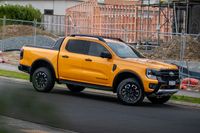
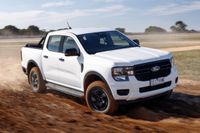
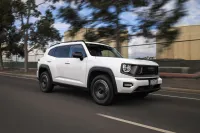
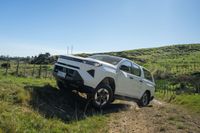
Whilst Ford’s updated Ranger and Everest duo might look largely unchanged, there’s at least one big tweak that is likely to prompt plenty of discussion — the new, shared 2.0-litre turbodiesel engine.
The fresh single-turbo 2.0-litre, derived from an engine in the brand’s Transit line-up, replaces the popular 2.0-litre bi-turbo engine that debuted in the original Ranger Raptor before eventually trickling down into the wider Ranger and Everest range.
Switching from a twin-turbo to single-turbo set-up has created a unique scenario where the updated Ranger and Everest get less power and torque than their predecessors.
Where the outgoing bi-turbo 2.0-litre made 157kW of power and produced 500Nm of torque, the new 2.0-litre makes 125kW of power and 405Nm of torque — a considerable 32kW/145Nm deficit.
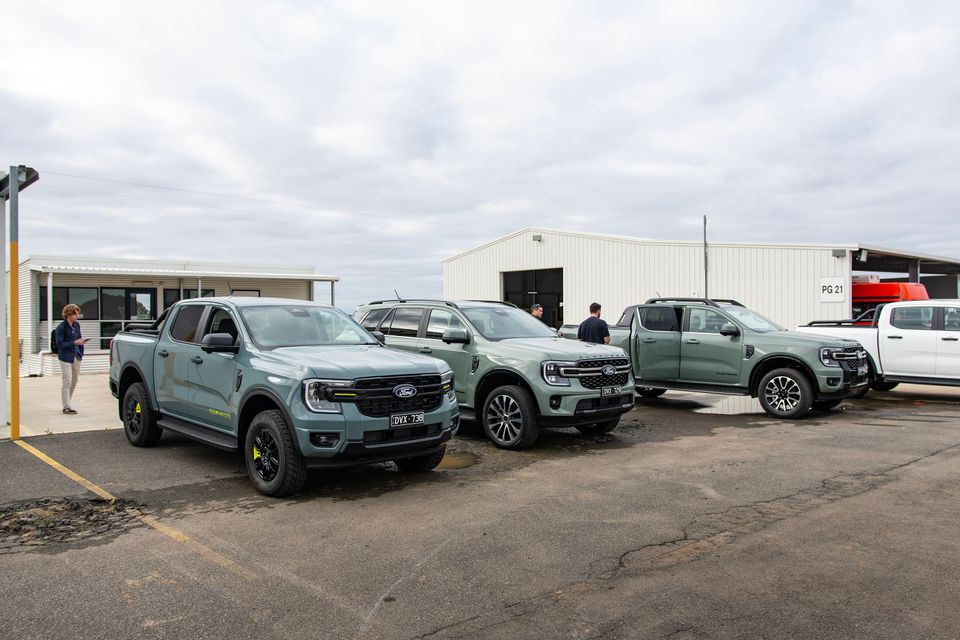
At the launch of the MY2026 Ranger and Everest, held earlier this month at the Ford You Yangs Proving Ground in Melbourne, Ford defended the switch, underscoring that the new powertrain’s performance remains competitive relative to its core diesel ute and SUV rivals.
For reference, the majority of the recently updated Toyota Hilux line-up is powered by either a non-hybrid 2.8-litre turbodiesel producing 150kW/420Nm, or a hybrid 2.8-litre turbodiesel producing 150kW/500Nm.
Conversely, the Mitsubishi Triton and Nissan Navara (which now share the same platform and powertrain), are powered by a 2.4-litre bi-turbo diesel engine making 150kW/470Nm.
Speaking to media at the local launch, Ford Australia director of marketing Ambrose Henderson defended the reduction in firepower, citing the step up in refinement in efficiency when comparing the new 2.0-litre to its predecessor.
Its claimed fuel economy is rated at 6.2–7.2L/100km in the Ranger, an improvement on the outgoing bi-turbo’s 7.2–7.6L/100km. The Everest, meanwhile, has a claimed figure of 7.1L/100km — essentially equalling the outgoing bi-turbo’s claimed 7.1–7.2L/100km.
Ambrose noted that the bi-turbo’s retirement from the Ford line-up was a “global engine rationalisation” decision, made to help the Ranger meet emissions regulations in order markets.
He added that the Ranger line-up has the “broadest range of engines” in the dual-cab segment. Along with the aforementioned 2.0-litre, the Ranger is also available with a 3.0-litre V6 turbodiesel, a 2.3-litre petrol plug-in hybrid petrol, or the 3.0-litre twin-turbo petrol in the Raptor performance flagship.
“It's about choice. If the customer wants the all out best on paper, we've got that,” said Henderson.
“We've got a V6 petrol and Raptor, we've got a V6 diesel across the entire range. Now, if they want all the capability of Ranger with no compromise but a lower fuel economy, we've got [an engine] that serves that. For the customer that wants the combination of capability and value, we've got the 2.0-litre new engine.”
Despite its on-paper power deficit relative to its bi-turbo cousin, not to mention the 3.0-litre V6, Ford describes its new 2.0-litre as its most responsive diesel engine produced to date. Henderson believes that customers will be impressed by how the engine performs in the real world.
“Any of us can write down what we like on paper. What really matters is how an engine and a vehicle performs on the road. [...] This is our most responsive diesel engine that we've ever produced.”



 Showroom
 Car Chooser
 Compare
 Car Specifications