

 Showroom
 Car Chooser
 Compare
 Car Specifications

Matthew Hansen
LDV confirms electric eTerron 9 ute a non-starter for NZ
Big pure plug-in pick-up not coming to New Zealand after all.
5 Days Ago
The country's most popular ute gears up for 2026 with a new plug-in hybrid powertrain and revised pricing.
Where expert car reviews meet expert car buying – CarExpert gives you trusted advice, personalised service and real savings on your next new car.
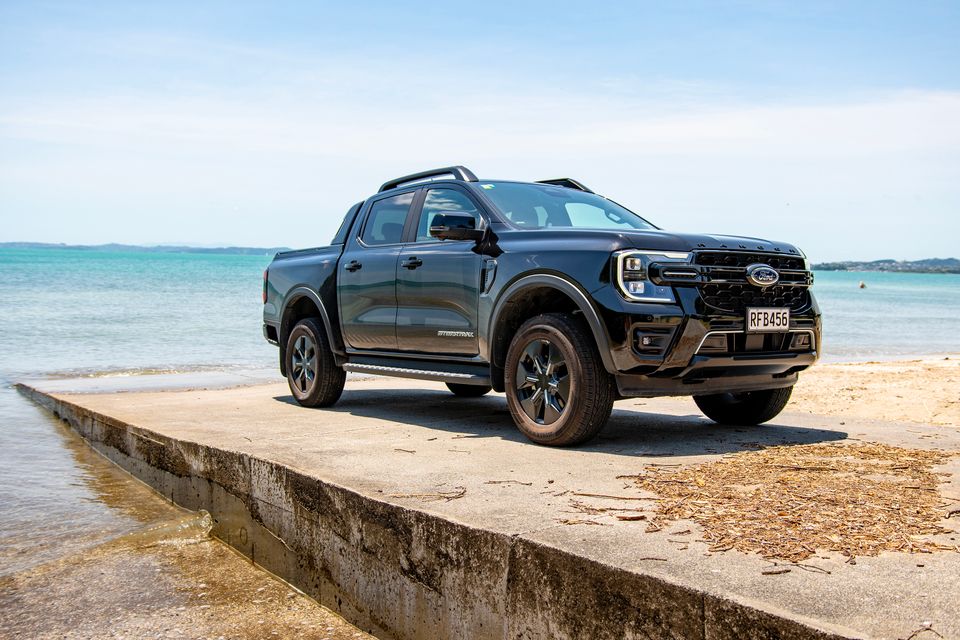
There’s plenty of change afoot with New Zealand’s best-selling ute. The Ford Ranger line-up is in the middle of grand upheaval. Some powertrains are entering the fray, whilst others are getting shuffled aside. A new hardcore variant will hit the market in the coming months. And in the middle of it all, the nameplate gained a plug.
Landing locally late last year, the Ranger PHEV has the potential to be one of the most impactful plug-in hybrids on the market. Is the most quiet, most civilised grade in the line-up the best Ranger yet?
As the country’s most popular new vehicle for 10 years — a run that only came to an end last year — it’s no surprise that Ford offers a whole host of different Ranger variants to customers. Different bodystyles, different powertrains, different specs.
Ford recently announced its plans to shuffle the Ranger line-up, dropping the Bi-Turbo 2.0-litre from the range completely and expanding the scope of its 3.0-litre V6 diesel to take up the slack. In the melee some models got a mild price cut, whilst others got a similarly mild price bump. PHEV prices remained static.
The Ranger has always had relatively high sticker prices relative to its main competitors (namely the Toyota Hilux and Mitsubishi Triton). Of course, retail prices of utes are to be taken with a grain of salt as fleet customers can often get considerable discounts.
Model | Price before on-road costs |
|---|---|
Ford Ranger XL Single Cab Chassis 2.0 4WD | $54,990 |
Ford Ranger XL Super Cab Chassis 2.0 4WD | $57,990 |
Ford Ranger XL Double Cab Chassis 2.0 4WD | $57,990 |
Ford Ranger XL Double Cab 2.0 4WD | $59,990 |
Ford Ranger XL Single Cab Chassis 3.0 V6 4WD | $61,490 |
Ford Ranger XL Super Cab Chassis 3.0 V6 4WD | $64,490 |
Ford Ranger XLT Double Cab 2.0 2WD | $55,990 |
Ford Ranger XLT Super Cab 3.0 V6 4WD | $68,990 |
Ford Ranger XLT Double Cab Chassis 3.0 V6 4WD | $69,990 |
Ford Ranger XLT Double Cab 2.0 4WD | $65,990 |
Ford Ranger XLT Double Cab 3.0 V6 4WD | $71,990 |
Ford Ranger Wolftrak Double Cab 3.0 V6 4WD | $75,990 |
Ford Ranger Tremor Double Cab 3.0 V6 4WD | $79,990 |
Ford Ranger Wildtrak Double Cab 2.0 4WD | $75,490 |
Ford Ranger XLT Hybrid 2.3 PHEV 4WD | $82,990 |
Ford Ranger Wildtrak Double Cab 3.0 V6 4WD | $85,990 |
Ford Ranger Wildtrak 2.3 PHEV 4WD | $89,990 |
Ford Ranger Platinum Double Cab 3.0 V6 4WD | $92,990 |
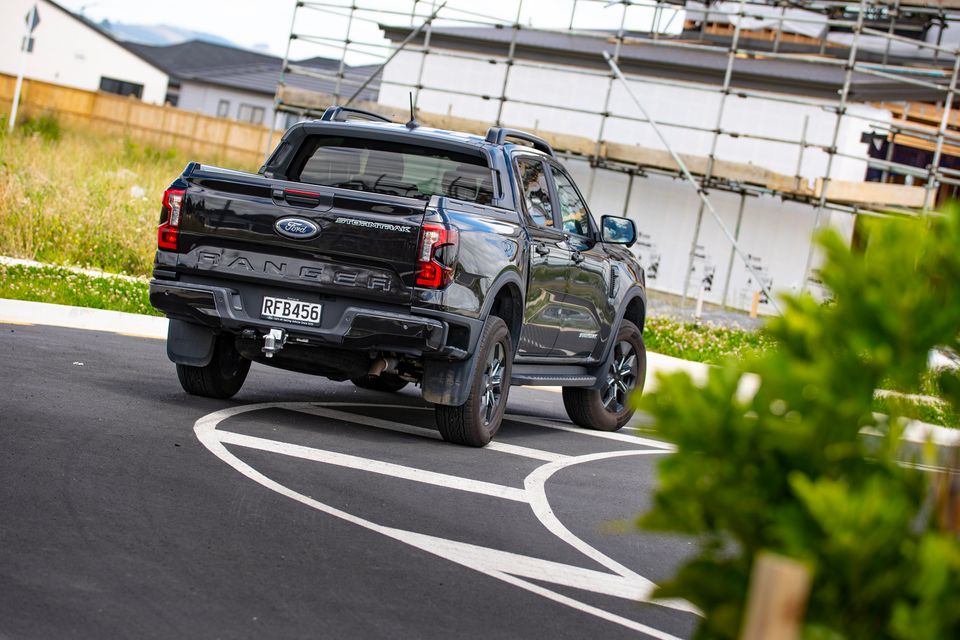
Ford Ranger Stormtrak 2.3 PHEV 4WD | $94,990 |
Ford Ranger Raptor Double Cab 3.0 V6TT 4WD | $98,490 |
The Ranger PHEV specifically is priced from $82,990 in base XLT trim, pricing it $15,500 above its equivalent 2.0-litre Bi-Turbo sibling. At $94,990, the flagship Stormtrak variant we tested is less than two grand shy of the high-performance Raptor V6.
There’s no denying that the Ranger PHEV isn’t especially cheap, and that’s emphasised when you position it next to the best-selling plug-in hybrid ute in the country. The BYD Shark 6 is sold here in just one spec; the $69,990 Premium variant. Whilst it lags behind its Ranger rival in terms of towing abilities (we’ll get into that soon), the Premium features an equipment list that is eerily similar to the Ranger Stormtrak — for $25,000 less.
There’s also the even cheaper GWM Cannon Alpha to consider. Sporting larger outright dimensions and subsequently more cabin space than both the Ranger and the Shark 6, not to mention superior off-road abilities than the BYD, it’s priced from $60,990 in base Lux trim, extending to $69,990 for the top spec Ultra.
The fact is that, generally speaking, utes no longer feel like cheap, grey, plasticy prisons on wheels inside. These days you can find plenty of refinement and tech in the average ute. And the segment owes a lot of thanks to the Ranger.
The interior of Ford’s best seller has always been towards the pointy end with respect to build quality, styling and features. And that reputation was once again justified when Ford launched the current generation Ranger in 2022. The widespread use of plush surfaces was one thing, but more impressive still was the tech.
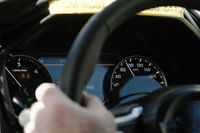
From the hefty portrait touchscreen (10.1-inch in base models, 12.1-inch in the Sport grades and above), to the digital cluster, the pin sharp 360-degree camera, and comprehensive off-roading menus, the Ranger felt more ‘premium’ than any dual-cab ute before it at launch. In the years since of course, other nameplates have closed the gap. The Kia Tasman and aforementioned Cannon Alpha and Shark 6 in particular have pushed the envelope of what creature comforts customers can expect to see in their pick-up.
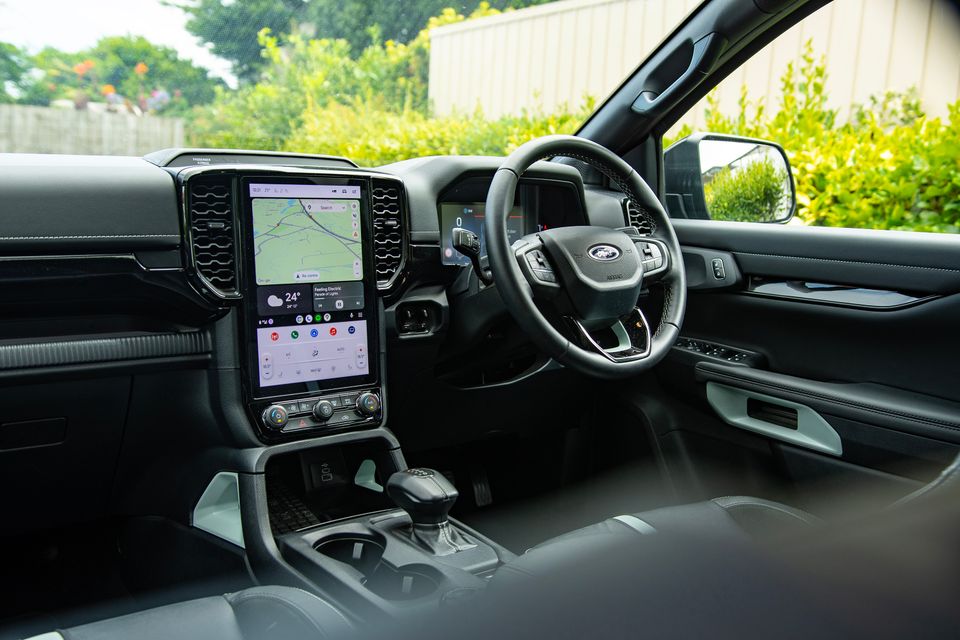
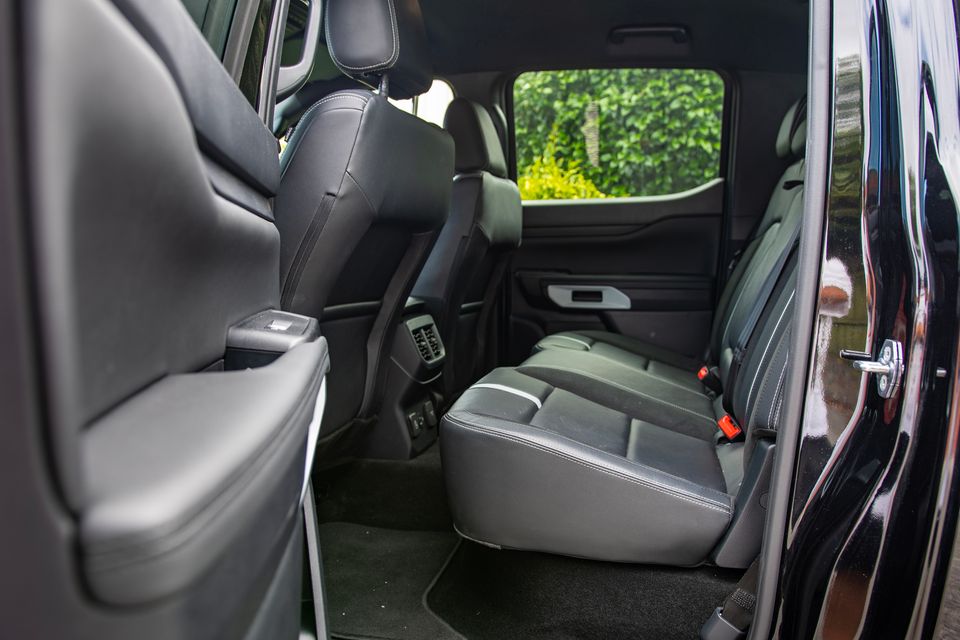
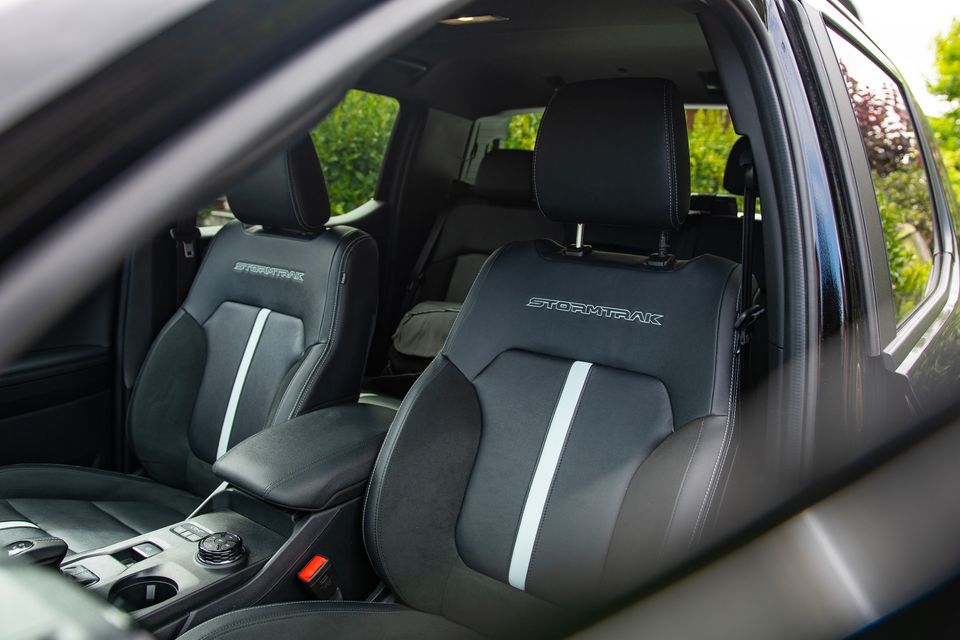
Whilst the Ranger’s cabin is perhaps now second in the pecking order to the Tasman in terms of refinement, space and toys, it is still a very comfortable and spacious place to sit. To the point that you could be forgiven for thinking you were sitting in an SUV rather than in a tray-laden workhorse.
More than a lot of other vehicles, the Ranger makes use of a modular dashboard design to help lift the feeling of quality in certain variants. Whilst in an XL and XLT every surface is hard plastic, models like the Wildtrak and the pictured Stormtrak swap out certain panels and pieces for soft-touch surfaces. The door cards, the trim around the digital cluster, and the panel above the passenger-side dash cubby space are all leather-lined in models like the Stormtrak.
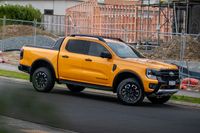
Speaking of the Stormtrak, it comes with its own range of little detail touches that separate it from the Wildtrak that it largely shares its specs with. There are ‘Chill Grey’ highlights on the centre console and doors, white contrast stitching on the leather upholstery, and Stormtrak insignia on the front seats and dashboard.
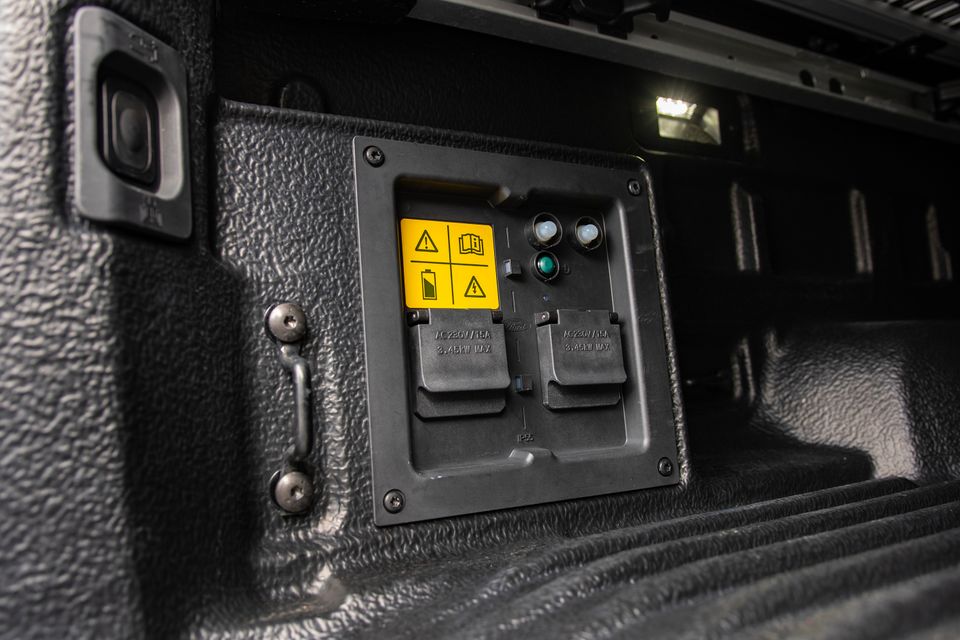
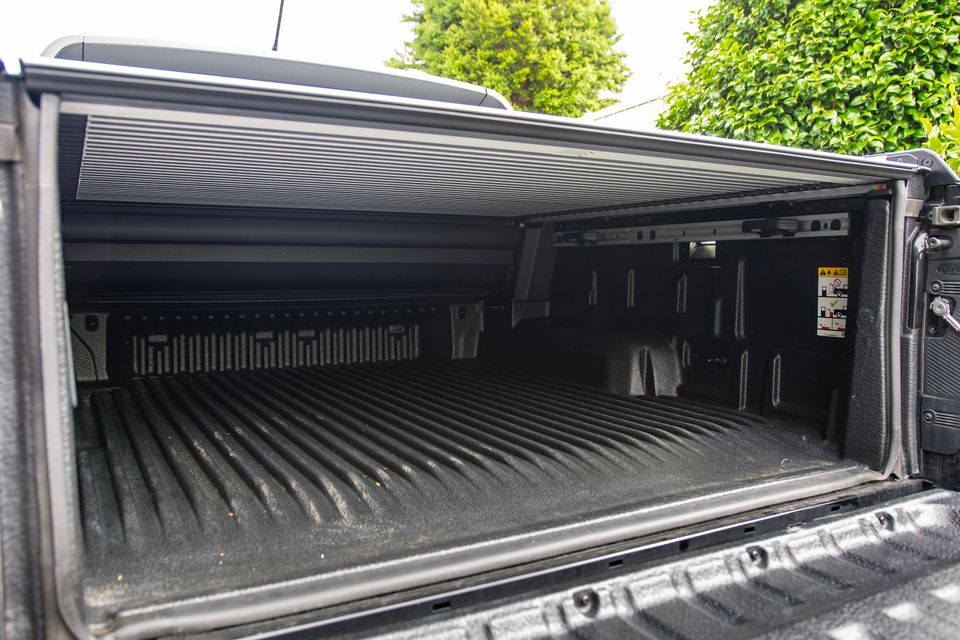
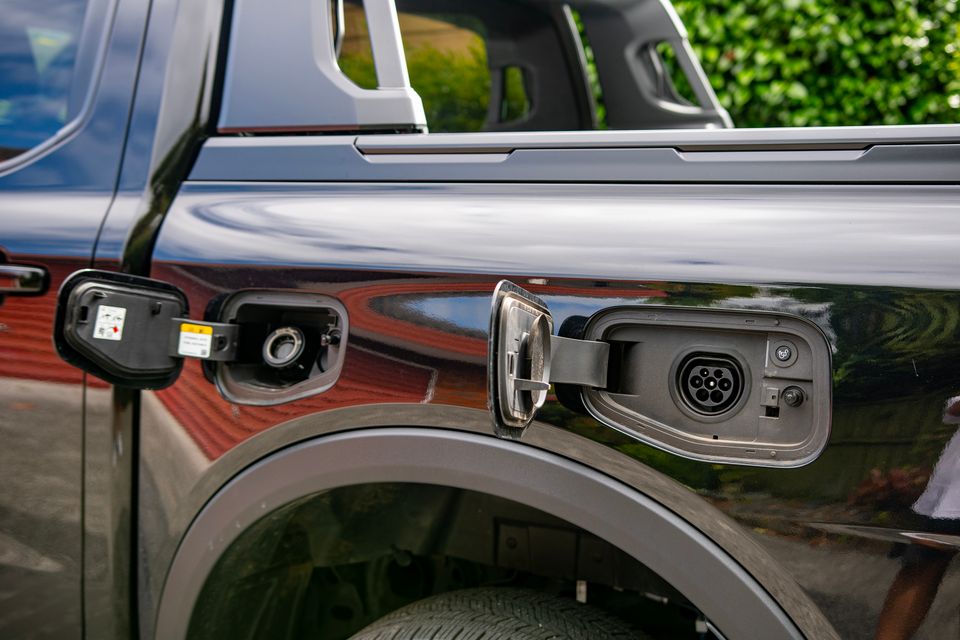
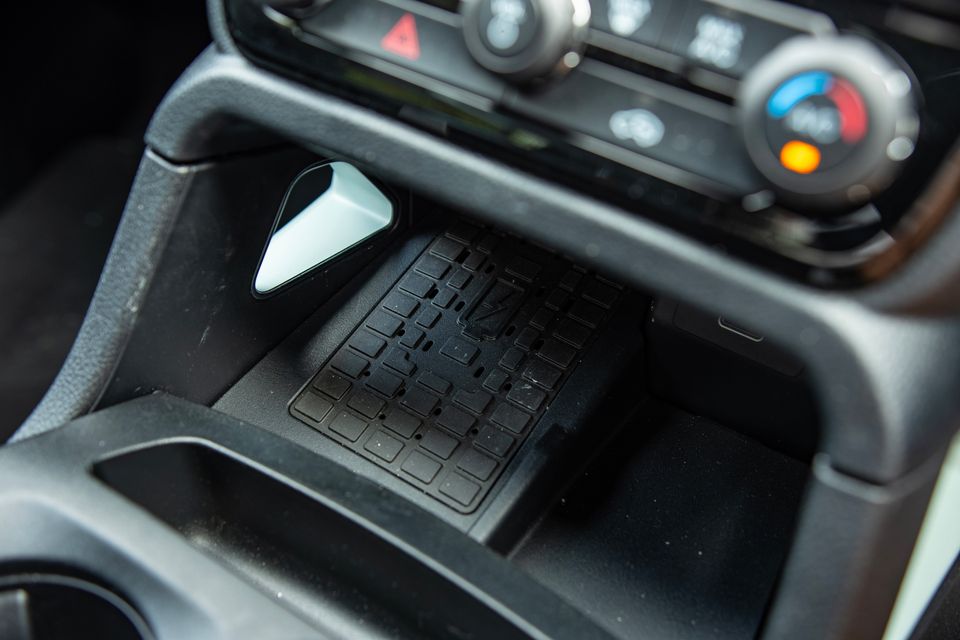
One of Ford’s big selling points behind its Ranger PHEV line-up is its ‘Pro Power Onboard’ system — Ford’s nomenclature for vehicle-to-load. This enables owners to power and charge their electric power tools and appliances using either the 2.3kW socket in the cabin, or the dual 3.45kW sockets in the tray.
As far as space is concerned, the Ranger offers plenty inside. Again, whilst it doesn’t have as roomy a backseat as a Tasman or a Cannon Alpha, there’s still ample space for two adults in the second row — three at a push. Legroom and headroom are both solid, and the seats themselves are quite comfortable.
Before we dive into what makes the Ranger PHEV tick, it’s worth a refresher on the many changes currently working through the rest of the model’s drivetrain line-up.
The biggest change is Ford’s current plan to phase out the 2.0-litre bi-turbo 4-cylinder diesel engine that used to power the majority of the Ranger line-up. The 154kW/500Nm unit has been lauded for its polished road manners and sound performance, but found itself on the chopping block as more stringent Euro 7 emission standards loom on the horizon.
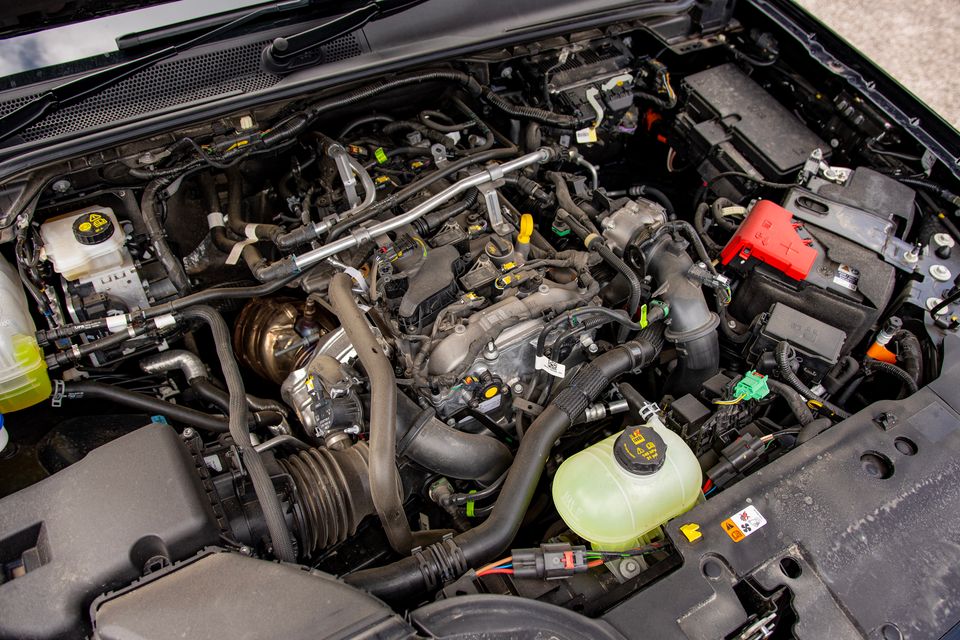
Ford is set to replace the outgoing engine by expanding the reaches of its two other diesel powertrains; the 3.0-litre V6 turbodiesel and an updated version of the single-turbo 2.0-litre 4-cylinder diesel engine. We expect to give the latest versions of both powertrains a test later this year. But, enough about diesels. Let’s talk plug-in hybrids.
The Ranger PHEV’s powertrain combines a detuned version of Ford’s familiar 2.3-litre 4-cylinder EcoBoost petrol engine (making 138kW/411Nm) with a 75kW electric motor and an 11.8kWh li-ion battery pack. Combined power is rated at a potent 207kW/697Nm, making this more of a torque monster than its Raptor cousin. Its official fuel economy figure is 2.8L/100km, but of course that number doesn’t mean a lot in the grand scheme of real-world PHEV usage.
The Ranger PHEV has a pure electric range of 43km on the 3P-WLTP cycle. This has been the model’s biggest talking point since launch. On one hand, Ford has adamantly explained that — according to its data — most Ranger owners drive 40km a day, making this total wholly adequate. But on the other hand, that figure pales in comparison to the approximate 80km real-world electric range of the BYD Shark 6 and GWM Cannon Alpha PHEV.
One counterpoint Ford can lean on here is how the Ranger PHEV retains the same towing capabilities as its diesel counterparts. The plug-in Ranger still boasts a 3500kg braked towing rating, and a payload of up to 973kg in the XLT variant (the Wildtrak and Stormtrak are rated for 885kg and 808kg, respectively). Whilst the Cannon Alpha can also tow 3500kg, the popular Shark 6 tows just 2500kg.
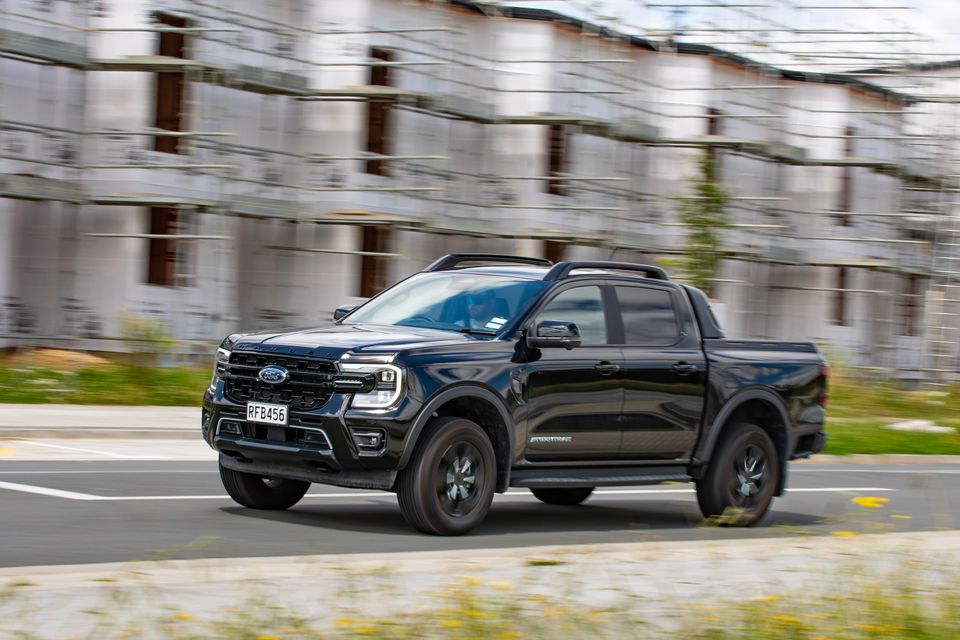
The T6 platform that underpins the Ranger has long been lauded for its drive experience. That is, the whole shooting box — how it rides over bumps, how refined it is, and the performance of the leading powertrains. The launch of the current generation Ranger took this to new heights, with the model’s ride quality still arguably the best in the business.
You might think the Ranger PHEV would represent more of the same, but with an added layer of hybrid refinement and fuel economy gain. The reality is a little more complicated than that.
In terms of performance, the electrified 2.3-litre is fairly punchy when you want it to be. It can sprint to 100kmh in just over eight seconds, making it a little quicker than a 3.0-litre V6 equivalent, whilst predictably being down on a Raptor. It’s also slower than a Shark 6, which gallops to three digits in just 5.7 seconds. Although we didn’t do much off-roading or towing with the Stormtrak during our time with it, our Australian colleagues have put it through its paces thoroughly — with impressive results.
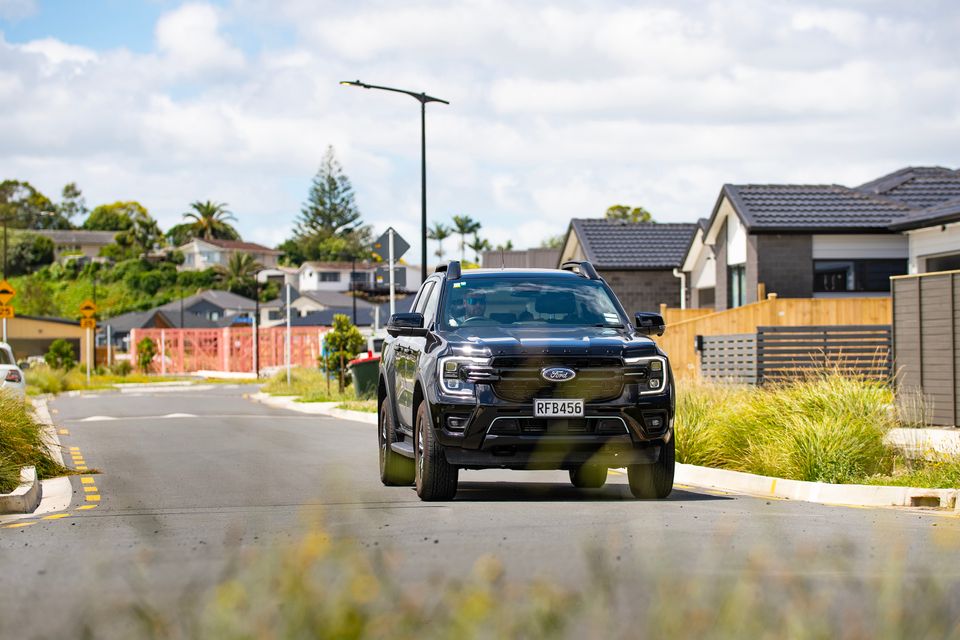
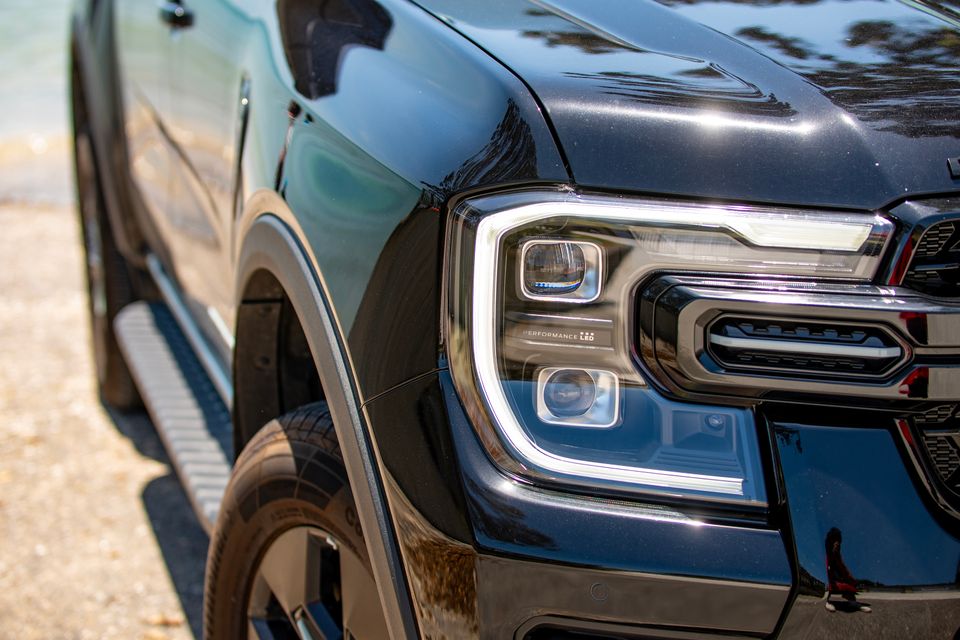
It’s pleasant, if a little eerie, to hop into a Ranger and turn it on without hearing some kind of diesel engine rattle into life. Ford’s tuning and management of the petrol-to-electric changeover is handled well, with the PHEV rarely stumbling or hesitating when transitioning between power sources. Even when it’s in full song, the 2.3-litre petrol is more quiet than any of the Ranger’s other diesels.
Something we appreciated was how the system will always have a little bit of battery power spare, even when its charge meter is showing zero. Not only does the Ranger PHEV almost always start silently, but it is one of the most functional PHEVs when operating with an ‘empty’ battery. Electric power would often kick in at low speeds and make a positive difference to fuel economy, days after the pick-up first indicated the battery was out of juice.
Speaking of economy, although its fully electric range isn’t especially impressive on paper, the Ranger PHEV can at least come quite close to replicating it in real-world driving. We saw a real-world result of 40km to a charge, just 3km shy of the official claim. In pure electric mode, the Ranger can get out of its own way, but you wouldn’t call it quick. Not that this is especially important, as I suspect most users are more likely to use this as a hybrid rather than a split-personality EV.
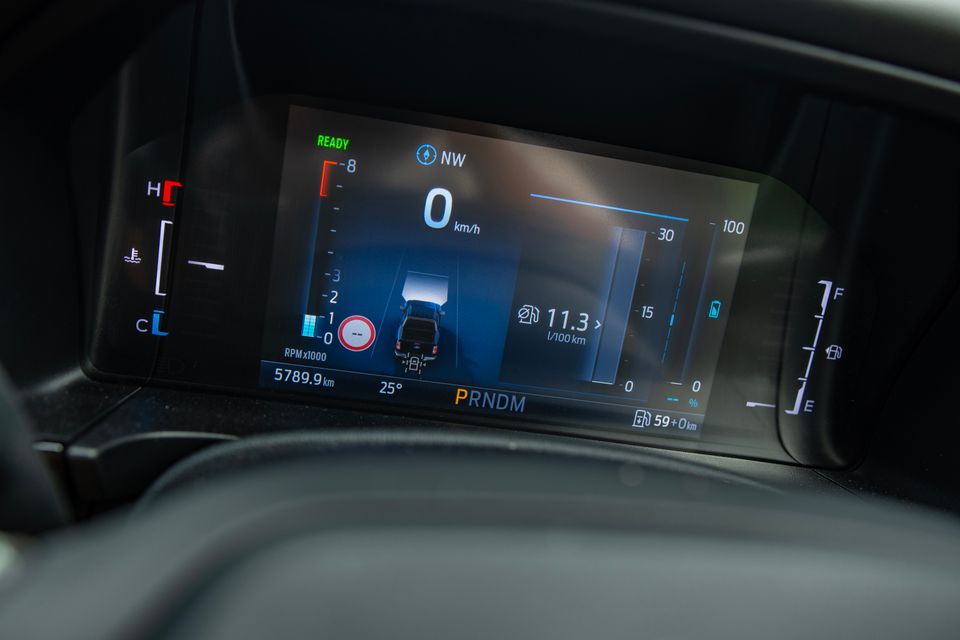
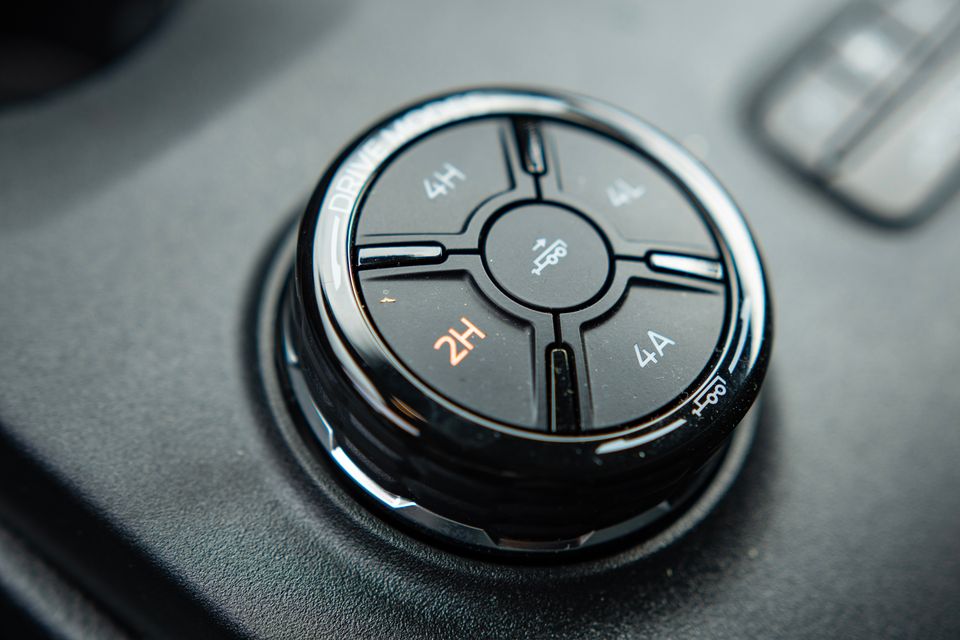
As far as actual fuel economy goes, the Ranger PHEV returned some fairly solid figures when operating on low battery. Even with minimal juice in reserve, it regularly indicated 8.0–8.5L/100km. This is a pretty strong figure when compared to GWM’s Cannon Alpha hybrid and plug-in hybrid, both of which struggled to return less than 11.0L/100km in past real-world tests. The Shark 6 still leads the way, showing a credible 7.9L/100km last time I drove one.
The cost of adding a larger battery to the T6 platform is weight. Tipping the scales at almost 200kg heavier than non-hybrid variants, the PHEV’s ride quality has taken something of a hit. It’s more firm and stunted than any other Ranger, with the added kilos clearly discernable to anyone familiar with the Ranger line-up.
Barring the firmed up ride, the Ranger PHEV is largely just as easy to drive around town as any other Ranger. Controls are light, the front end is easy to position in tight spots thanks to the squared off bonnet outline, and the interior is well insulated.
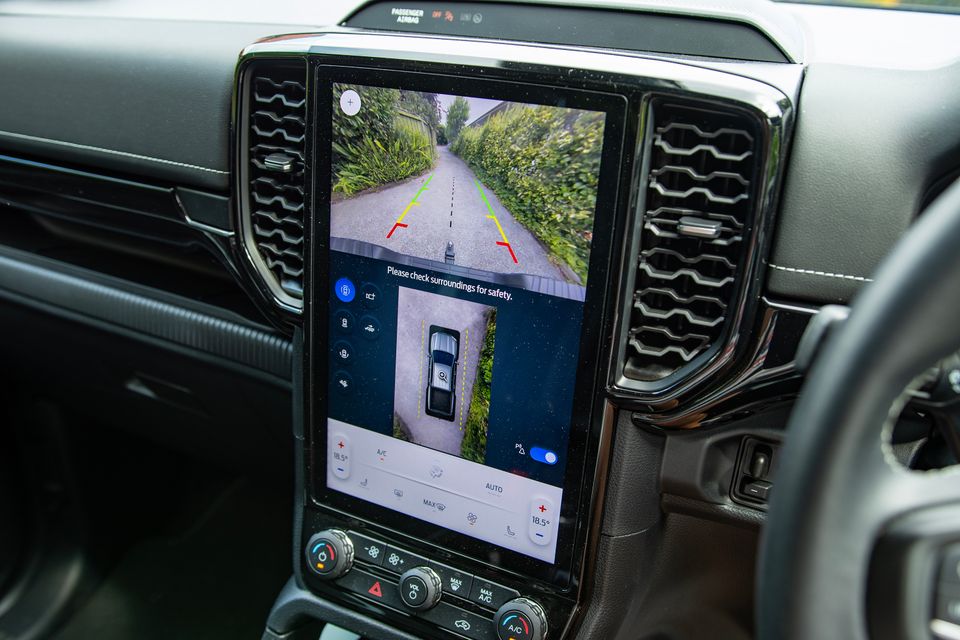
As the nameplate that’s dragged the ute segment to new frontiers, it’s no surprise that the Ranger line-up is one of the most well specified models in the segment. This naturally also applies to the Stormtrak, which comes with everything you could need in a pick-up, apart from perhaps a head-up display.
2026 Ford Ranger XL equipment highlights:
Ranger XLT adds:
Ranger Sport adds:
Ranger Wildtrak adds:
Ranger Stormtrak adds:
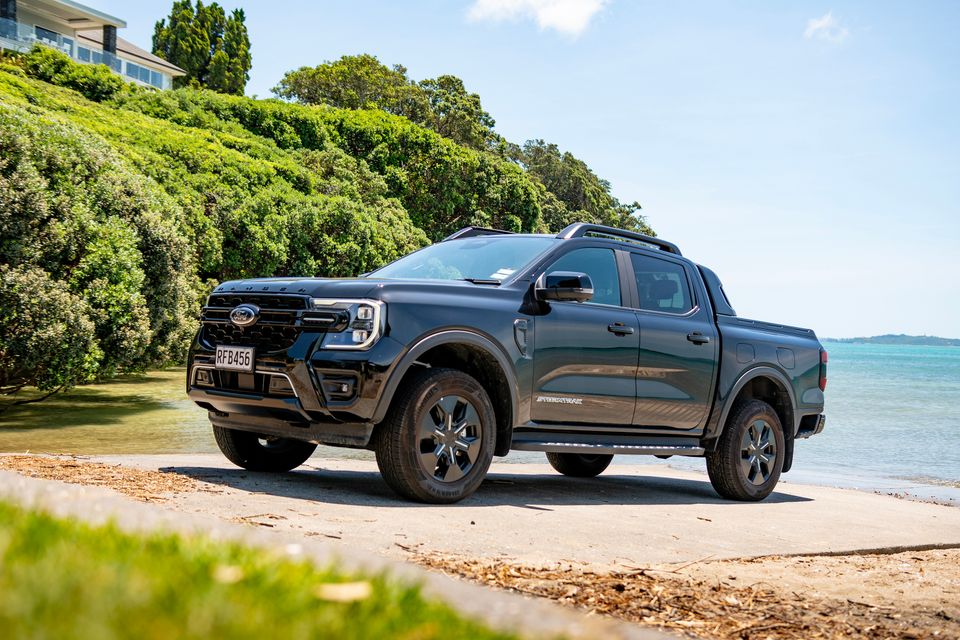
Although it isn’t as capable as a plug-in hybrid, the Ranger PHEV remains exceptionally approachable in a way most utes can only dream of. There’s ample comfort, surprisingly plush build quality, and an ease of use that ute users could only dream of 10 years ago.
Comparing the Ranger PHEV with its peers — the BYD Shark 6 and GWM Cannon Alpha PHEV — raises a bit of a conundrum. One that can only be solved on a case-by-case basis. The plug-in Ford stumbles on the biggest point of getting a plug-in hybrid; range. This leaves a potential open goal for both of its Chinese rivals.
But, Ford’s commitment to ensuring that the Ranger PHEV is just as capable as any other diesel-drinking Ranger means it can go further off-road and comfortably tow heavier loads than the Shark 6. And for a lot of punters, that could well be enough to give it the nod.
Where expert car reviews meet expert car buying – CarExpert gives you trusted advice, personalised service and real savings on your next new car.
Quickly see how this car stacks up against its competition. Select any benchmark to see more details.
2026
$54,990
2026
$55,990
2026
$59,990
2026
$75,490
2026
$75,990
2026
$79,990
2026
$86,990
2025
$89,990
2026
$92,990
2025
$94,990
Matthew Hansen co-founded motorsport outlet Velocity News, worked as a freelance photographer for various race teams, and was a specialist journalist for NZ Autocar Magazine and Driven at the NZ Herald. Most recently, he was Editor of Motoring at Stuff.co.nz.
Add CarExpert as a Preferred Source on Google so your search results prioritise writing by actual experts, not AI.
Matthew Hansen
5 Days Ago

Dave Kavermann
13 Days Ago

CarExpert
18 Days Ago

Ben Zachariah
21 Days Ago
Dave Kavermann
26 Days Ago

Damion Smy
26 Days Ago
Add CarExpert as a Preferred Source on Google so your search results prioritise writing by actual experts, not AI.
† Displayed prices exclude on-road costs such as delivery charges, registration fees, number plates, insurance and applicable road taxes. These prices are subject to change without notice and may not reflect current market pricing or dealer offers.
 Automotive Vehicle Spec Data & 4K images Powered by JATO Dynamics Ltd