

 Showroom
 Car Chooser
 Compare
 Car Specifications

William Stopford
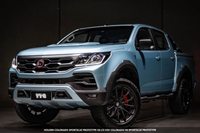
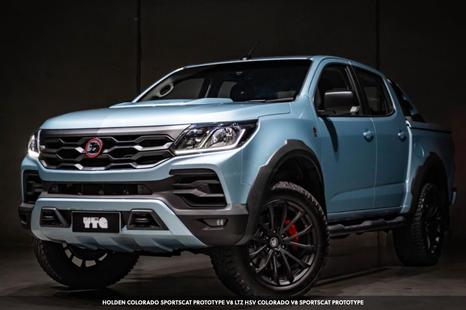
Would you pay $363k for "the real last HSV V8"?
HSV wanted to put a V8-powered Ranger Raptor rival into production but only ended up building one. Now you can buy it.
14 Hours Ago
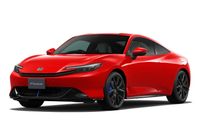
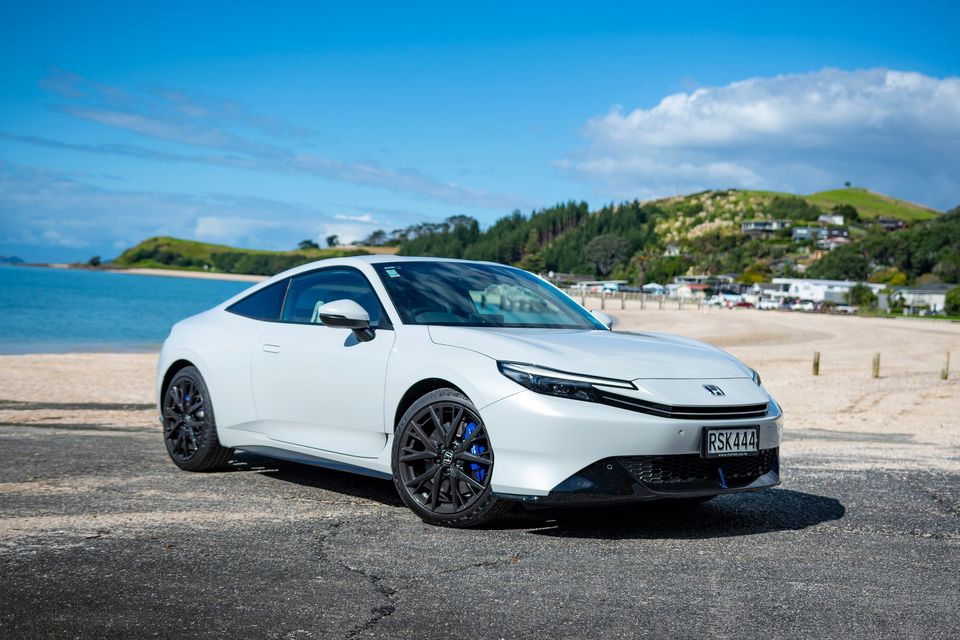
25 years since it was last on the market, the Honda Prelude is back, and we've driven it.
Where expert car reviews meet expert car buying – CarExpert gives you trusted advice, personalised service and real savings on your next new car.
It’s been 25 years since Honda last produced a Prelude, and a lot of water has passed under the proverbial bridge in that time.
The world of motoring has almost entirely shunned the manual transmission, invented family SUVs that can accelerate to 100kph in just a few seconds, and decided that every dashboard should have a giant touchscreen plonked on top of it.
The return of the Prelude comes at an intriguing time. On the one hand, rolling out a front-wheel drive, hybrid two-door sports car with a 0–100kph time that’s double that of a Tesla Model Y Performance seems a little daft in the current climate. And inevitably you have those who wonder what the point of it all is.
On the other hand, as we found out in our first go in Honda’s new coupe, there’s a certain honesty to the Prelude that might be just the antidote for certain enthusiasts feeling a little jaded about the state of modern motoring.
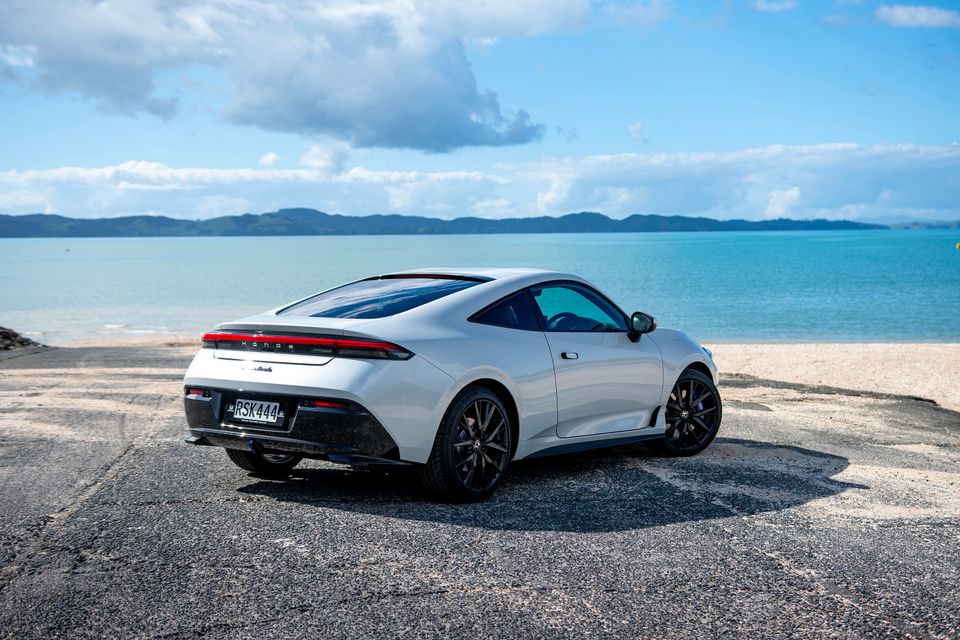
The Prelude isn’t necessarily what you’d call cheap. Just one generously optioned spec is being offered in New Zealand, and it’s $69,990 plus on-road costs. That’s a lot of money, but it’s actually less expensive than previous Prelude generations were when you take their original prices and adjust them for current inflation.
Direct rivals to the Prelude are hard to come by. The most obvious suitors are the Toyota GR 86 and Mazda MX-5, which are priced from $59,990 and $60,490, respectively. Within the Prelude’s own family, there’s also of course the $77,000 Civic Type R.
I don’t think the Prelude is a direct alternative to any of these nameplates, for reasons we’ll dig into later.
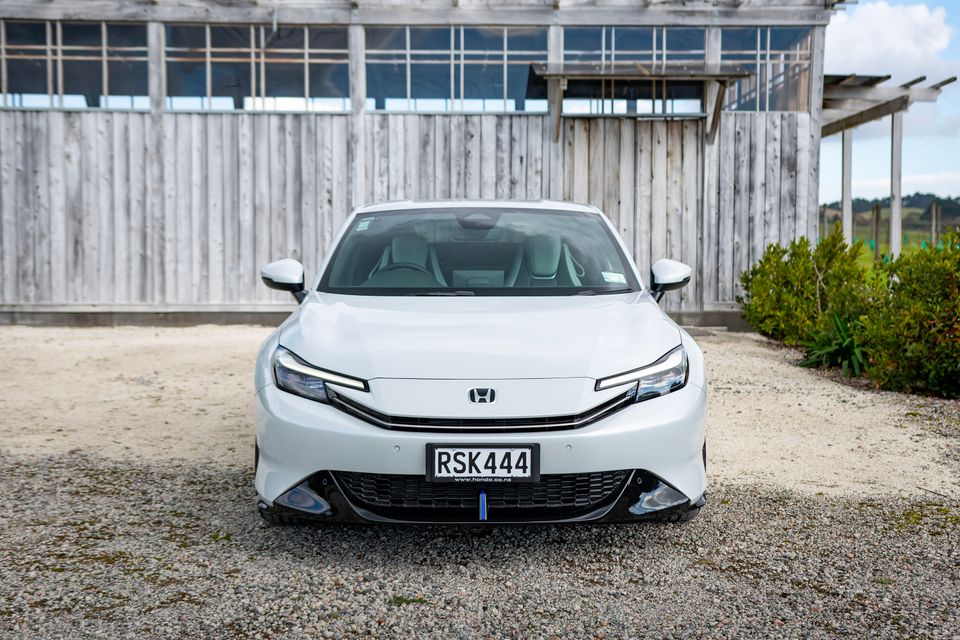
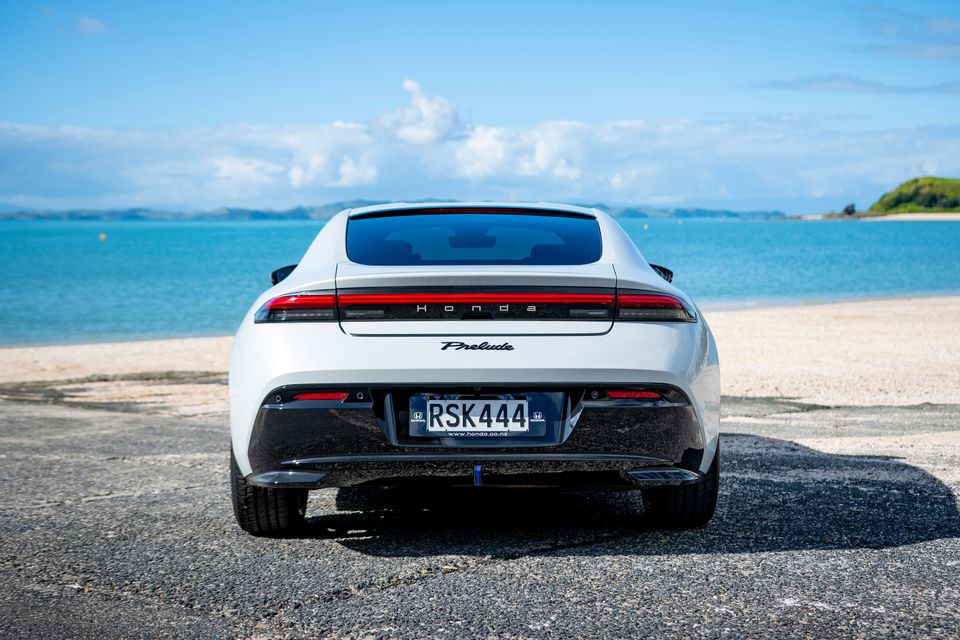
The Prelude sits somewhat in the middle of a standard $59,000 Civic e:HEV and a Type R with respect to its mechanicals. It gets the same platform and 2.0-litre hybrid 4-cylinder powertrain as the standard Civic (with all the same outputs), combined with a tinkered-with iteration of the Type R’s suspension and braking package.
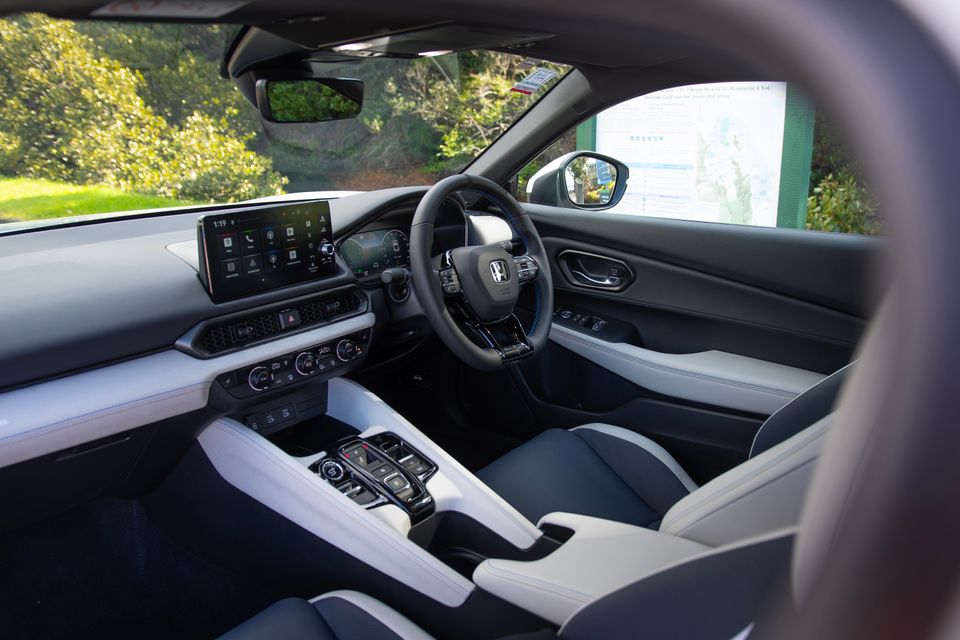
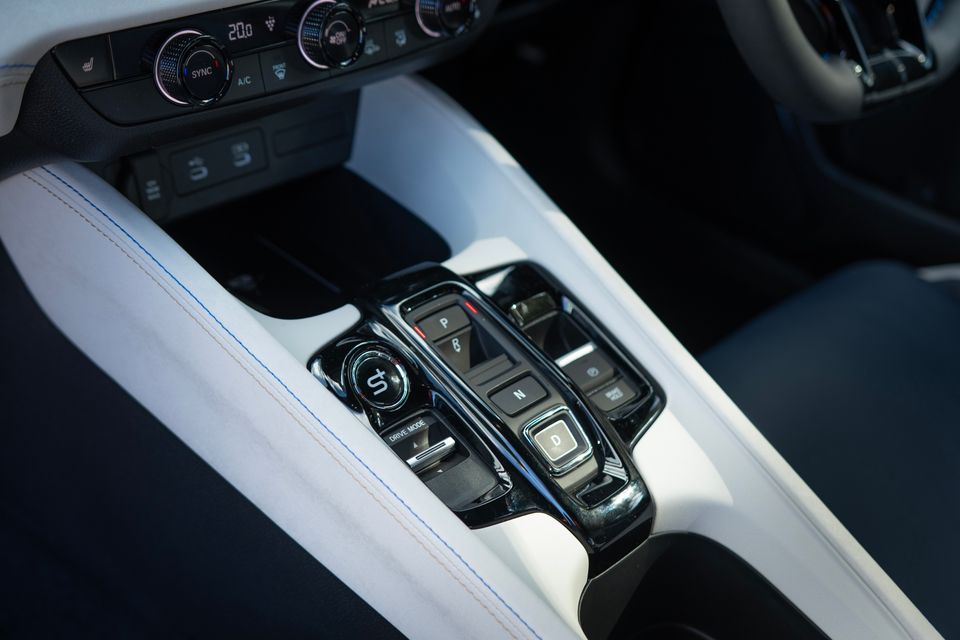
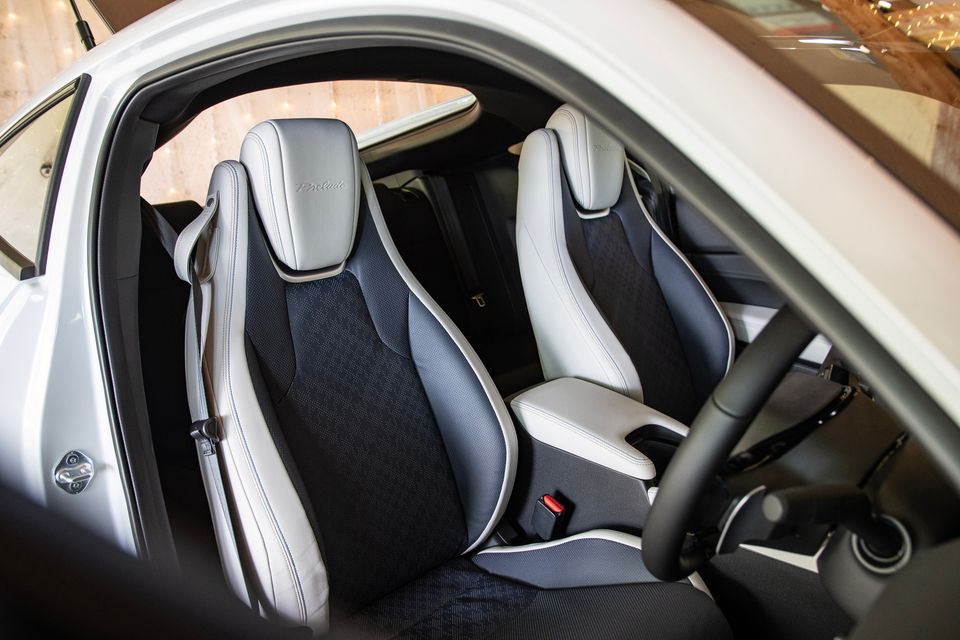
The Prelude’s cabin is one of its highlights. As with its Civic siblings, build quality, material choices, and finish inside the Prelude is exemplary — and certainly much more premium than in a GR 86 or MX-5.
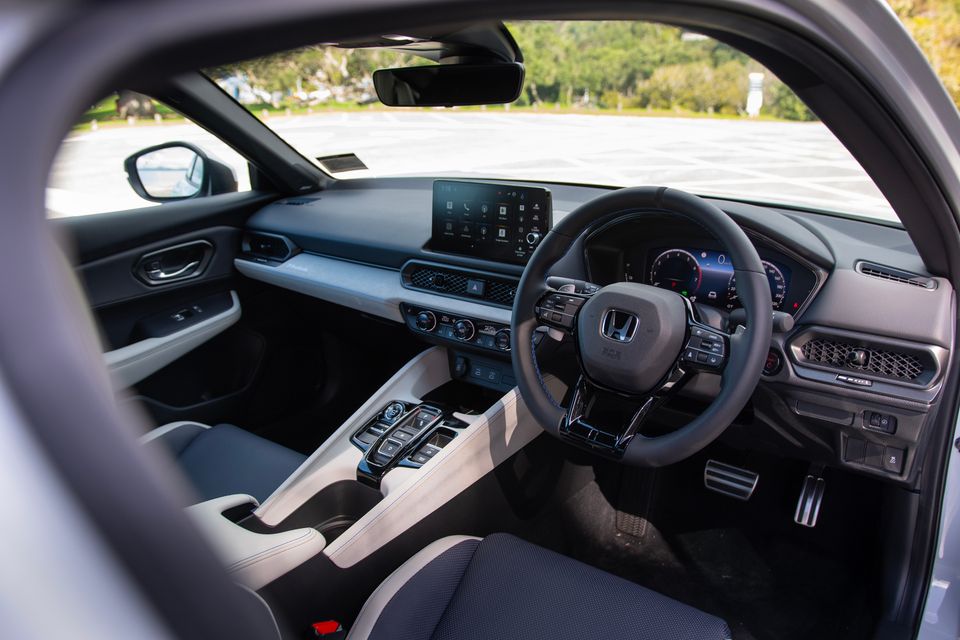
The two-tone leather and cloth seats are comfortable and easy to clamber in or out of. The metal, honeycomb mesh of the climate vents and well weighted switches and knobs all feel like classic Honda. The stitched ‘Prelude’ logo on the dashboard is a nice, retro touch. And of course, it comes with both Honda’s loaded Sensing safety suite and Honda Connect app capabilities.
For such a small space, it feels quite airy and open inside the Prelude. The light-coloured leather helps, as does the gaping visibility out front and relatively minimalist dashboard layout. The amount of room and comfort up front is notable (in part thanks to the model’s ‘double bubble’ roof), and should put the Prelude in good stead with Honda’s lankier customers.
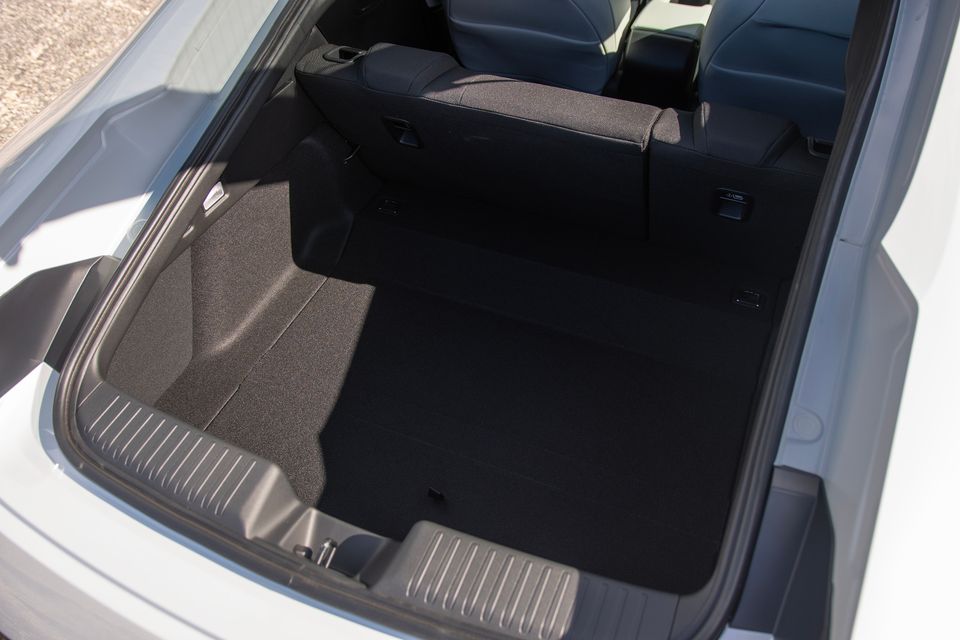
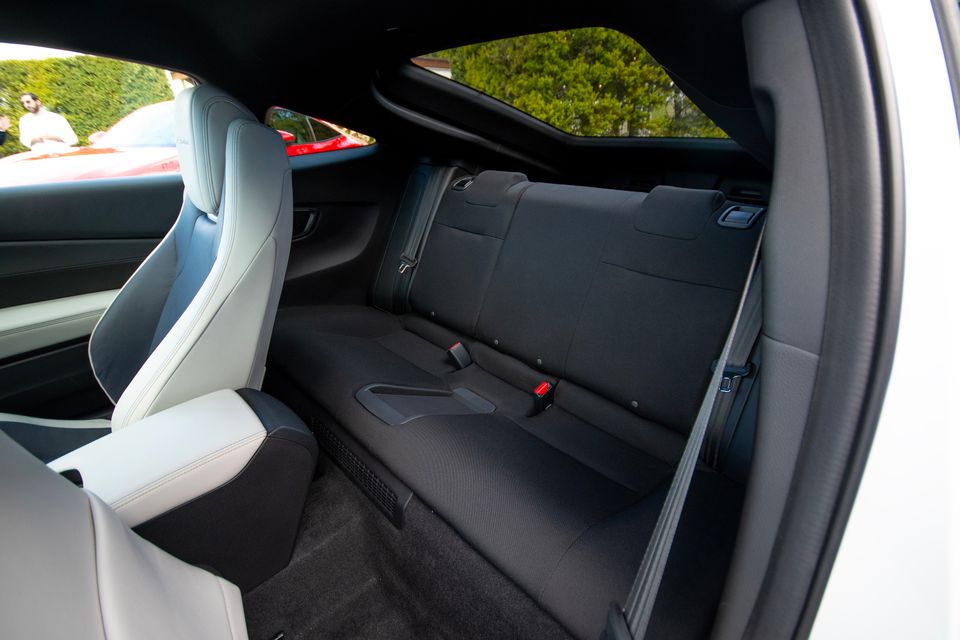
There’s obviously precious little space in the back seats, with really only room for the smallest of kids (or, more likely, some light luggage). But that’s fairly typical for the segment. On the flip side the boot is relatively huge at 428-litres. Flip the 60/40 back seats down, and the Prelude becomes a very functional two-seater.
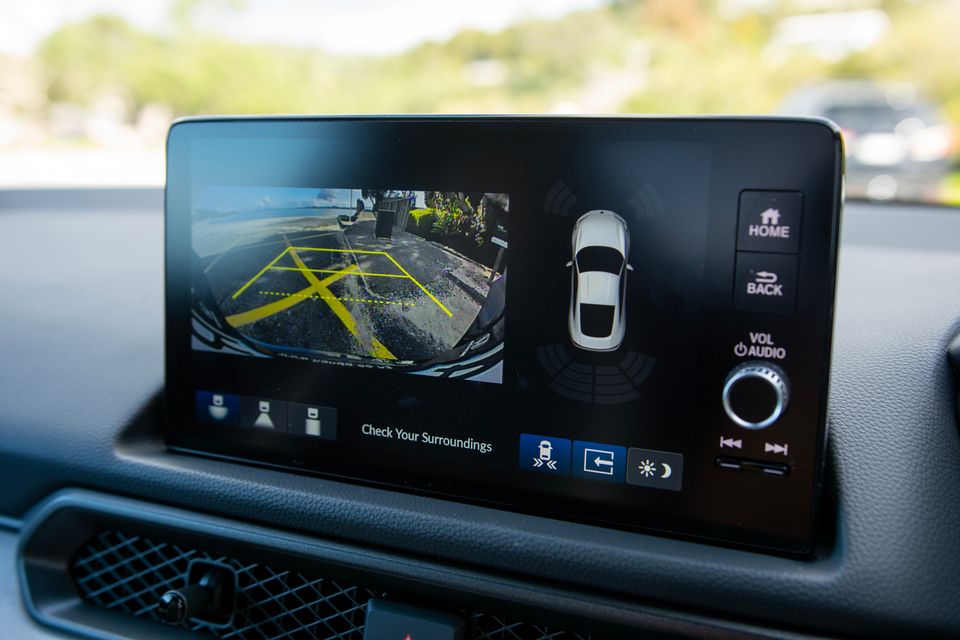
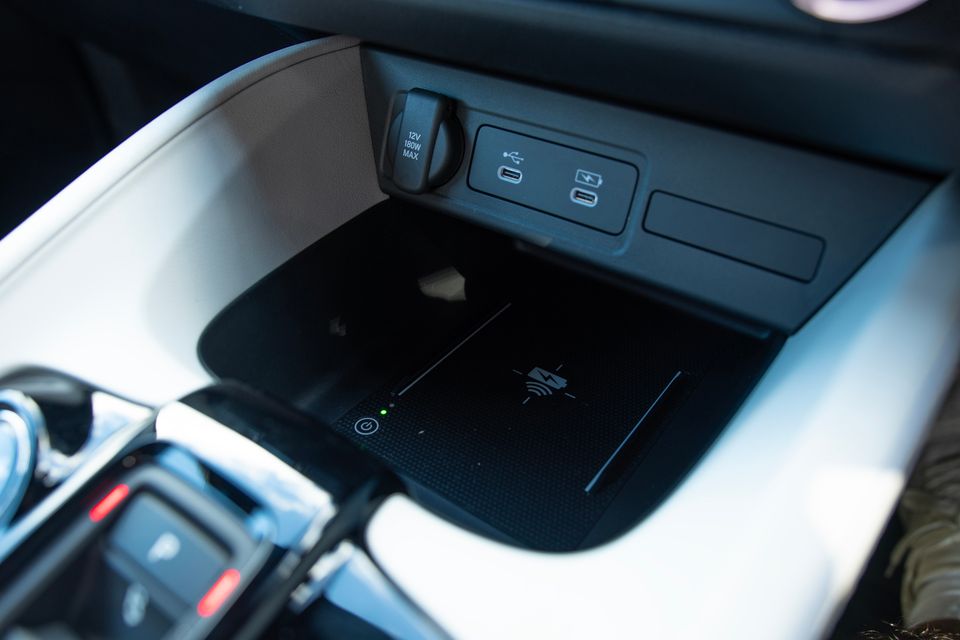
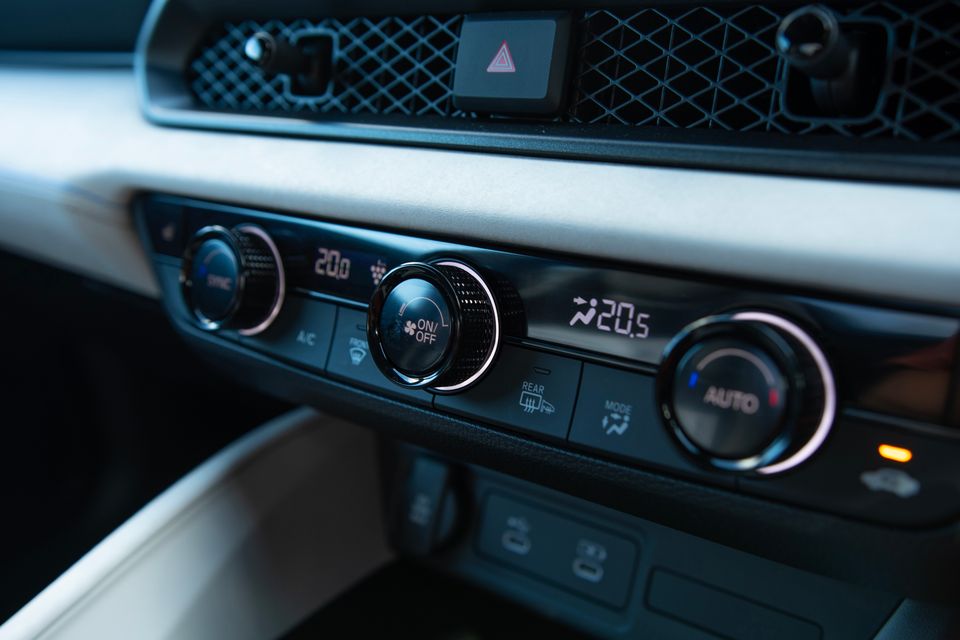
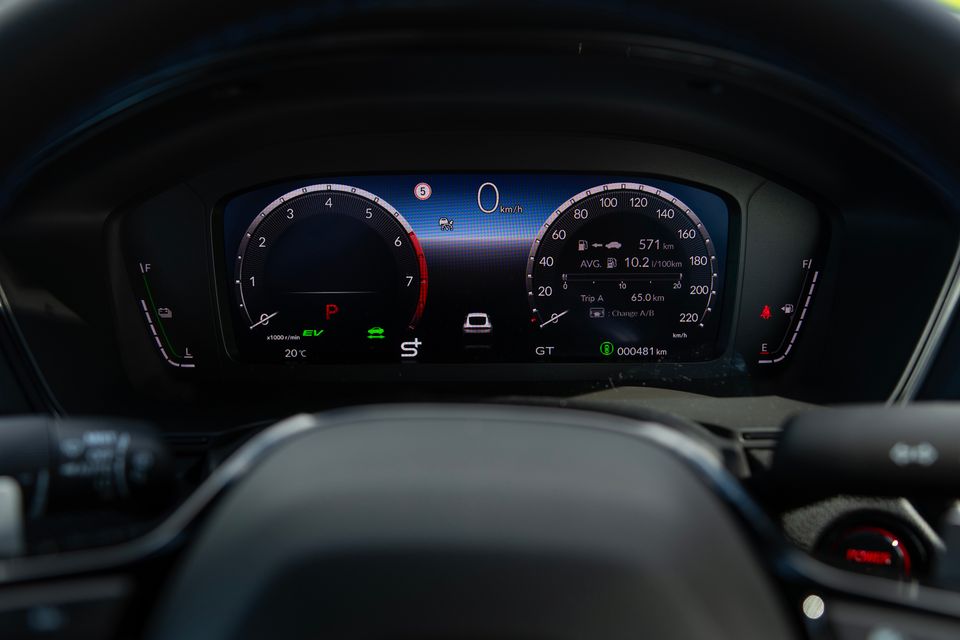
Tech? Yes, there’s some decent technology inside the Prelude. Built-in Google services are a great sight, particularly from a car brand that used to truly lag behind its peers with its touchscreen software.
Speaking of, there’s a 9.0-inch screen in the centre of the dash, and a 10.2-inch cluster behind the steering wheel. You also get heated front seats, dual-zone climate control, a wireless charger, wireless Apple CarPlay and Android Auto, and plenty more.
Under the Prelude’s shapely bonnet you will not find a screaming naturally aspirated 4-pot, nor the juiced 2.0-litre from the Civic Type R. Instead you get a comparatively sombre 2.0-litre e:HEV atkinson cycle dual-motor hybrid straight from the standard Civic.
Making 135kW of power and 315Nm of torque and capable of a 0–100kph time of 7.0-seconds, the Prelude’s numbers don’t exactly get the heart racing. There’s less power here than you find under the bonnet of the GR 86 or MX-5, and that power is being sent to the ‘wrong’ set of wheels.
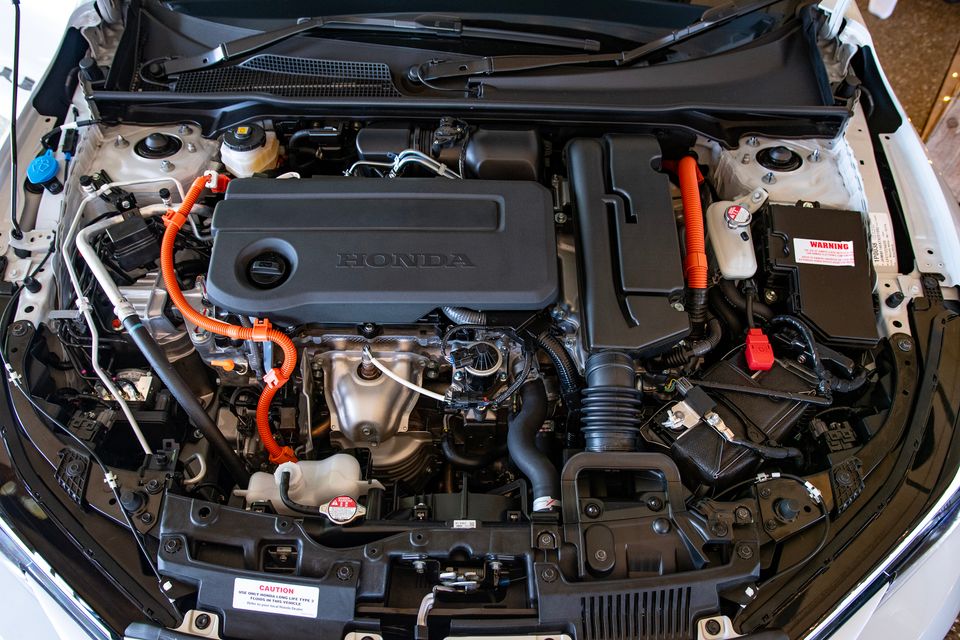
There’s also no manual transmission. Instead, you get something quite different.
The Prelude has long been a nameplate synonymous within Honda’s line-up for ingenuity. The third-generation Prelude was the first car in the world to come with mechanical 4-wheel steering, and the fifth-gen ‘Lude was one of the first cars to come with a torque vectoring system.
The latest Prelude’s contribution to Honda’s innovation history books is something called S+ Shift. The S+ Shift system is to CVTs what the simulated clutch and soundtrack in the Hyundai Ioniq 5 N is to silent electric vehicles.
S+ Shift is, essentially, an e-CVT that does everything it can to emulate the feel of an 8-speed torque-converted automatic transmission, with a focus on simulating crisp upshifts, blips of the throttle on downshifts, and less of that pesky, irritating ‘rubber band’ feel often associated with CVTs. Almost all of it is purely synthetic, created through mapping and software.
It might not make a lot of power, but the Prelude does come with some Type R performance cred. Its Brembo 4-piston front brake calipers, dual-axis strut front suspension, and adaptive dampers are all lifted from the FL5 Type R.
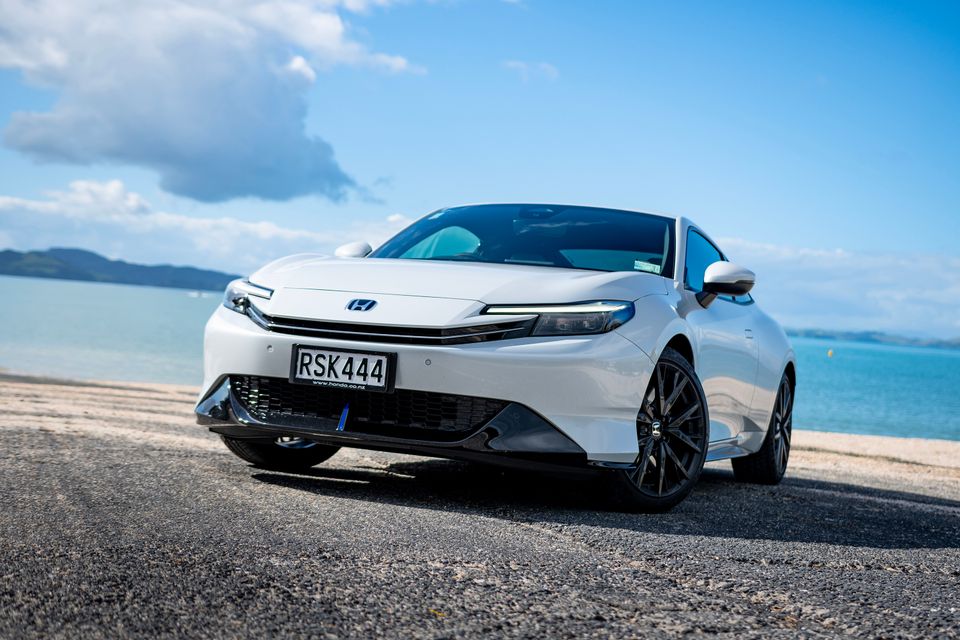
Our first taste of the Prelude came at a launch event in Auckland, where we got to fling it around the roads near Maraetai for an hour or so. So bear in mind that it was a shotgun drive, and a more detailed look will be posted to the CarExpert NZ airwaves shortly.
To get the obvious out of the way, the Prelude is not especially quick. It’s not a thoroughbred. It’s not a ‘Type R in disguise’. It isn’t going to upstage any Teslas at the traffic lights. It also isn’t particularly raucous. The 2.0-litre produces a reasonably pleasant Honda-like exhaust note, but it’s quite muted unless you’re really caning it.
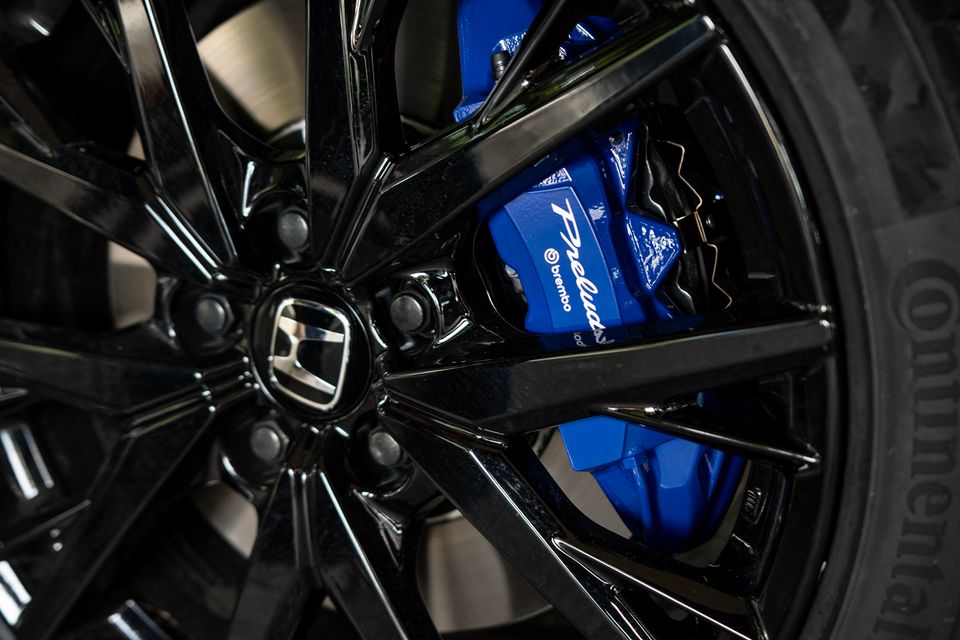
As you would expect, the Prelude’s suspension tuning is sublime. Even when keyed into Sport mode, its ride manages to be both ultra plush and level in the corners. There’s a heap of mechanical grip (as well as a decent footing from its Continental rubber) that makes for an interesting contrast to the comparatively slippy GR 86 and MX-5. The references to Type R DNA are more than just marketing, they’re real.
It also steers well, too. The amount of weight between your fingers is very satisfying, and it’s easy to be precise with your car placements. There isn’t a lot in the way of texture or feel, but in a car with the Prelude’s motivations I’m okay with that.
So, is the S+ Shift stuff more than just marketing, too? Well yes, mostly. This is, by quite some margin, the most ‘connected’ CVT I’ve experienced in a performance car. Shifts through the metal paddles feel physical and somewhat mechanical, which in turn emphasises the urgency of the Prelude’s rev-happy 2.0-litre.
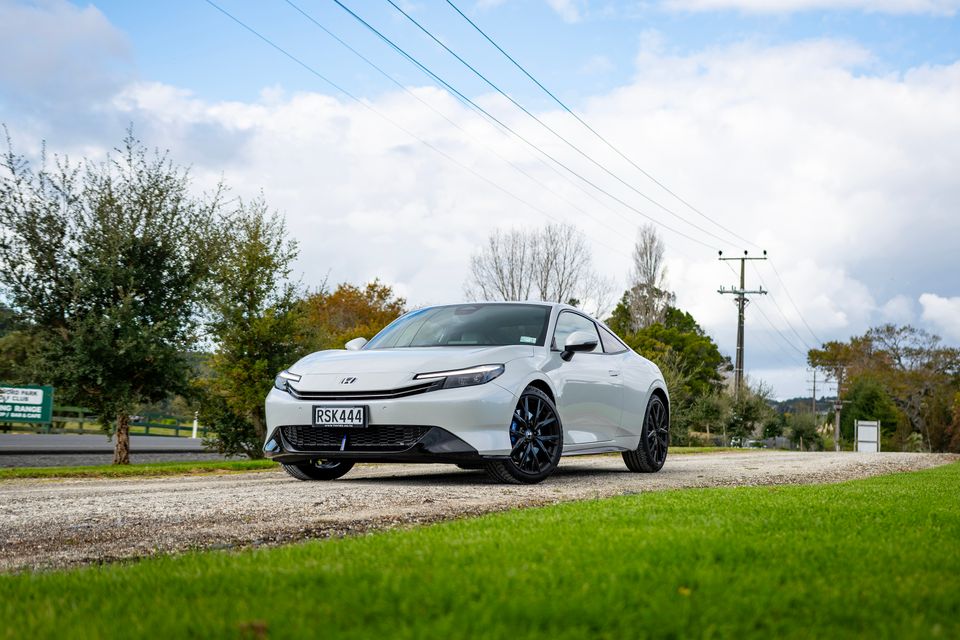
It’s genuinely fun to create a little gap in traffic, drop the Prelude a few fake cogs, and feed it a full boot of throttle. Because it’s all software based, the paddles traverse the gears instantaneously. Combined with a well balanced, grippy platform, and plush but purposeful suspension, and you can have quite a lot of fun with the little Prelude.
Honda has done a good thing here, and I wouldn’t be surprised if we start to see S+ Shift tech feature in other cars over time.
Would it be more fun with a 6-speed manual, or even a standard torque-converted or dual-clutch auto? Quite possibly. But, Honda is clearly chasing a particular vibe with the Prelude. And, if you want a 6-speed manual, you can always just get a Type R instead.
The Prelude has always fancied itself as being a bit nerdy and premium, and the new one is no exception. There are no stripped-back base variants (at least not yet), with the one standard spec loaded up with plenty of kit.
Honda Prelude equipment highlights:
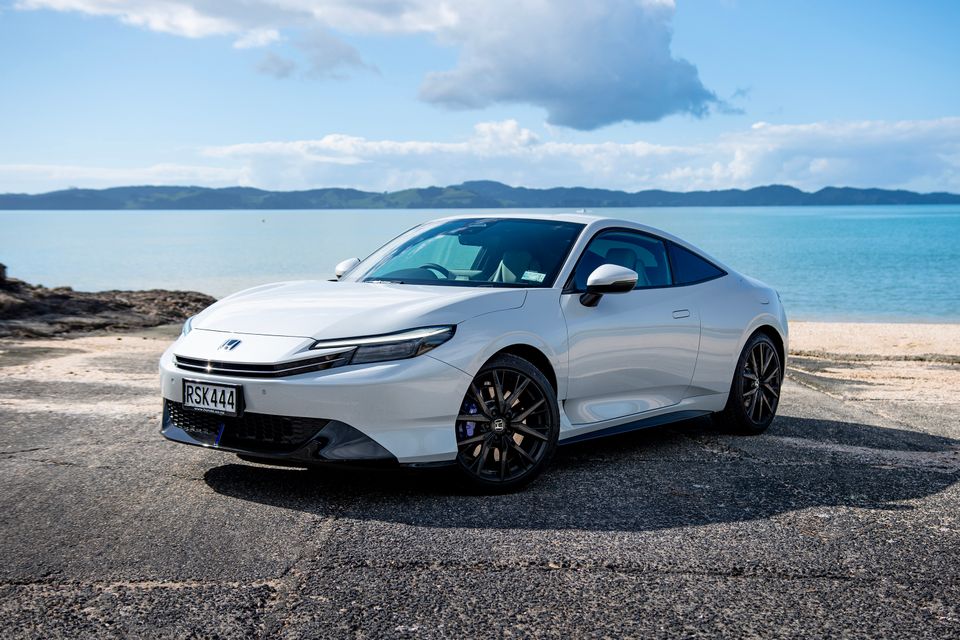
More grand tourer than raw sports car, the new Prelude is one of the most interesting new releases of 2026.
At a time where so many affordable, electrified cars are surprisingly quick off the mark, Honda proves that scintillating acceleration times aren't necessarily imperative when it comes to having fun behind the wheel.
The Prelude is as sharp and polished in its drive as it is approachable and usable. It's no secret that the Prelude has struck quite a chord with older customers in the markets, and I can see why. This is a fun, throw around platform that even the most 'mature' of enthusiasts could live with every day.
Still, a manual version with a Type R 2.0-litre and a Type S badge on the back is admittedly a tasty prospect ...
Where expert car reviews meet expert car buying – CarExpert gives you trusted advice, personalised service and real savings on your next new car.
Matthew Hansen co-founded motorsport outlet Velocity News, worked as a freelance photographer for various race teams, and was a specialist journalist for NZ Autocar Magazine and Driven at the NZ Herald. Most recently, he was Editor of Motoring at Stuff.co.nz.
Add CarExpert as a Preferred Source on Google so your search results prioritise writing by actual experts, not AI.
William Stopford
14 Hours Ago

Dave Kavermann
15 Hours Ago

Damion Smy
15 Hours Ago
Dave Kavermann
1 Day Ago

Dave Kavermann
1 Day Ago
Damion Smy
1 Day Ago
Add CarExpert as a Preferred Source on Google so your search results prioritise writing by actual experts, not AI.
† Displayed prices exclude on-road costs such as delivery charges, registration fees, number plates, insurance and applicable road taxes. These prices are subject to change without notice and may not reflect current market pricing or dealer offers.
 Automotive Vehicle Spec Data & 4K images Powered by JATO Dynamics Ltd