What’s the next big innovation coming to cars? It could be solid state batteries — smaller, and considerably more dense and powerful than the current norm. It could be better, more engaging ‘fake’ manual transmissions designed to try and lure enthusiasts back into the new vehicle market.
It could maybe even be a piece of tech that’s just hit the New Zealand market by way of the surprisingly interesting updated Lexus RZ line-up.
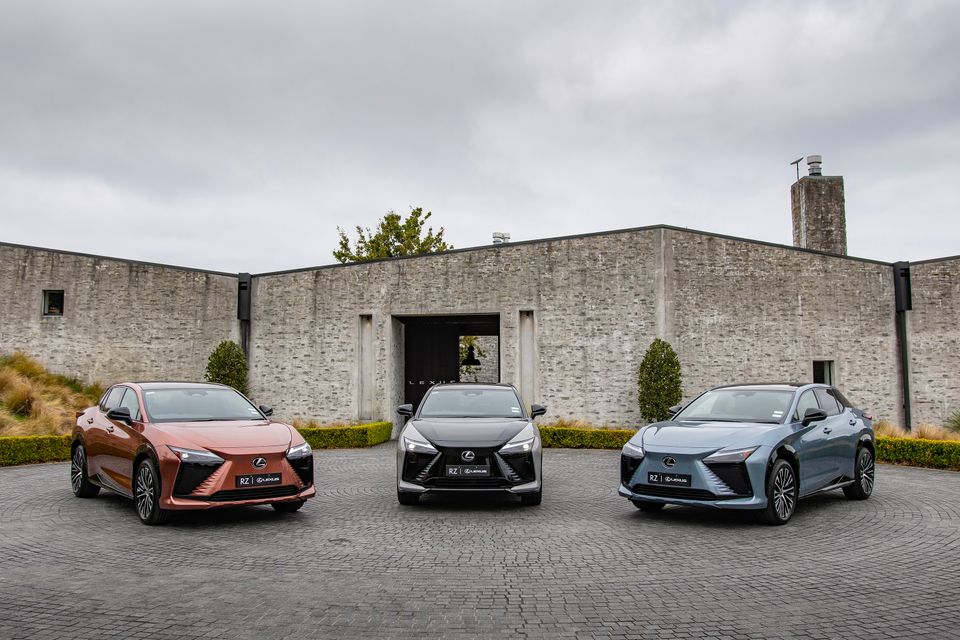
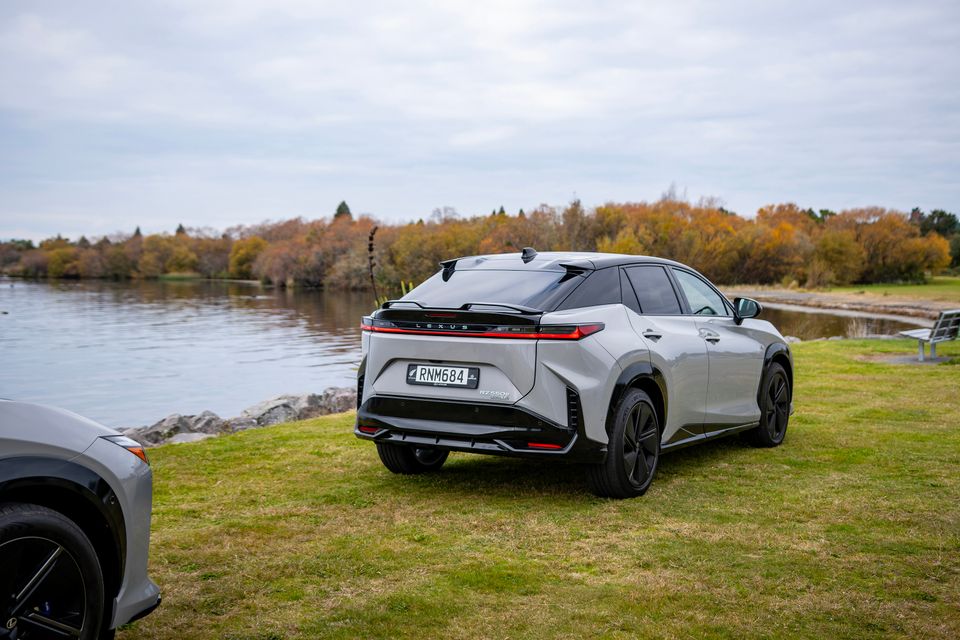
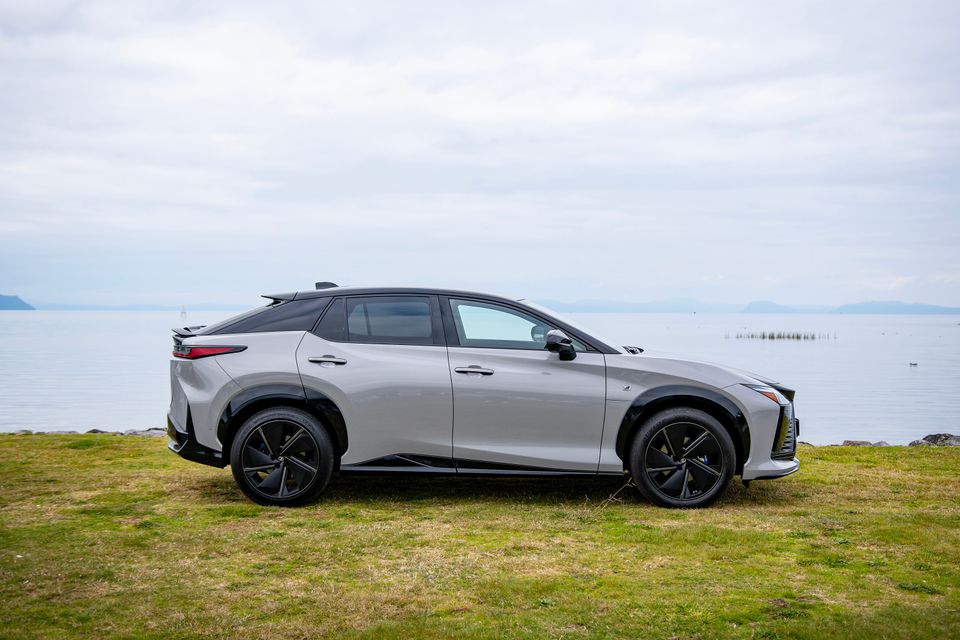
Although the new RZ looks a heck of a lot like the old one, there’s plenty of new developments to sink one’s teeth into. It’s massively cheaper than its predecessor, with improved range and more power. For the first time it’s available in a proper F Sport performance trim, a trim that adds more than just cosmetics. And it can even be had with a simulated 8-speed flappy paddle gearbox, kind of like a Hyundai Ioniq 5 N.
But, the most interesting piece of tech in the new RZ is that it’s the country’s first ever car to combine a Knight Rider–esque ‘yoke’ steering wheel with a variable ratio steer-by-wire system. We attended the local launch of the RZ in Taupō to see if the tech is worth the fuss.
How much does the Lexus RZ cost?
The outgoing RZ was properly pricey. That wasn’t especially noteworthy at the time. Lexus is a luxury brand after all. What is noteworthy is that the nameplate’s price has dropped dramatically with this update.
Model
Price before on-road costs
Lexus RZ 500e Dynamic
$109,900
Lexus RZ 500e Dynamic with steer-by-wire
$119,900
Lexus RZ 550 e F Sport
$134,900
Priced between $141,900 and $151,600 on first arrival to New Zealand, the RZ’s pricing has tumbled to $109,900 for the ‘entry-level’ RZ 500e Dynamic and $134,990 for the RZ 550 e F Sport — a more powerful flagship grade that’s new to the RZ line-up. The yoke steering wheel and accompanying system is a standard feature in the F Sport, and a $10,000 extra in the Dynamic.
Lexus hasn’t provided a direct reason as to how the RZ was able to shed more than 30 grand in pricing (more than 40 grand if you’re comparing the old Dynamic to the new Dynamic), other than saying that it wanted the nameplate to slot underneath the RX hybrid in the line-up.
It’s no secret that EVs are getting cheaper and cheaper, and early adopters were always going to pay a higher sticker price than those coming in later on. Toyota has drafted similar discounts with the RZ’s less bougie cousin, the bZ4X.
Still, it must sting a little if you forked out for an original RZ.
As far as rivals are concerned, the RZ goes toe-to-toe with the $134,990–$155,990 Audi Q6 e-tron and the upcoming $125,900– BMW iX2 50 xDrive, as well as the yet-to-be-priced Volvo EX60 (arriving in the second half of this year).
Lexus RZ 500e Dynamic interior
What’s the Lexus RZ like inside?
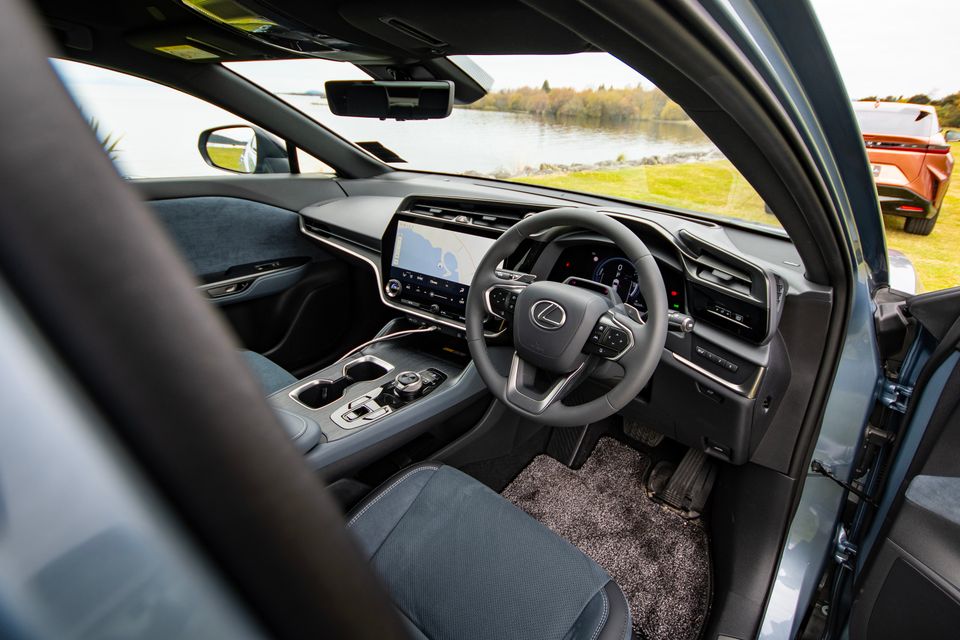
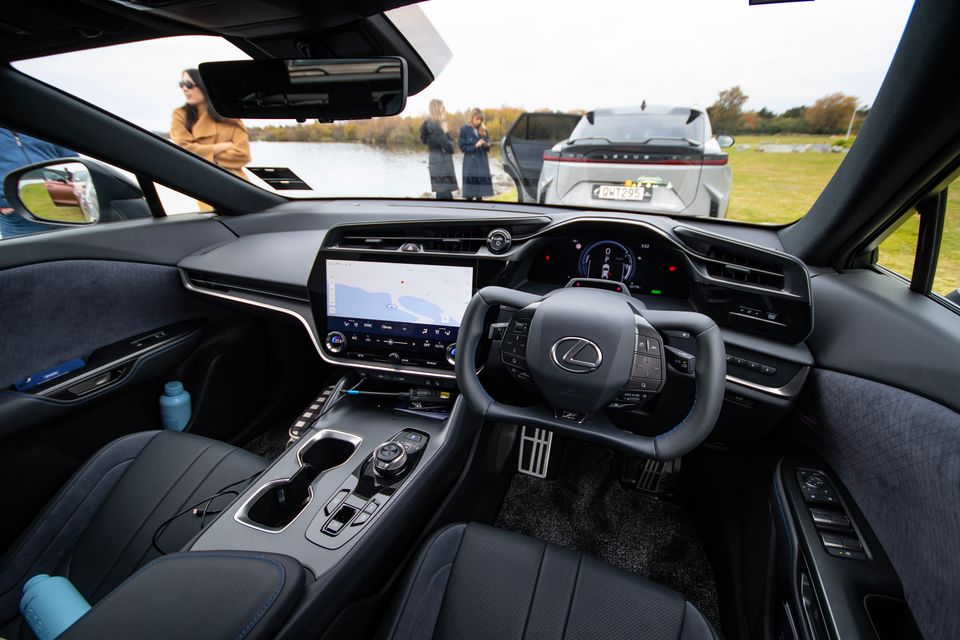
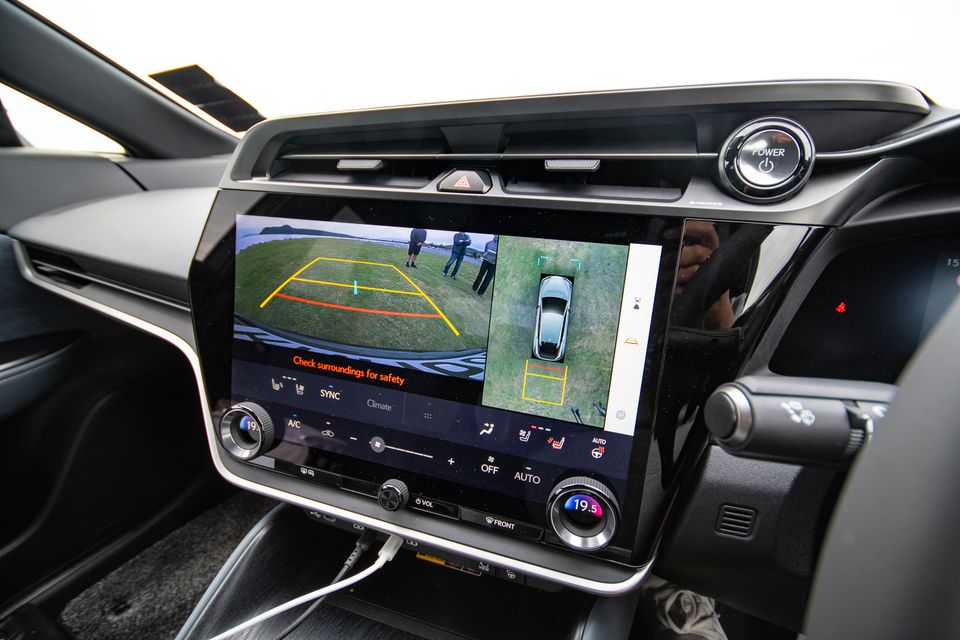
Parking the somewhat space-age steering wheel for a second, the rest of the RZ’s interior largely adheres to the sort of conservatism and quality we expect from Lexus these days. There’s a big 14-inch touchscreen in the centre of course with the brand’s latest software and wireless phone mirroring. But, there’s also plenty of agreeably placed physical controls for functions like air conditioning, too.
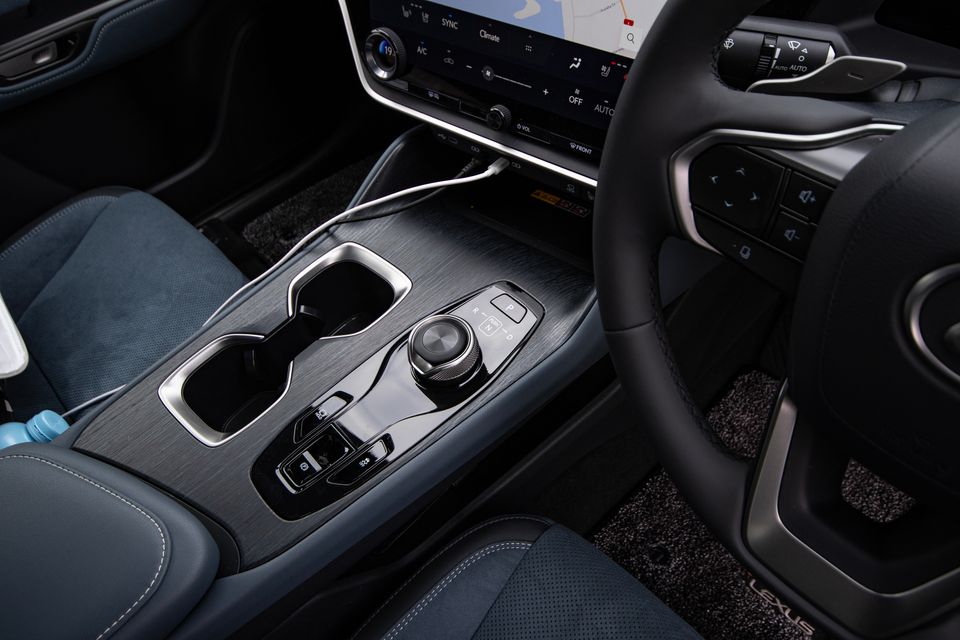
It’s a dashboard layout that generally carries over from its predecessor, which means some of the same quirks. There’s still no glove box on the passenger side (that’s where the car’s radiant heater lives). The drive mode selector dial in the centre comes straight from the bZ4X.
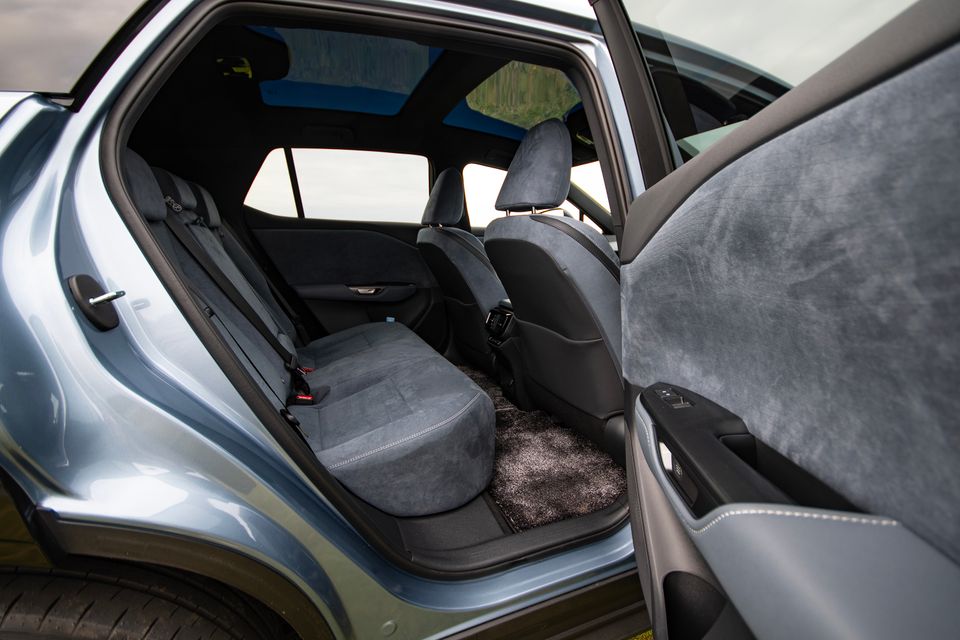
The build quality is inevitably very high, with neat contrast stitching, thick floor carpets, knurled switches, suede with detailed patterns in the door cards, and animated ambient lighting. The panoramic sunroof is made of glass with adjustable opacity, and there’s a wireless charging pad, head-up display, and digital cluster.
Lexus RZ550e F Sport interior.
The Dynamic and F Sport trims have quite different presentation inside. The former can be had with either a black or a light blue interior, with a focus on comfort. The latter, meanwhile, gets black leather upholstery and a pair of (still pretty comfortable) bucket seats up front.
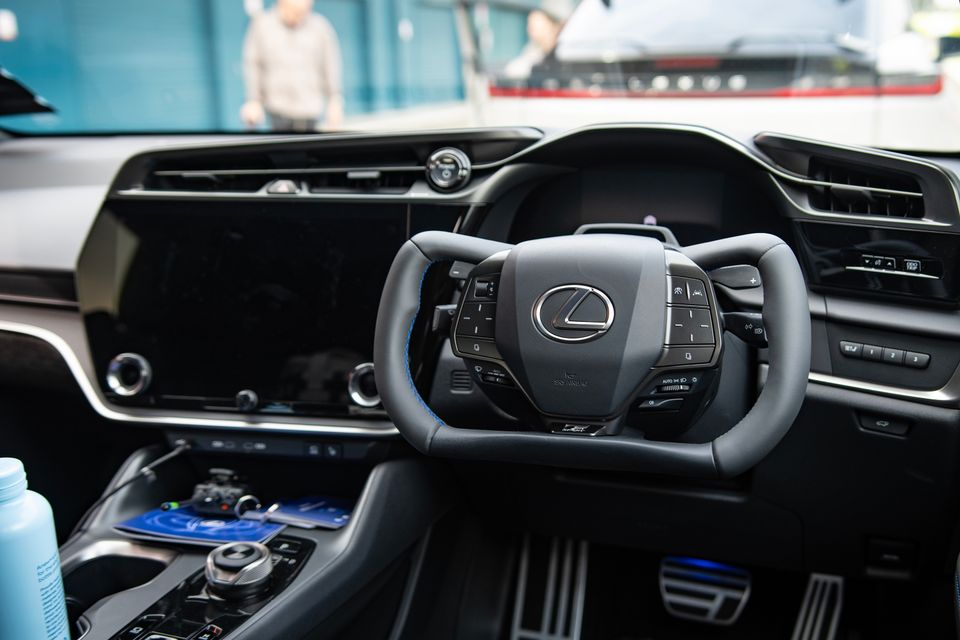
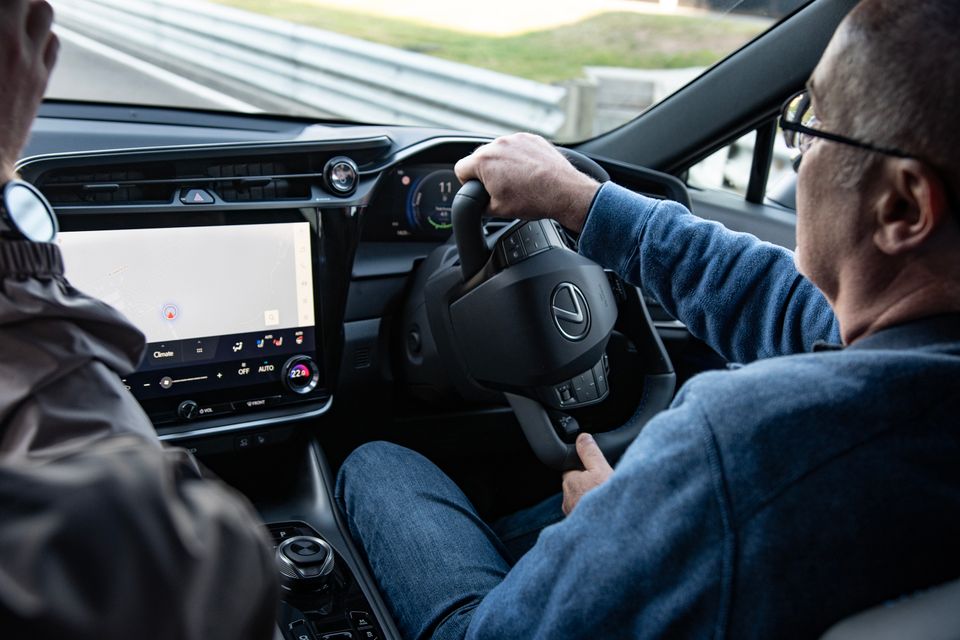
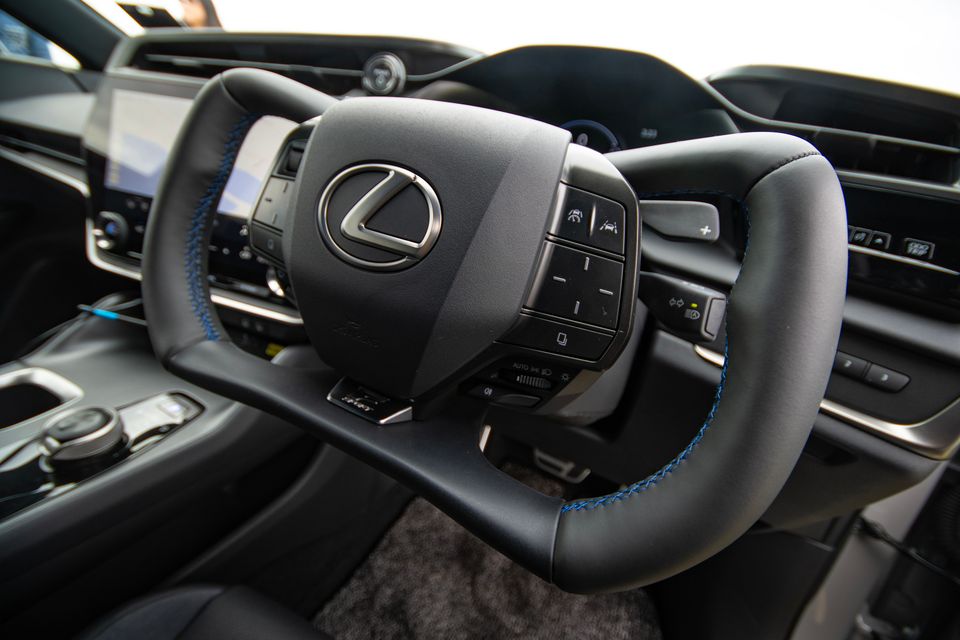
It would be remiss to not talk a bit more about the aesthetics of the yoke steering wheel. Because of the change of shape, Lexus has had to shuffle around quite a few of the buttons.
Headlights are controlled via a scroll wheel on the bottom right of the wheel, the stalks behind the wheel are stubbier and mounted closer to the wheel, and there are two slightly awkward trackpads for your thumbs to cycle through audio controls and the digital cluster menus.
There’s plenty going on there, and it’ll take a longer suburban drive to fully unpack what it’s like to actually live with.
What’s under the bonnet?
The RZ’s powertrain has benefited from a collection of little improvements across the board. The 74.7kWh battery is 3.7kWh larger than the old one, claimed range has lifted to 460km on the WLTP cycle in Dynamic variants and 437km for the F Sport.
Peak charging speed when hooked to a DC fast charger is still 150kW, but Lexus says that new inverters, motors, and the introduction of pre-conditioning mean the RZ can be charged at that peak speed for longer. AC charging speeds have doubled, too, from 11kW to 22kW.
Both the Dynamic and F Sport feature dual motors and all-wheel drive, with the pair making 280kW and 300kW of power, respectively. Lexus doesn’t quote a combined torque figure directly, but says each motor produces 286Nm a piece.
The F Sport’s additional power is good for shaving two tenths from its 0–100kph sprint time, to 4.4 seconds. The F Sport also gains ‘Manual Drive’ — a pair of paddles behind the steering wheel that can act as a simulated 8-speed gearbox and combine with some synthetic ‘revving’ sounds that reverberate through the cabin.
How does the Lexus RZ drive?
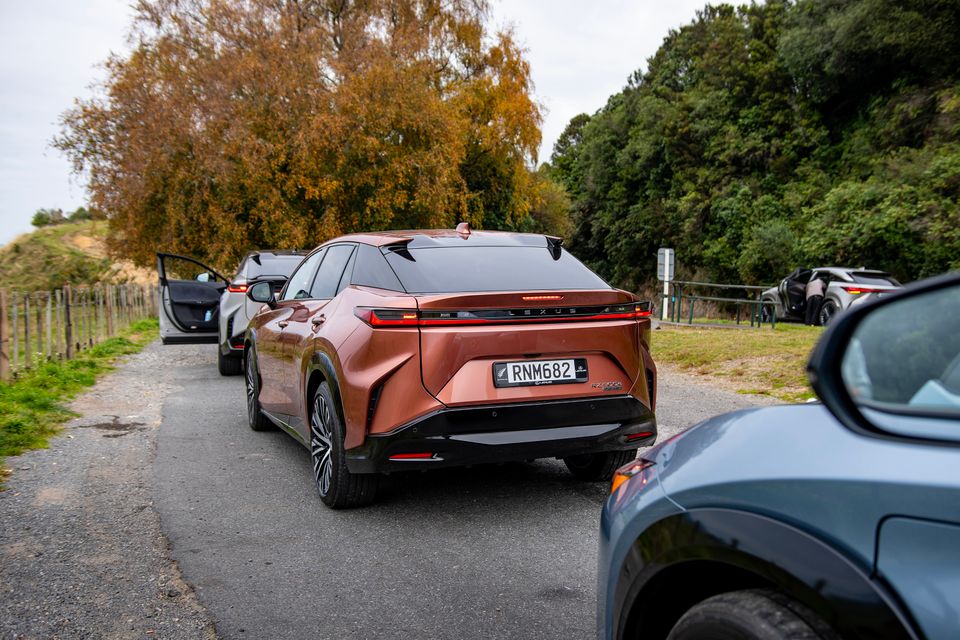
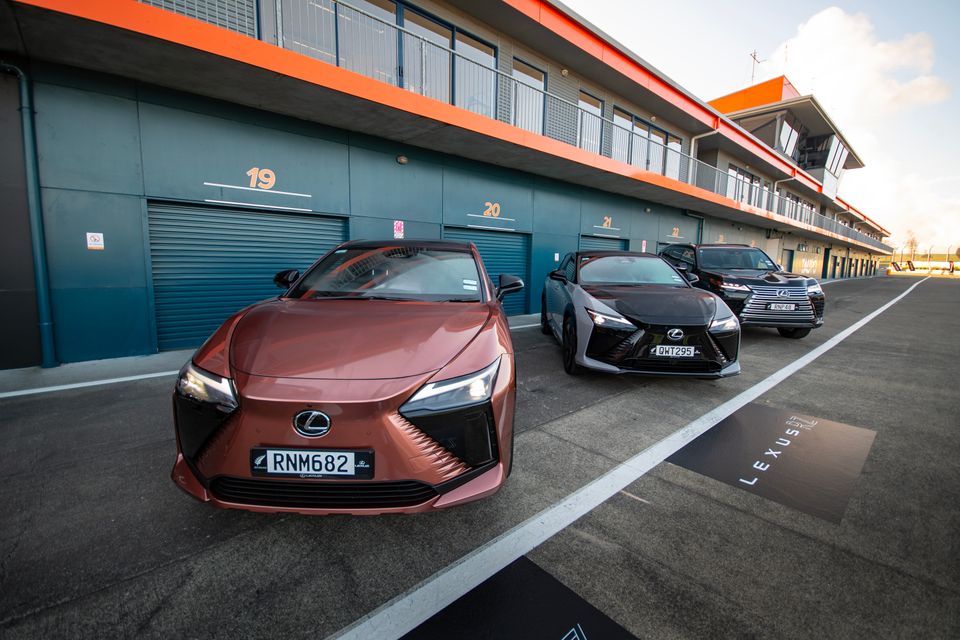
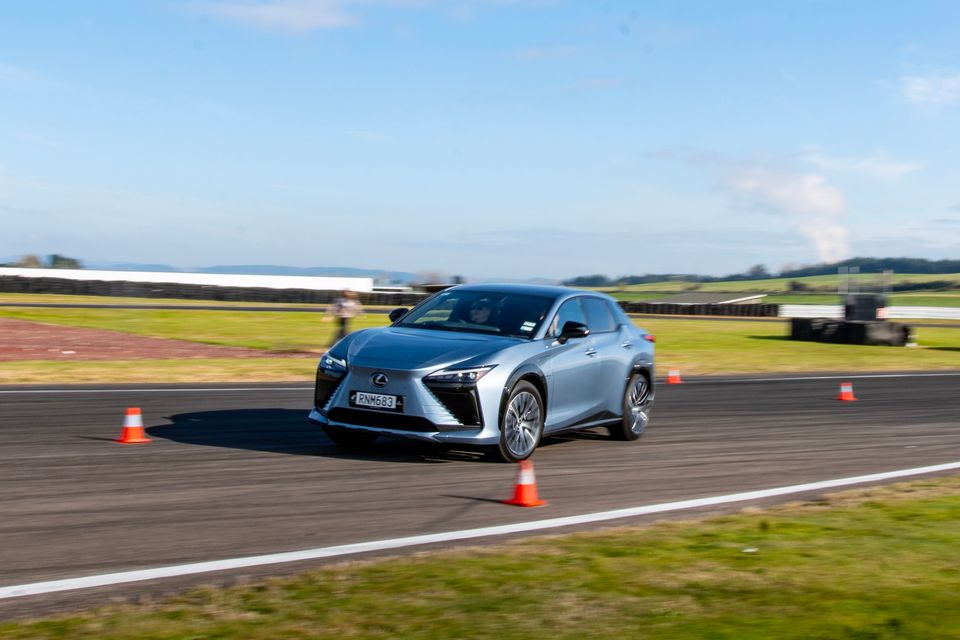
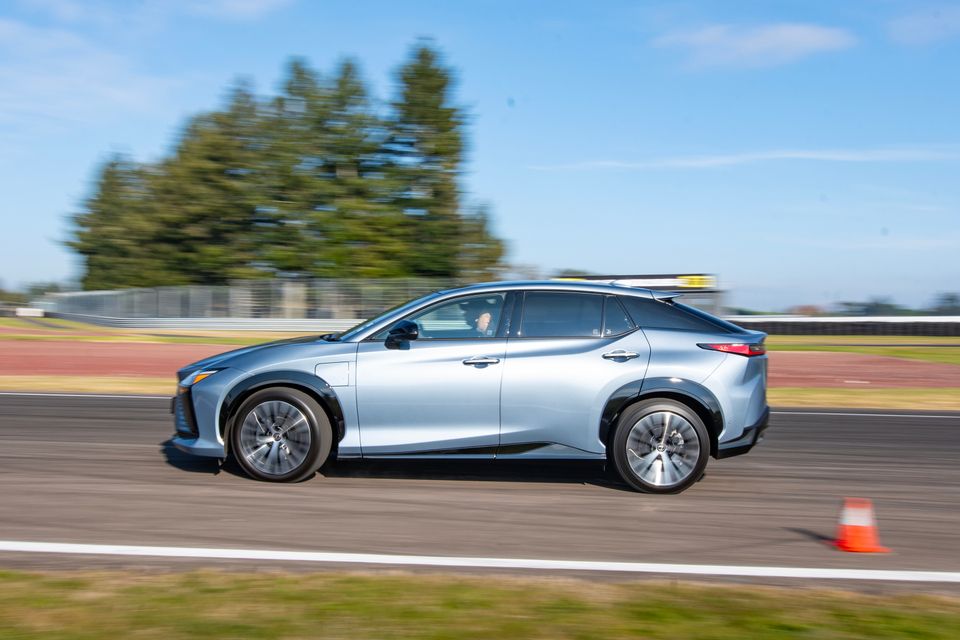
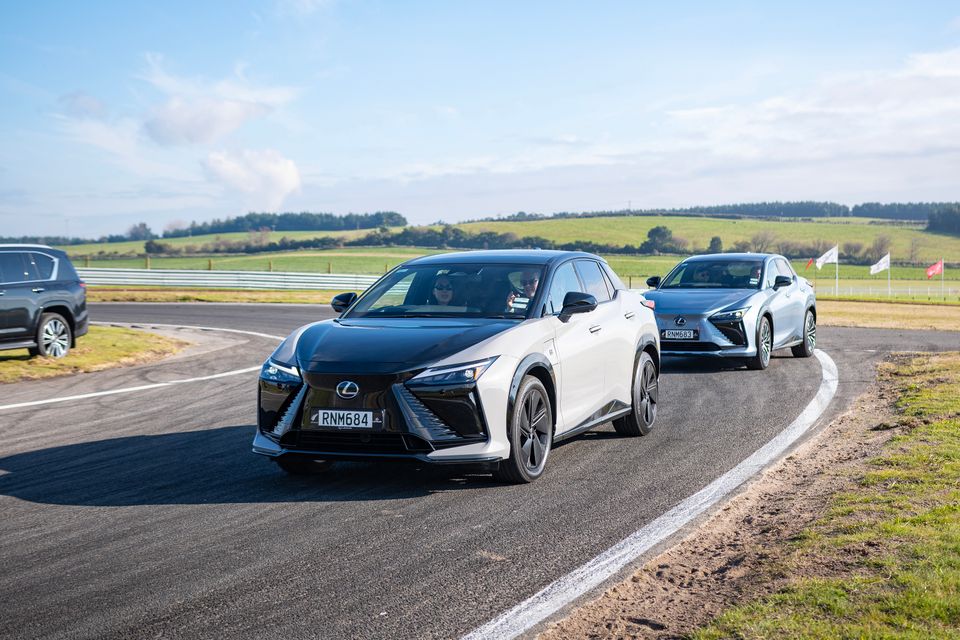
Our drive of the new RZ started at the location of Toyota’s first Supercars championship race win; Taupō Motorsport Park. We sadly didn’t get to hoof the cars around the track proper, but we did get some intriguing slow and fast driving under our belts in both the Dynamic and the steer-by-wire-shod F Sport. The track jaunt was then followed by a less tyre-squeally scenic drive through the countryside.
The RZ, even with all the sporting angle of the F Sport, is still primarily a soft, warm and welcoming luxury car rather than a proper sharpened performance car. There’s no clever air suspension combo, but the pitch and bounce control hardware works very well both on our rural roads and when dealing with sudden changes of direction on a track.
The Dynamic feels, by and large, like a bit of a rinse and repeat relative to its predecessor. And that’s not a bad thing. The one striking improvement is the additional 50kW of power, which amends one of the consistent complaints people had of the old RZ.
The F Sport’s Manual Drive system, which can be switched on via the ‘M’ button down in the centre console, is better than the equivalent system in the Abarth 500e, but not a patch on the incredible Hyundai Ioniq 5 N’s internal combustion impersonator. It broadly functions well. Rattling down a simulated cog or two prompts kicks through the car, as do upshifts with hard acceleration. It produced more giggles than you could hope for from a big luxury EV.
The paddles (which are also used for adjusting the car’s regenerative braking when Manual Drive isn’t selected) are in a slightly awkward spot on the wheel, and have quite a small contact pad for your fingers. And, the sound the car pumps into the cabin when this mode is active isn’t all too enticing.
Then finally, there’s the yoke and steer-by-wire system. It’s quite a jarring piece of hardware to wrap your head around at first. There’s just 200 degrees of wheel rotation, meaning you can go from lock to lock without your hands leaving 9 and 3. And, the variable steer-by-wire element means that the amount of turn changes depending on how quickly you’re travelling.
Small adjustments do plenty at low speeds, but at higher speeds the amount of turn required for a basic rural bend is about the same as in a conventional car. Because the steering wheel doesn’t have a top rim, you can’t really ‘shuffle’ your hands when parallel parking or doing a tight 360-degree turn (as we did on the slalom). Conversely, the cockpit feels a little more airy and open thanks to the smaller wheel.
Given that the steer-by-wire system means there’s no physical link between the front wheels and the steering wheel, it shouldn’t be surprising to hear that there’s not a heck of a lot of feedback or feel. But, that’s sort of the point. Lexus notes that the lack of direct connection means less unsightly knocks felt through the wheel from things like potholes and speed bumps. Exactly the sort of refinement you’d want in a plush luxury SUV.
I think it’s important to separate the yoke and the steer-by-wire elements of the RZ. Together, they work well with each other once you’re used to them. But, whilst the yoke half of the ledger feels a little bit surplus — a neat aesthetic change to show off to your mates — I can see steer-by-wire being something with longevity elsewhere in the Lexus (and maybe one day the Toyota) range.
What do you get?
Losing the prior Core variant means that there are no bare-bones options in the RZ line-up anymore. The Dynamic is furnished like a flagship, with little in the way of spec blind spots.
Lexus RZ 500e Dynamic equipment highlights:
20-inch wheels
Dual-zone climate control
Air purification
Humidity sensor
Radiant heater
Push button start with smart entry
Wireless charger
3 x 12V power sockets
5 x USB-C ports
Power tailgate
13-speaker Mark Levinson sound system
Voice recognition
Wireless Apple CarPlay and Android Auto
14-inch touchscreen
Satellite navigation
Ultrasuede upholstery
Power dimming panoramic roof
Heated and ventilated front seats
Heated outer back seats
Memory driver’s seat
Heated steering wheel
Touch sensor wheel controls
Power tilt steering column
Digital rear-view mirror
Digital cluster
Head-up display
Ambient lighting
Bi-beam LED headlights with adaptive high beams
LED taillights
Rain-sensing front wipers
Privacy glass
Autonomous emergency braking with bicycle and pedestrian detection
Lane tracing assist
All-speed radar cruise control
Road sign assist
Blind spot monitor with safe exit assist
Trailer sway control
2 x ISOFIX
3 x tether anchor
RZ 550e F Sport adds:
Synthetic leather and ultrasuede upholstery
F Sport seats
Piano black exterior accents
Black painted wheel arch mouldings
Yoke steering wheel
Manual Drive
Steer-by-wire system
CarExpert’s take on the Lexus RZ
It’s been a while since the launch of a new luxury electric SUV has been so peppered with new toys to play with. And, at a considerable price cut on the outgoing first-gen model to boot.
The new Lexus RZ might’ve stepped away from its post as the Japanese brand’s flagship R-labelled SUV. But, it still acts as an interesting and competent showcase of the brand’s future technologies. Now, let’s take that steer-by-wire system on the road to see how it can deal with some dodgy Auckland CBD parallel parks and rushed 3-point turns.
Trusted Reviews, Smarter Choices, Better Prices
Where expert car reviews meet expert car buying – CarExpert gives you trusted advice, personalised service and real savings on your next new car.
An outstanding car in almost every way. A joy to drive, packed with great features, and highly recommended.
Very Good
A well-rounded car that's enjoyable to drive, offers great value or features, and is easy to recommend.
Good
A solid choice that does most things well. Comfortable, capable, and worth considering in this segment.
Average
Meets the standard for this segment. May not stand out, but still a dependable and reasonable option.
Below Average
Falls a bit behind others in the segment, but still passes safety checks and may suit specific needs or budgets.
Explore Variants
Build your new Lexus RZ
Select your specs to find the perfect Lexus for you.
Vehicle Configurator
Core
2023
$141,600
Dynamic
2023
$151,600
Year
2023
Fuel
Electric
Transmission
Automatic
Body Type
Sport Utility Vehicle
Number of Doors
5 Doors
Drivetrain
4x4
Maximum Power
230 kW
Choose your preferences
Pick the features and options you want, and we’ll show you the best match.
2 Configurations available
Select any filter to begin.
Matthew Hansen
Editor
Matthew Hansen
Editor
Matthew Hansen co-founded motorsport outlet Velocity News, worked as a freelance photographer for various race teams, and was a specialist journalist for NZ Autocar Magazine and Driven at the NZ Herald. Most recently, he was Editor of Motoring at Stuff.co.nz.
† Displayed prices exclude on-road costs such as delivery charges, registration fees, number plates, insurance and applicable road taxes. These prices are subject to change without notice and may not reflect current market pricing or dealer offers.
Automotive Vehicle Spec Data & 4K images Powered by JATO Dynamics Ltd



 Showroom
 Car Chooser
 Compare
 Car Specifications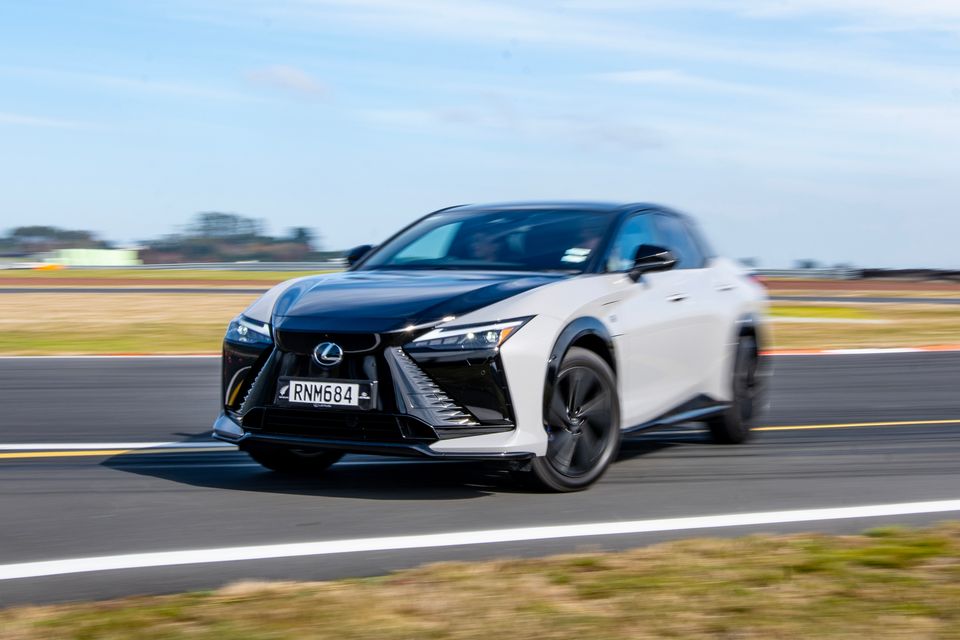






 Automotive Vehicle Spec Data & 4K images Powered by JATO Dynamics Ltd