

 Showroom
 Car Chooser
 Compare
 Car Specifications

CarExpert
CarExpert Choice Awards: Best Luxury Small Car
This Choice Awards category recognises premium small cars that offer the perfect blend of city-friendly size and luxury refinement and appointments.
11 Days Ago
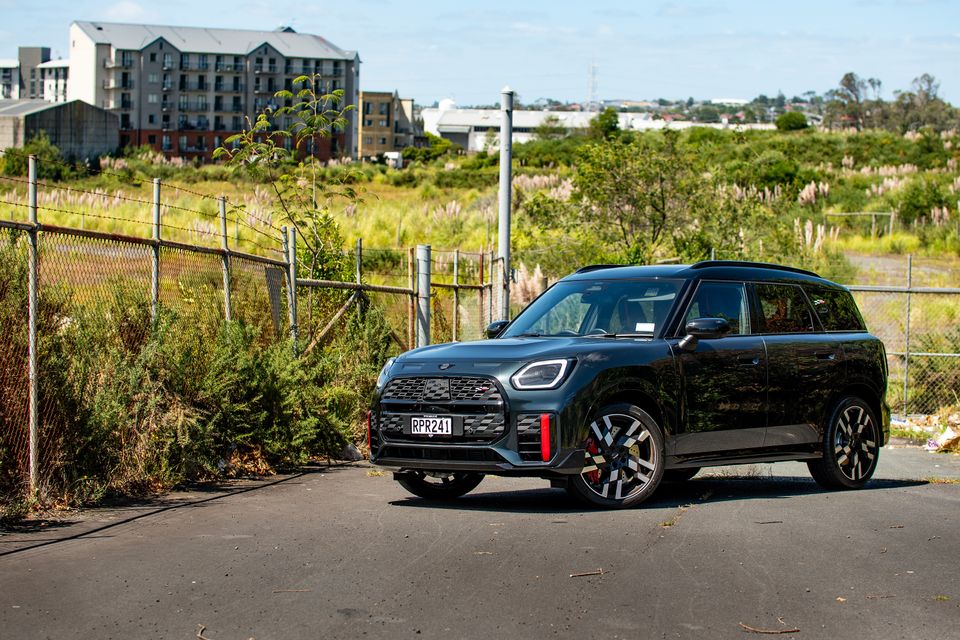
Fast and fun Mini JCW Countryman boasts one of the quirkiest cabins of 2026.
Where expert car reviews meet expert car buying – CarExpert gives you trusted advice, personalised service and real savings on your next new car.
The contemporary Mini is not-so-mini anymore. It’s a line that often gets rolled out whenever we have an example of the breed booked in for review. And, I think it’s a line that’s run its course.
The notion of a small Mini similar in size to the hallowed original is fun, but is firmly an idea of the past. Not only are truly small Minis a little conducive to modern vehicle safety, but — frankly — Mini customers aren’t really after them. If anything they’re after stuff that’s larger, like Mini’s best-selling nameplate; the Countryman.
“Wow that Mini is huge!” Yeah, it’s also the most popular and arguably quintessential Mini of the new age.
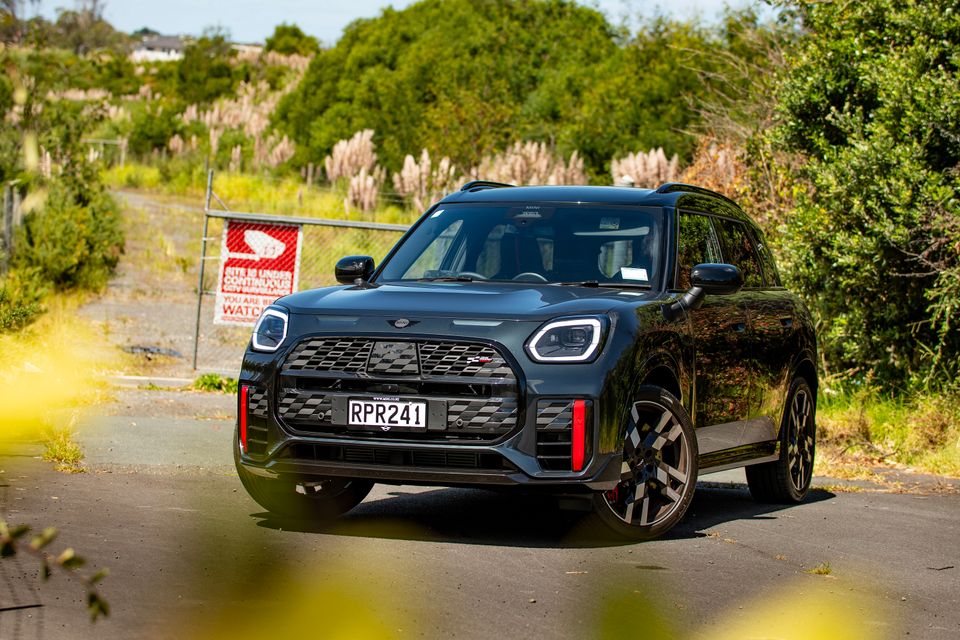
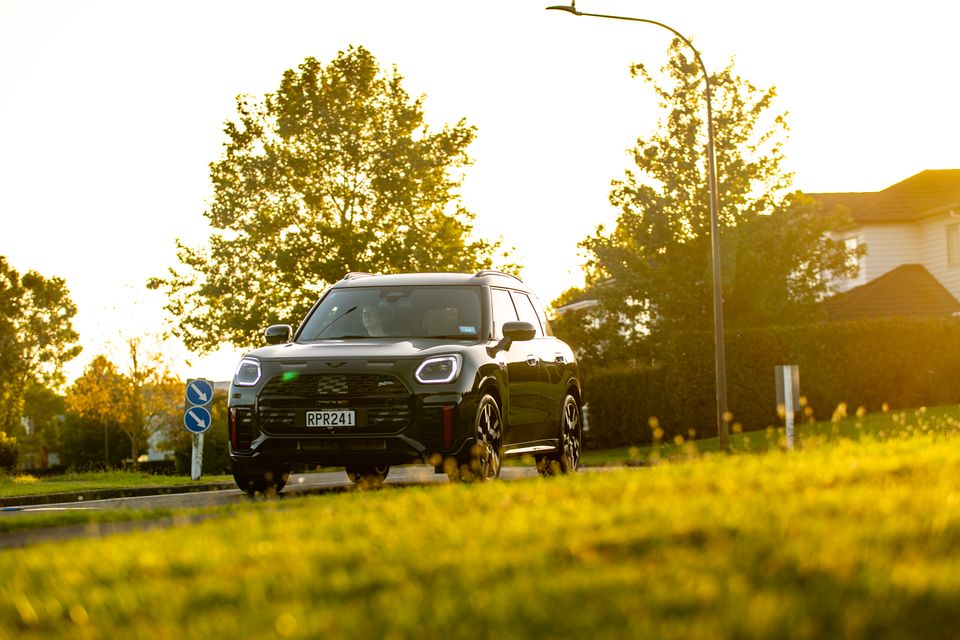
Anyway, enough ranting. We recently got to drive the sharpest, cheekiest iteration of the Countryman — the John Cooper Works, or JCW. And we asked the question; is this the most fun you can have in an SUV?
The Countryman line-up is surprisingly dense. There are four key variants — the C, S, JCW, and SE — and within those variants there are two to three sub-variants. The range starts with the front-wheel drive Countryman C, priced from $54,990 in its Core guise. The range tops out in terms of price with the fully electric SE, peaking at $86,990 JCW Sport (more an aesthetic trim than a performance one).
Model | Price not including on-road costs |
|---|---|
Mini JCW Countryman All4 Classic | $79,990 |
Mini JCW Countryman All4 Favoured | $83,990 |
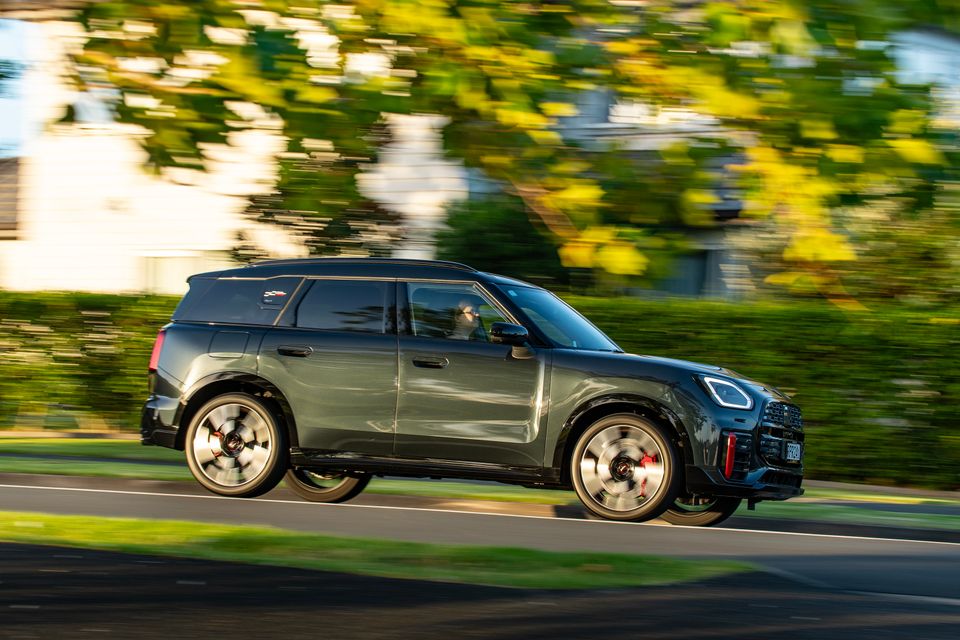
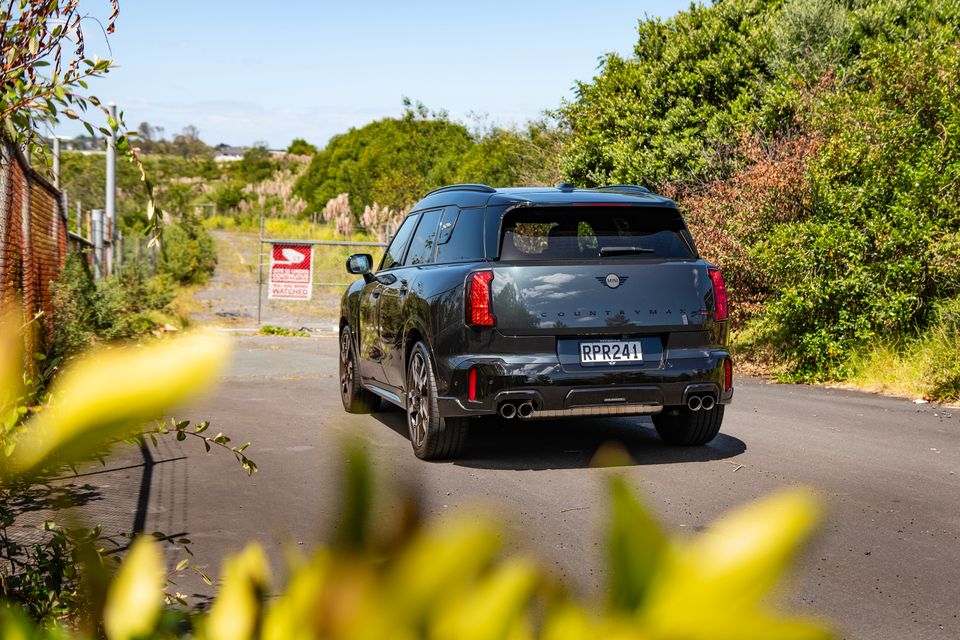
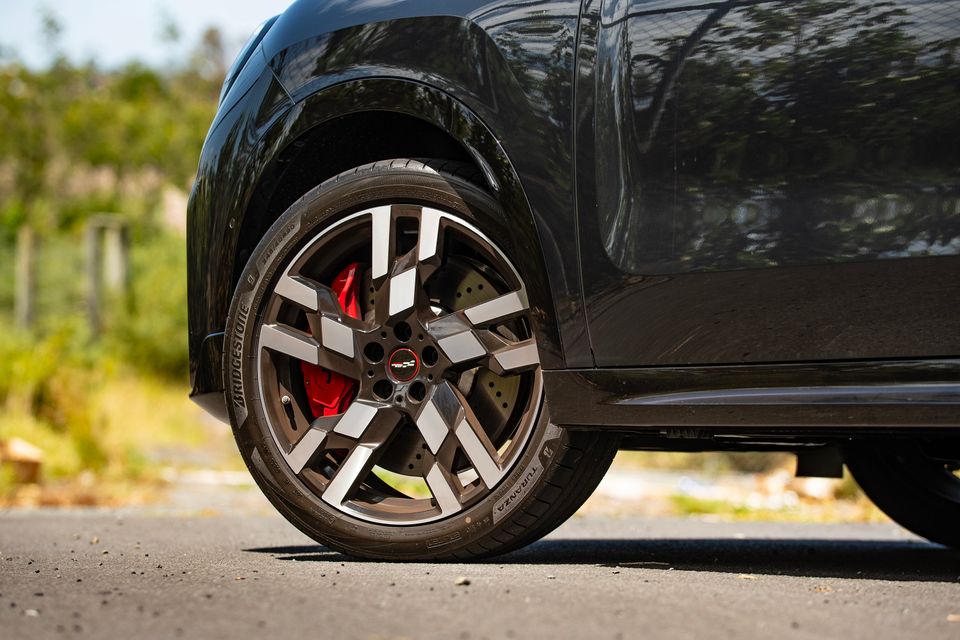
In terms of this proper JCW, there are two trim levels — the $79,990 Classic and the $83,990 Favoured that we drove. The two come with the same powertrain, with the Favoured adding uprated brakes and 20-inch wheels amongst other features.
As far as rivals are concerned, the JCW takes pot shots at a wide group of characters. It could be seen as an alternative to hot hatches like the $85,494 Volkswagen Golf R or the $105,990 Audi S3 Sportback. More logically, it goes head-to-head with the $87,500 Cupra Formentor VZ, $74,990 Volkswagen T-Roc R, and maybe even some of those performance-orientated electric SUVs like the $84,990 Smart #3 Brabus.
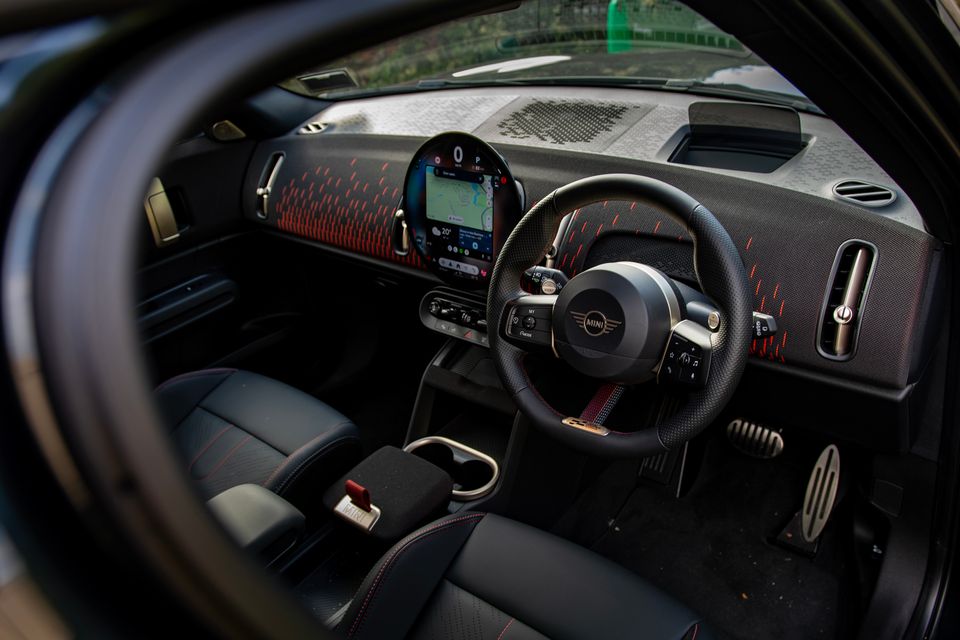
Oh goodness there is so much to talk about.
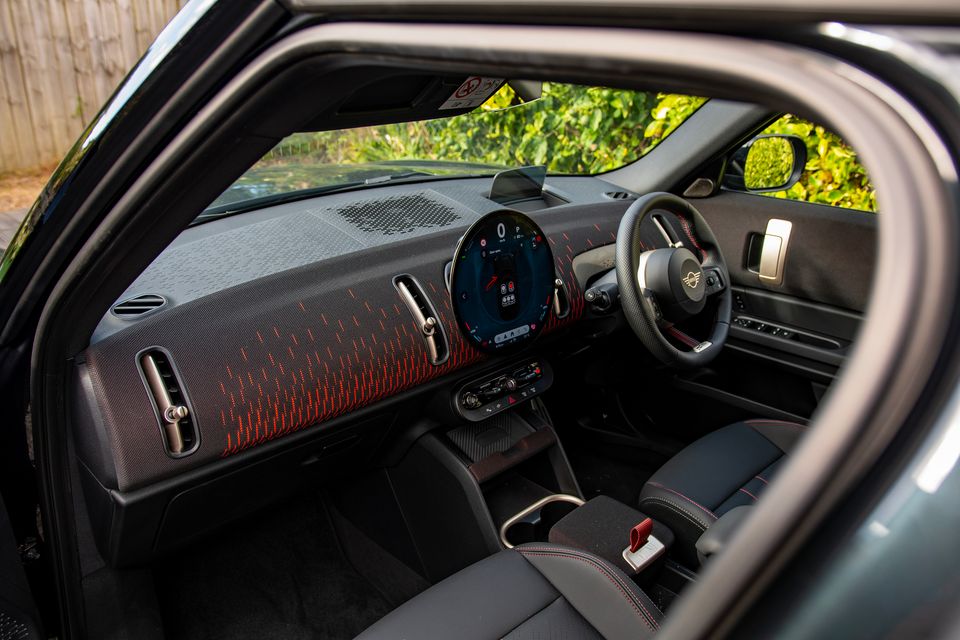
Mini in its modern iteration has always been known for their somewhat zany and retro-inspired interior layouts. And as interiors have only become more homogenous and iPhone-ified with whopping big touchscreens and minimalism, Mini’s commitment to the bit has only become more endearing.
The cabin of the Countryman — and the remainder of the Mini line-up, given most utilise the same elements — will be a breath of fresh air for those a little bored with modern car interiors. Not necessarily because Mini skirts the big screens and tech, but because it does it differently.
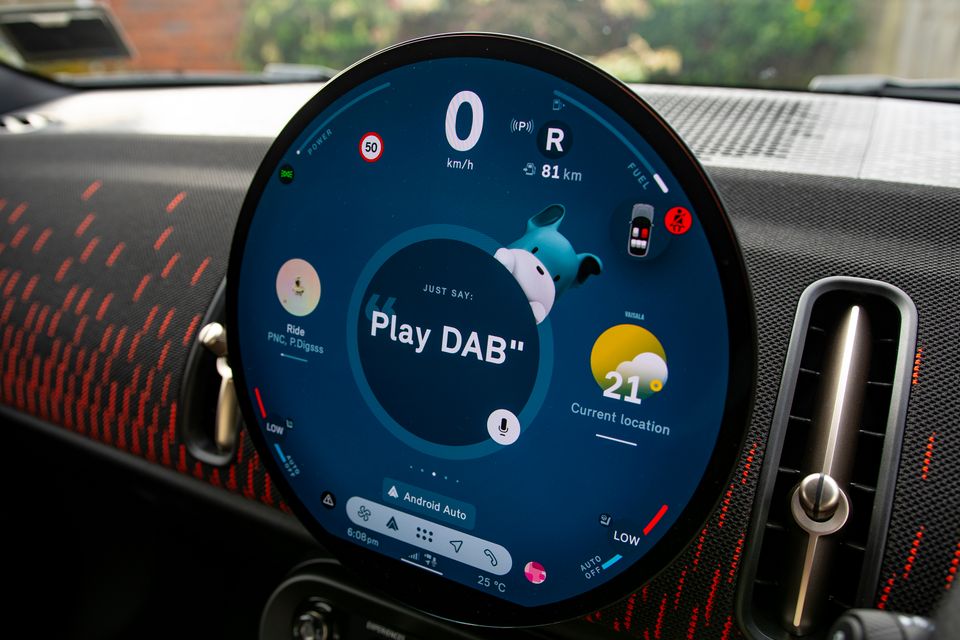
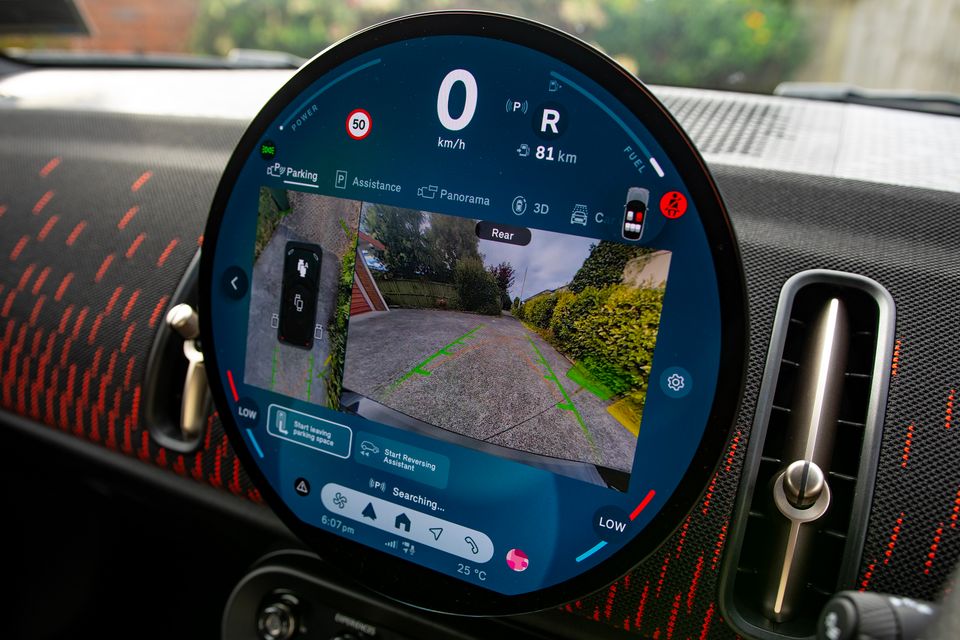
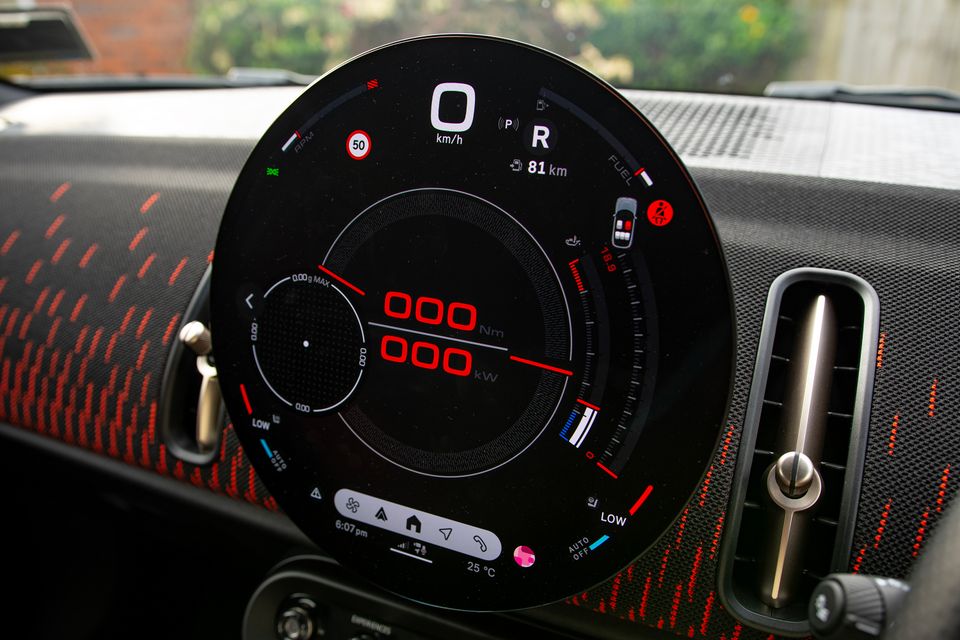
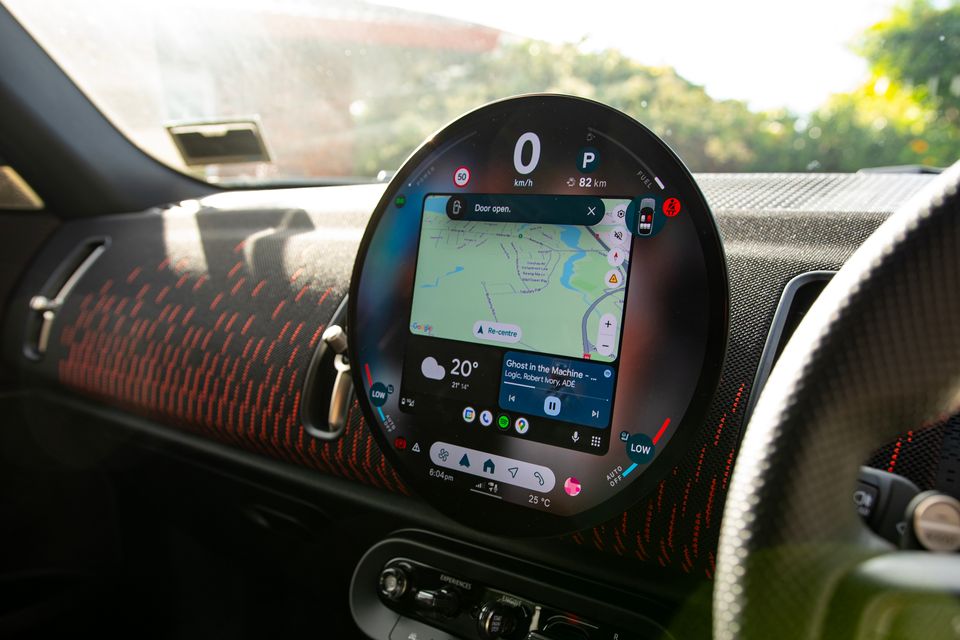
Plonked in the centre of the dashboard is a gigantic circular 240mm OLED touchscreen that is unlike anything you’ll find in any other new car. It is vibrant, pin sharp, and resplendent with all of the bright menus projected through its pixels. It looks fantastic.
The circular shape is of course an ode to Minis of old, which previously utilised a giant centrally mounted speedometer. Inevitably, one of the plethora of screens you can have on the Countryman’s central display is a digital, retro speedometer. It’s one of the dozens upon dozens of screen options available to you.
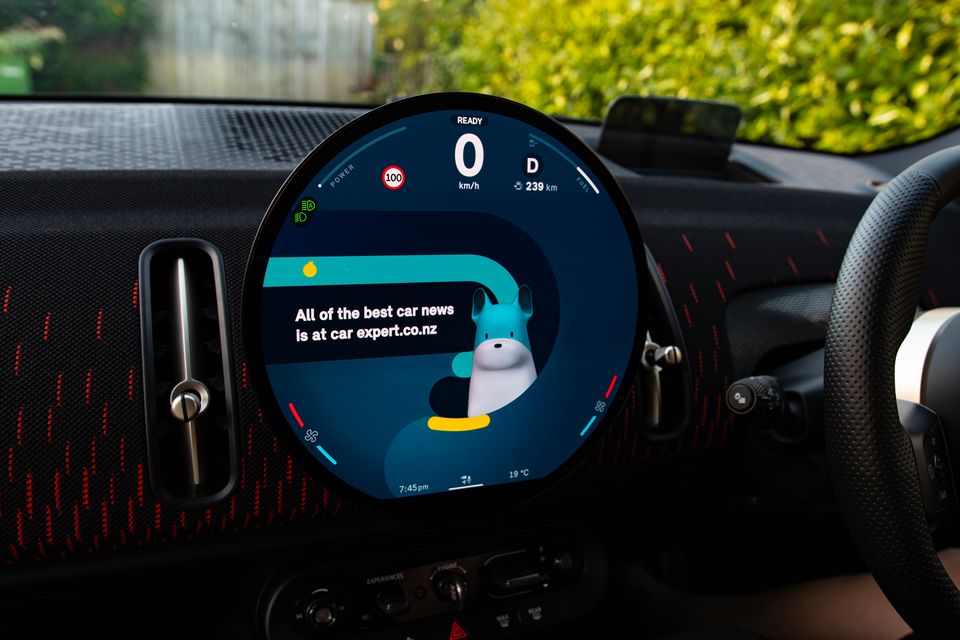
It’s a feat of tech engineering, but that’s not to say there aren’t some drawbacks. The wireless Apple CarPlay and Android Auto integration manifests as a square in the middle, rather than perfectly filling the whole screen. The screen can also be a little confusing to traverse in terms of its menu layout. Although you do get used to it, particularly if you use the permanent shortcuts at the bottom of the screen.
On the dashboard, either side of the screen, you’ll find a knitted textile made out of recycled polyester made out of salvaged carpet and plastic bottles. In standard Countryman grades it’s black, whilst in the JCW it has bright red jags in the shape of an audio waveform.
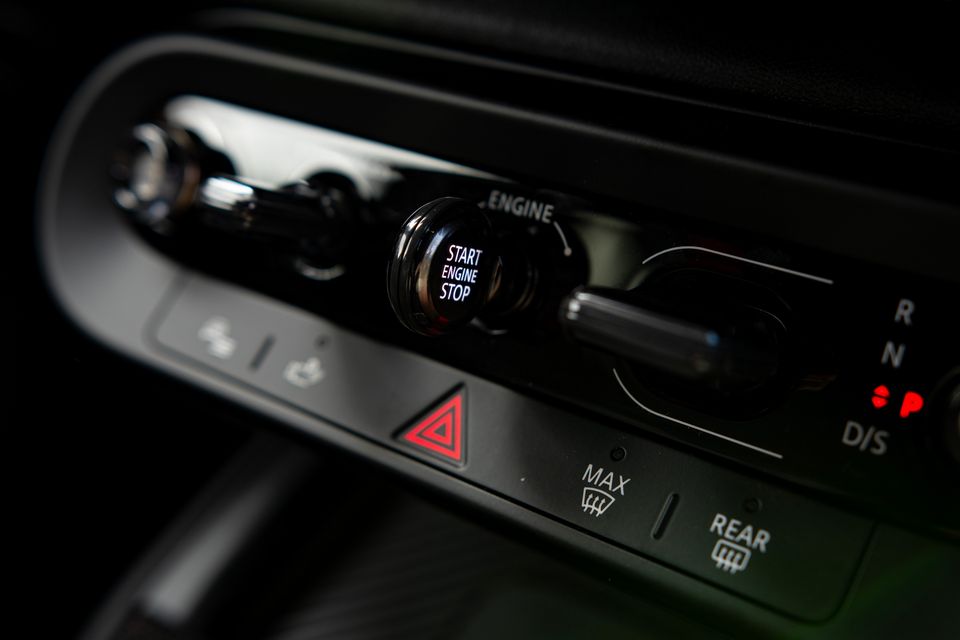
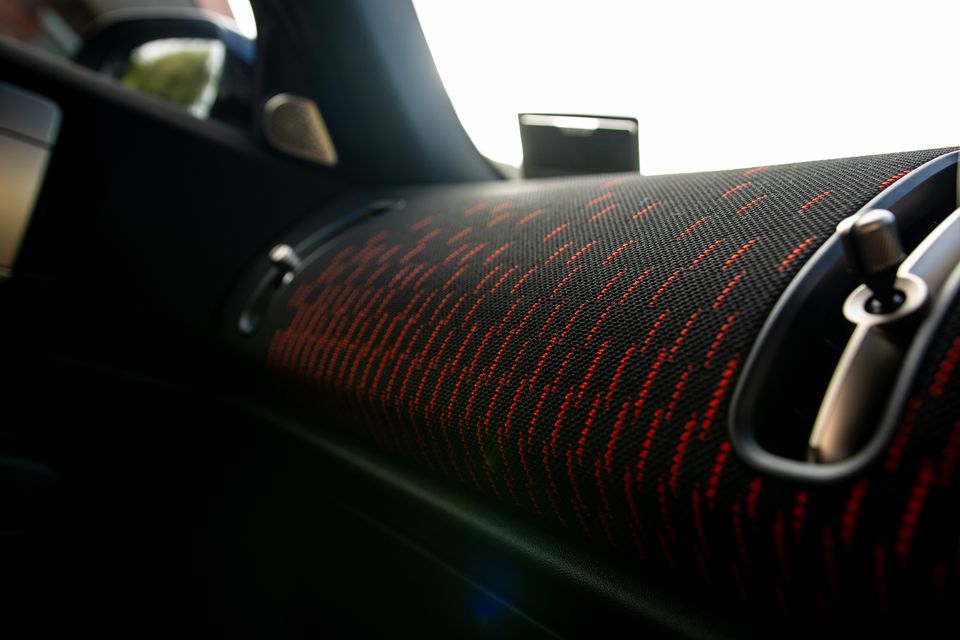
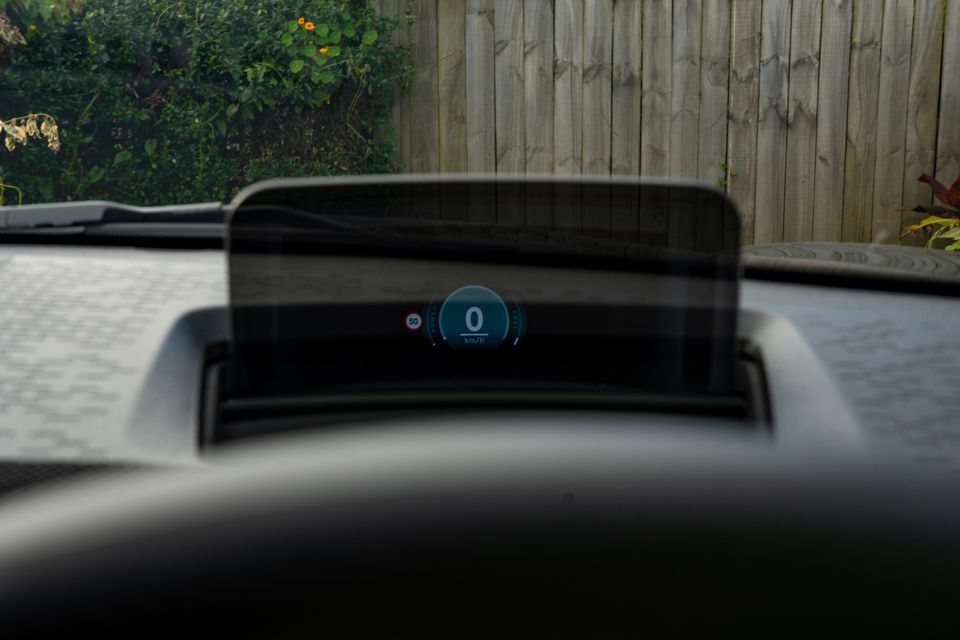
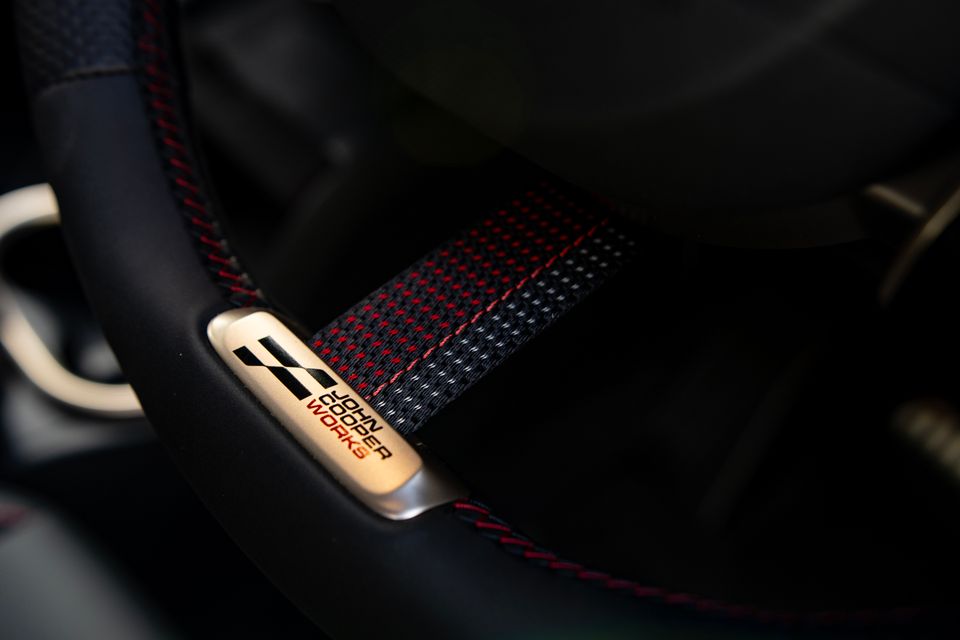
The interior is full of quirky little touches. The start-stop button is a protruding plastic switch that you twist like a key. Each drive mode makes a little jingle when you choose it, with the JCW mode emitting a joyful “woohoo” through the speakers. The car’s voice assistant exists as an avatar; a dog called ‘Spike’. Some of this stuff can feel a little cringe in isolation (the “woohoo” can be turned off thank heavens), but in the context of the Countryman’s cabin as a whole these things come across earnestly.
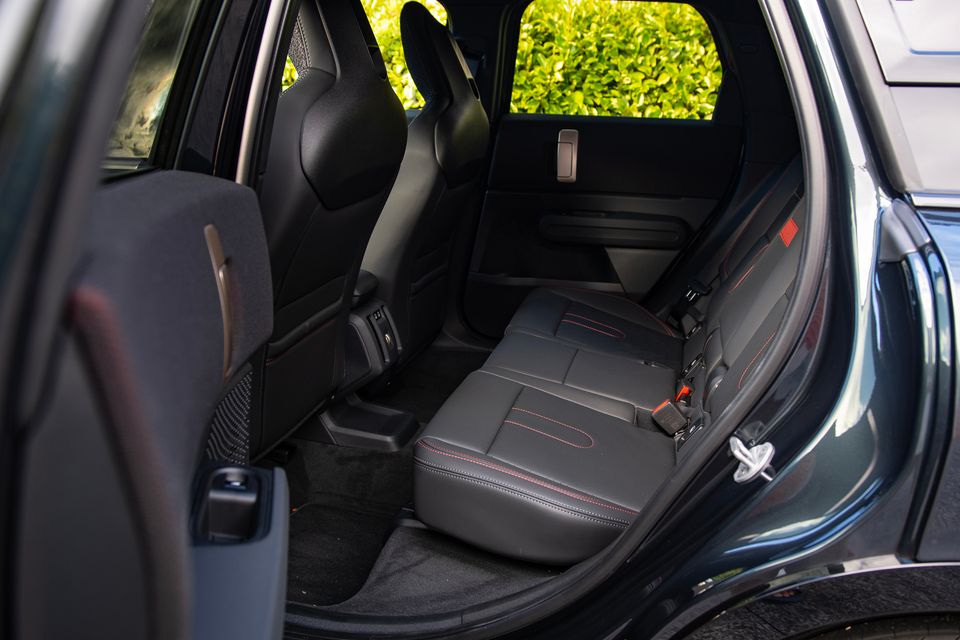
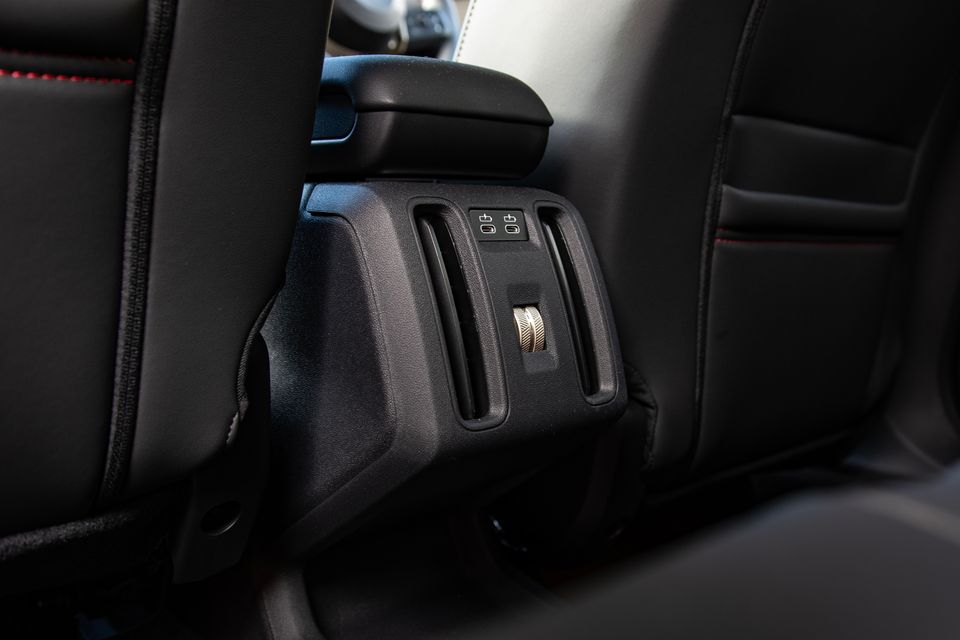
I suppose we should talk about all the other boring stuff inside the Countryman. Although its dimensions are in the mid to top end of ‘compact crossover’ territory, its cabin is spacious enough to rival some mid-size heavyweights. Headroom and legroom in the outboard second-row seats is good, whilst the centre seat occupant has a big transmission tunnel to navigate. The boot, meanwhile, offers a very handy 505-litres of storage with the seats up and 1530-litres with them down.
You won’t find any flash hybrid systems in the JCW Countryman’s powertrain, nor any torque vectoring or four-wheel steering whizzbang trickery. Instead the JCW cops a fairly conventional layout; turbocharged 2.0-litre 4-cylinder petrol engine mated to a 7-speed dual clutch transmission. A bit old-school, isn’t it.
The 4-banger develops 221kW of power and 400Nm of torque. In contemporary hot hatch terms, it’s a fairly humble amount of power. And it’s inevitably dusted both on paper and in a straight line by most any pure electric SUV. However, as we’ll touch on later, the Countryman’s engine is greater than the sum of its parts.
As far as economy is concerned, the JCW sips at a claimed combined rate of 8.4L/100km on the WLTP cycle. Not all that frugal, but this is a performance car after all.
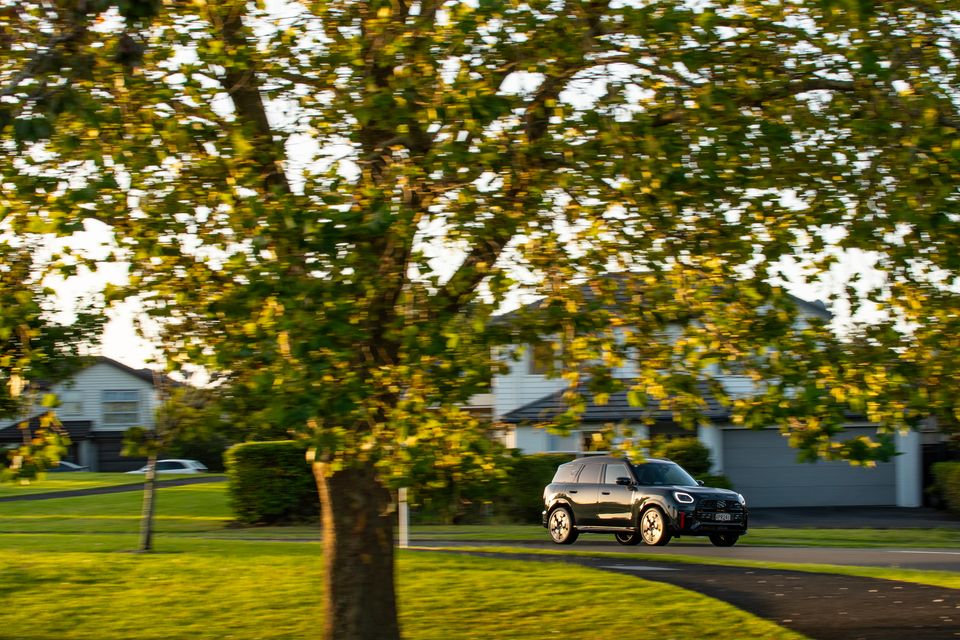
Physics and progress means that there are plenty of comparatively ordinary electric family SUVs that leap off the line quicker than the JCW can. Its 5.4-second 0–100kph time is 2015 fast, but not necessarily 2026 fast.
That changes somewhat when you hop in the JCW and actually toy with it. Sure, it’s outgunned by plenty of other things these days, but there’s a sense of urgency and edginess that the turbocharged four brings to the party that makes it addictive any time you’re on a motorway onramp.
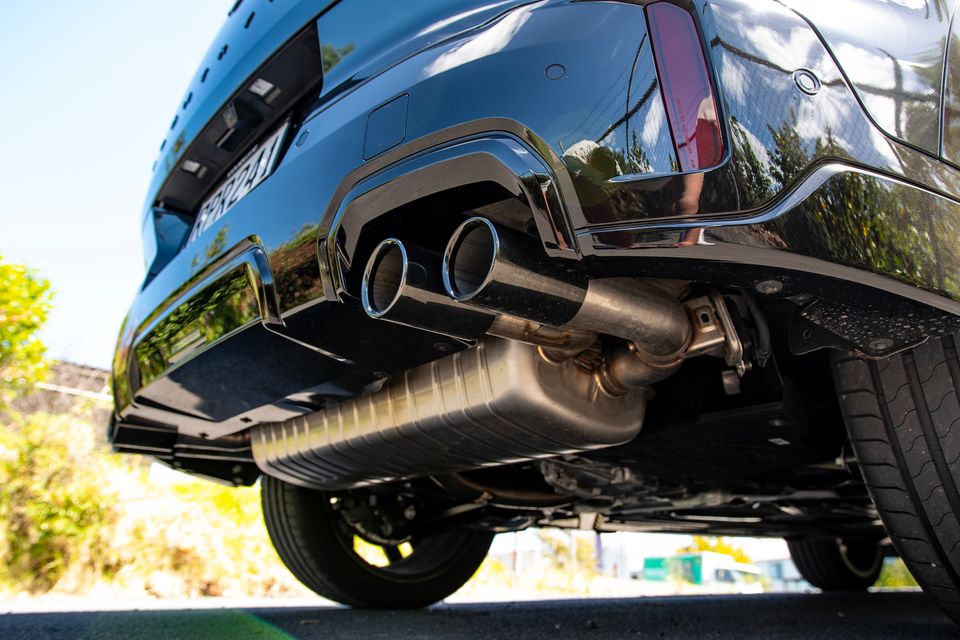
The 4-cylinder makes a great exhaust note (thanks in part to the quad-tip set-up out back, and a dash of pumped-in fakery inside), and runs through the rev range with gusto. The dual-clutch is the perfect partner to this enthusiasm, snapping through gears with confidence and an occasional ‘bang’ for a bit of theatre. It’s great fun.
It might be a ‘big’ Mini, but that doesn’t mean the Countryman isn’t immune from the whole ‘it handles like a go kart’ trope (indeed, it has a Go Kart drive mode). And although it weighs 1660kg — almost three times the weight of an original Mini — I’m pleased to report that the trope still holds weight.
The smaller Cooper is of course a little more pointed and precise, but the JCW Countryman still feels fabulously chuckable on a winding Kiwi backroad. There’s good balance, minimal bodyroll, and a planted feel you only really get when a car’s wheels are pushed right out to the corners. It also moves around a lot under power, creating a feeling of old-school connectedness behind the wheel. There are some big smiles to be had in this thing.
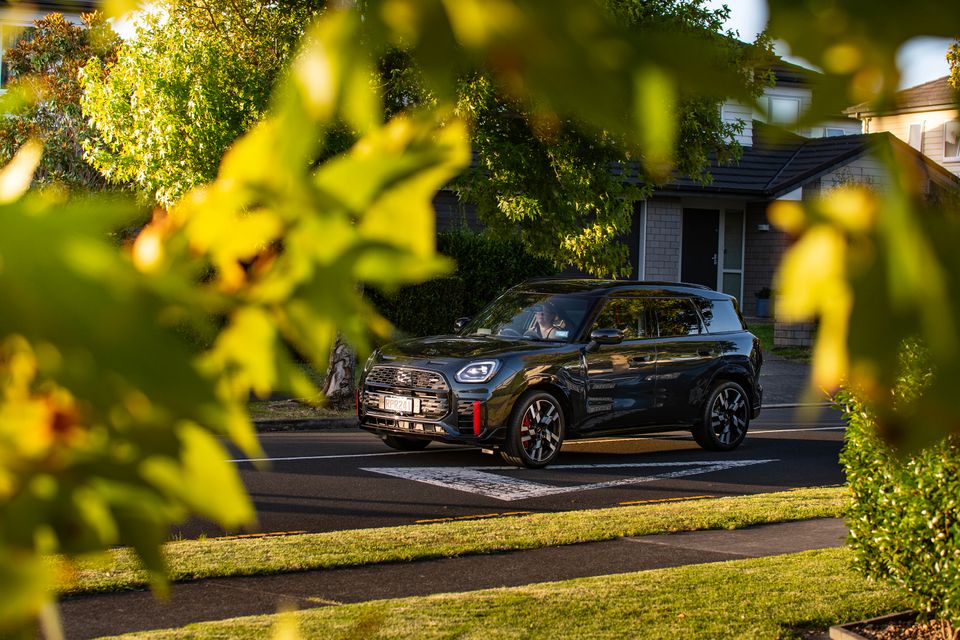
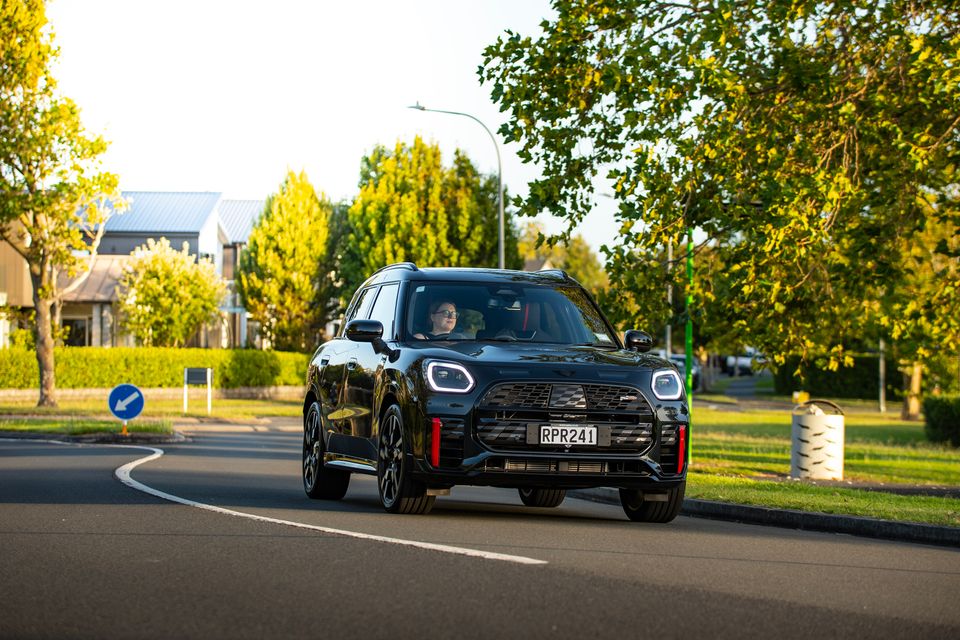
It could maybe do with some better rubber, as the JCW’s Bridgestone Turanzas do not offer the same bite as a set of Potenzas, let alone the cliched Pirelli or Michelin alternatives of the day. But to be fair, when there’s less power on tap the necessity for best-of-the-best tyres does fade a little. I suspect, too, that the JCW’s fluid handling I mentioned earlier is in part owed to its less sticky tyre choice.
The remainder of my JCW drive complaints centre on what it’s like to live with. On the plus side, it’s a very simple car to drive. Its controls are light, and its boxy shape and big glasshouse mean visibility is good and the cabin feels quite light and airy. On the downside, its dual-clutch can feel a little hesitant and lurchy around town and when trying to switch between reverse and drive in a hurry.
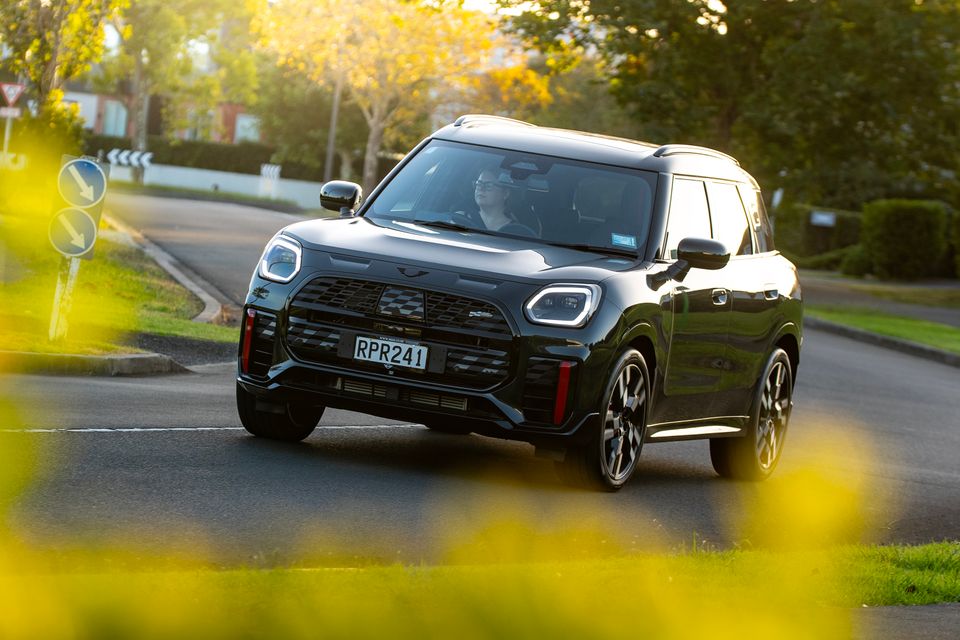
We returned just over 9.0L/100km in fuel economy during our week with the JCW Countryman, which isn’t too bad considering we didn’t necessarily give it an easy time. But, that’s also quite thirsty given it spent a lot of its time with us on motorway duty.
My biggest knock, though, is its suspension. The adaptive system is very good when being applied at pace on a twisty road. But I considered it to be a little too brittle and harsh when on typical urban roads — even in its most plush setting. In a JCW Cooper, a bonafide competitor in the hot hatch segment and the sort of car that wouldn’t look out of the ordinary at a track day, this suspension makes sense. But in a JCW Countryman, theoretically targeting a more mainstream audience of punters, it’s a little extreme.
Whether the extra four grand separating the JCW Countryman Classic and Favoured is good value will depend on the individual. The beefed up brake package is worth the upgrade if you’re someone intending to drive spiritedly with regular frequency. On the other hand, I’m curious whether the smaller 19-inch wheels improve the Mini’s ride quality.
Mini JCW Countryman All4 Classic equipment highlights:
JCW Countryman All4 Favoured adds:
Where expert car reviews meet expert car buying – CarExpert gives you trusted advice, personalised service and real savings on your next new car.
There are plenty of SUVs in this size bracket that acquit themselves nicely on a challenging piece of road, or throw down impressive acceleration figures. But precious few are as genuine a giggle to drive quickly as the JCW Countryman.
Fun is the word of the day with this thing, whether you’re describing its cornering abilities or talking about its chaotic cabin. It isn’t perfect. But it is charming, fast, and unique in a way few of its peers can rival.
Where expert car reviews meet expert car buying – CarExpert gives you trusted advice, personalised service and real savings on your next new car.
Quickly see how this car stacks up against its competition. Select any benchmark to see more details.
2026
$54,990
2026
$57,990
2026
$61,990
2026
$72,990
2024
$74,990
2024
$78,990
2024
$86,990
Matthew Hansen co-founded motorsport outlet Velocity News, worked as a freelance photographer for various race teams, and was a specialist journalist for NZ Autocar Magazine and Driven at the NZ Herald. Most recently, he was Editor of Motoring at Stuff.co.nz.
Add CarExpert as a Preferred Source on Google so your search results prioritise writing by actual experts, not AI.
CarExpert
11 Days Ago

Dave Kavermann
26 Days Ago

Matthew Hansen
28 Days Ago

Damion Smy
1 Month Ago
Dave Kavermann
1 Month Ago
Damion Smy
1 Month Ago
Add CarExpert as a Preferred Source on Google so your search results prioritise writing by actual experts, not AI.
† Displayed prices exclude on-road costs such as delivery charges, registration fees, number plates, insurance and applicable road taxes. These prices are subject to change without notice and may not reflect current market pricing or dealer offers.
 Automotive Vehicle Spec Data & 4K images Powered by JATO Dynamics Ltd