

 Showroom
 Car Chooser
 Compare
 Car Specifications

CarExpert
2026 CarExpert Choice Awards: Best Luxury EV
This award category covers premium electric vehicles that combine electrification with luxury, advanced technology, and performance.
6 Days Ago
New Zealand's best-selling 7-seater SUV gets a surprisingly comprehensive update for 2026.
Where expert car reviews meet expert car buying – CarExpert gives you trusted advice, personalised service and real savings on your next new car.
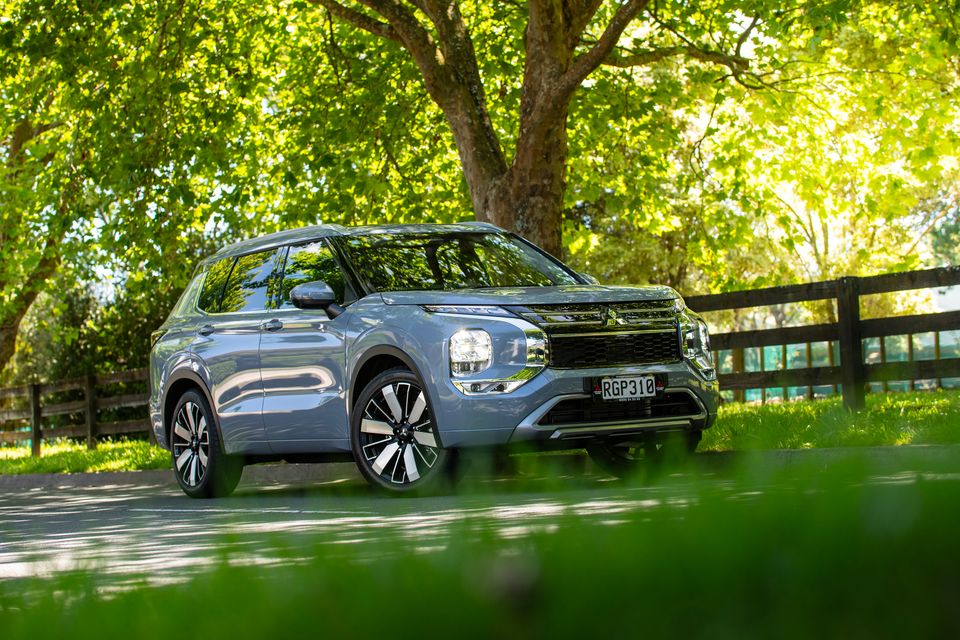
A few years ago, Mitsubishi did the unthinkable. With a fresh, all-new Outlander in its line-up, it managed to outsell the Toyota RAV4 to become New Zealand’s best selling passenger car. A mammoth feat considering the local momentum behind the Toyota juggernaut.
Whilst the Outlander hasn’t quite been able to replicate that feat in the years since, it remains a key competitor in the mid-size SUV battle. And, it just received its first update. Is it still a worthy frontrunner in 2026?
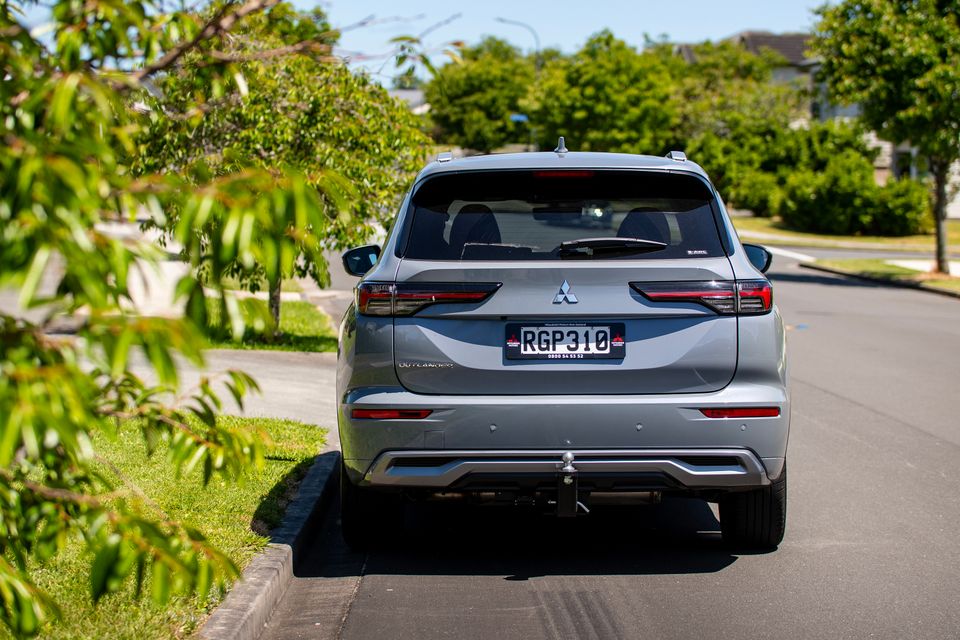
How much does the Mitsubishi Outlander cost?
The Outlander’s positioning as a value pick amongst its peers is dependent on whether you opt for the conventional petrol-powered 2.5-litre models or one of the plug-in hybrids.
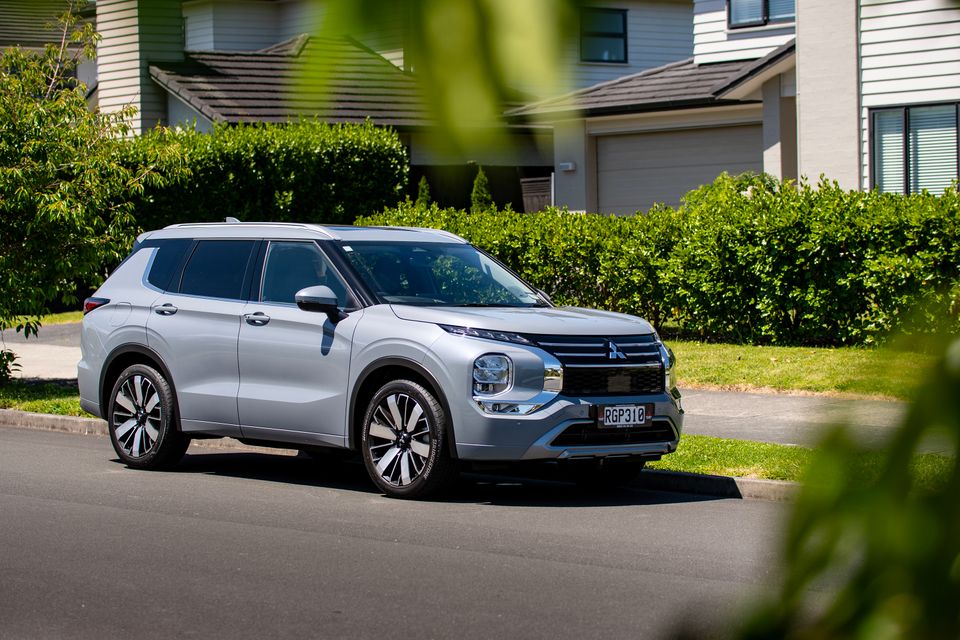
The former kicks off from $43,990 in 2WD LS trim, making it $7,000 cheaper than an equivalent Toyota RAV4 GX or Kia Sportage Light — although the Toyota and Kia are both hybrids. If you’re looking for a pure petrol equivalent, the $44,490 Mazda CX-5 GLX is a likely rival. The plug free Outlander VRX 4WD that we tested is $59,490 — pricing it about $3,000 shy of a RAV4 Limited.
Model | Price before on-road costs |
|---|---|
Mitsubishi Outlander LS 2WD 2.5-litre 5-seater | $43,990 |
Mitsubishi Outlander LS 4WD 2.5-litre 5-seater | $46,990 |
Mitsubishi Outlander XLS 2WD 2.5-litre 7-seater | $48,990 |
Mitsubishi Outlander XLS 4WD 2.5-litre 7-seater | $51,990 |
Mitsubishi Outlander VRX 2WD 2.5-litre 7-seater | $55,490 |
Mitsubishi Outlander Exceed 2WD 2.5-litre 7-seater | $58,990 |
Mitsubishi Outlander VRX 4WD 2.5-litre 7-seater | $59,490 |
Mitsubishi Outlander Exceed 4WD 2.5-litre 7-seater | $62,990 |
Mitsubishi Outlander LS 4WD 2.4-litre PHEV 5-seater | $64,990 |
Mitsubishi Outlander XLS 4WD 2.4-litre PHEV 7-seater | $71,990 |
Mitsubishi Outlander VRX 4WD 2.4-litre PHEV 7-seater | $77,990 |
Mitsubishi Outlander Exceed 4WD 2.4-litre PHEV 7-seater | $81,990 |
If you’re looking at the plug-in hybrid models, the question of value gets a little interesting. The plug-in hybrid mid-size SUV field is growing by the day thanks to the arrival of a mountain of incredibly capable, sharply priced options from China.
There are simply too many to list them all so to take two contenders we’re quite fond of; the MG HS Super Hybrid and the Chery Tiggo 7. The former can be had for as little as $52,990 plug on-road costs, some $12,000 cheaper than the most affordably priced Outlander PHEV. The Tiggo 7, meanwhile, is even cheaper, being priced from just $39,990.
Of course, none of these alternatives have an answer to the biggest ace up the Outlander’s sleeve. Whilst they’re all 5-seaters, the Outlander comes standard with seven seats if you opt for the XLS spec or higher. The Honda CR-V Sport 7 is temporarily sold out as the Japanese brand plans to launch an update later this year. Those looking at other mid-size SUVs with three rows of seats, then, are limited to the Skoda Kodiaq, Volkswagen Tayron, and the Chery Tiggo 8 plug-in hybrid.
What’s the Mitsubishi Outlander like on the inside?
The Outlander is arguably Mitsubishi’s strongest product at the moment, and that’s most apparent when you hop inside. Even in the base trims, the family wagon is a roomy, cushy, plush crossover that’s arguably more welcoming than a RAV4 or Sportage.
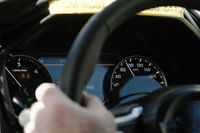
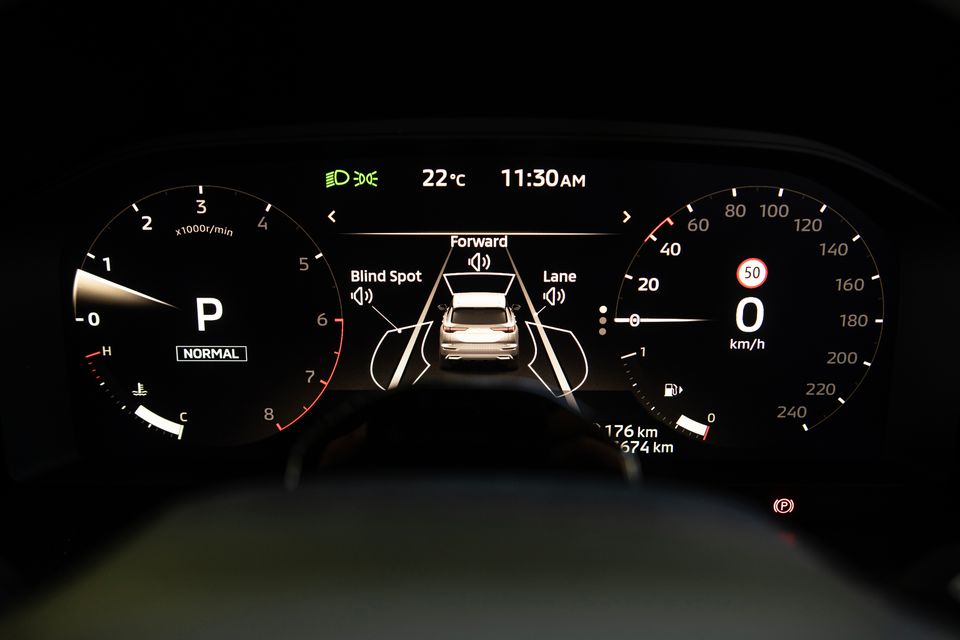
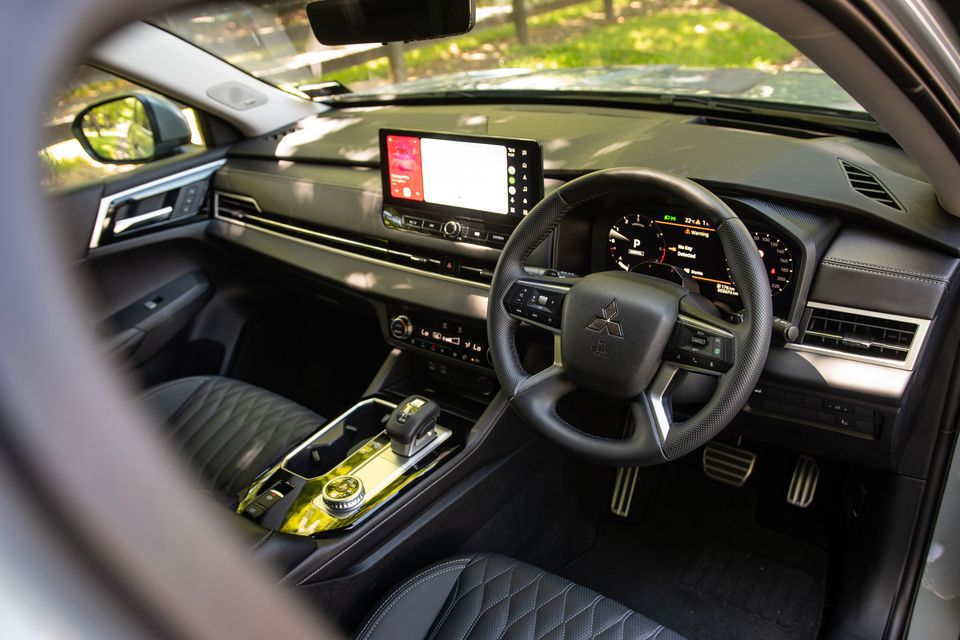
Mitsubishi’s recent tweaks to the Outlander, which arrived here in late 2025, aren’t anything drastic — with the brand focusing on evolution rather than revolution. Most of the changes are inside, starting with a new 12.3-inch touchscreen (improving on the old 9.0-inch unit) paired with a new 12.3-inch digital information cluster behind the steering wheel. Fascinatingly this tech is standard across all grades, even the base LS variant.
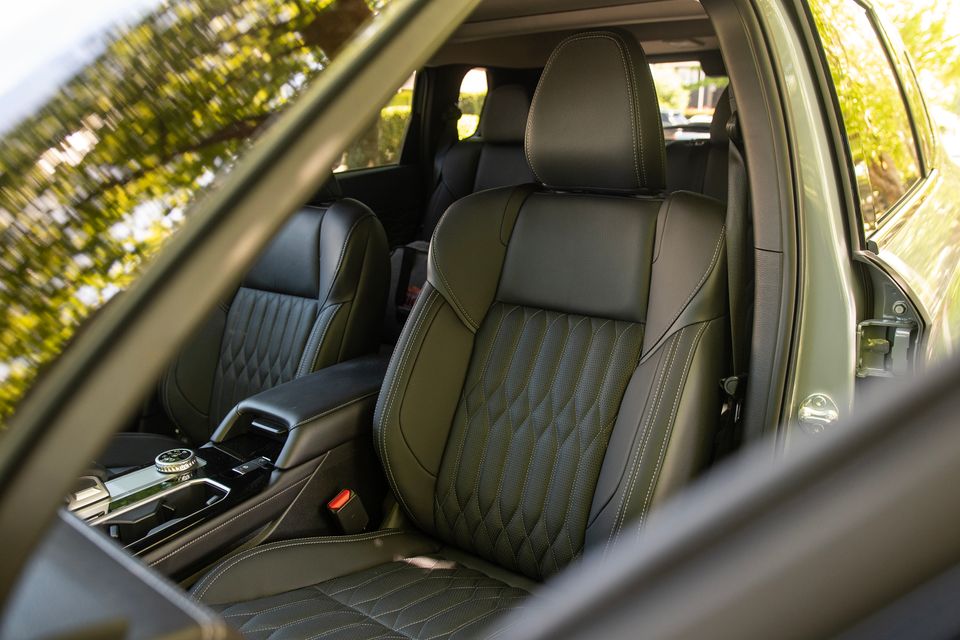
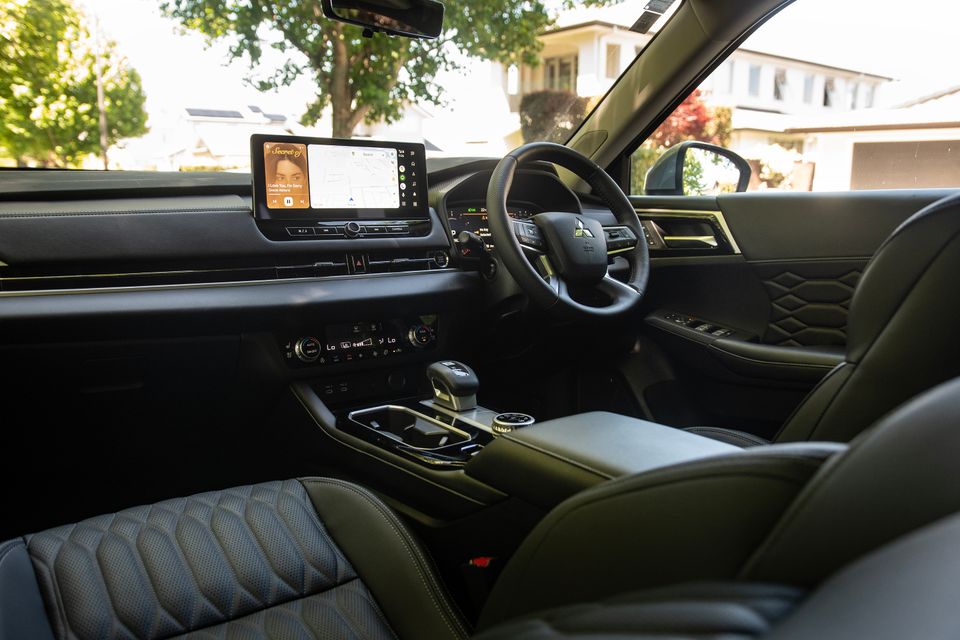
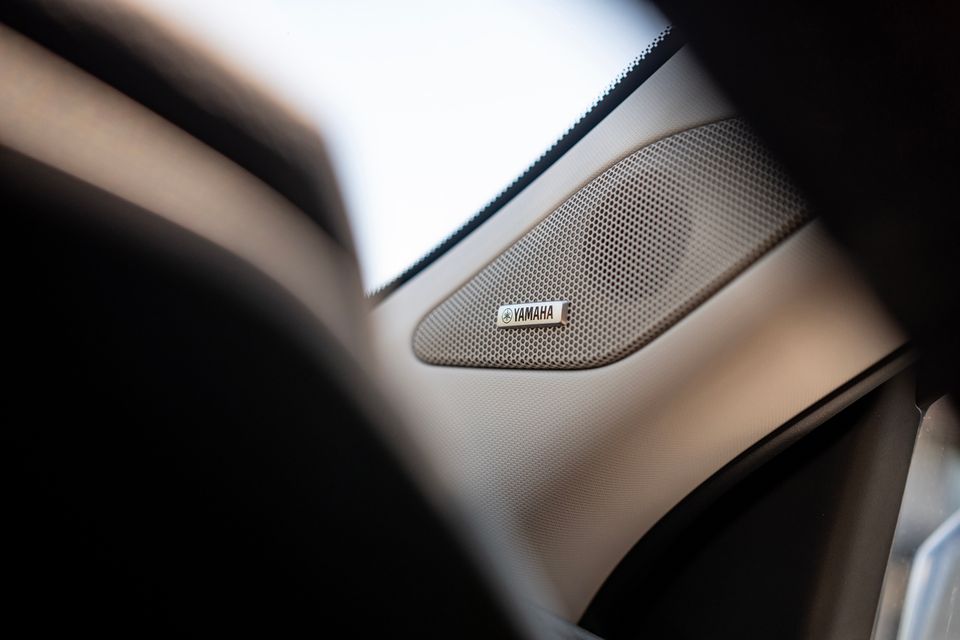
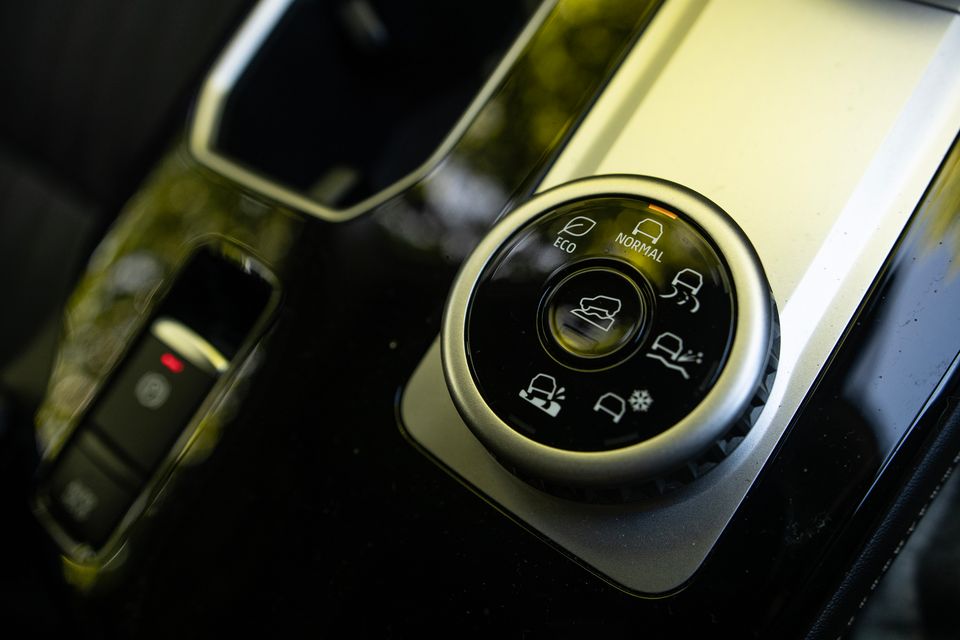
There are a few other changes too, some more logical than others. Mitsubishi has moved the location of the gear shift lever from the left hand side of the centre console to the right, possibly to make it easier to grab. The electronic hand brake switch and the drive mode dial have also swapped positions. There’s a new digital rear-view mirror (which can be switched to a standard mirror if you’re not into it), and Mitsubishi has replaced Bose with Yamaha for its premium sound system provider. Last but not least, the flagship Exceed models come with snazzy ‘Sienna Brown’ leather upholstery. Very nice.
Forget what you might remember about previous generations of Outlander (or, frankly, any experiences you might’ve had of its ASX sibling). This is one of the most pleasant SUVs on the market to sit in. The layout of the dashboard neatly walks the line between minimalist styling and clicky functionality, and all of it feels very well put together.
The slick dashboard layout is amongst our favourites in this segment, and has only gotten better with the addition of a larger touchscreen. Mitsubishi’s latest software isn’t particularly flashy, but its simplicity will likely serve it well in the long run. I had no issues at all with connecting my phone via Android Auto, and the Outlander’s camera technology impressed.
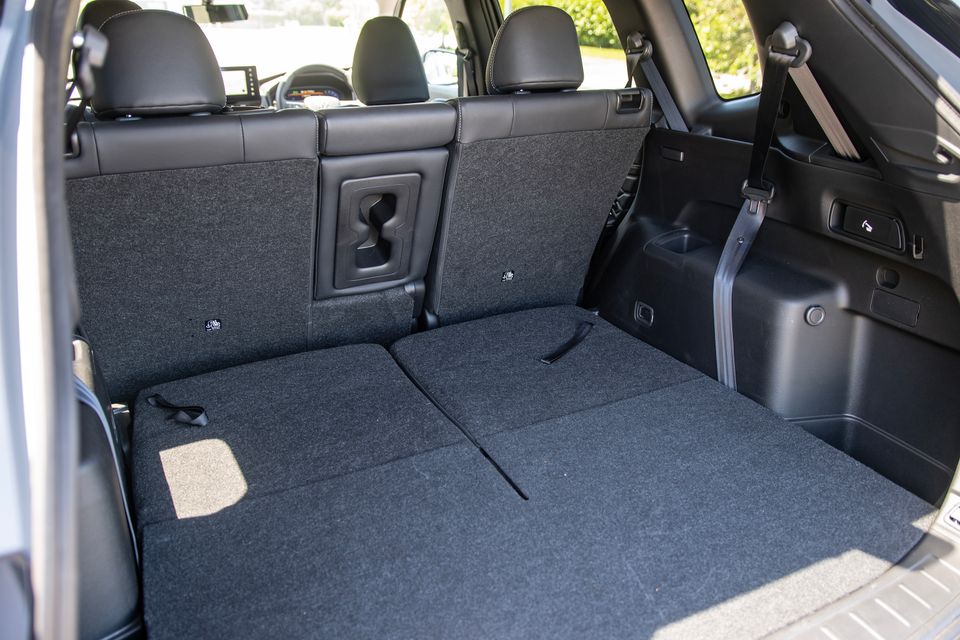
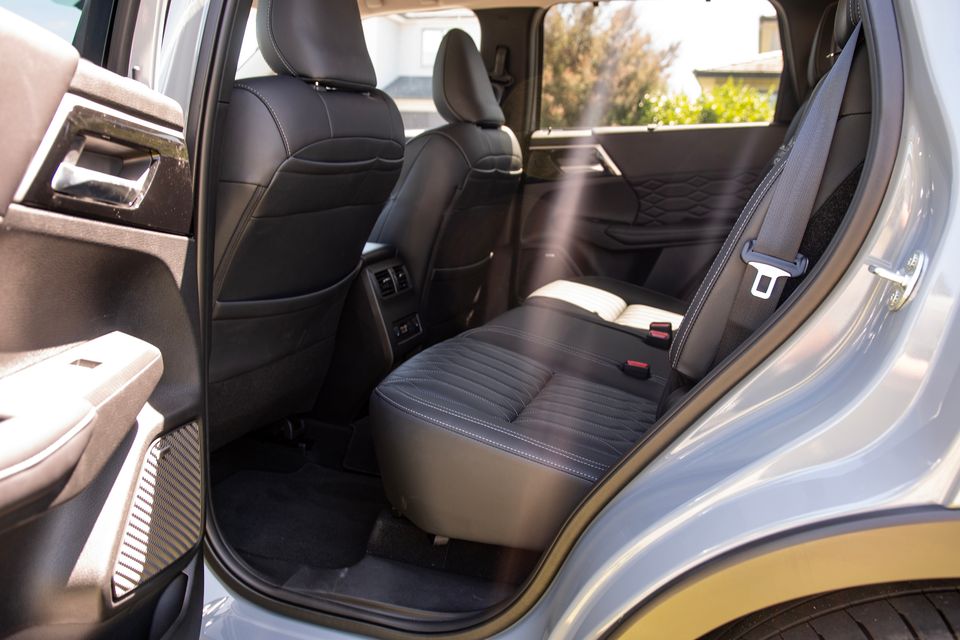
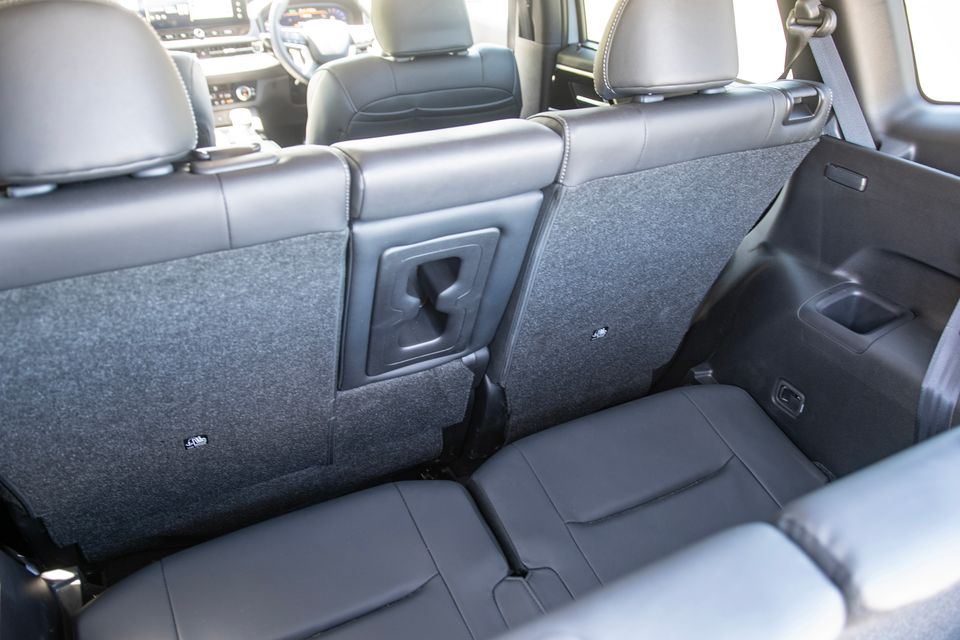
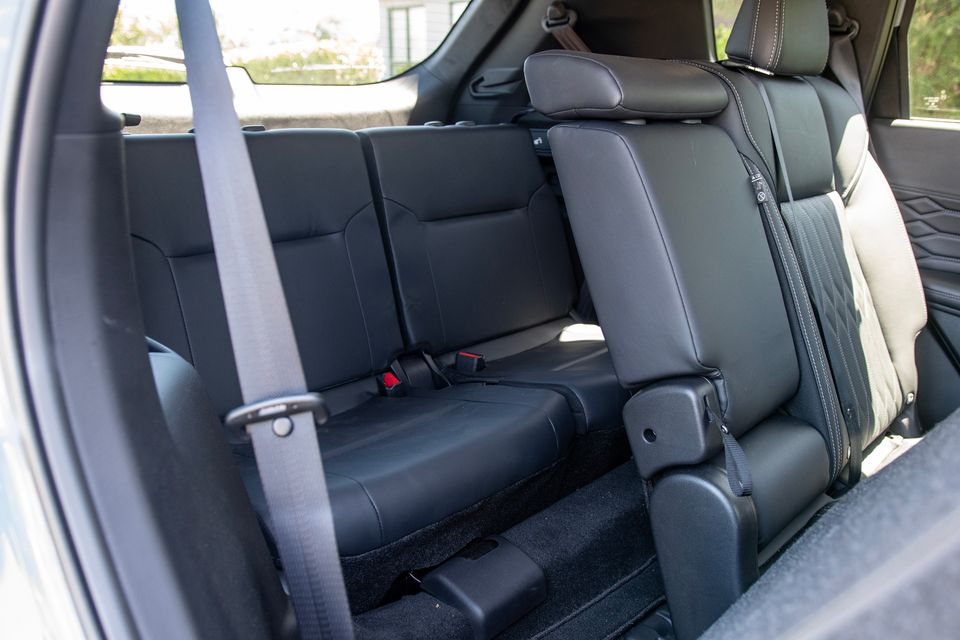
As far as space is concerned, the Outlander’s extra row of seats gives it a competitive edge over many of its peers. Its second row is not the most generous in the segment, with solid legroom on offer but slightly pinched headroom in models that come with a sunroof (VRX and Exceed). Of course, this is likely a result of the packaging shuffle that allows for a more accessible third row.
Space in the very back is admittedly pretty cramped — you wouldn’t put an adult or teenager back there for anything other than a brief trip, for example. But, this is quite common for SUVs of this size. Those wanting a properly functional third row need to step up a rung to something like a Toyota Highlander or Hyundai Santa Fe.
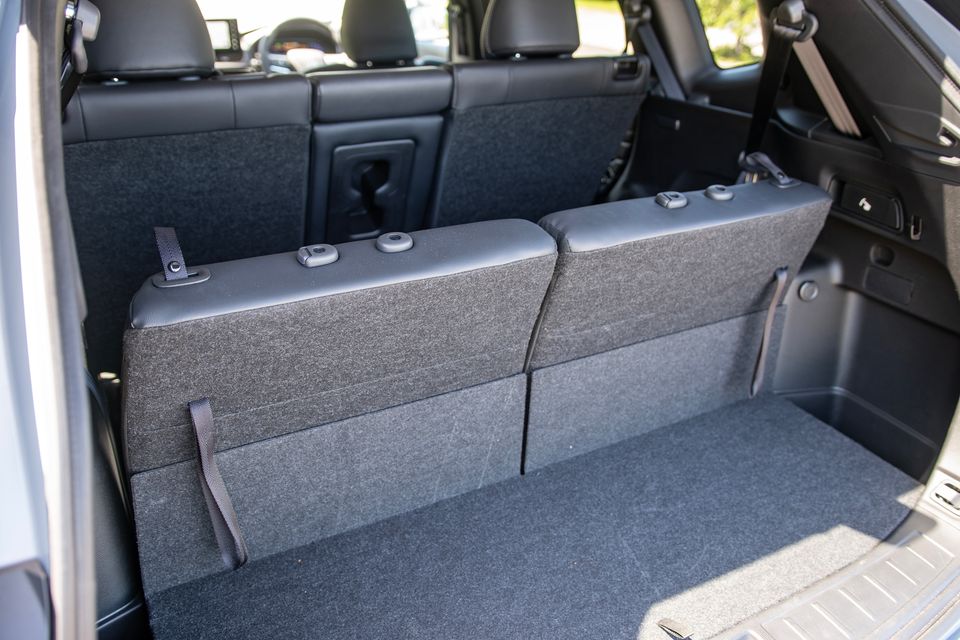
Boot space of course depends on which seating arrangement you opt for, measuring in at either 645-litres for a dedicated 5-seater or 637-litres in the 7-seater if you’ve got the third row folded flat. Mitsubishi doesn’t provide a number for how much boot space is behind the third row when it’s up, but there’s quite a healthy amount of room back there. More than enough for a solid weekly shop or a large suitcase.
What’s under the bonnet?
Such is the swing towards hybrids and EVs that the (unchanged) pure combustion naturally aspirated 2.5-litre 4-cylinder petrol engine that powers the majority of the Outlander line-up could almost be viewed as niche.
Power and torque is rated at 135kW/244Nm, and Mitsubishi claims a combined fuel economy of 8.6L/100km in front-wheel drive models and 9.0L/100km in four-wheel drives like our VRX tester (the base LS grades get slightly sharper economy numbers). And it comes paired to a flappy paddle CVT. If you’re looking to tow with it, the Outlander can lug up to 1600kg braked.
The Outlander PHEV’s 4-cylinder has a reduced displacement, dropping from 2488cc to 2360cc, whilst still making use of a CVT. It adds in a 22.7kWh battery — a 2.7kWh rise in capacity, which has lifted the claimed pure electric range from 84km to 103km. We’ll hopefully get to hop behind the wheel of an Outlander PHEV later this year.
How does the Mitsubishi Outlander drive?
Dynamics have never been a particular strength for the Outlander, and that included the first iteration of the current generation. By no means was it a disaster. I found it to be comfortable over bumps and straightforward to drive. But, it was clearly lacking in its driving dynamics behind the likes of the Mazda CX-5, Kia Sportage, and even the Toyota RAV4.
Not that this is a particularly important factor for a mid-size SUV of course. But nevertheless, Mitsubishi has clearly done a bit of work in this regard because whilst the new Outlander looks largely the same as it used to … it now drives quite a lot better. I’m mainly referring to its handling, with the Outlander’s front end becoming a lot easier to position on the road than its predecessor.
Under the sheetmetal, Mitsubishi has deployed an Australian-based suspension tune, meaning this car is made to deal better with the occasionally rough roads on both sides of the ditch. Although it still doesn’t hold a candle to something like a CX-5 for fun factor, the Outlander is now much more capable all the same.
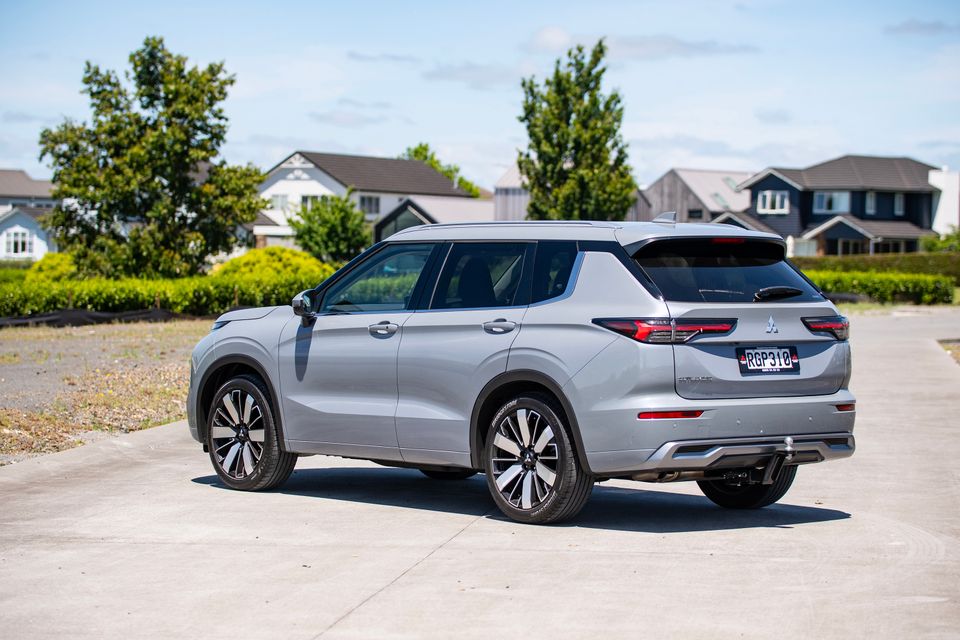
The 2.5-litre petrol in this 4WD VRX is best described as ‘fine’. Mitsubishi might have tweaked the Outlander’s damping, but the engine essentially carries over unabated. Although it does develop more power and torque than some of its competitors (like the outgoing RAV4, for example), the lack of any additional electrification combined with the presence of a CVT means it sometimes feels a little strained when you’re leaning on it for performance either from a standstill or when you go for an overtake.
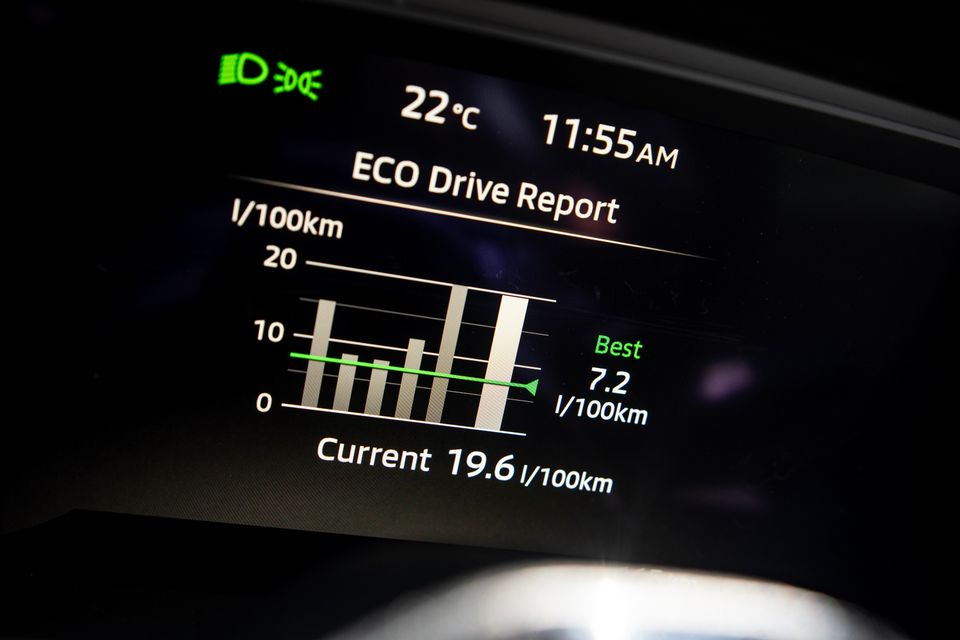
When you’re just humming around town, the 2.5 is quite effective in terms of its refinement. It goes about its business without making much noise at all. Fuel economy, meanwhile, is a bit of a mixed bag. We regularly saw figures around 9.5L/100km. On one hand, that’s not far off Mitsubishi’s own digits. On the other hand, that’s also not especially impressive. It’s more than a litre per 100km behind what we recently saw from a Mazda CX-5 Limited, and it doesn’t compare to the fours and fives you’ll get from a RAV4 or Sportage hybrid.
What do you get?
Like its Triton ute sibling, the Outlander comes loaded with equipment regardless of the spec you opt for. Although I enjoyed my time with the VRX, I think the XLS represents the best value in the line-up.
Mitsubishi Outlander LS equipment highlights:
Outlander XLS adds:
Outlander VRX adds:
Outlander Exceed adds:
CarExpert’s take on the Mitsubishi Outlander
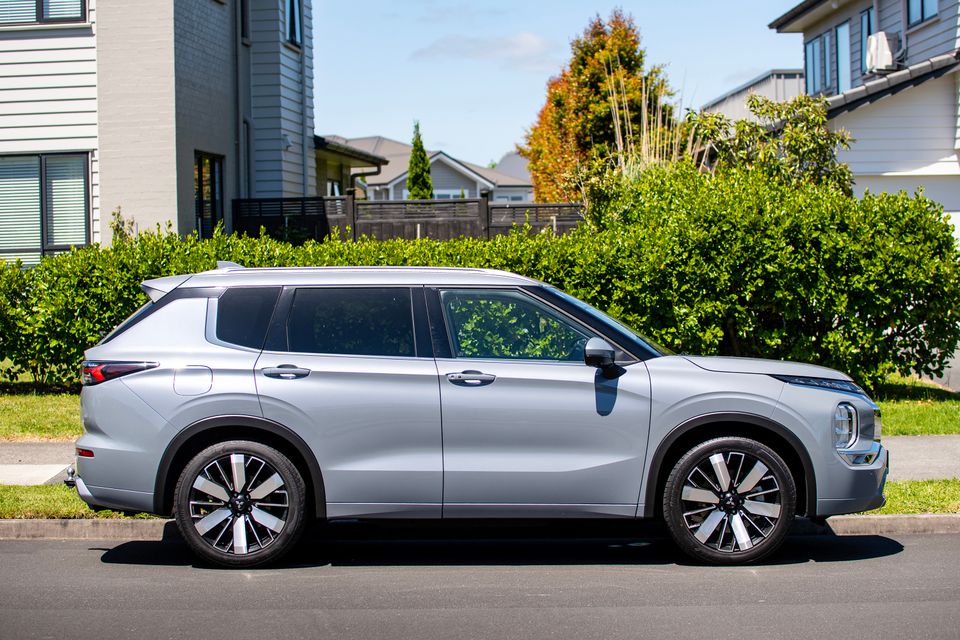
Mitsubishi’s most compelling nameplate has only gotten better with the Japanese manufacturer’s latest update. And with rivals in the segment continuing to pop out of the woodwork, its arrival is timely.
It has its ‘rough around the edges aspects’, but the Outlander nails the core pillars of what customers demand from a practical, mid-size SUV. And its 7-seater format and massive 10-year warranty still give it a credible edge over its mainstream rivals. It could be a little better on fuel, but there’s always the plug-in hybrid variants for those wanting a more frugal drinker.
The question now is whether Mitsubishi has been able to remedy past issues it has had with securing supply of Outlanders. Should these dramas be in its rear-view mirror, there’s no reason why the Outlander can’t step up and try to topple the RAV4 and reclaim its best-seller crown.
Where expert car reviews meet expert car buying – CarExpert gives you trusted advice, personalised service and real savings on your next new car.
Quickly see how this car stacks up against its competition. Select any benchmark to see more details.
2025
$51,990
2025
$55,990
2025
$62,990
2025
$69,990
2026
$71,490
2026
$77,990
2026
$83,990
2026
$91,590
Matthew Hansen co-founded motorsport outlet Velocity News, worked as a freelance photographer for various race teams, and was a specialist journalist for NZ Autocar Magazine and Driven at the NZ Herald. Most recently, he was Editor of Motoring at Stuff.co.nz.
Add CarExpert as a Preferred Source on Google so your search results prioritise writing by actual experts, not AI.
CarExpert
6 Days Ago

Matthew Hansen
11 Days Ago
Matthew Hansen
11 Days Ago

Damion Smy
11 Days Ago

Dave Kavermann
13 Days Ago
CarExpert
16 Days Ago
Add CarExpert as a Preferred Source on Google so your search results prioritise writing by actual experts, not AI.
† Displayed prices exclude on-road costs such as delivery charges, registration fees, number plates, insurance and applicable road taxes. These prices are subject to change without notice and may not reflect current market pricing or dealer offers.
 Automotive Vehicle Spec Data & 4K images Powered by JATO Dynamics Ltd