

 Showroom
 Car Chooser
 Compare
 Car Specifications

CarExpert
CarExpert Choice Awards: Best Luxury Small Car
This Choice Awards category recognises premium small cars that offer the perfect blend of city-friendly size and luxury refinement and appointments.
3 Days Ago
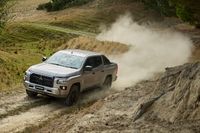
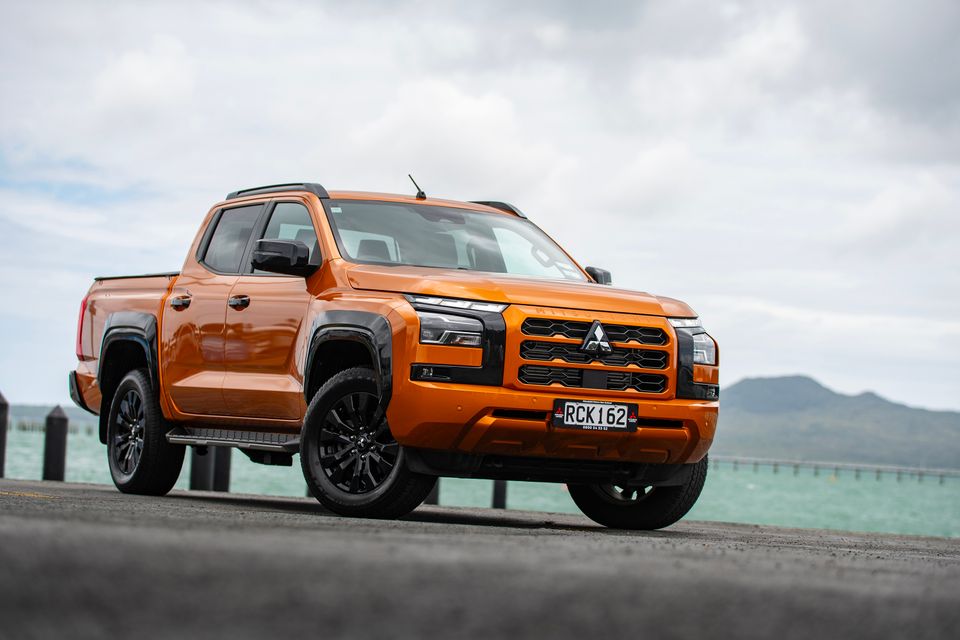
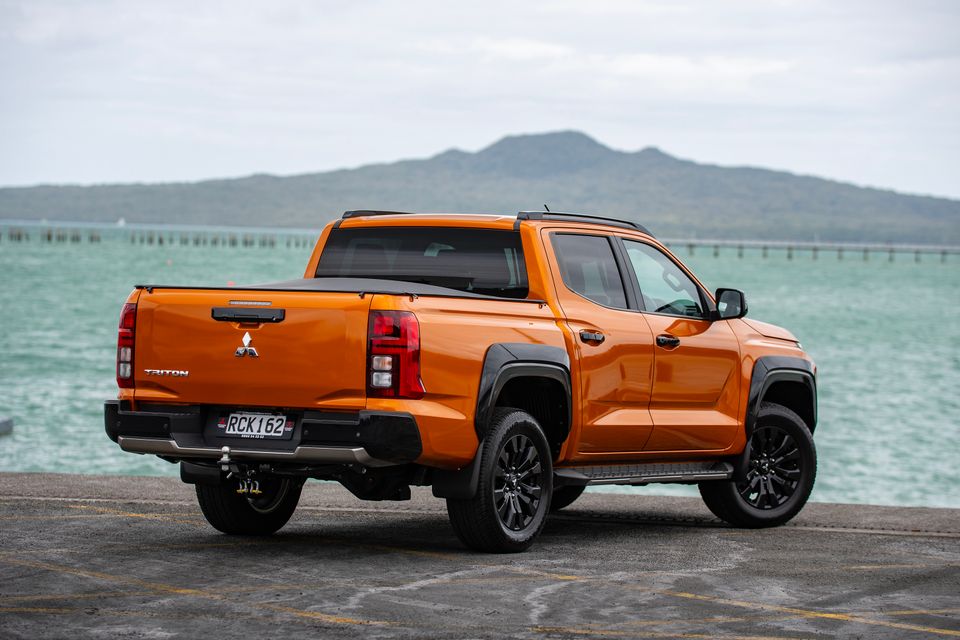
It's New Zealand's third most popular ute. Here's why 2026 could be the year of the Mitsubishi Triton.
Where expert car reviews meet expert car buying – CarExpert gives you trusted advice, personalised service and real savings on your next new car.
Don’t think Toyota’s facelift of the Hilux goes far enough? Unsure on getting a Ford Ranger with all of the turbulence around its powertrain line-up? This year could leave an open goal for New Zealand’s third most popular pick-up — the Mitsubishi Triton.
The Triton has always been a popular double-cab here, and in recent years has cemented itself in third position amongst its ute peers. It copped an enormous update in 2023, in the form of all-new architecture — lifting its safety, tech and refinement chops. A ute long appreciated for value-packed pricing became a platform that could hold its own on merit.
How much does the Mitsubishi Triton cost?
Despite its recent mechanical glow-up, the Triton remains enormous value for money, with double-cab wellside trims priced between $43,990 for the two-wheel drive GLX and $59,990 for the flagship four-wheel drive VRX.
Model | Price not including on-road costs |
|---|---|
Mitsubishi Triton GLX 2WD 2.4-litre double cab wellside | $43,990 |
Mitsubishi Triton GLXR 2WD 2.4-litre double cab wellside | $46,990 |
Mitsubishi Triton GLX 4WD 2.4-litre double cab wellside | $50,740 |
Mitsubishi Triton VRX 2WD 2.4-litre double cab wellside | $51,990 |
Mitsubishi Triton GLXR 4WD 2.4-litre double cab wellside | $53,990 |
Mitsubishi Triton VRX 4WD 2.4-litre double cab wellside | $59,990 |
The Triton’s natural rival is the Toyota Hilux, with the Triton undercutting its Japanese countryman across the board when comparing similar specs. There’s more savings to be had at the entry level, with the GLX 2WD being $6,000 cheaper than the equivalent Hilux SR 2WD (note that Hilux pricing includes on-road costs, and the Triton’s does not).
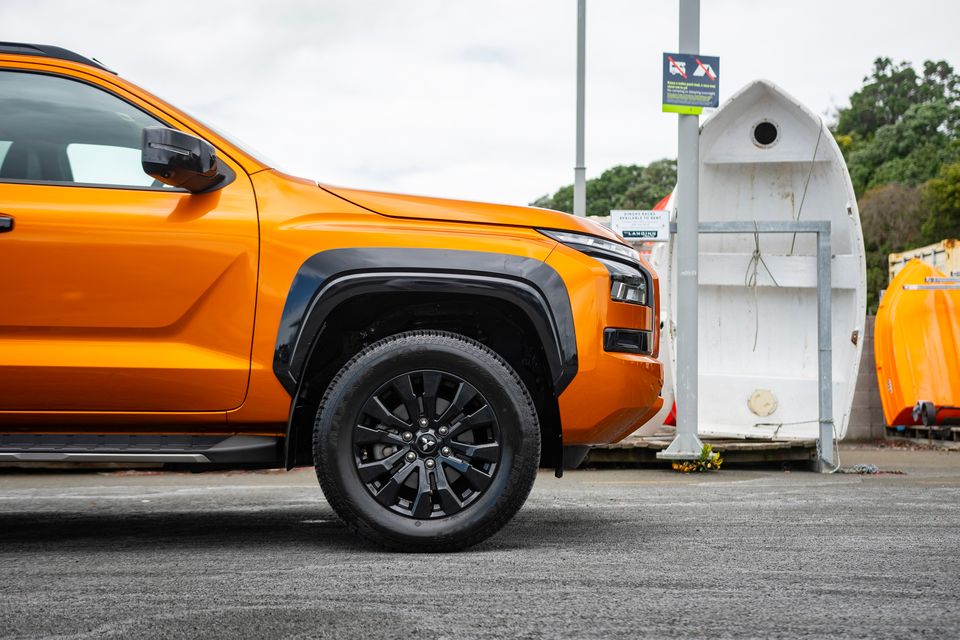
When you get to the flagship grades, the deficit narrows — the Triton VRX 4WD we tested here is $4,000 shy of the Hilux SR5 Cruiser. Both options are obviously much cheaper than the segment-leading Ranger. Its VRX and SR5 Cruiser competitor, the Ranger Wildtrak, starts at $76,990 in its soon-to-be-defunct 2.0-litre form, and $85,990 with the 3.0-litre V6.
If you’re looking at this pricing and thinking ‘what’s the Triton’s catch’ … well, there isn’t really any. Its dimensions are a little smaller than the Hilux and Ranger, but it still boasts a 1000kg payload and 3500kg braked towing capacity. I suppose you can also say that the Triton doesn’t come with any hybrid hardware, although it’s speculated that some kind of electrified variant (possibly using tech from the Outlander PHEV) is in the works.
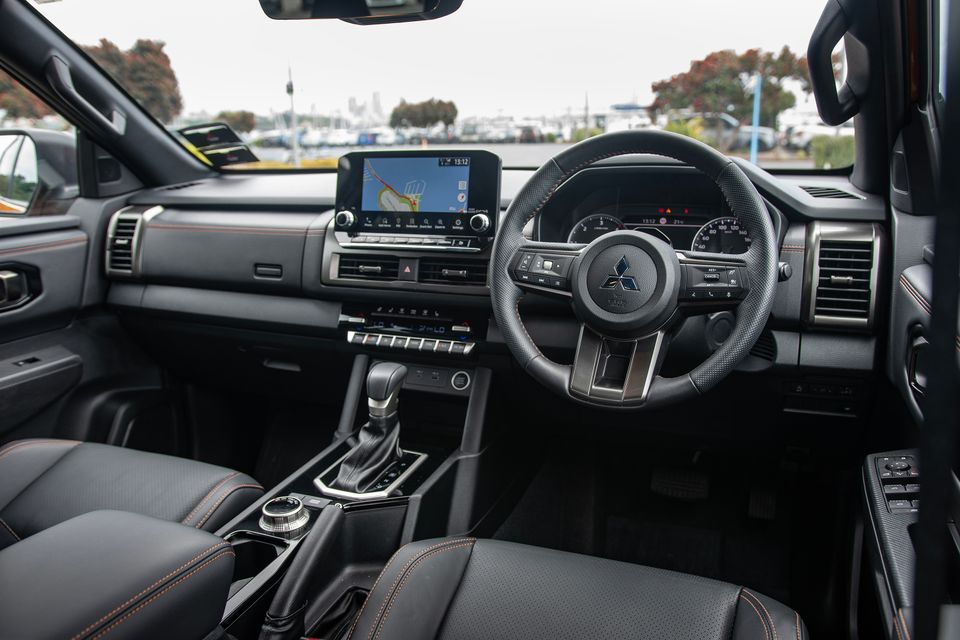
What’s the Mitsubishi Triton like on the inside?
Where previous generations of Triton looked cheap and outdated inside — even when new — the latest iteration is finally bang up-to-date with its competition. And, thanks to the new architecture’s lengthened wheelbase, there’s a lot more room in the second row to boot.
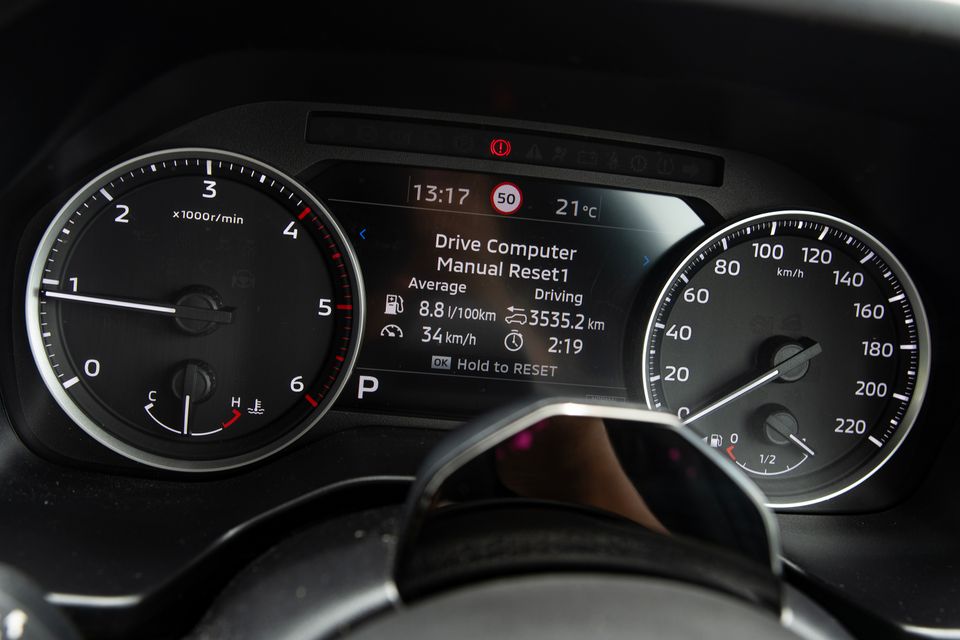
Regardless of which model you choose, you get a 9-inch touchscreen with wireless Apple CarPlay and wired Android Auto, built-in navigation, an ana-digi cluster unit with a 7-inch display, and Mitsubishi’s full suite of active safety technology. This ranges from radar cruise control and parking sensors at both ends, to traffic sign recognition, lane departure warning, and driver monitoring. The latter has been a sore topic for the Triton, but we’ll get to that later.
The touchscreen is powered by Mitsubishi’s latest software, which will be instantly familiar for those who have driven the current Outlander. There’s nothing too flash about its presentation, but that will likely play into its favour over time as it ages. Its menu layout is simple enough, and we had no issues connecting our phone.
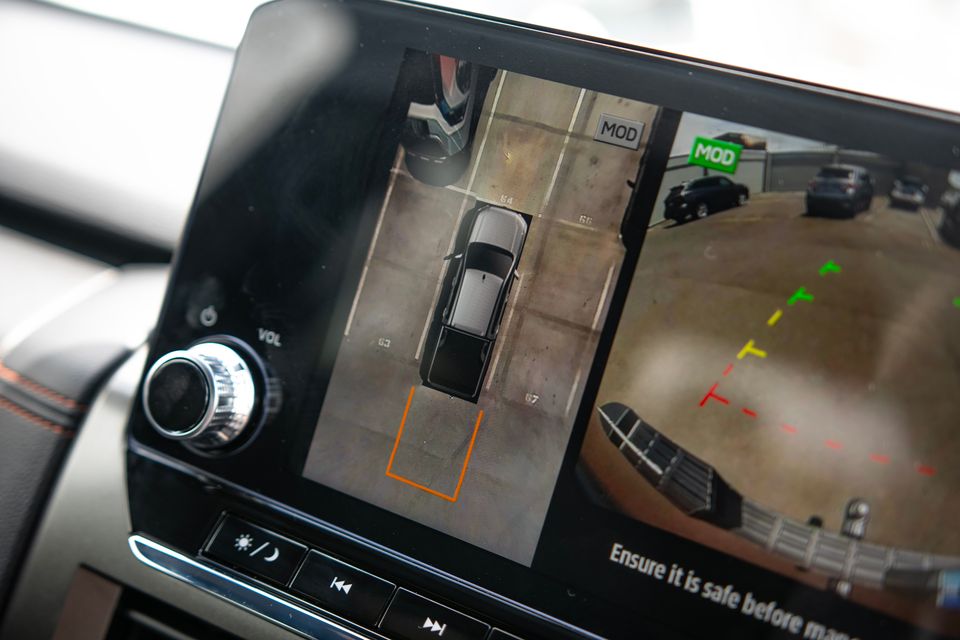
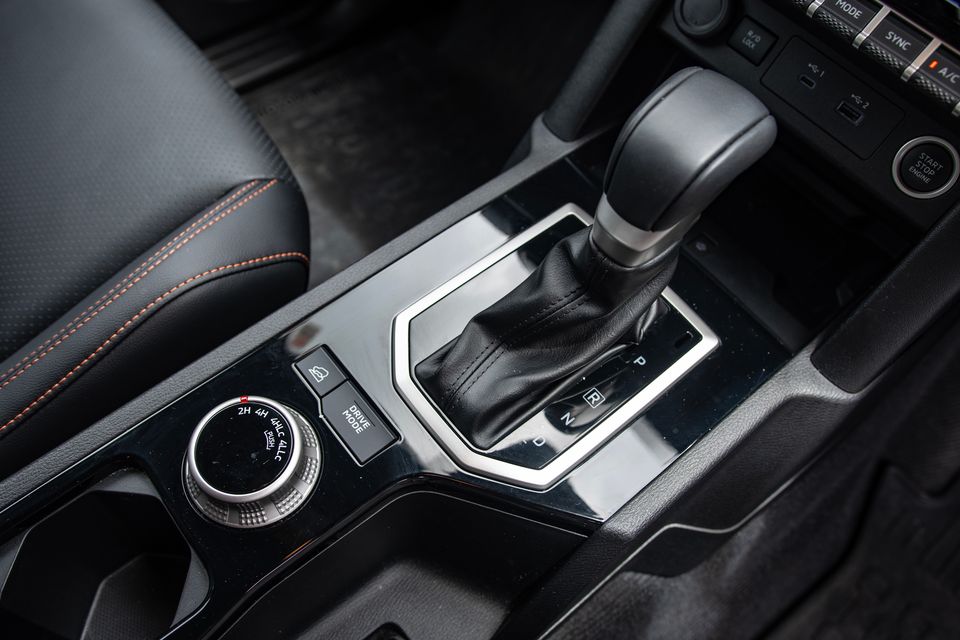
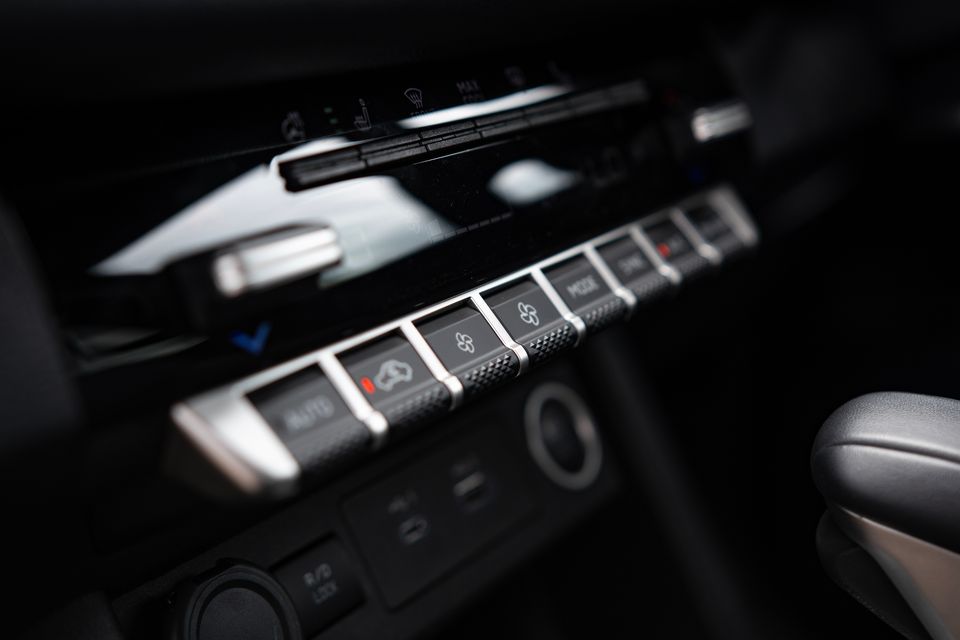
Whilst the Ford Ranger and Kia Tasman aren’t going to lose much sleep over it, the quality and finish of the Triton’s interior is good enough to go toe-to-toe with just about any other pick-up in class. This Triton VRX has neatly executed leather soft-touch appointments on the dashboard and door cards, complemented by leather upholstery, Wildtrak-esque orange contrast stitching, and splashes of faux carbon fibre.
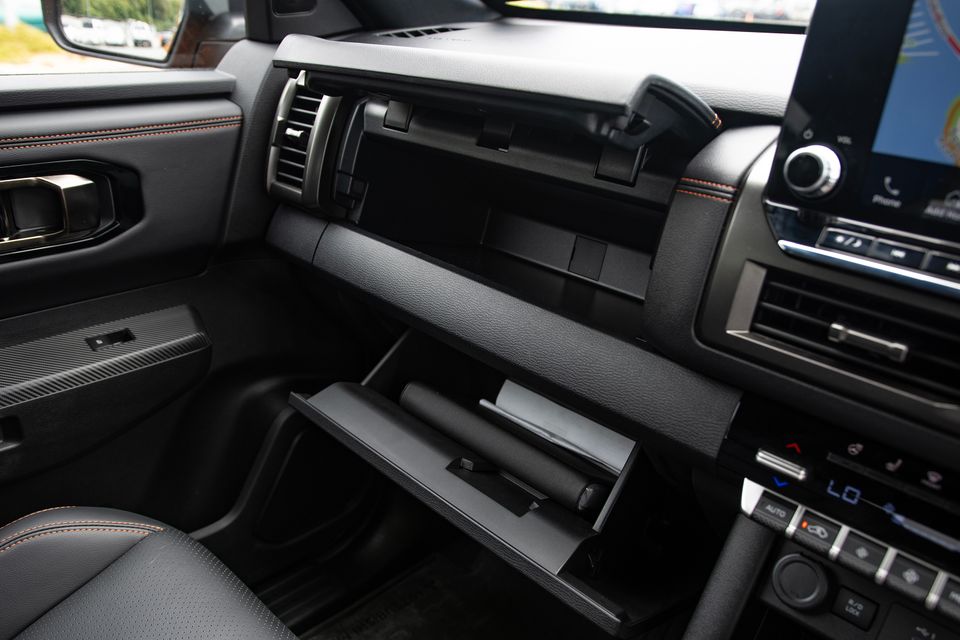
There’s plenty of physical switches and buttons — including a full separate panel for climate control adjustment, a row of hard shortcut buttons for the touchscreen, and a coveted volume knob. There’s plenty of useful cubbies and storage areas, including a slick split glovebox configuration.
It would have been nice if the upper sills of the door cards and the knee-region of the dashboard also featured some padding. And the piano black trim around the gear lever is prone to scratches and dust. But these are amongst the few issues I have with the double-cab Mitsi’s interior.
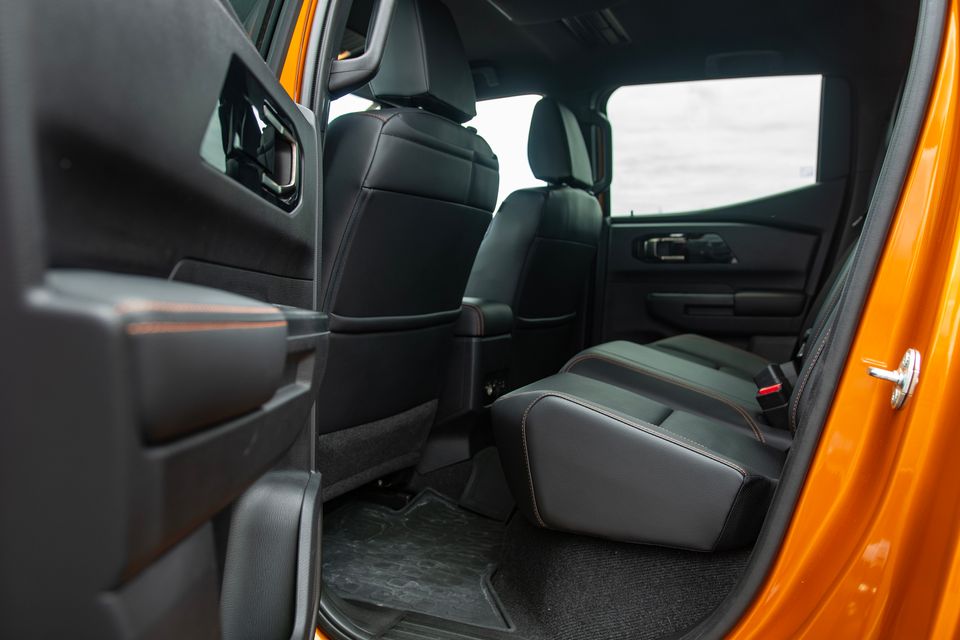
When it comes to space, the Triton’s second row is the nameplate’s best yet. Legroom is fantastic, and the flanking seats are comfy thanks to a healthy amount of recline and the bucket effect created by the raised fifth seat. And although the Triton is one of the smaller utes in its segment, its bed is surprisingly large. The load area is 91mm longer and 25mm wider than that of a Ranger.
What’s under the bonnet?
No matter what Triton you opt for, the powertrain is the same. Between the front wheels sits a 2.4-litre bi-turbo 4-cylinder diesel engine, making 150kW of power and 470Nm of torque. The bones of this 2.4 carry over from the previous generation Triton, although Mitsubishi has tweaked the unit to give it more power, more torque, better fuel economy, and cleaner emissions.
Despite the brand’s number gains, there will still be those concerned with the 2.4-litre’s capabilities. The obvious metric of worry is its torque number, which is down on the unspoken industry standard of 500Nm. As previously mentioned, this hasn’t harmed the Triton’s overall towing rating or payload capabilities. But, it will no doubt play on the mind of anyone intending to tow a decent load with their next ute.
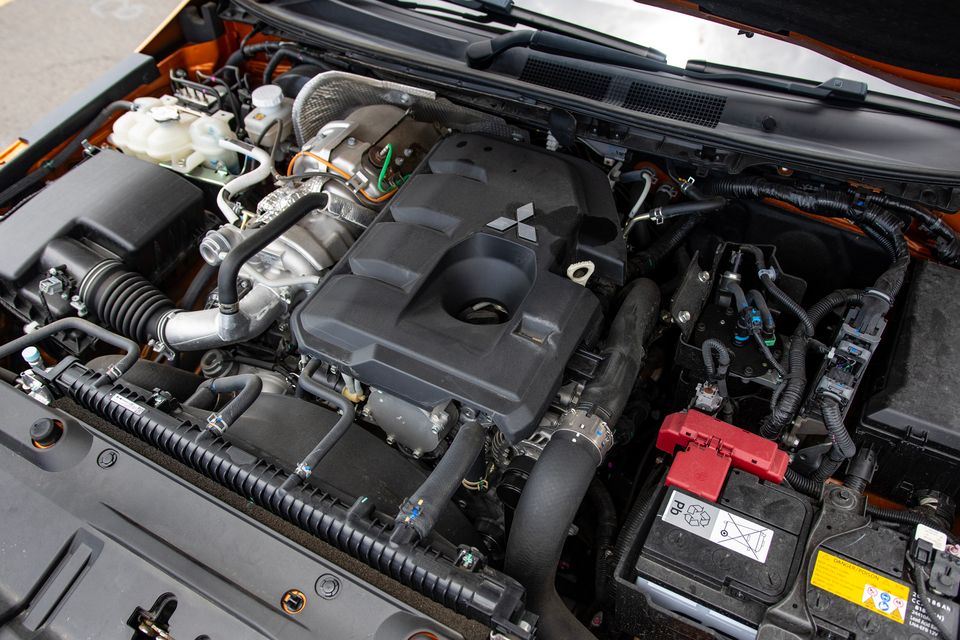
On the economy front, the Triton claims a figure of 8.8L/100km combined — almost perfectly mirroring the 8.7L/100km Toyota claims for its Hilux Hybrid, whilst falling short of a Ranger 2.0-litre’s 7.6L/100km claim (a number that is admittedly quite difficult to replicate in real-world tests).
The Triton sends its power and torque through a traditional 6-speed automatic transmission, with Mitsubishi electing to skip manuals across the board. One interesting addition made to the current generation was Mitsubishi’s decision to give all four-wheel drive variants its Super Select II hardware. This means they all come with selectable full-time four-wheel drive; a relatively rare feature in the segment as most other utes make do with part-time four-wheel drive.
Amongst other differences, this gives the Triton additional assurance on wet and gravel surfaces. Where a part-time system can only operate on tarmac in two-wheel drive mode, a full-time system enables four-wheel drive running on tarmac and other intermediate surfaces. And Mitsubishi’s system is one of the best.
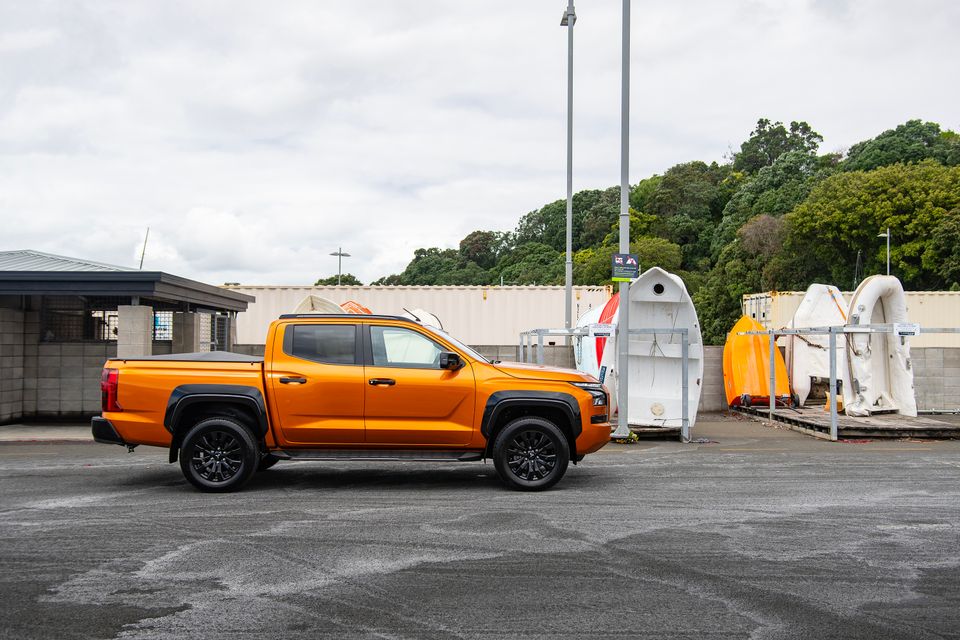
How does the Mitsubishi Triton drive?
It’s true that the Triton’s 2.4-litre has never delivered Hollywood numbers. But, that’s not to say it isn’t without its merits. Compared to the Ford Ranger’s 2.0-litre and the Kia Tasman’s 2.2-litre, it’s quite a bit more rattly and ‘traditional’. There’s a considerable amount of classic diesel acoustics on start-up, which only then hushes up once you’re up to operating speeds.
But, it’s still a fairly likeable powertrain all the same. The Triton doesn’t feel noticeably short of poke. Its mid-range performance is credible, aided by a straightforward and effective 6-speed and a healthy amount of pull early in the rev range.
The 2.4-litre’s biggest strength is arguably its fuel efficiency. Mitsubishi may claim the Triton can achieve 8.8L/100km combined, but in my time with it I’ve always found it easy enough to beat that figure in real-world driving … without making any particular fuel-saving effort. That’s an exceptional feat for a double-cab when the likes of the non-PHEV Ranger and Hilux Hybrid struggle to dip beneath 10.0L/100km.
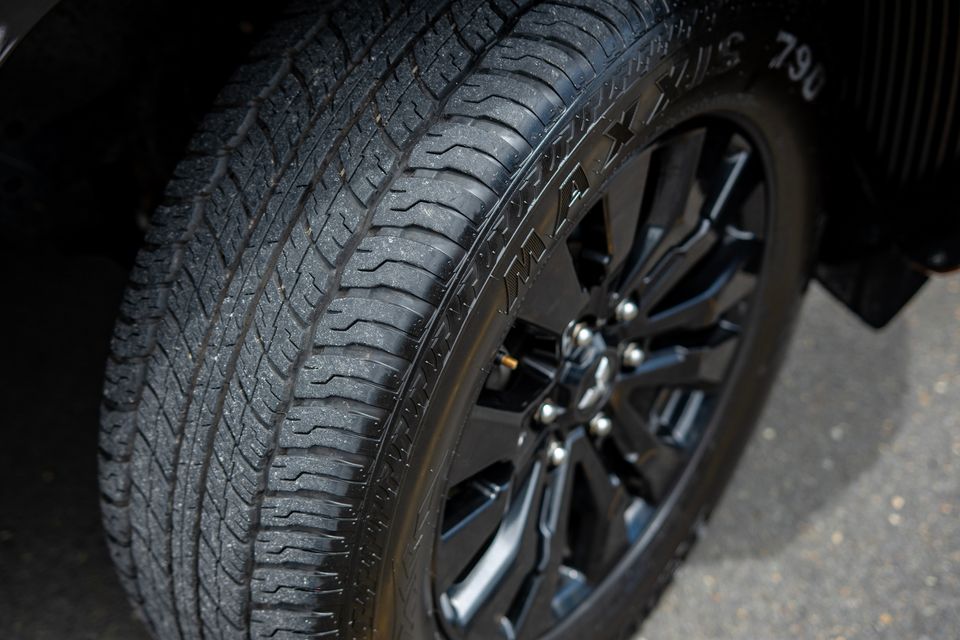
In terms of the Triton’s handling abilities, Mitsubishi has made solid inroads between generations. It cannot hold a candle to the Ranger or Tasman in terms of refinement or ride quality, but it’s considerably more comfy than a Hilux whilst also featuring a lighter steering rack. I’ll note that, like the Hilux, the Triton’s ride quality improves with a bit of weight in the bed.
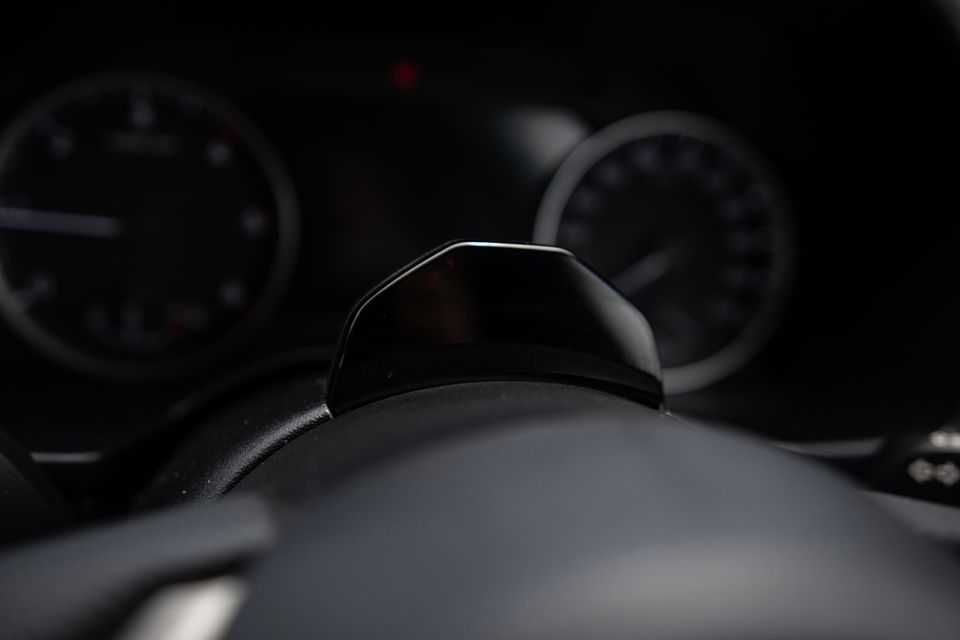
Something that’s overshadowed the Triton’s improvements with this new generation has been the reception to its driver monitoring system. For the uninitiated, this system is based around a camera mounted on top of the steering column and pointed at the driver. When the driver is deemed to be ‘distracted’ — as in, looking away from the windscreen for two long — the car beeps them and telegraphs a warning message onto the cluster.
Driver monitoring is pretty common in the passenger car space, but it’s still quite new for ute drivers. So, perhaps it’s not surprising that the Triton’s system has been a particular sore point for ute consumers. Look, it’s not the most invasive system I’ve had the displeasure of using, but it’s far from ideal — often buzzing out alerts when you take a slightly too long peek at the touchscreen or check your blind spot. One day everything else in the ute segment will adopt this technology and the Triton will be on a somewhat even footing. But for now, it’s one of the Triton’s key frustrations.
What do you get?
The Triton is arguably one of the most generously equipped utes on the market. Whilst the fruit and sharp price of the VRX we tested should be tempting, the mid-spec GLXR is probably the spec sweet spot.
2026 Mitsubishi Triton GLX equipment highlights:
Triton GLXR adds:
Triton VRX adds:
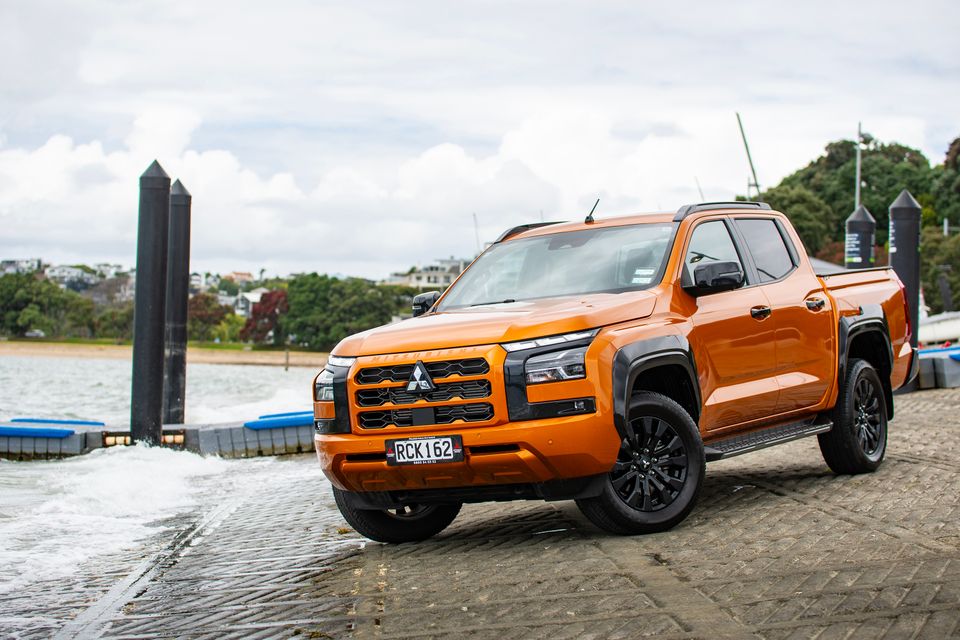
CarExpert’s take on the Mitsubishi Triton
Crammed with equipment and boasting a 10-year/160,000km warranty, the Mitsubishi Triton is a ute option that deserves to be known as much more than ‘the frugal pick’. It may not be the most cutting edge pick-up in class, but it sits towards the pointy end of the segment in all of the metrics that matter.
It’s notable too that the forthcoming update to one of its biggest rivals, the Nissan Navara, is essentially a badge engineered model built on the same platform, featuring the same 2.4-litre engine, and identical sheetmetal from the front fenders back. There could well be Navara customers who cross the aisle to Mitsubishi, if it can offer a better deal.
With more companies contemplating their ‘bottom line’ and changing fortunes amongst the Ford, Toyota, and Nissan ute camps, we expect the Triton’s customer base to broaden in 2026. With the work that’s been put into the platform, it deserves it.
Where expert car reviews meet expert car buying – CarExpert gives you trusted advice, personalised service and real savings on your next new car.
Quickly see how this car stacks up against its competition. Select any benchmark to see more details.
2025
$44,490
2026
$48,050
2025
$53,990
2026
$54,990
2025
$58,990
2026
$59,990
2026
$59,990
2025
$59,990
2025
$79,990
Matthew Hansen co-founded motorsport outlet Velocity News, worked as a freelance photographer for various race teams, and was a specialist journalist for NZ Autocar Magazine and Driven at the NZ Herald. Most recently, he was Editor of Motoring at Stuff.co.nz.
Add CarExpert as a Preferred Source on Google so your search results prioritise writing by actual experts, not AI.
CarExpert
3 Days Ago

Dave Kavermann
3 Days Ago

Alborz Fallah
3 Days Ago
Dave Kavermann
3 Days Ago
Dave Kavermann
3 Days Ago

Matthew Hansen
4 Days Ago
Add CarExpert as a Preferred Source on Google so your search results prioritise writing by actual experts, not AI.
† Displayed prices exclude on-road costs such as delivery charges, registration fees, number plates, insurance and applicable road taxes. These prices are subject to change without notice and may not reflect current market pricing or dealer offers.
 Automotive Vehicle Spec Data & 4K images Powered by JATO Dynamics Ltd