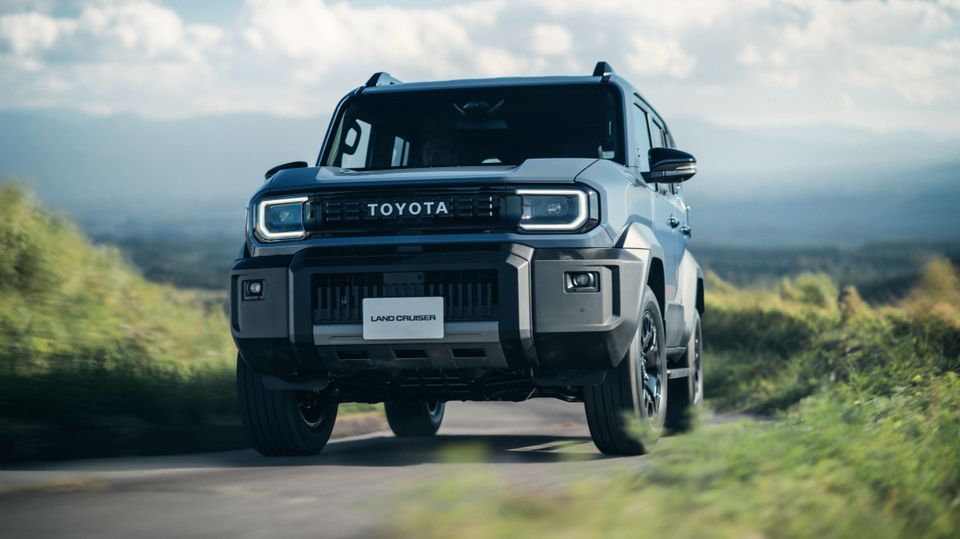
Toyota has expanded the Land Cruiser lineup in its home market, unveiling the all-new Toyota Land Cruiser FJ as a smaller, more affordable entry point into the company’s most iconic off-road model line.
Joining the existing Land Cruiser 300, Land Cruiser Prado 250, and 70 Series models, Toyota says the new FJ has been developed around the theme of “Freedom & Joy”. Rather than replacing any existing model, the FJ sits beneath the larger off-roaders and aims to attract customers who may have found previous Land Cruisers too large or expensive.
Toyota has priced the Land Cruiser FJ from ¥4,500,100 (~NZ$48,600), and is targeting monthly sales of 1300 units in Japan.
The Land Cruiser FJ measures 4575mm long and 1855mm wide, with a 2580mm wheelbase. Compared with the four-door Suzuki Jimny, the FJ has a similar wheelbase but is 755mm longer and 210mm wider.
Compared with the larger Land Cruiser Prado, the FJ is 350mm shorter and 125mm narrower. Its shorter wheelbase also helps reduce the turning circle to 5.5 metres, improving urban manoeuvrability while maintaining off-road capability.
The styling retains familiar Land Cruiser cues including a square cabin design, upright proportions, prominent wheel arches, and a rear-mounted spare wheel. Toyota has also introduced more playful design elements, including a recurring ‘dice motif’ throughout the vehicle.
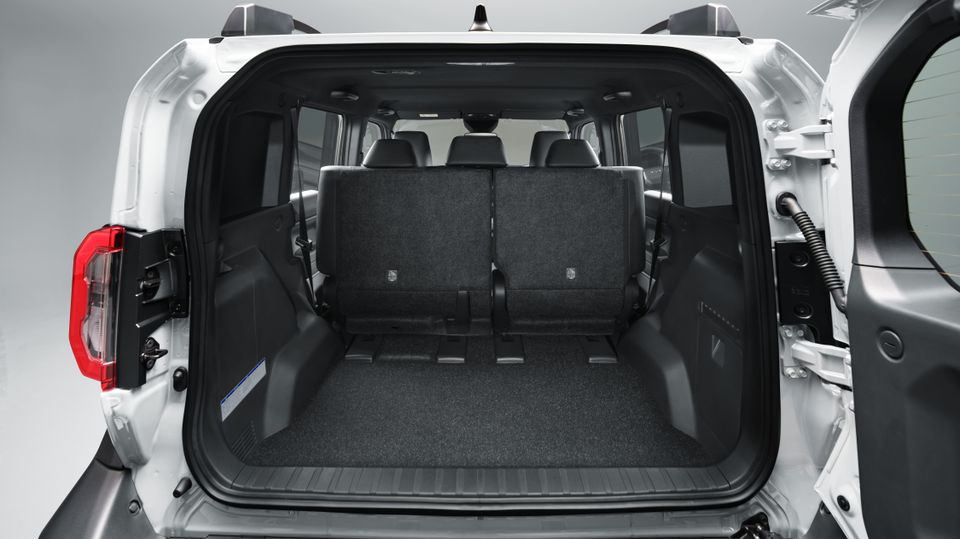
Despite its smaller size, Toyota says practicality remains a focus, with the FJ offering a two-row, five-seat layout and 795 litres of luggage capacity with the rear seats in place, expanding to 1607L with them folded.
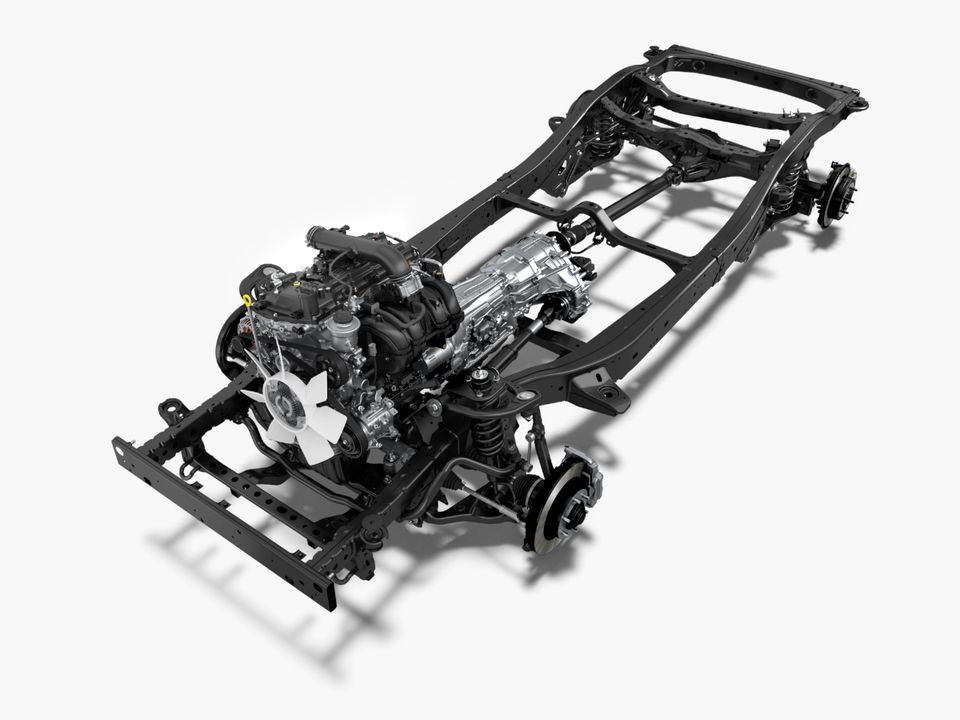
While the FJ has the smallest footprint of any Land Cruiser, the FJ remains a proper body-on-frame four-wheel drive, retaining the ladder-frame architecture that has underpinned the Land Cruiser nameplate for decades.
Toyota claims the FJ offers comparable wheel articulation with the Land Cruiser 70 Series while also delivering better approach and departure angles to the larger Prado, thanks partly to its shorter overhangs.
The suspension setup consists of double wishbones up front and a four-link rigid rear setup. Standard off-road equipment includes downhill Assist Control, hill-start Assist Control, electric rear differential lock, roof rails, side steps, front skid plate and a rear-mounted spare wheel.
Power comes from a naturally aspirated 2.7-litre four-cylinder petrol engine producing 120kW of power and 246Nm of torque, paired with a six-speed automatic transmission.
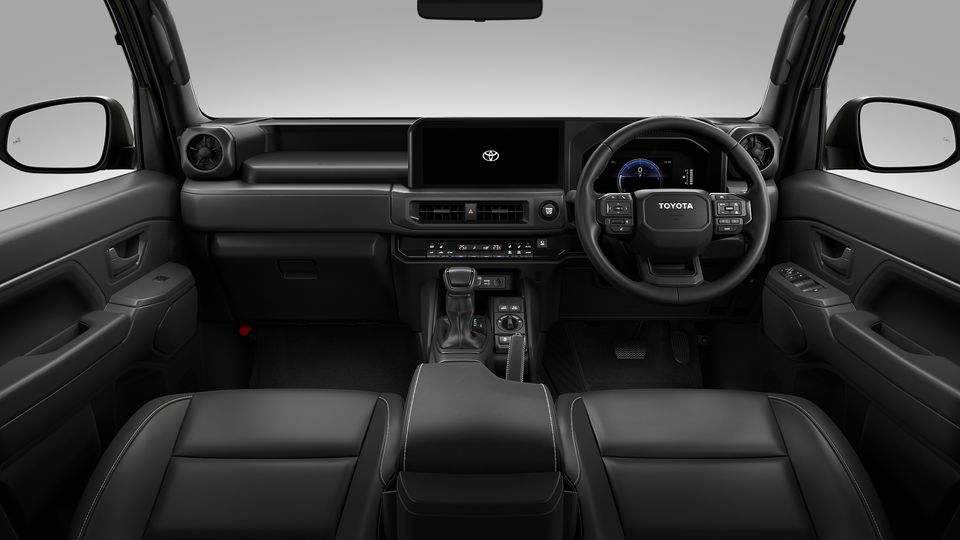
Inside the cabin, standard technology features include a 12.3-inch infotainment touchscreen, blind-spot monitoring, and a panoramic-view monitor.
Toyota New Zealand stated the new Land Cruiser model is not under consideration for the local market in late 2025, although the FJ could potentially fill an interesting space between the work-focused Land Cruiser 70 Series and more family-oriented SUVs such as the Toyota RAV4.
However, the Japanese starting price doesn’t account for local taxes, shipping, or market-specific equipment. Should Toyota New Zealand introduce the FJ locally, the eventual sticker price would likely be substantially higher, from around NZ$60,000-$70,000 based on taxes and positioning.
Toyota is yet to confirm broader global rollout plans, though the addition of a more compact Land Cruiser could make the FJ a strong candidate for markets such as New Zealand and Australia, where demand for rugged lifestyle-focused SUVs remains strong.
Do you think the Toyota Land Cruiser FJ would sell in New Zealand?



 Showroom
 Car Chooser
 Compare
 Car Specifications