


 Showroom
 Car Chooser
 Compare
 Car Specifications


Dave Kavermann
BYD reveal $330k Denza Z electric supercar with 1164kW
The Denza Z Coupe will launch in the UK, and if it were to come to NZ, would become one of the fastest new car offered locally.
46 Minutes Ago
"Last week was even better. This week is still good. Next week's going to be worse," warns the AA
Journalist
Journalist
New Zealand motorists are being urged to fill up sooner rather than later, with the Automobile Association (AA) warning fuel prices are set to climb following renewed conflict in the Middle East.
The warning comes after the United States intensified military action against Iran, which responded by announcing the closure of the Strait of Hormuz – one of the world's most important oil shipping routes.
While fuel prices have steadily eased over recent weeks, the AA says the current dip may prove short-lived.
AA fuel spokesperson Terry Collins said motorists who can afford to should top up their tanks before wholesale price increases begin flowing through to service stations.
"Last week was even better. This week is still good. Next week's going to be worse," Mr Collins told RNZ.
"The longer you wait, the more you're probably going to have to pay."
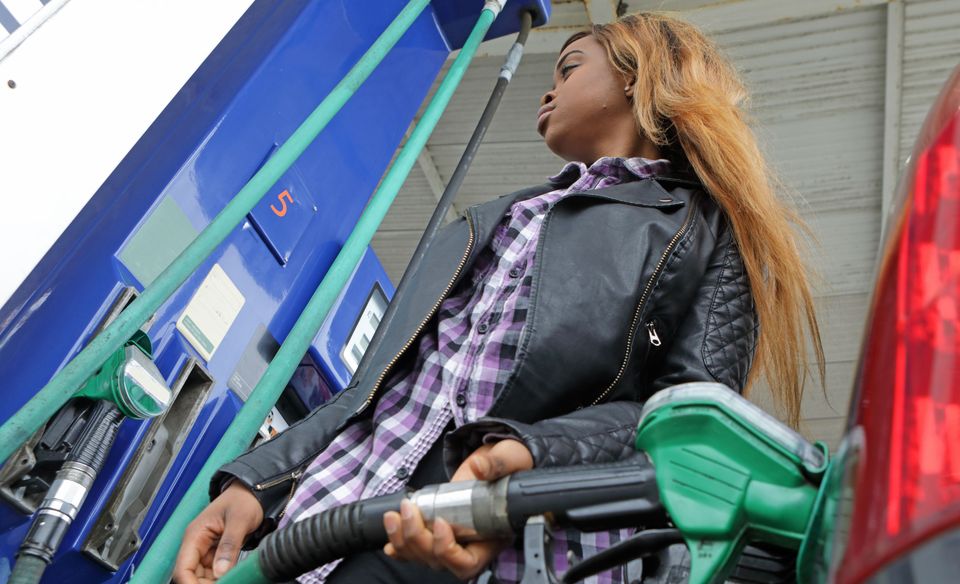
The lastest call from the AA comes after prices at the pump have steadily fallen in the last month.
According to fuel price tracking app Gaspy, the national average for 91-octane petrol currently sits at $2.934 per litre, down 4.56 cents or 1.53 per cent over the past 28 days.
Diesel has recorded the biggest fall, averaging $2.401 per litre after dropping 26.47 cents, or 9.93 per cent, over the same period.
Average prices for premium fuels currently stand at $3.126 per litre for 95-octane and $3.278 per litre for 98-octane.
The fall in fuel prices comes after Brent crude – the global benchmark for oil prices – traded at US$68.58 per barrel on July 1. However, following renewed tensions in the Middle East, it has since climbed to US$80.22 per barrel.
Mr Collins said future increases at the pump are expected to be more gradual than those seen when tensions first flared in March, as oil tankers have more alternative shipping routes available than previously.
However, he said there are already signs retailers are preparing for higher wholesale costs.
"Some fuel companies had already skipped their usual Tuesday specials this week," he said.
"That's another strong indicator that prices are going to move up. They're not in a hurry to get rid of their cheaper product."
According to Mr Collins, importers must begin pricing fuel based on replacement cost rather than what it cost to purchase existing stock.
"If I've got $100,000 worth of fuel in my tank, and next week it's going to cost me $120,000 to fill it up, I'm going to charge $120,000 for that fuel I've got in my tank now, because otherwise I'm going to have a shortfall."
The latest warning follows comments from both the AA and Westpac NZ earlier this week suggesting fuel prices had likely reached their lowest point after several months of declines.
At the time, Westpac NZ chief economist Kelly Eckhold said petrol prices were likely to remain within a broad $2.80 to $3.00 per litre range unless there was a significant improvement in global oil supply.
Mr Collins also said then that motorists shouldn't expect further meaningful price reductions, warning the recent lows were "probably as good as it's going to get".
Despite the latest escalation, the AA doesn't expect prices to return to the extreme levels seen during previous global oil shocks.
Mr Collins said petrol is unlikely to climb significantly above $3.00 per litre, although diesel could see larger increases because global diesel supplies remain tighter.
"We don't have a supply problem. We just have a price problem, and that's a global thing," he said.
"We're just at the mercy of what happens overseas, being a small country at the end of the world."
Theses changes mean the Government's temporary fuel relief payment for low-income households will likely remain in place for some time. When announced, the Government said the relief payment will continue until the national average price of 91-octane petrol stays below $3.00 per litre for four consecutive weeks.
Dave is a Kiwi motoring journalist with experience in motorcycle racing, new car sales, radio and communications.
Dave Kavermann
46 Minutes Ago


CarExpert
4 Hours Ago

Dave Kavermann
4 Hours Ago


Matthew Hansen
5 Hours Ago

Matthew Hansen
8 Hours Ago

Dave Kavermann
1 Day Ago
Add CarExpert as a Preferred Source on Google so your search results prioritise writing by actual experts, not AI.