

 Showroom
 Car Chooser
 Compare
 Car Specifications

Dave Kavermann
Peugeot NZ '100 per cent committed to our market' despite Australian collapse
Peugeot New Zealand has reassured Kiwi buyers they're staying put and expanding, despite the brand's future in Australia looking uncertain.
15 Hours Ago
The Blue Oval brand says it’s not worried about Chinese auto brands, despite their rapid ascent up the sales charts in Australia and New Zealand.

Managing Editor
Managing Editor
Ford says it’s not concerned by the rise of Chinese auto brands including BYD, despite their rapid rise in the region.
In New Zealand, Ford is the second most popular marque year-to-date behind Toyota. But, when looking purely at passenger vehicle registrations, the brand drops to 13th in the order, behind the likes of BYD, MG, GWM, and (following a stand-out March and April) Dongfeng. In Australia, meanwhile, Ford was outsold overall by BYD in both March and April.
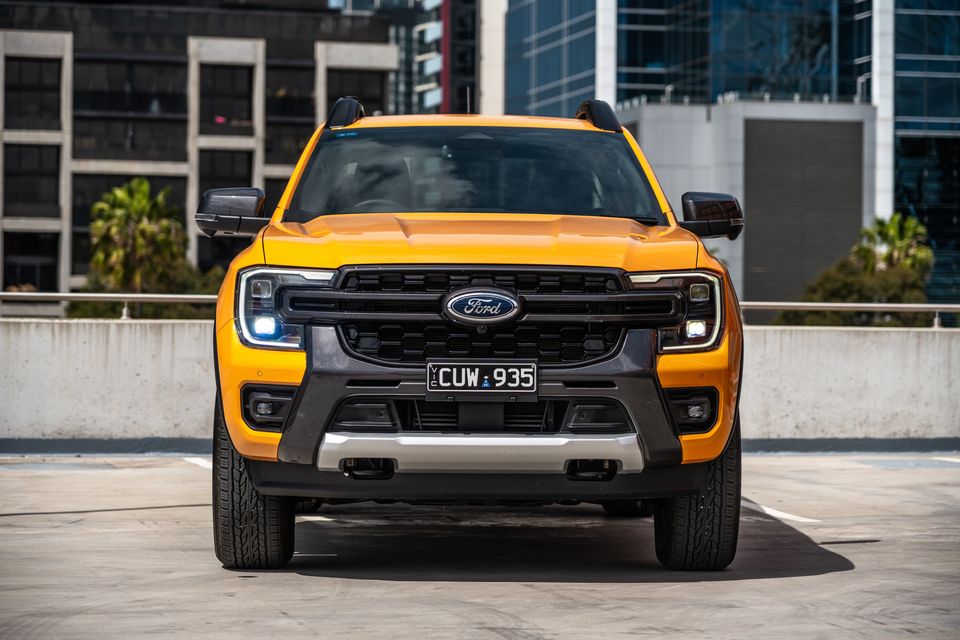
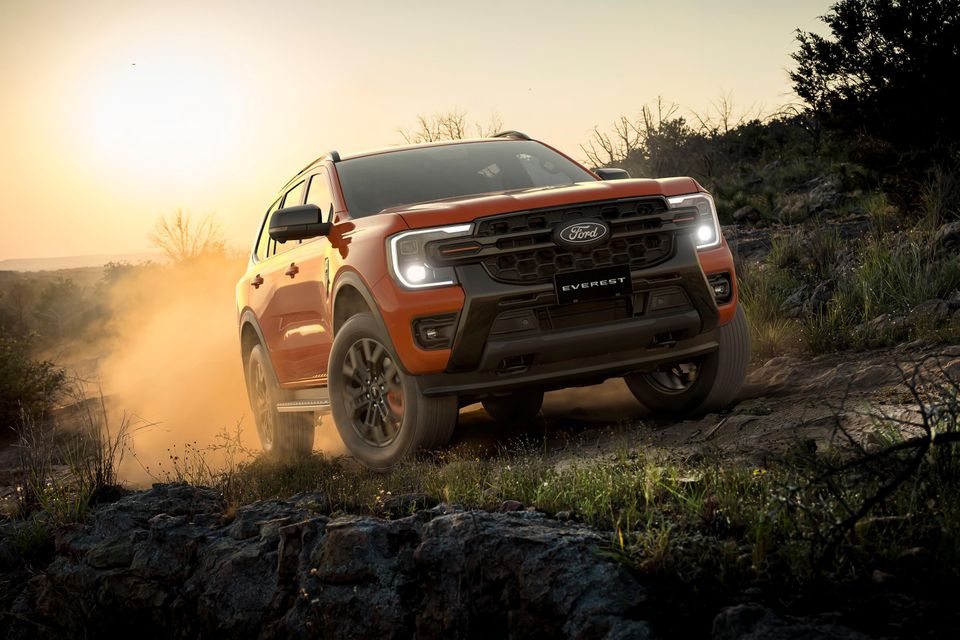
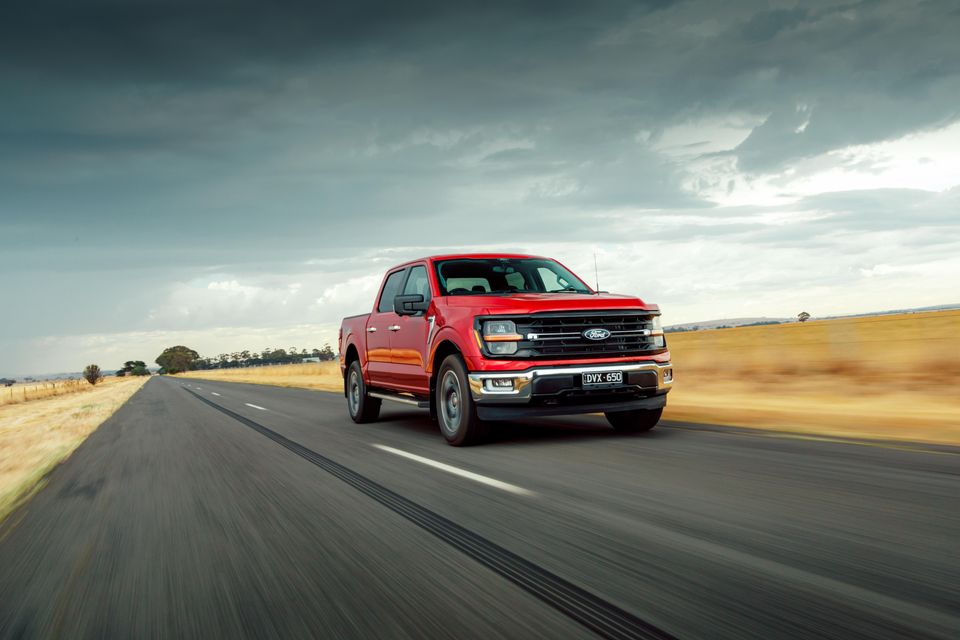
“Our view is that's a point in time, based on what's happening in the overall environment, and that things will normalise,” said Ford Australia marketing director Ambrose Henderson at the launch of the updated MY26.50 Ranger and Everest.
“We'll see the results of that come over the next few months, but you know that wasn't a performance they were able to deliver over consecutive months at this point, and maybe they will in time, but we're here to run our own race, focus on the segments we're really strong in, and play where we can win.”
Across the ditch, BYD continues to publicise its “first special shipment” of almost 5000 new vehicles, which is currently on its way from China, as part of an April commitment to ship 30,000 vehicles to Australia across May and June in response to record fuel prices driving a sales spike.
The fleet of 4810 new vehicles is aboard one of BYD’s eight purpose-built, roll-on roll-off (RORO) car-carrying vessels, called the BYD Zhengzhou, which has left Shanghai and will arrive in Melbourne on June 2, before heading on to Sydney and Brisbane.
BYD will hold a special media function to mark the vessel’s arrival in Australia next week, and the Chinese brand even cited the ship’s captain describing sea bird species en route in its latest press release promoting the special shipment.
However, Ford’s marketing chief dismissed all this activity as a publicity stunt.
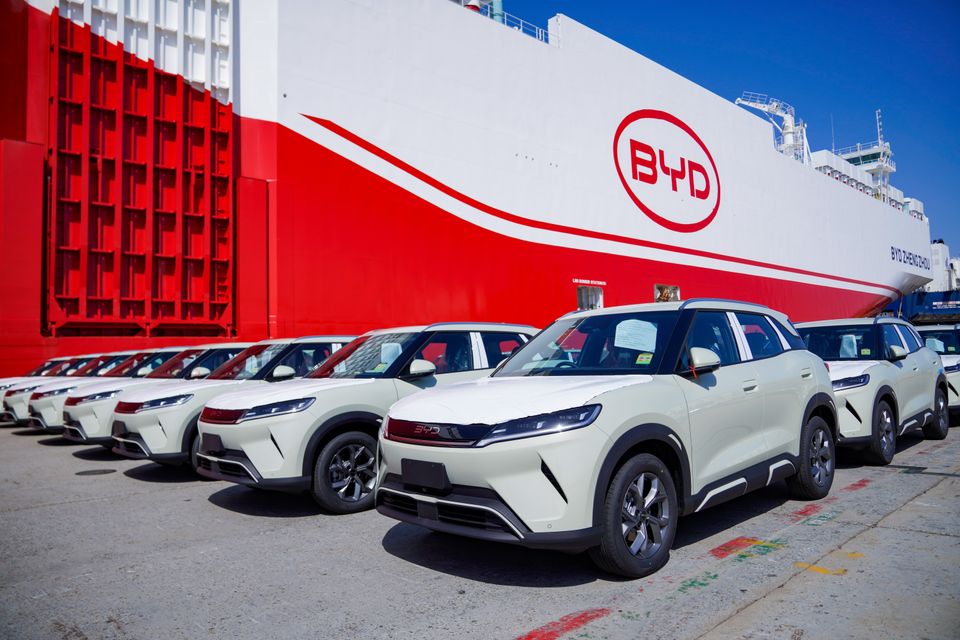
“I'm going to speak specifically about the boat for a second and the reason is that three, four years ago we leased two boats of our own, and so we could also do a picture of our 5000 Rangers coming in every month at every port, because we leased two boats and all those two boats do is go between Thailand and Australia, delivering Rangers and Everests,” said Henderson in response to a question about BYD’s latest shipment.
“So I think part of this is some PR, part of this is some, you know, socialisation, if I can put it that way. So we are taking those actions and already took those actions to secure the logistics for the volume of cars we're selling years ago, so there's in my mind no new news about a boat of 5000 cars coming, because we do that every month.”
Mr Henderson said the influx of Chinese brands was just the latest chapter in a long history of auto brands setting up shop in Australia, rather than the biggest shift the local auto industry.
“I think we've seen so many shifts in the industry over time, it would be a bold statement to say this is the biggest,” he said.
“I think it's a new wave of competitors that everyone is looking at, as we do all the time, both locally and internationally. Clearly, what the Chinese OEMs have done really well is really think through their future strategy and focus on BEV and BEV platforms to be able to vertically integrate those platforms right now.
“It's an economic environment that is very much favouring that type of offering, but that current economic environment is not going to be around forever, and at a point in time fuel prices and all that sort of thing will normalise again.
“I think that there's some things that have happened in the recent couple of months that are points in time, not systemic trends, and for us what we're focused on is our key segments – and those key segments, generally speaking, are not impacted from huge swings in electrification, or huge swings in terms of those manufacturers that are winning their volume.
“Those huge differences have been found in other segments, which we don't participate in.”
Australasia is one of the world’s most competitive auto markets, with the number of players continuing to grow every week. Another new marque from China, JMC, was confirmed for New Zealand just yesterday. Yet Ford says it has a strong track record of fending off competitors.
“This has been the most competitive market in the world for a long time, and it was the most competitive market in the world before the Chinese OEMs started to enter the market and have the impact that they've had,” said Henderson.
“We haven't been around for 101 years in Australia without having to go through a few changes in the market – two world wars, GFC, COVID, depression, you know. We've seen a fair bit in our history, and I think what you've seen from Ford at every one of those changes in the industry is us refocus on what customers want, pivot and address that, to deliver and win.
“You've seen us go through that cycle many, many times. And I think what you're seeing from us is going through that cycle again, right? There's a new wave of competitors, of course. We're assessing what they're doing as we assess every competitor, as we assess what's happening around the world, and consider what might be coming next.”
Henderson said Ford’s position as the only automaker with the capability to design, engineer and develop a vehicle from scratch in Australia gives it a competitive advantage, and dismissed efforts by various Chinese brands led by GWM to conduct local chassis tuning programs as mere window dressing.
“It's so important that we keep talking about capability today, because that is something that we think we have a sustainable long-term competitive advantage on, because we've made a decision to be based here and invest here, while others – that may be Chinese OEMs or it might be other OEMs – talk about Australian-tuned as a marketing plan,” he said.
“I'm in marketing, right? So I know how you can do a marketing splurge. Let's be honest, right? How much is Australian tuning? How much can you really change on the dynamics of a vehicle? I mean, I'd argue if it's any more than five per cent.
“It's really insignificant in terms of how a whole vehicle comes together. Our NVH engineers, brake engineers, performance engineers – they're all based here. So 100 per cent of the vehicle is really considering how it needs to perform in Australia, not just the final five.
“Tuning is the last end of it. If you're not designing it here from scratch and put the right hardware in at the start, you can't get the tuning you want. When you talk about the life of the car, you put the right hardware in the start and it gives it long life. If you mess it up at the start, it doesn't matter how hard you work on tuning, you're never going to get that.”
Asked whether the Chinese onslaught has forced Ford to adjust the pricing and/or specifications of its models to remain competitive, Henderson pointed to new entry-level versions and wider availability of its V6 diesel engine in its top-selling Ranger and Everest as part of their MY26.50 upgrade.
“I would put it as two parts. There's a competitive environment, which existed regardless, and that's only getting more competitive, and that's great for Australian consumers, right?” he said.
“Because prices will continue to go down and value will continue to go up, and so I think the Australian consumer wins out of that. I don't think it's just because of the Chinese. I think it's a factor of a number of things… the economic environment, all of the competitors pushing really hard in segments that are obviously growth opportunities for many manufacturers.
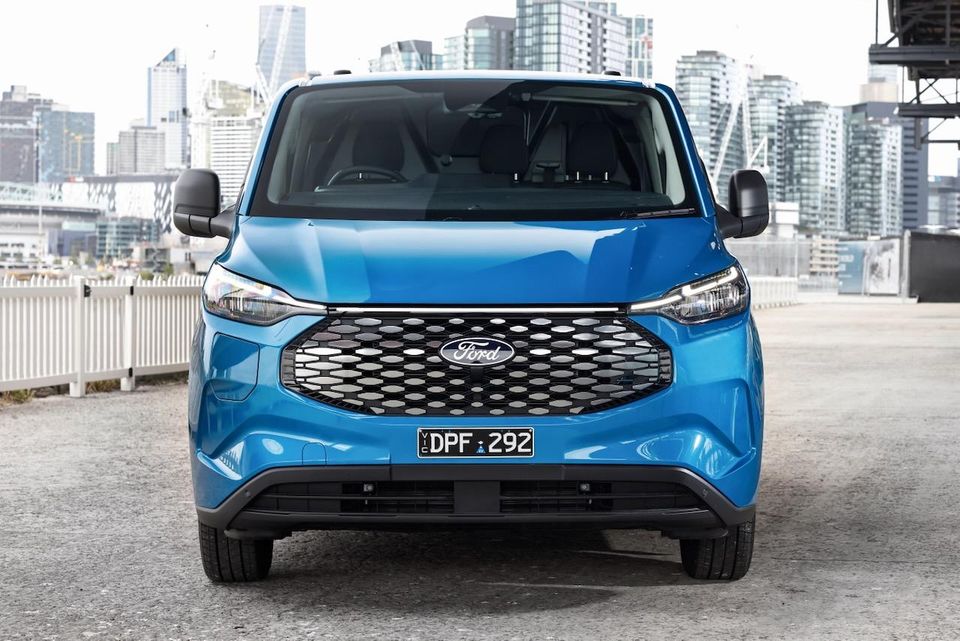
“So has it had an impact? Sure, but have lots of other aspects of industry also impacted it? Yes. Are we in our key segments to win? Absolutely, we are. And part of that strategy is to operate in a broader part of those segments, with more competitive entry models that are more value-packed, that are more in keeping with what customers have told us they want in terms of retail appeal and things like that.
“So we have everything from that entry-level product to compete really hard in that space right up through to the premium series, and still to this day we don't have a real competitor to Raptor, and we don't have competitors that can truly match us in capability.
“So our job at Ford Australia is to make sure that those two products, Ranger and Everest, continue to be at the absolute peak of capability, and we continue to innovate so that we stay ahead of the competition.
“I think the proof's in the pudding, you know. These competitors have been around for some time now. It's not a May event or an April event. They've been around for some time now, and we've continued to be able to deliver number-one performance in both segments, and also the number-one selling car overall.”
Marton Pettendy is a veteran motoring journalist and editor with decades of experience across Australia’s leading automotive titles.
Dave Kavermann
15 Hours Ago

Damion Smy
15 Hours Ago

William Stopford
15 Hours Ago

CarExpert
15 Hours Ago
Dave Kavermann
2 Days Ago
CarExpert
3 Days Ago
Add CarExpert as a Preferred Source on Google so your search results prioritise writing by actual experts, not AI.