


 Showroom
 Car Chooser
 Compare
 Car Specifications


CarExpert
2026 CarExpert Choice Awards: Best Affordable Large SUV
This category recognises spacious, three-row SUVs that deliver maximum family space, safety and comfort for growing Kiwi families.
9 Hours Ago
A chief economist warns "the prognosis doesn't look good" for fuel prices in the near future.

Journalist
Journalist
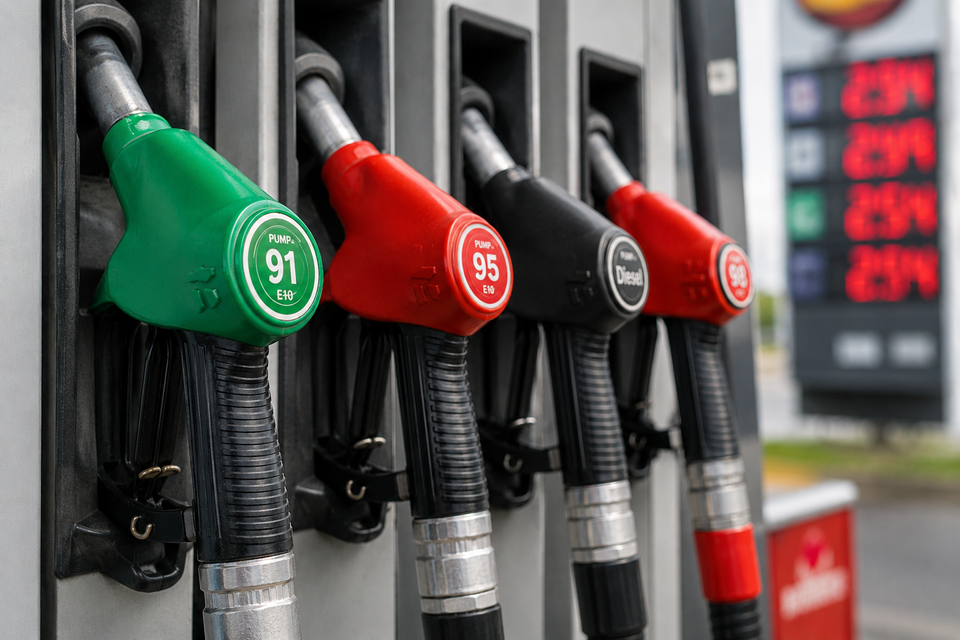
New Zealand motorists could soon be paying close to $3.00 per litre for 91 octane petrol again, with fuel industry leaders warning prices at the pump are set to rise as global oil prices climb and conflict in the Middle East intensifies.
Fresh attacks on shipping in the Red Sea and ongoing tensions around the Strait of Hormuz have pushed Brent crude to a six-week high, increasing expectations higher wholesale fuel costs will begin flowing through to service stations over the next fortnight.
After hovering around US$67 a barrel at the start of July – close to the prices seen prior to the latest escalation in the region – Brent crude has since climbed above US$91 a barrel.
Waitomo Group chief executive Simon Parnham told RNZ he expects petrol prices to rise by around 15 to 20 cents per litre over the next one to two weeks.
"I'd forecast that we'd be going close to $3.00, just a little bit under. But on diesel, about $2.50," he said.
Waitomo fuel stations are currently selling 91 for as low as 2.87 in Auckland, $2.91 in Wellington and $2.99 in Christchurch.
Mr Parnham said the latest jump followed reports a tanker was struck off the coast of Saudi Arabia, while US President Donald Trump threatened military action against Iranian infrastructure following attacks on ships travelling through the Strait of Hormuz.
He also pointed to Ukrainian drone strikes on Russian oil refineries as another factor tightening global fuel supplies.
Despite the expected increase, Mr Parnham doesn't expect petrol prices to return to the record highs seen earlier this year, when 91 octane briefly reached around $3.48 per litre.
He said additional crude oil production from the United States, Brazil, and Guyana, along with increased fuel exports from China, had helped stabilise global markets.

Mr Parnham also believes traders have become less reactive to geopolitical rhetoric.
"I think the market... started to shrug their shoulders and say this is the new normal... the days of him talking the market up or down seem to have gone."
Westpac chief economist Kelly Eckhold said motorists should prepare for further price increases if global oil prices remain elevated.
"The prognosis doesn't look good," he told RNZ.
"It looks like we are going to continue to be in this environment where we are going to get lots of geopolitical shocks and risks, relatively high and variable fuel prices and... you certainly can't rule out the prospect things go a lot higher yet."
Based on current wholesale oil prices, Mr Eckhold said 91 octane petrol could return to levels last seen in May, with prices potentially climbing beyond $3.10 per litre if crude remains near current levels for several weeks.
According to Gaspy, the national average price for 91 octane petrol is currently $2.969 per litre. Diesel averages $2.549 per litre, while 95 octane sits at $3.153 per litre and 98 octane averages $3.288 per litre.
While concerns are growing over shipping disruptions through both the Strait of Hormuz and the Red Sea, Mr Eckhold said New Zealand isn't facing an immediate fuel supply shortage.
Instead, motorists are more likely to feel the effects through steadily rising prices at the pump if instability in the region continues.
Dave is a Kiwi motoring journalist with experience in motorcycle racing, new car sales, radio and communications.
CarExpert
9 Hours Ago


Matthew Hansen
10 Hours Ago

Dave Kavermann
12 Hours Ago


Derek Fung
13 Hours Ago

Dave Kavermann
14 Hours Ago
Dave Kavermann
1 Day Ago
Add CarExpert as a Preferred Source on Google so your search results prioritise writing by actual experts, not AI.