

 Showroom
 Car Chooser
 Compare
 Car Specifications

Matthew Hansen
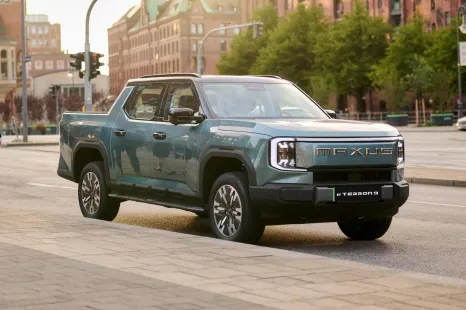
LDV confirms electric eTerron 9 ute a non-starter for NZ
Big pure plug-in pick-up not coming to New Zealand after all.
5 Days Ago
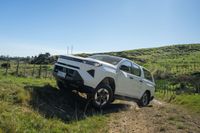
Bidding farewell to the current-generation Toyota Hilux, and why it might still be worth grabbing in 2026.
Where expert car reviews meet expert car buying – CarExpert gives you trusted advice, personalised service and real savings on your next new car.
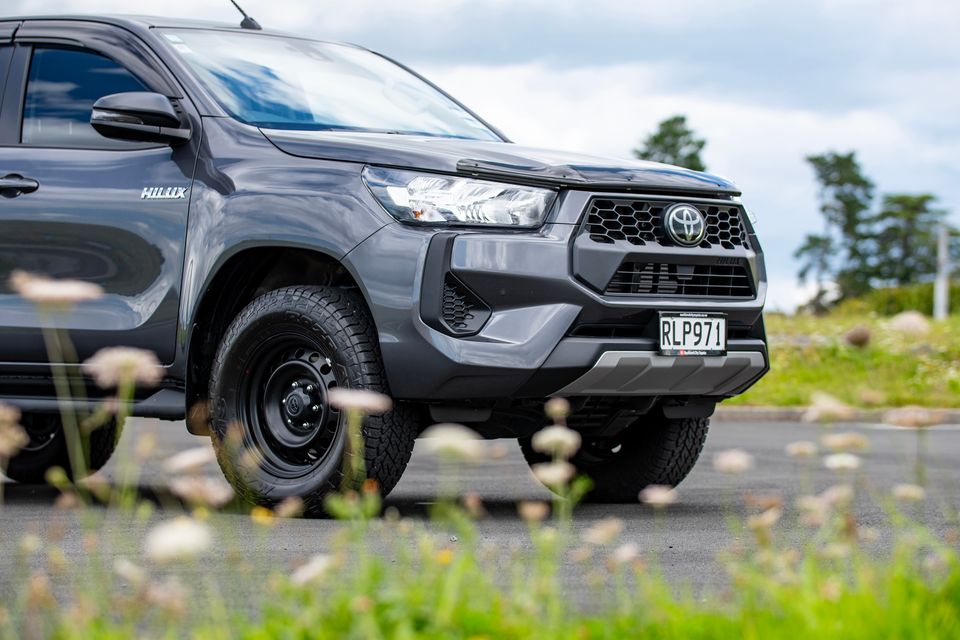
The All Blacks had just won back-to-back Rugby World Cups the last time a shipment of all-new Toyota Hiluxes landed in New Zealand.
Since then, both have remained icons beyond their respective fields, but both have now slid to #2 in the standings that matter most.
Just prior to the eighth-generation N80 Hilux’s arrival in 2015, the Ford Ranger ended the model’s 32-year reign as the best selling commercial model.
Three facelifts, 21 series models, a locally-built-to-order Mako and hardcore GR Sport version later and the eighth-gen is still on sale and fighting for its former crown… Just.
An all-new ninth-generation Hilux is just about to land here to continue the battle and not before time. Ahead of its arrival, we take the N80 Hilux for one final drive.
How much does the Toyota Hilux cost?
At the time of publishing, a new Hilux is imminent but there are still a very limited number of new eighth-gen Hilux models available. If the new design isn’t your taste, you’ll need to get in touch with your local dealer right after reading this review.
Pricing for the new double-cab Hilux range has just been announced.
Model | Drive away price |
|---|---|
Hilux SR PreRunner 2WD | $49,990 |
Hilux SR 4WD chassis Manual | $52,490 |
Hilux SR Hybrid 4WD chassis | $54,990 |
Hilux SR Hybrid 4WD | $56,990 |
Hilux SR5 4WD Manual | $58,490 |
Hilux SR5 Hybrid 4WD chassis | $58,990 |
Hilux SR5 Limited 4WD Manual | $59,990 |
Hilux SR5 Hybrid 4WD | $60,990 |
Hilux SR5 Limited 4WD | $62,990 |
Hilux Adventure Hybrid | $63990 |
What is the Toyota Hilux like on the inside?
Not too dissimilar to the model that launched in 2015.
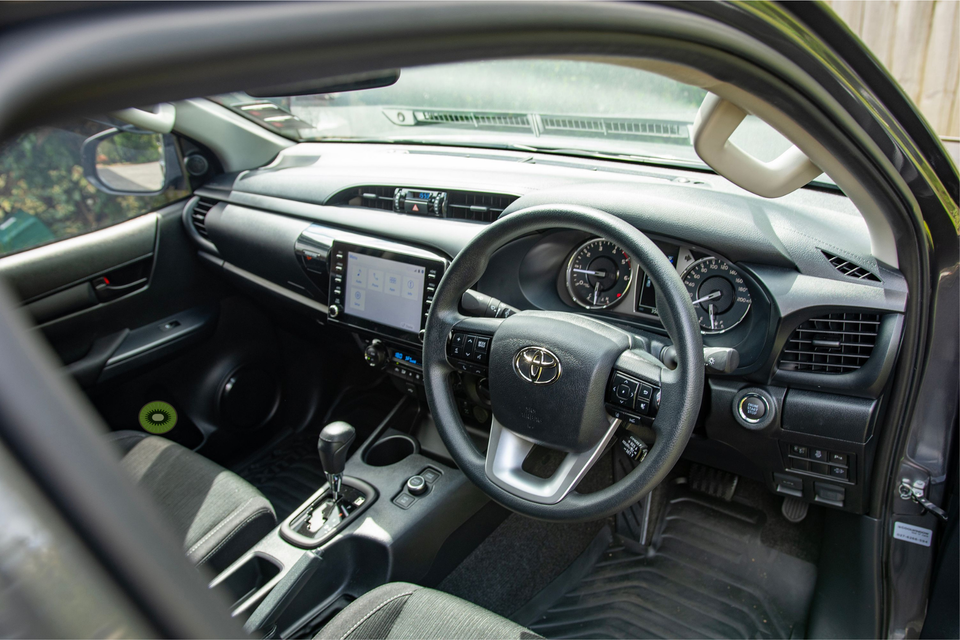
The cabin’s layout and appearance is basically identical. Sure, the infotainment screen has grown slightly and there are a few more buttons on the steering wheel of a 2025 model, but a game of spot the difference would be tricky.
The dashboard is mostly analogue and the material selections are there to take the battering of trade use. No fancy cloth here. The Hilux SR is as stripped back as a ute can get in 2026.
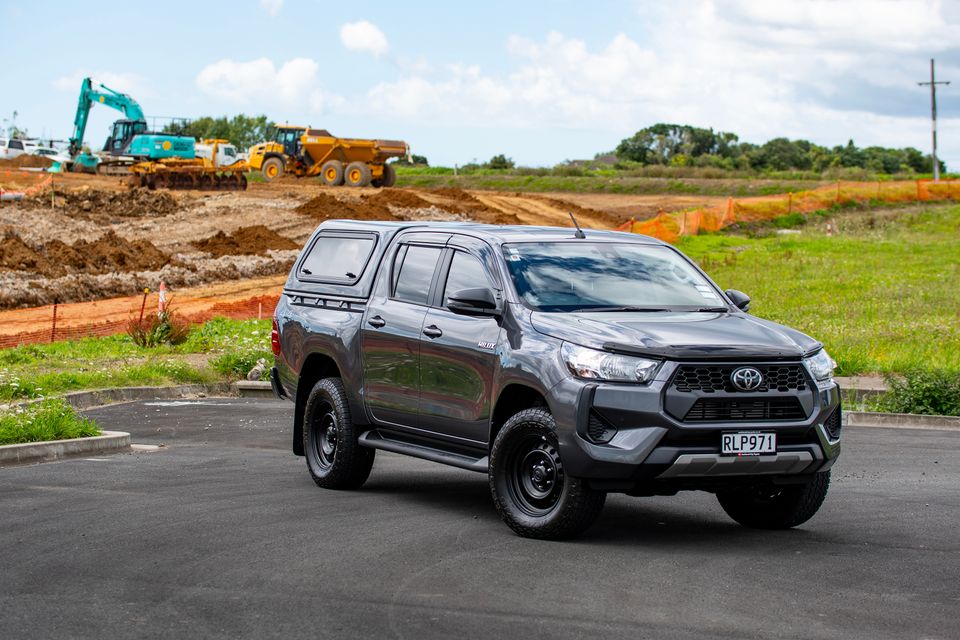
That’s no surprise with a base, work-orientated SR model. While the boss may show up in a leather-seated SR5, it's likely an SR like our tester seen here is the workhorse that hauls the materials, tools and workers that get the mahi done.
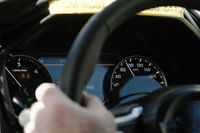
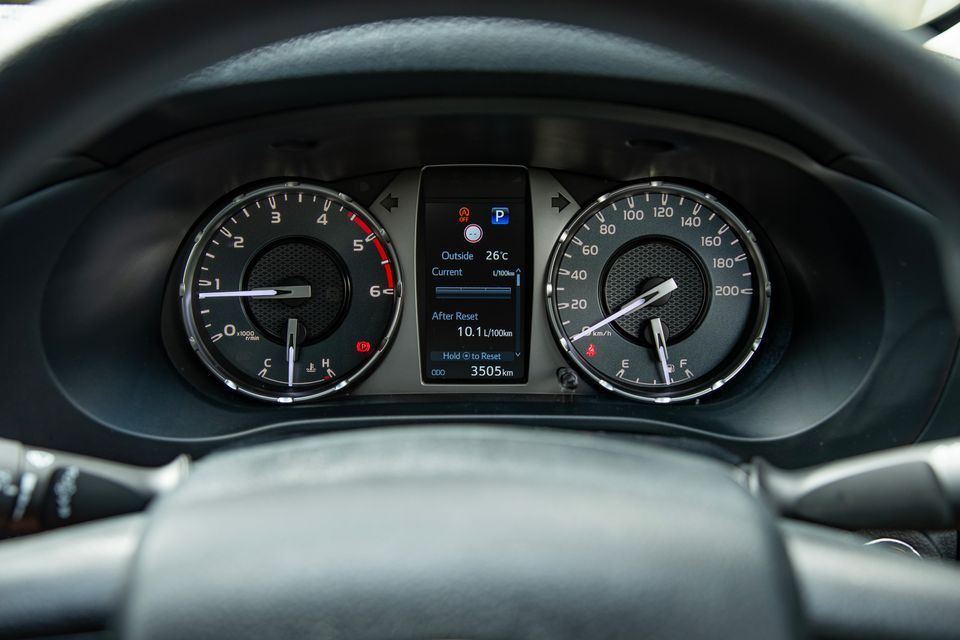
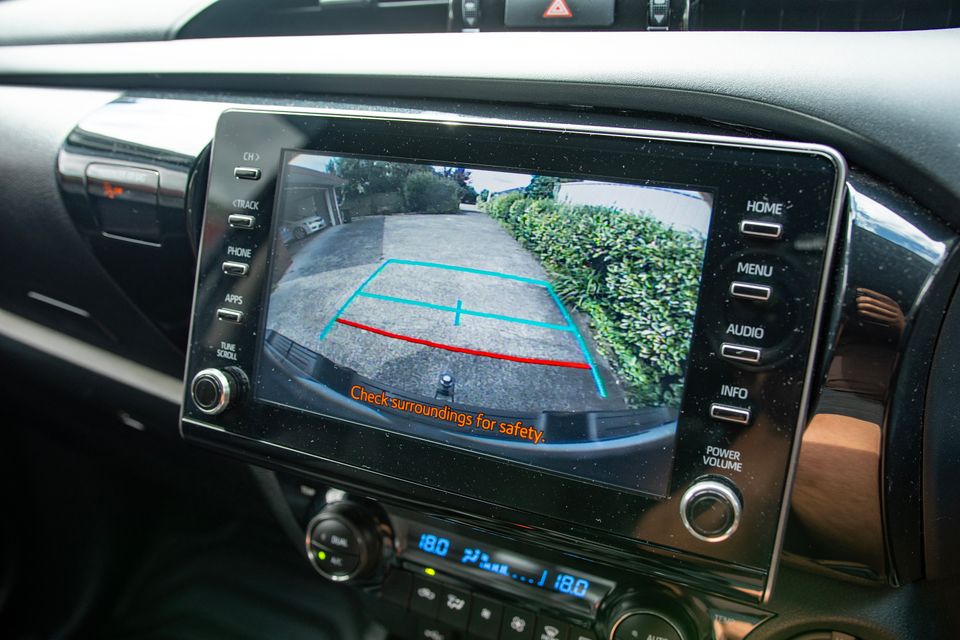
Visually, the most advanced technological features are the 8.0-inch central touchscreen infotainment system and a small digital drivers display sandwiched between the analogue rev counter and speedometer.
Toyota’s infotainment operating system (OS) has been in use for over a decade now, not necessarily a milestone worth celebrating, so functionally it doesn’t offer much beyond trip information, audio controls and phone functions.
Apple CarPlay or Android Auto smartphone pairing requires a wired USB-A connection and provides a much smoother experience to Toyota's OS.
While it may not be the most modern solution, it is easy to use. Physical buttons surround the infotainment unit allowing you to jump quickly between menus and scrolling controls on the steering wheel make navigating radio stations or songs easy without having to look away from the road.
One update for the base model is automatic climate control with similarly easy to use controls housed underneath the infotainment screen.
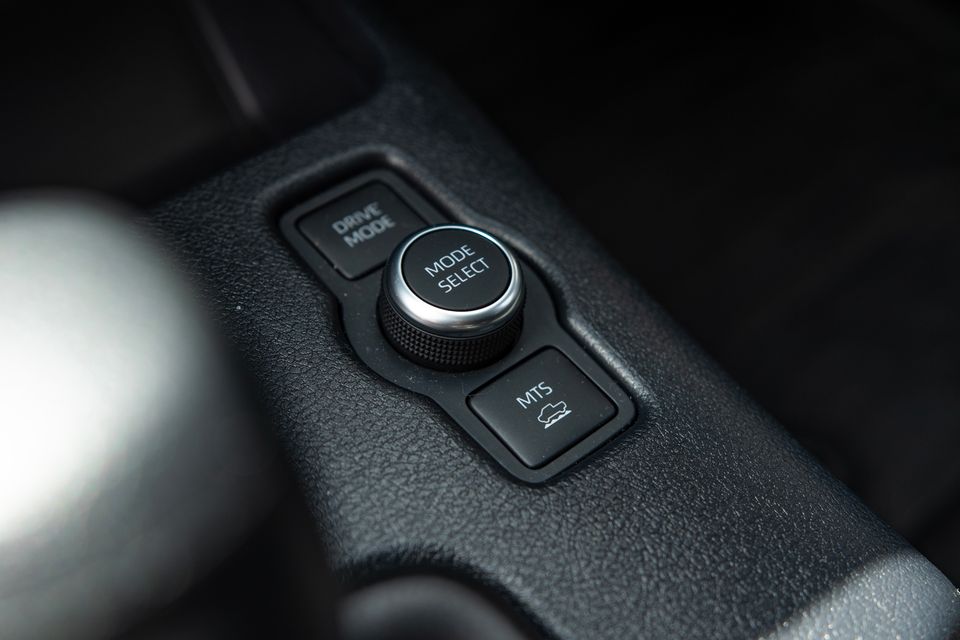
The central tunnel has space for a phone, a single cupholder (there are 2 more hidden beneath the air vents under the A-pillars for the driver and front passenger), controls for drive modes and Toyota’s off-road multi-terrain select system.
The materials in the cabin are all geared towards hard work. The floor is covered in vinyl, so it’s easy to clean. The dashboard, door cards and even the steering wheel are hard plastics. In fact the only soft touch surfaces are a small section of padded cloth for your elbow on the door and the black cloth seats.
Thankfully the front seats are comfortable and offer a wide enough range of manual adjustment to get into your preferred driving position.
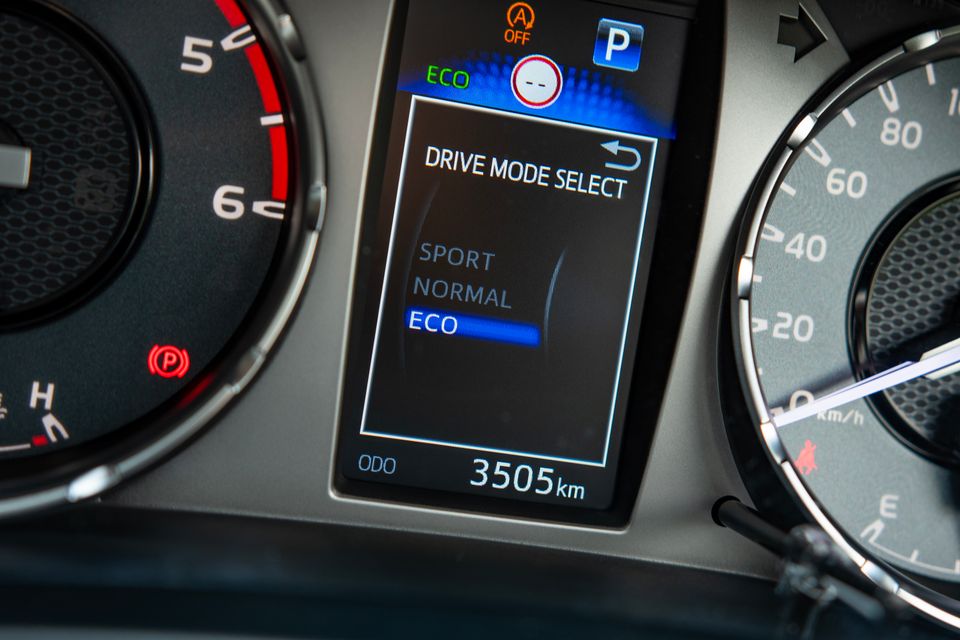
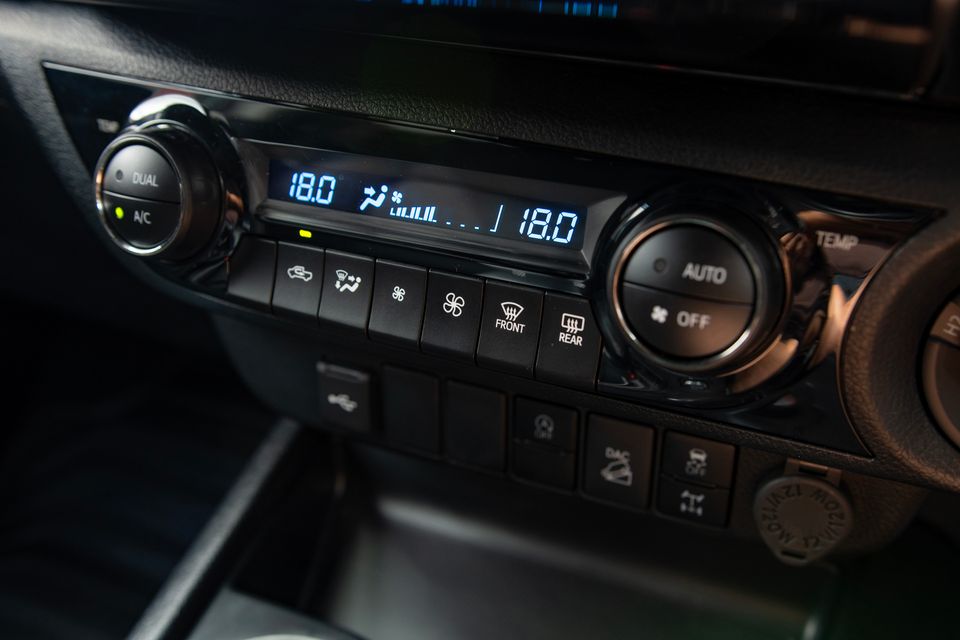
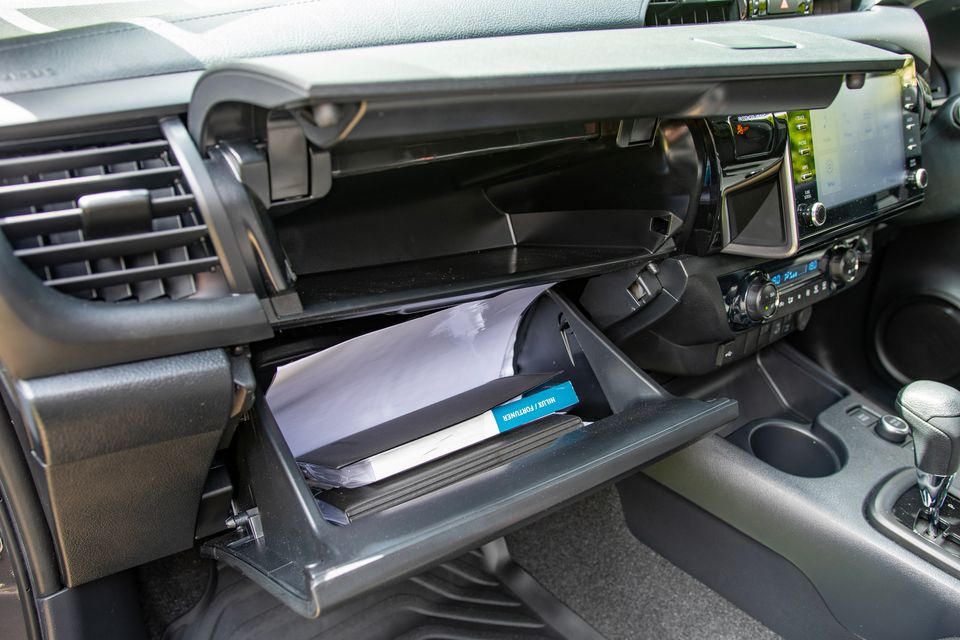
There’s the usual storage spots you’d expect from a ute along with a hidden dash compartment, door bins big enough for a large water bottle and work folder, and a storage unit under the centre armrest.
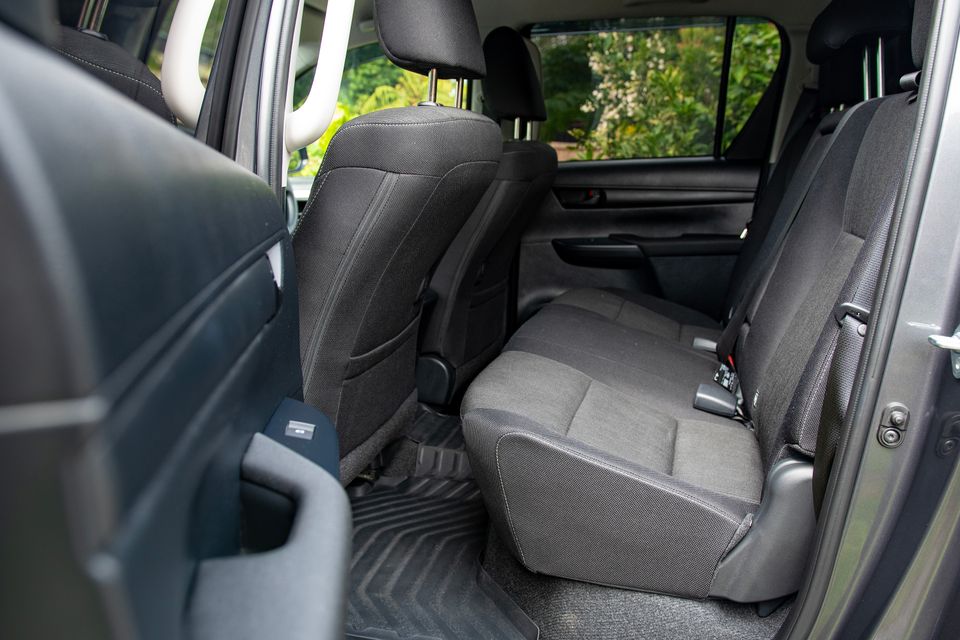
If you find the front row a bit bare, then you’ll consider the second row to be barren.
Even for a base spec vehicle, the SR Hilux pushes the limits of what’s acceptable in 2026. Basic comforts like air vents or USB outlets will not be found here. Then there’s the issue of space.
You’d expect a double cab to accommodate two passengers but even the smallest adults will find the area cramped and, if you’re like me at six foot, it will be a squeeze. My knees are pressed against the front seat set to my driving position.
I can make do for short journeys, but from my home in Auckland I wouldn’t want to be going further than the Bombay Hills as a second row passenger.
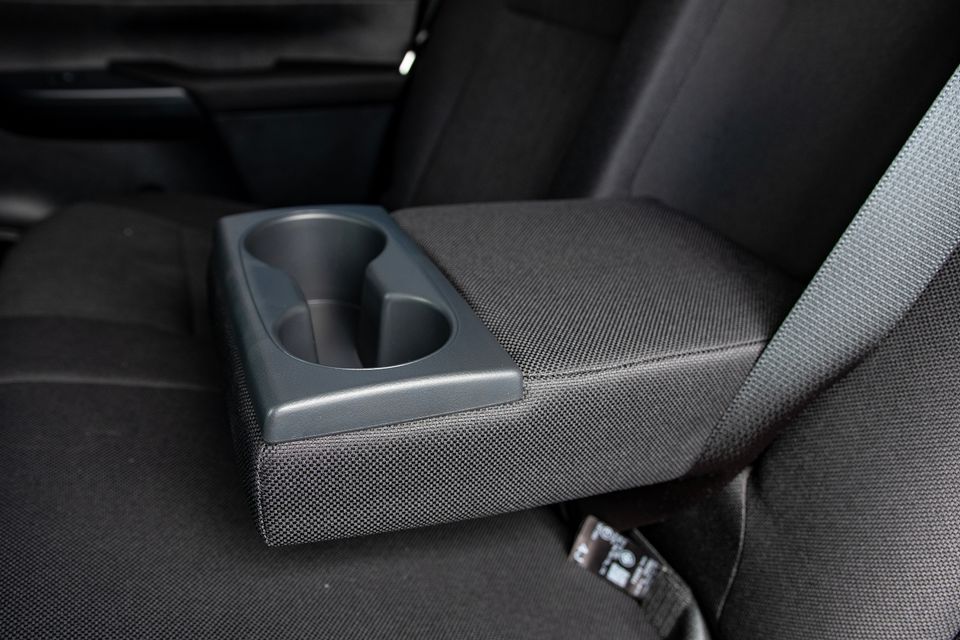
There are a few spots to store items in the door bins and a centre armrest with integrated cupholders provide some comfort.
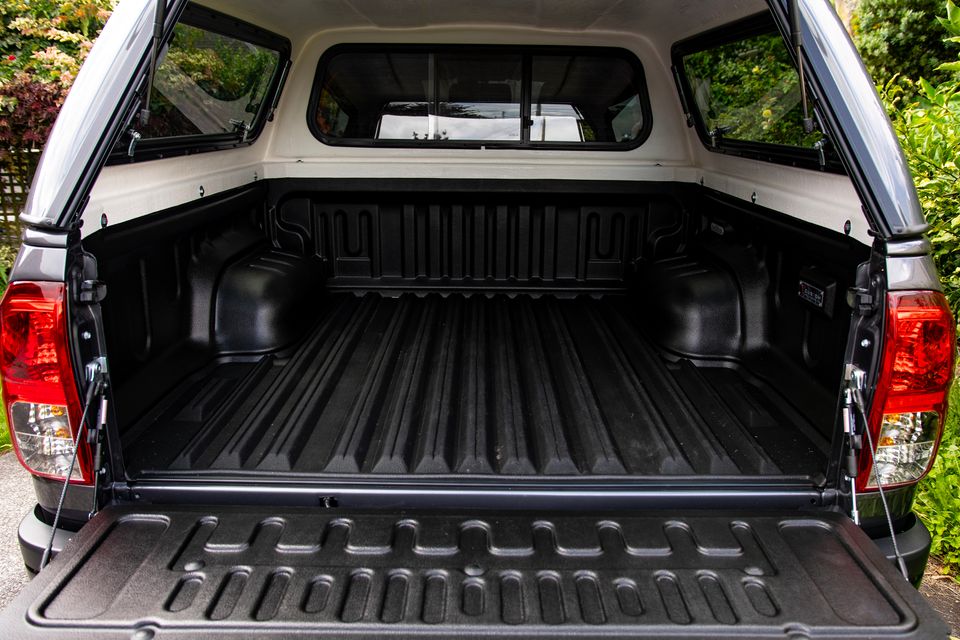
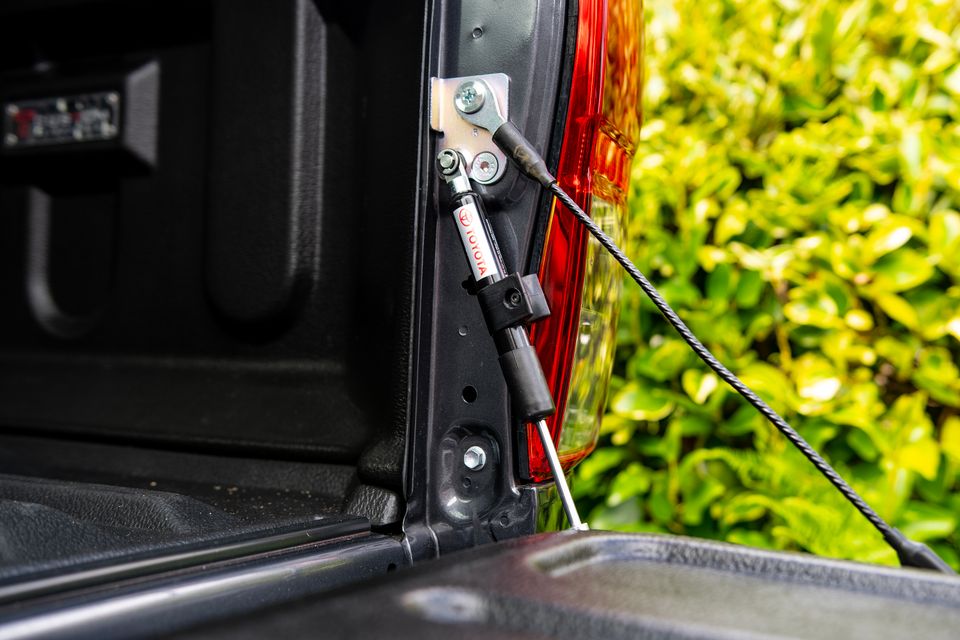
In the tub, you won’t get much as standard. While our tester is fitted with a canopy and tray liner, both are optional extras. Any kind of tie down point is also missing. While it appears as bare as the second row, the addition of gas struts prevents the rear tailgate from opening too quickly and hurting your wrists.
What’s under the bonnet?
The big change in 2024 was the addition of a mild-hybrid system for all automatic double cabs, the first hybridized ute to be offered in New Zealand. The hybrid comprises a motor generator, 48-volt battery and DC/DC converter, and is paired to the familiar 2.8-litre four-cylinder turbo-diesel we’ve known for over a decade.
Combined they provide 150kW of power and 500Nm of torque through a six-speed automatic transmission.
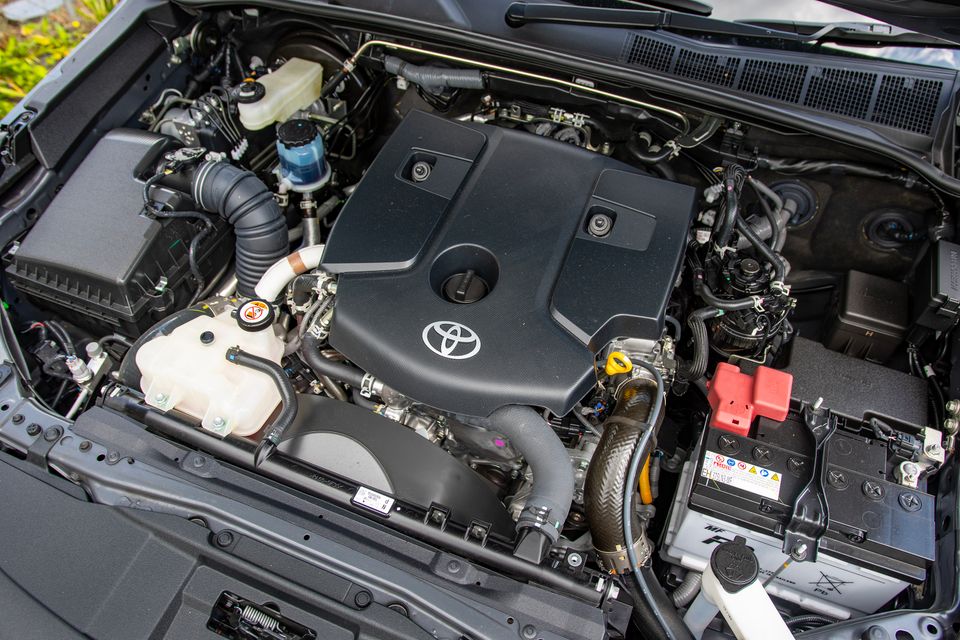
The system enables automatic stop/start and the motor generator can recover energy when braking or coasting. While the system doesn't provide full-electric drive, energy stored in the battery can provide a quick 12kW/65Nm boost to the engine via the motor generator. The battery is stored under the rear row passenger seats.
Hilux Hybrid models also gain Toyota’s Multi-Terrain (MTS) off-road system. In high range, you can select between Auto, Dirt, Sand, Mud, or Deep Snow modes. In low range, Auto, Sand, Mud or Rock.
This same engine and hybrid system will be carried over to the new generation Hilux due here next month.
How does the Toyota Hilux drive?
The addition of a hybrid system hasn’t changed the dynamics of the Hilux.
To its credit, I found the auto start/stop system to work perfectly. It reacts very quickly, sparking back to life as soon as you lift off the brake pedal and throughout my test I never found myself waiting for the engine to get me out of an intersection.
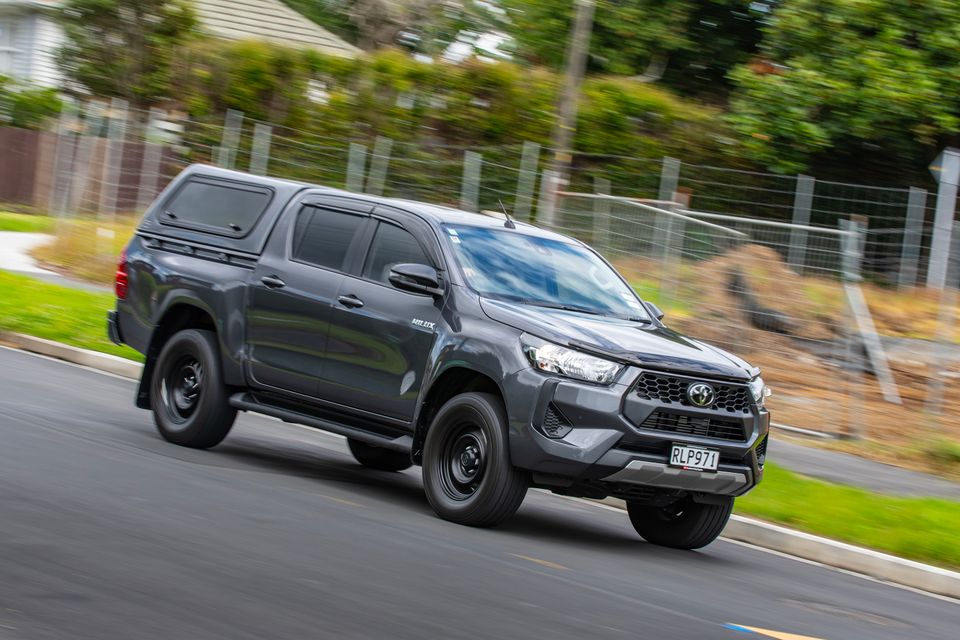
The small surge offered from the motor-generator also does a great job of delivering smooth power off the line. Power and torque feels much more linear than before and helps the 6-speed auto bridge the gap between cogs, especially first to second.
The motor-generator also provides benefits off-road. Extra low-down torque means idle speeds have been reduced from 720rpm to 600rpm, allowing for more control in low-range.
There’s no doubt the system will save diesel when sitting at the lights, but just how much is quite a difficult question to answer.
At launch Toyota’s marketing department suggested as much as a 10% saving, early tests overseas claimed closer to 5%. Yet when official fuel consumption figures were published the new hybridized Hilux came in at 8.5l/100km, 0.1 litres less than the pure diesel it replaced.
Our tester was fitted with Maxxis off-road tyres and I couldn't get that figure under 9, not a bad result considering the size and weight of the extra tread. So small savings around town should be had, just don’t expect RAV4 Hybrid numbers.
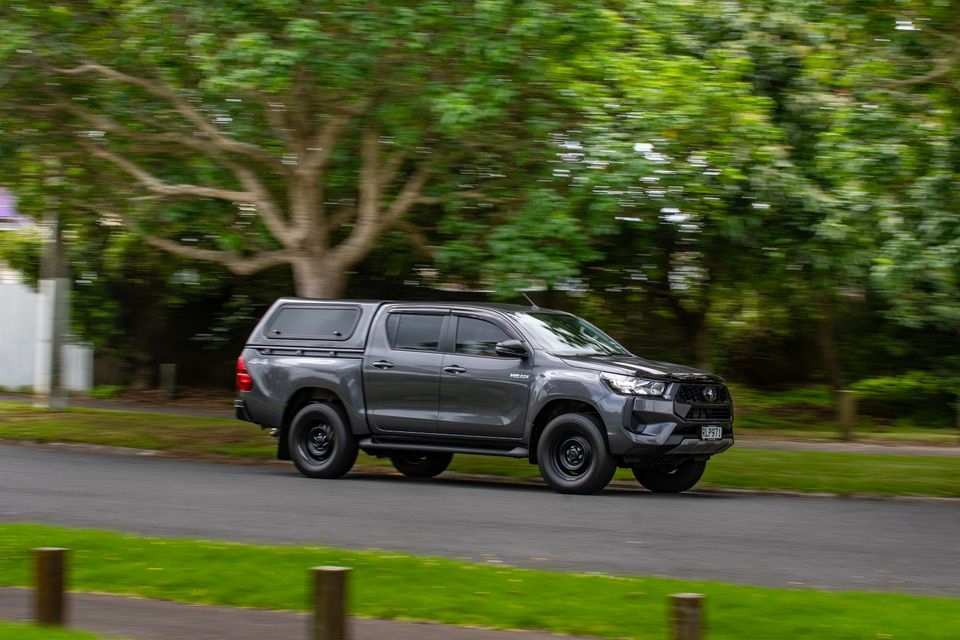
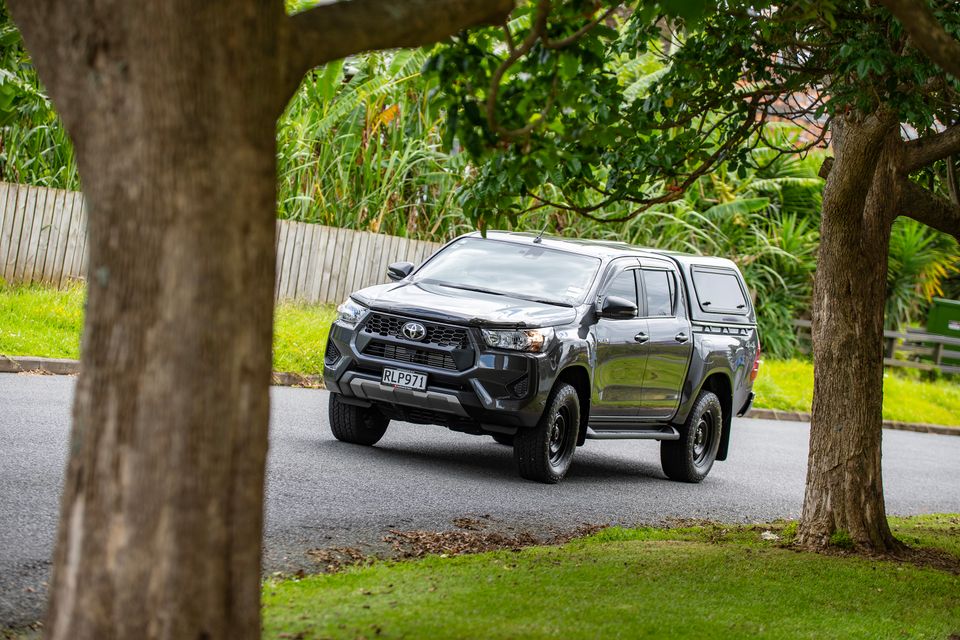
While around town you’ll also notice the hydraulic steering rack. The Hilux is a big, heavy unit and it feels it through the wheel which is weightier than most of its rivals.
It’s not a big issue in itself, but the SR also lacks some common safety features like blind-spot monitoring, rear cross-traffic alerts or surround-view cameras, so manoeuvring in tight carparks can be unnerving and more physical than you expect at times.
The reversing camera is also poor by modern standards and frustratingly, it’s offset so you have to compensate for that when reversing into a park or lining up a trailer.
Around town and completely unloaded, the SR Hilux’s ride is bouncy. The suspension, especially the leaf springs in the rear, is set up to carry stuff and although it only has a payload of 915kg, the Hilux wants to haul weight.
Even adding a front passenger and 200kg of weight into the bed makes a massive difference to ride quality. All of a sudden the whole ute settles over uneven surfaces. There are still jitters and vibrations on bad surfaces, but it's a greatly improved experience compared to unloaded.
If you’re after a lifestyle ute that won’t carry much, the SR isn’t for you. If you haul all sorts on the regular, it's surprisingly comfortable.
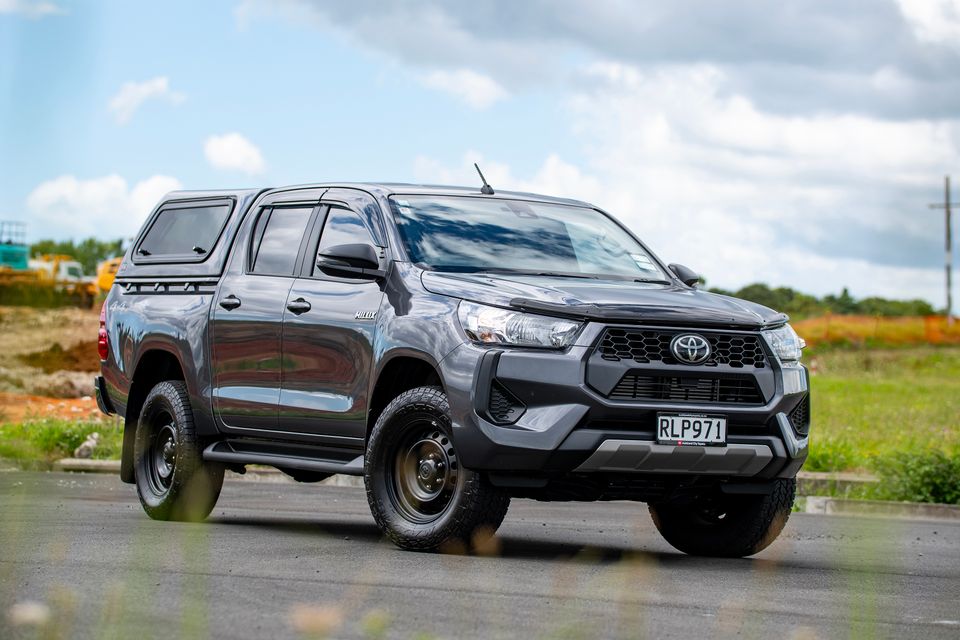
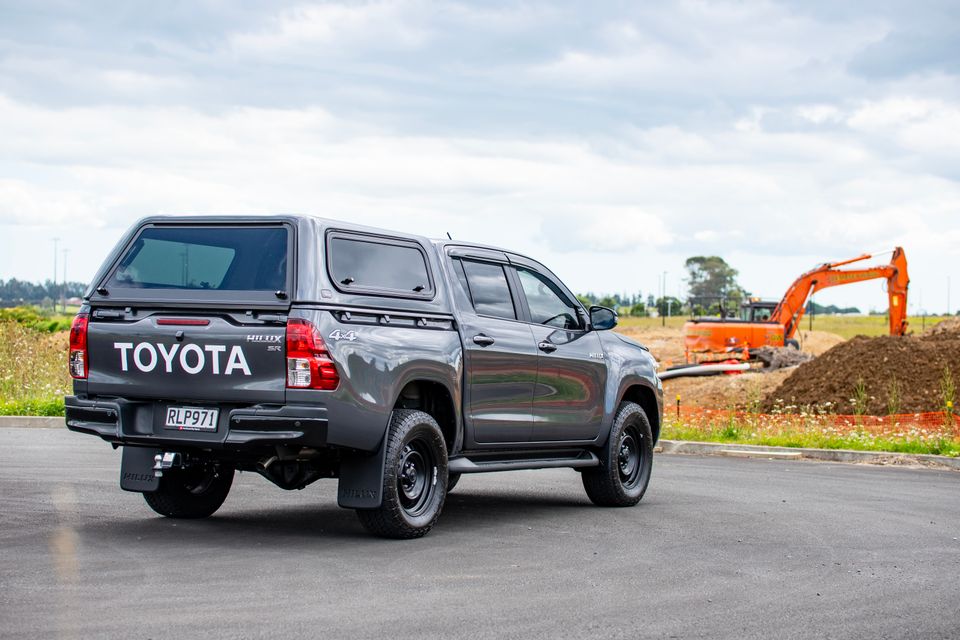
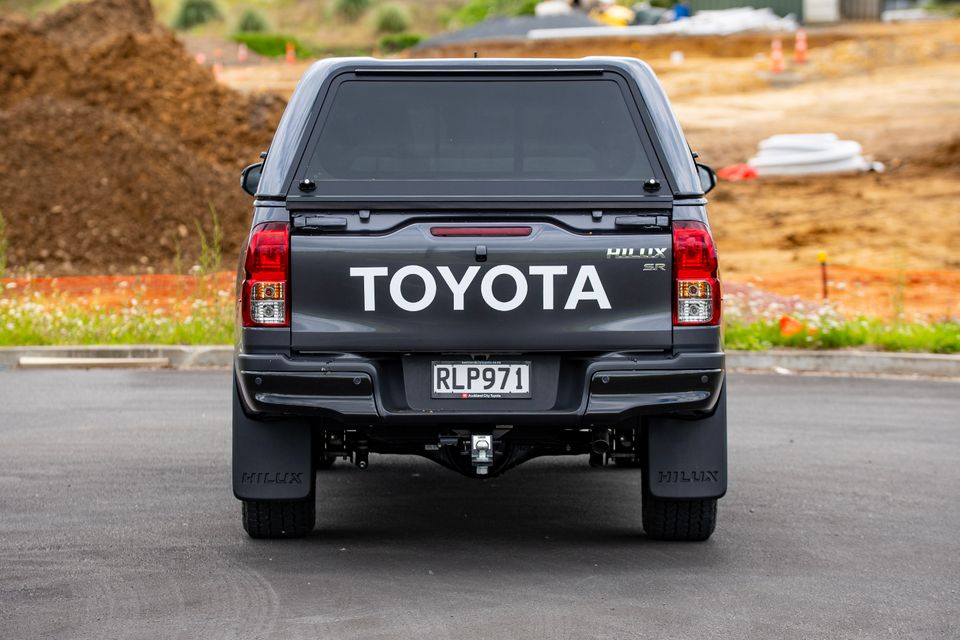
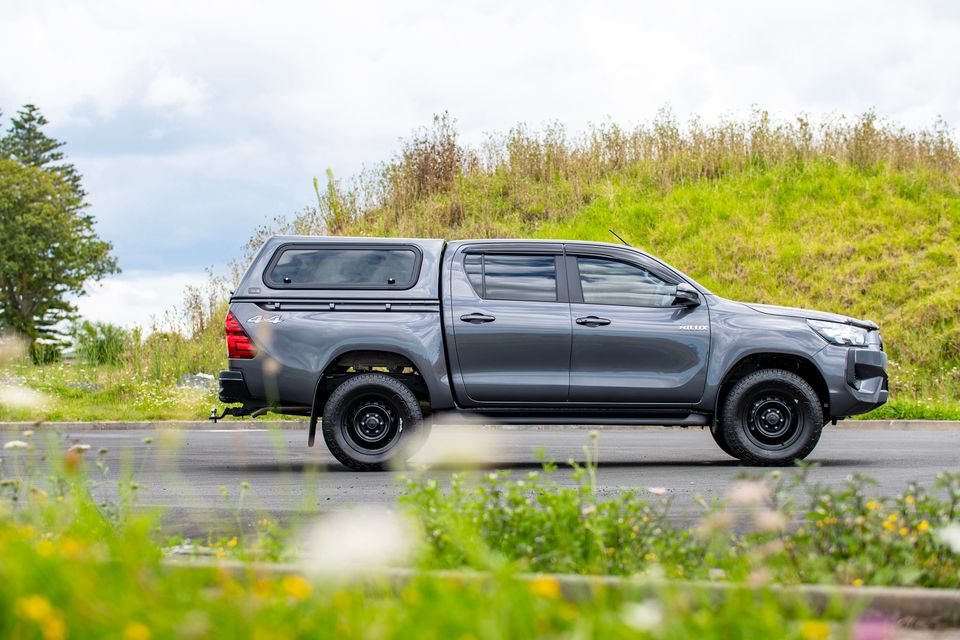
The hybridised 2.8-litre diesel’s 150kw and 500Nm of torque might sound pretty unremarkable by modern standards, however there’s no doubt it will get the job done without fuss. The engine can be loud and shaky under load but even when towing a 1.5 tonne trailer, the SR Hilux didn’t break a sweat and the ride felt comfortable. Max towing capacity is still 3.5 tonnes.
The Hilux is also one of the best motorway cruisers in its class. Despite its relatively basic setup, the Hilux is surprisingly composed, even unladen. Even in base spec with off-road tyres, wind and road noise is minimal for a ute. The ride seems to settle at speed, too.
What do you get?
2025 Toyota HiLux SR double cab equipment highlights:
SR5 adds:
SR5 Cruiser:
CarExpert’s take on the Toyota Hilux SR
The eighth-generation has done its dash and proved to be a dependable workhorse, but it’s time for the new model to take over.
The ninth-generation Hilux has been revealed and is set to arrive in dealerships next month. A new model isn’t always reason enough to ignore the current version, but in the case of the Hilux, it’s time to modernise.
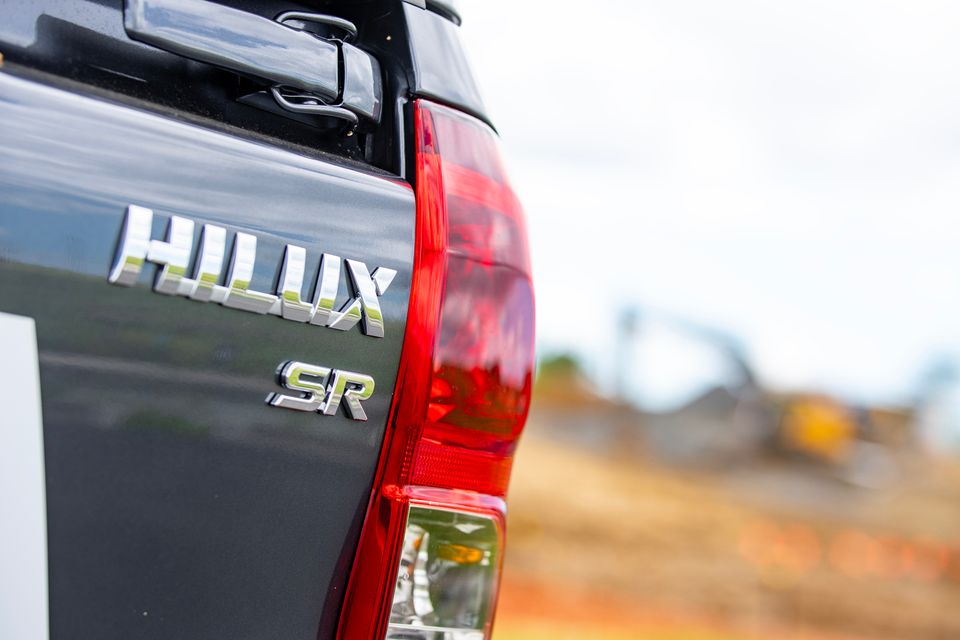
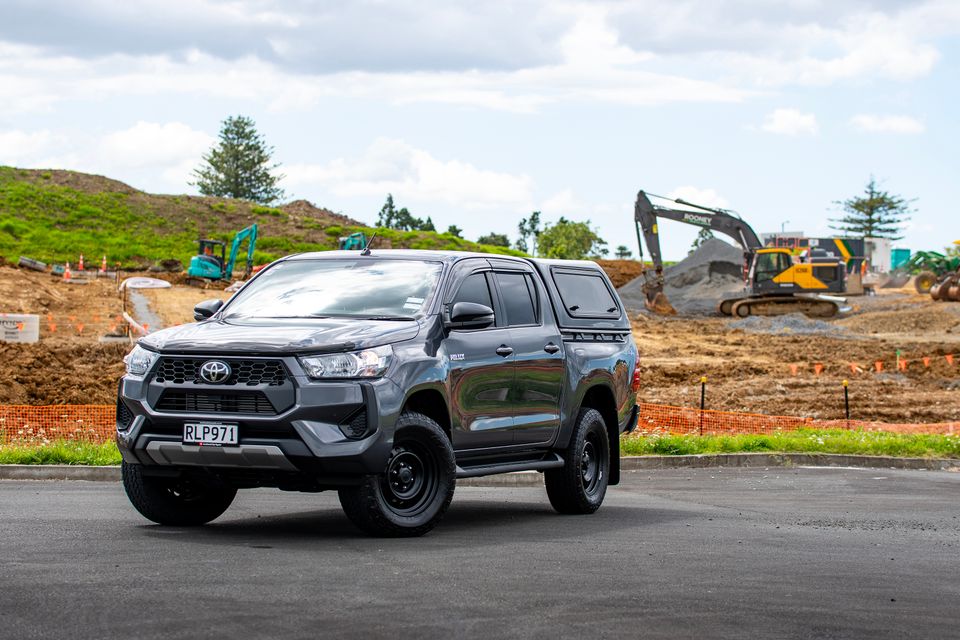
In isolation, there’s nothing really wrong with the Hilux, especially if your use case revolves around hauling people, equipment and supplies to get work done. It’s great at that and would do so reliably for years with normal servicing.
But this model has been with us since 2015. The entire market has changed massively since then. Yes, the next Hilux will be hybridised, yet it’s now going against fresh competition from Plug-in hybrids like the BYD Shark or Cannon Alpha. Even its greatest rival, the Ford Ranger, is now available as a plug-in.
Other new entrants like the Kia Tasman join established competitors like the Mitsubishi Triton that now offer much more amenities, even in base spec models.
Buyers’ have more choice than ever, and manufacturers are trying to cover as many bases as possible.
If the Toyota Hilux is to regain the #1 selling commercial crown, it will have to deliver more than the basics and reliability that once made it a legend.
Where expert car reviews meet expert car buying – CarExpert gives you trusted advice, personalised service and real savings on your next new car.
2024
$46,490
2024
$49,490
2026
$49,990
2023
$54,690
2026
$58,490
2026
$59,990
2026
$63,990
Dave is a Kiwi motoring journalist with experience in motorcycle racing, new car sales, radio and communications.
Add CarExpert as a Preferred Source on Google so your search results prioritise writing by actual experts, not AI.
Matthew Hansen
5 Days Ago

Dave Kavermann
13 Days Ago

CarExpert
18 Days Ago

Ben Zachariah
21 Days Ago
Dave Kavermann
26 Days Ago

Damion Smy
26 Days Ago
Add CarExpert as a Preferred Source on Google so your search results prioritise writing by actual experts, not AI.
† Displayed prices exclude on-road costs such as delivery charges, registration fees, number plates, insurance and applicable road taxes. These prices are subject to change without notice and may not reflect current market pricing or dealer offers.
 Automotive Vehicle Spec Data & 4K images Powered by JATO Dynamics Ltd