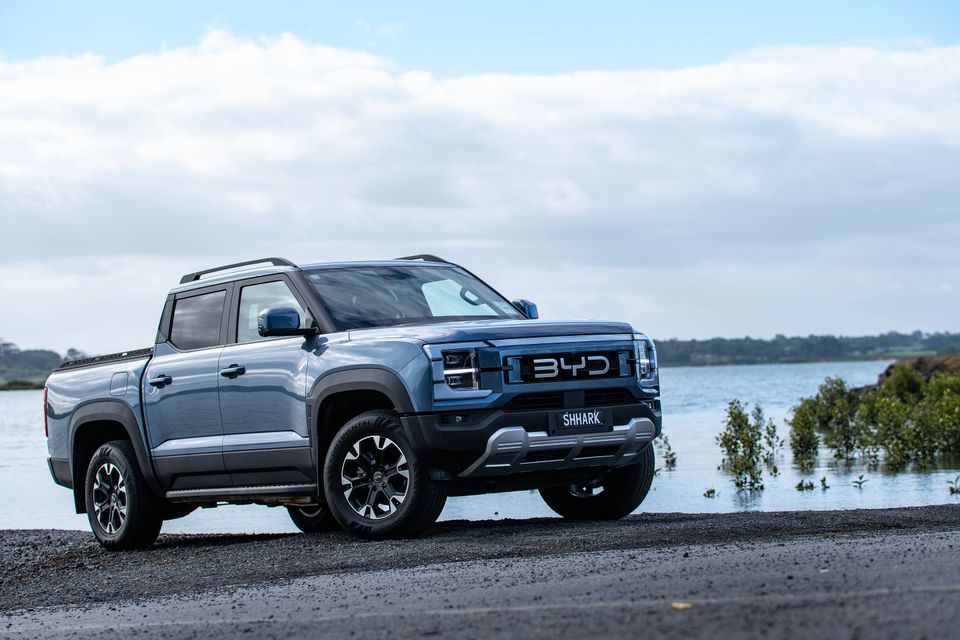
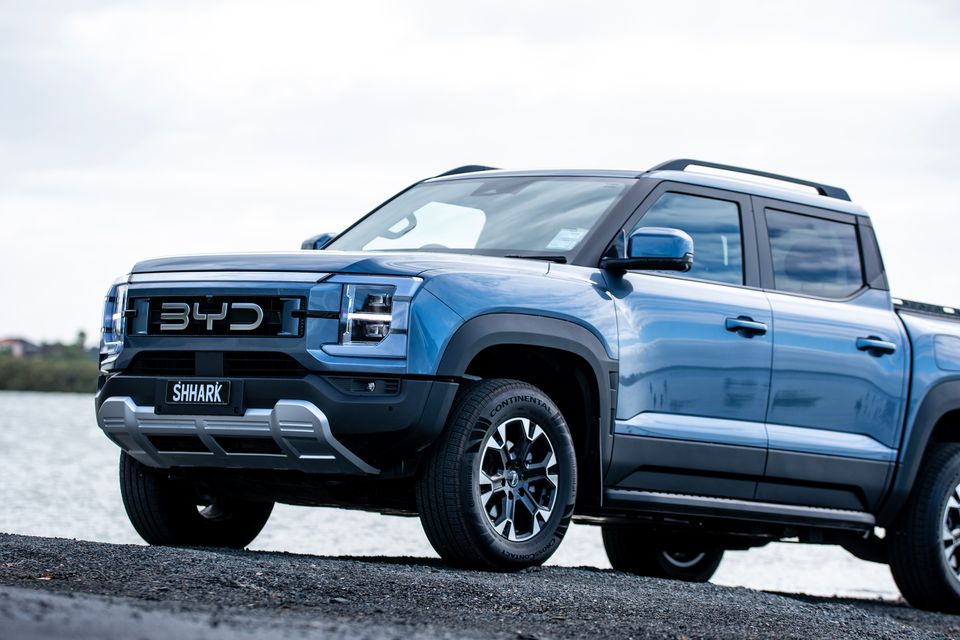
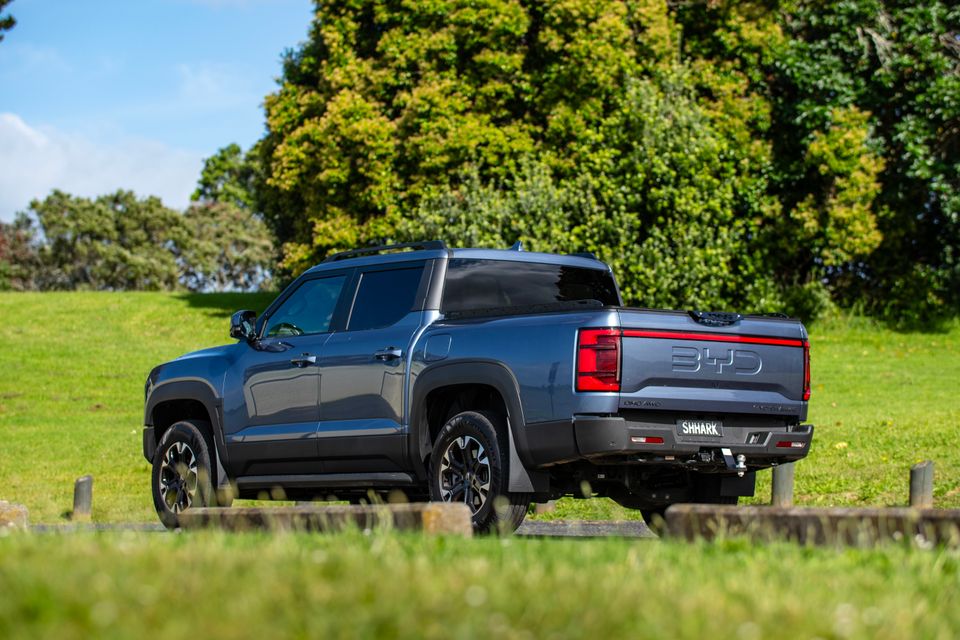
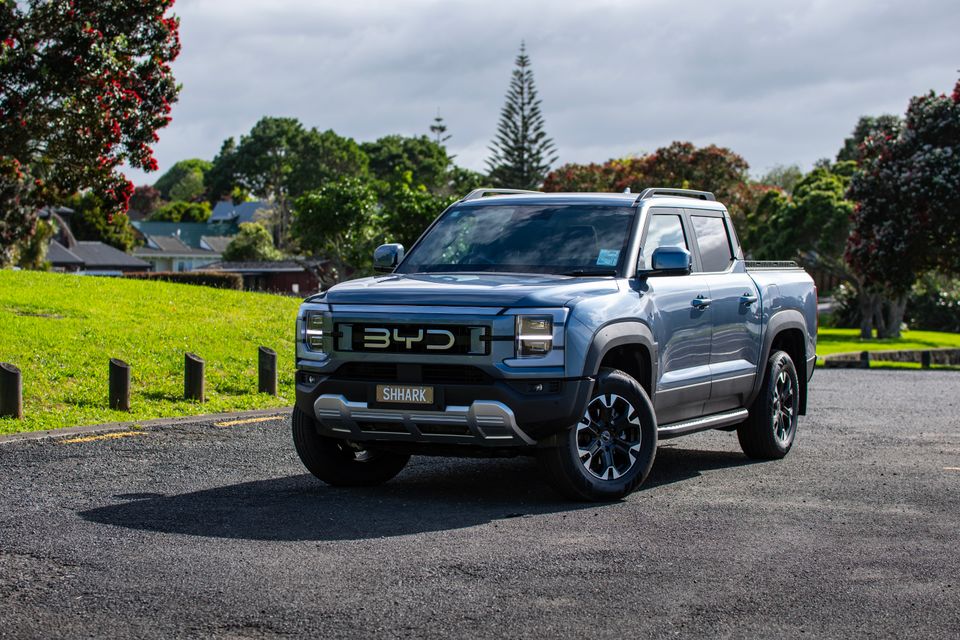
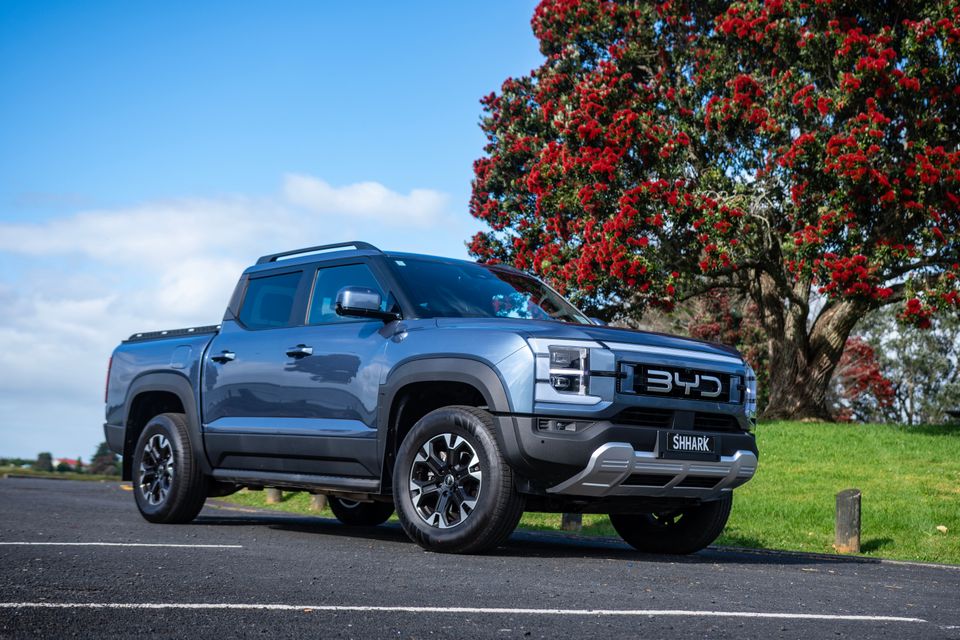
It seems like forever ago now but remember when then-Prime Minister, now-Dame Jacinda Ardern said electric utes were 12 to 24 months away? That was in 2021, and only now are we really seeing the start of the properly electrified utes in New Zealand. Note I said electrified, not quite fully electric. Those do exist here, just not quite in the same capacity as regular diesel utes), namely in driving range. The happy medium is, if you ask BYD, plug-in hybrid power. Enter the Shark 6, a new entrant to the ute market from a relative new entrant to New Zealand’s vehicle industry.
It combines a small petrol engine with a powerful electrical system and a decently large battery to negate the issue of driving range, especially when the tray is fully loaded, all while keeping emissions down. Oh, and more power and torque than the Ford Ranger Raptor. It’s not hard to see why we’re so interested in this one.
How much does the BYD Shark 6 cost?
BYD will sell you a Shark 6 for the very reasonable sum of $69,990 (knock off a grand for the cab chassis version). It’s just the one model at the moment, named Premium, but BYD has made sure it is as kitted as possible.
Model | Price before on-road costs |
|---|
BYD Shark 6 Cab Chassis | $68,990 |
BYD Shark 6 Premium | $69,990 |
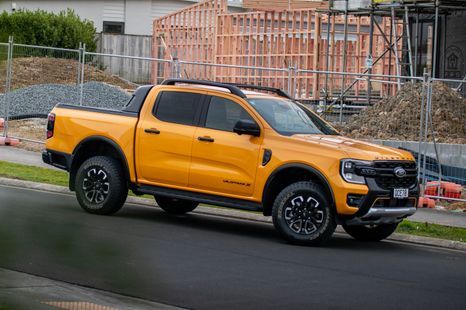
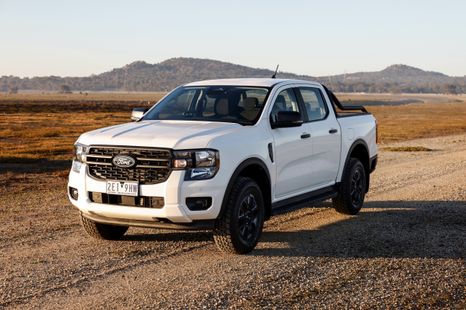
It goes without saying the value proposition is there. For comparison, at that price Ford will sell you Ranger Sport, which uses the set-to-be-axed 2.0-litre biturbo diesel engine, while Toyota’s Hilux range currently tops out with the Adventure at $63,990.
Comparing the three shows BYD winning out in overall specification, though if towing is of particular concern, the Ranger and Hilux both trump the Shark 6 with 3500kg of maximum capacity compared to 2500kg. This isn’t a fault of the powertrain, mind, instead a result of regulations and weights. Basically, adding to the towing capacity would push it above the combined weight limit allowed (6000kg) for regular car license holders. The ute itself weighs 2710kg, while its GVM is 3500kg (the maximum weight a vehicle can be when fully loaded, including the weight of the vehicle, passengers, cargo, fluids, and any accessories).
What’s the BYD Shark 6 like on the inside?
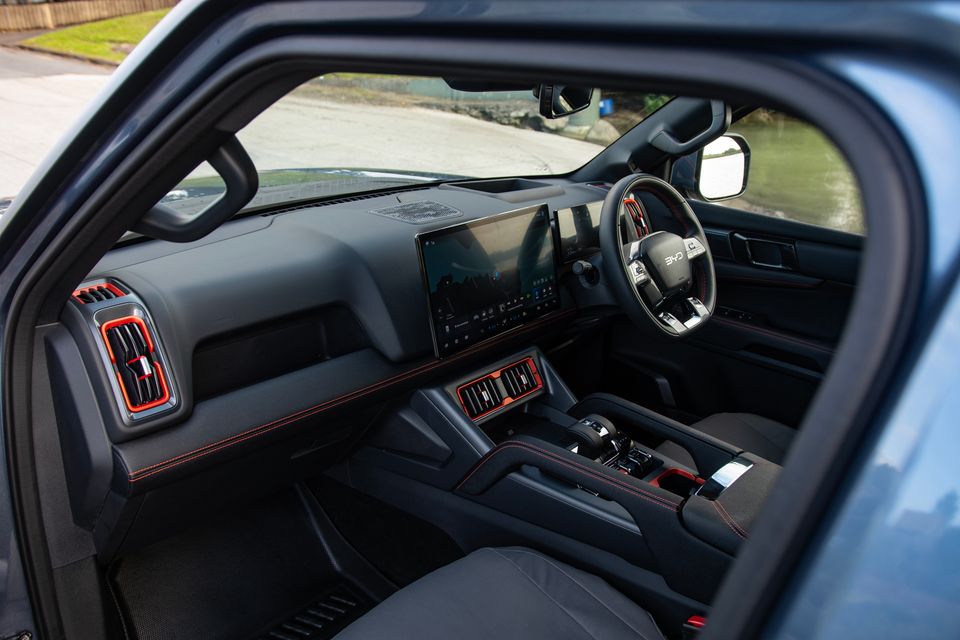
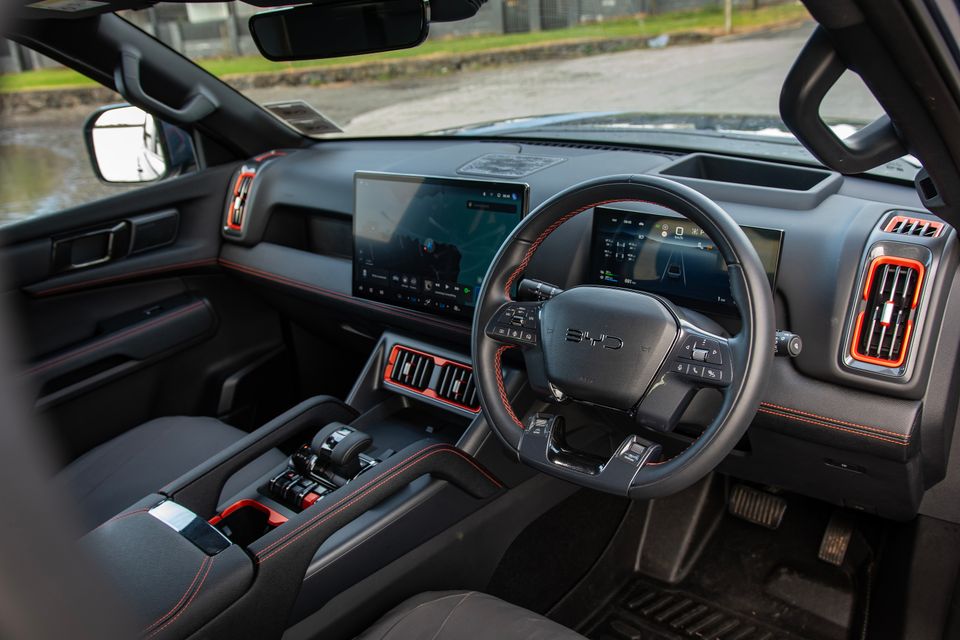
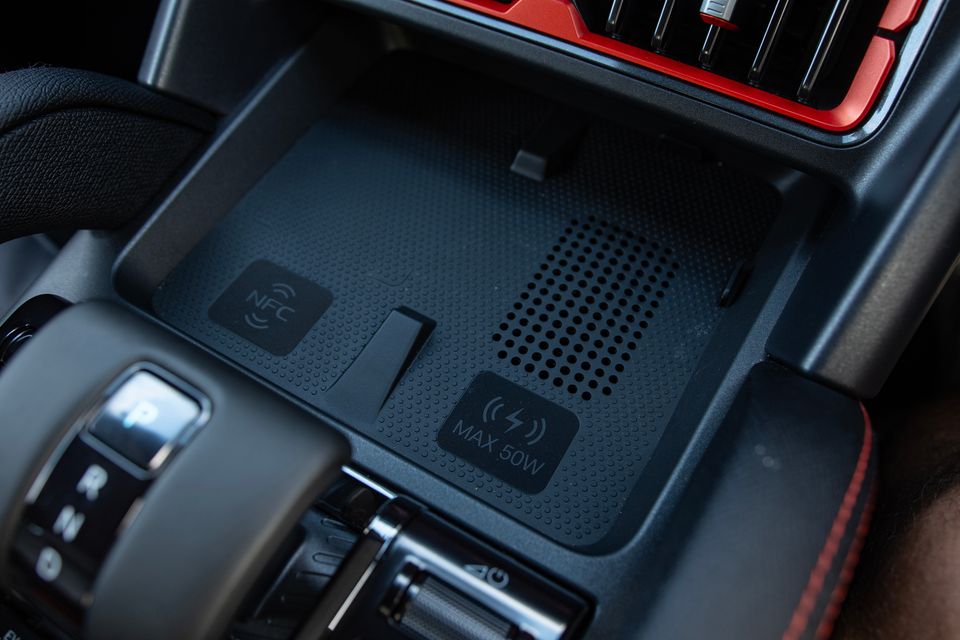
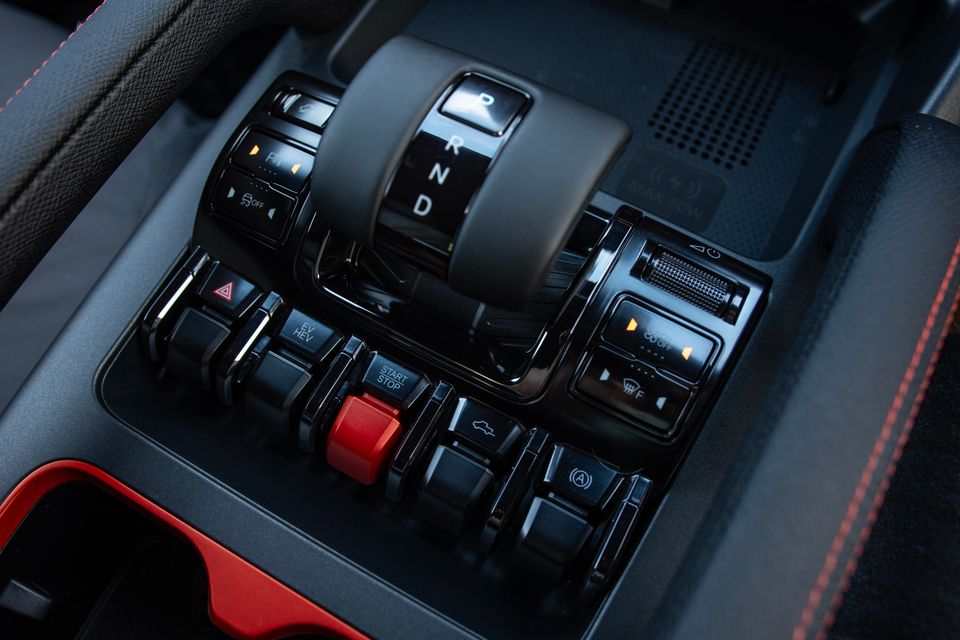
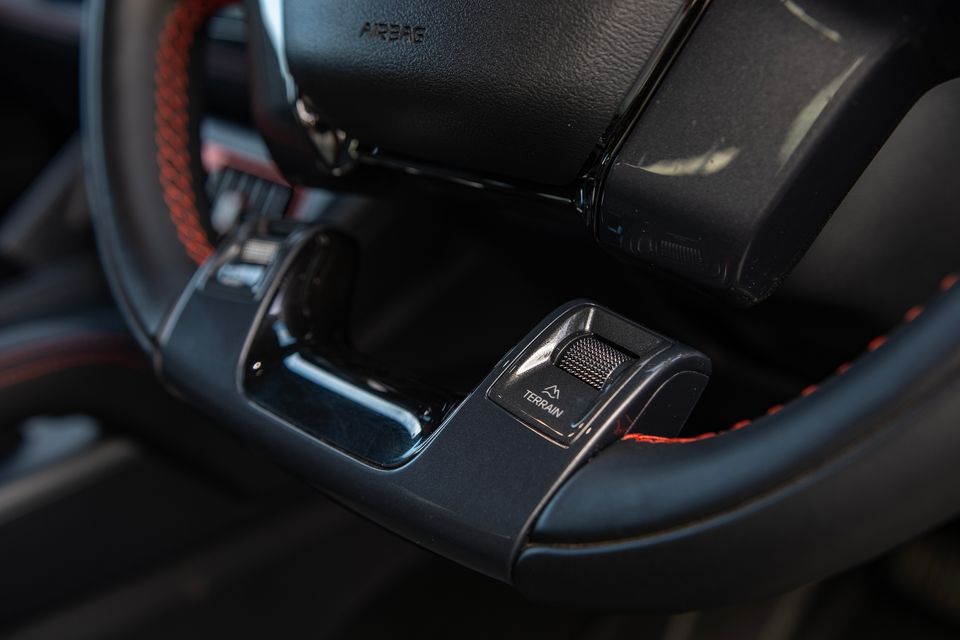
Premium, as its name suggests. There’s a leather steering wheel, heated and ventilated leather seats, more lashings of leather around the dash along with orange accents, and some very cool fighter jet buttons just below the rather Ranger-like gear selector. Lots of soft-touch plastics too, which ups the high-end feel. All the switches feel nice and tactile, and I quite like the little gaps between the drive mode/terrain mode rollers near the bottom of the steering wheel.
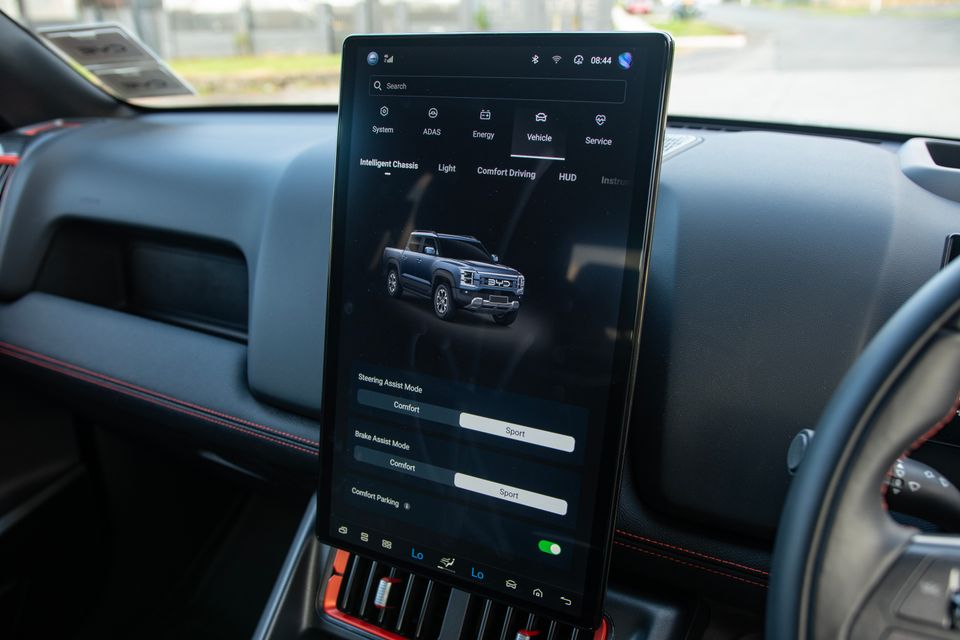
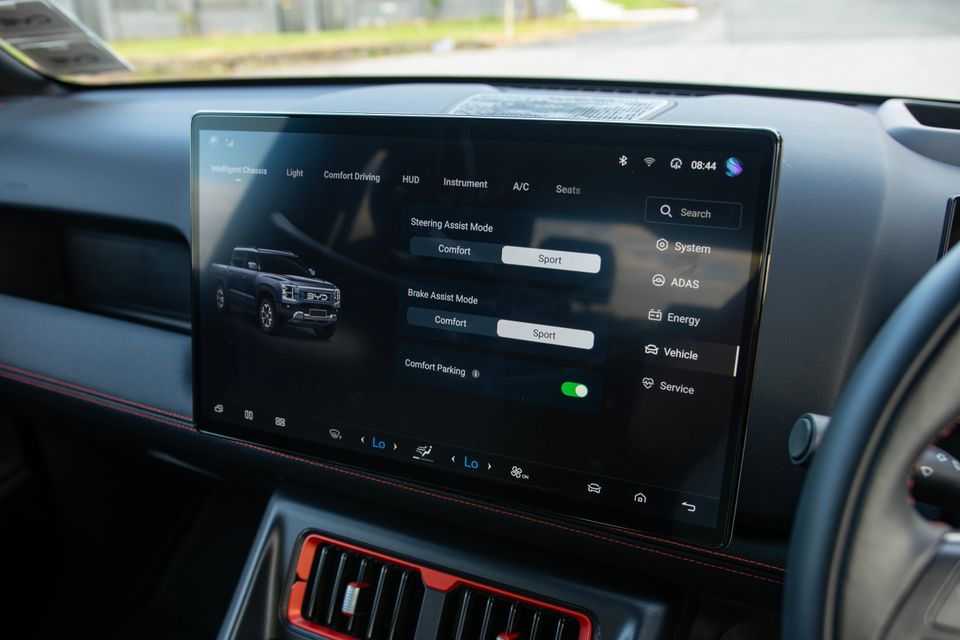
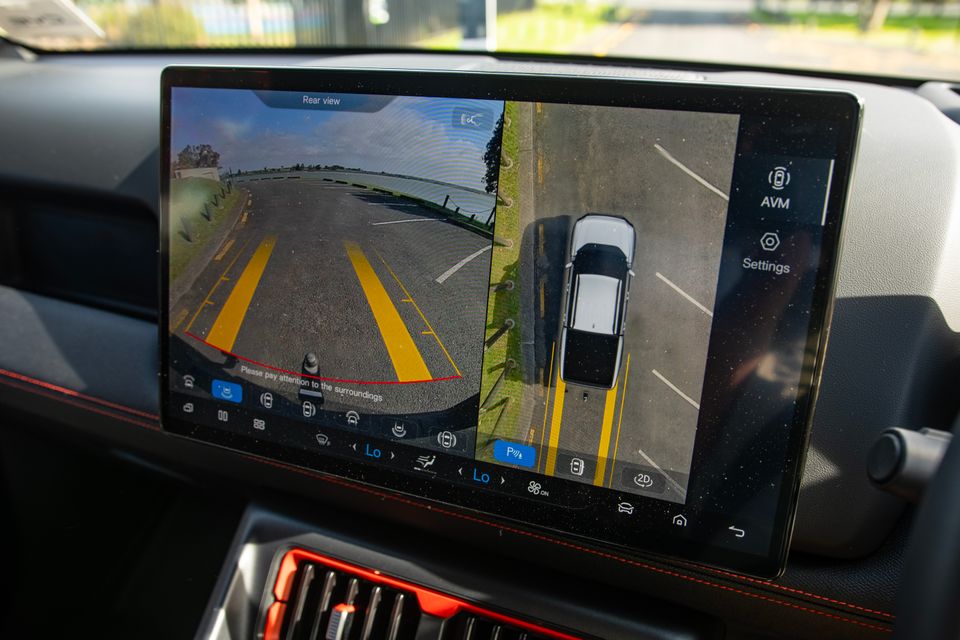
BYD’s trademark 15.6-inch rotating infotainment display is present, with many features available through its slick interface (though phone mirroring doesn’t work in portrait mode). It’s very pretty and responsive, as with other BYD models.
In fact, some fleet buyers have expressed concerns the Shark 6 is a bit too nice, which is interesting. Perhaps there’s room for BYD to introduce a version with cloth seats, hard plastics and a smaller, fixed touchscreen? We’ll have to wait and see.
In the meantime, BYD probably isn’t all that worried because around half of its Shark 6 sales have been from fleet buyers. And to be fair, the cab-chassis version isn’t far off, but a more affordable wellside version is what I’m thinking.
What’s under the bonnet?
This is the really interesting bit. BYD has created a sort of super hybrid system for the Shark 6 - indeed, that’s exactly what it’s called, DMO Super Hybrid - which consists of a 1.5-litre petrol engine acting primarily as a range extender for the 29.58kWh battery and twin electric motors.
The engine isn’t just a generator though, able to feed power into the wheels as well. All in, the powertrain makes 321kW and 650Nm of torque, which is huge for a ute. That’s 29kW/67Nm more than the V6 Ford Ranger Raptor, and despite the Shark 6 weighing around 200kg more than the Raptor, both hit 100kph in about 5.7 seconds. Interestingly, the Shark 6 doesn’t have a gearbox as such, with the motors working through a single-speed reduction gear and the engine using a direct-drive clutch.
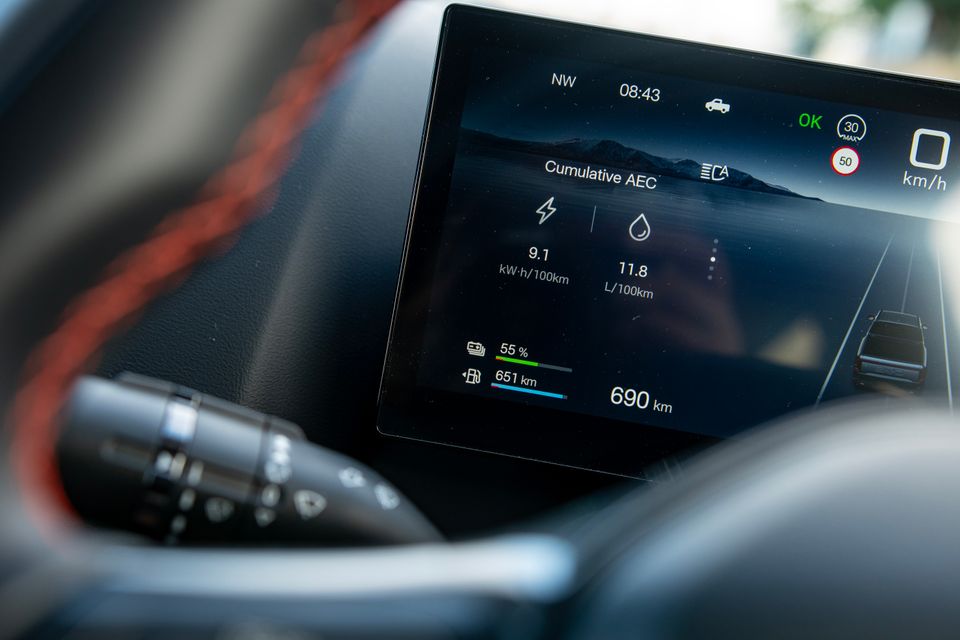
Because the powertrain here operates on an electric-first approach, fuel consumption is kept way down. BYD claims 2L/100km when the battery is between 25% and 100% charge, or 7.9L/100km if things go below that 25% mark.
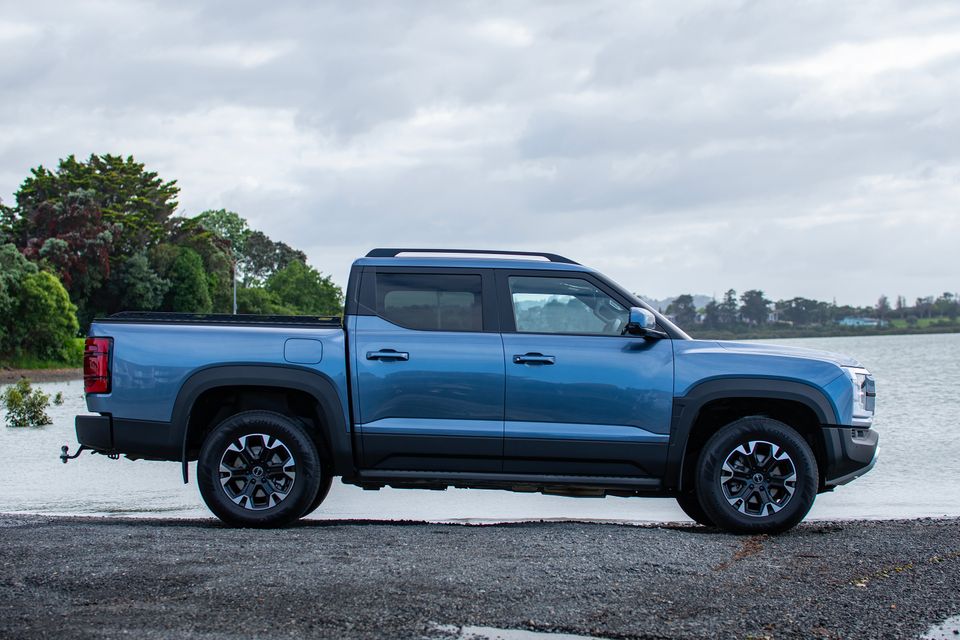
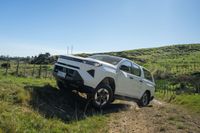
You’ve also got proper four-wheel drive, and good off-road credentials with an approach angle of 31 degrees, a departure angle of 19.3 degrees, ramp-over angle of 17 degrees and 200mm of ground clearance. Those figures are a little under the Ford Ranger Wildtrak’s 30 degrees approach, 23 degrees departure, 21 degrees rampover and 231mm of ground clearance. Similarly, wading for the Shark is rated at 700mm, while the Wildtrak is 800mm.
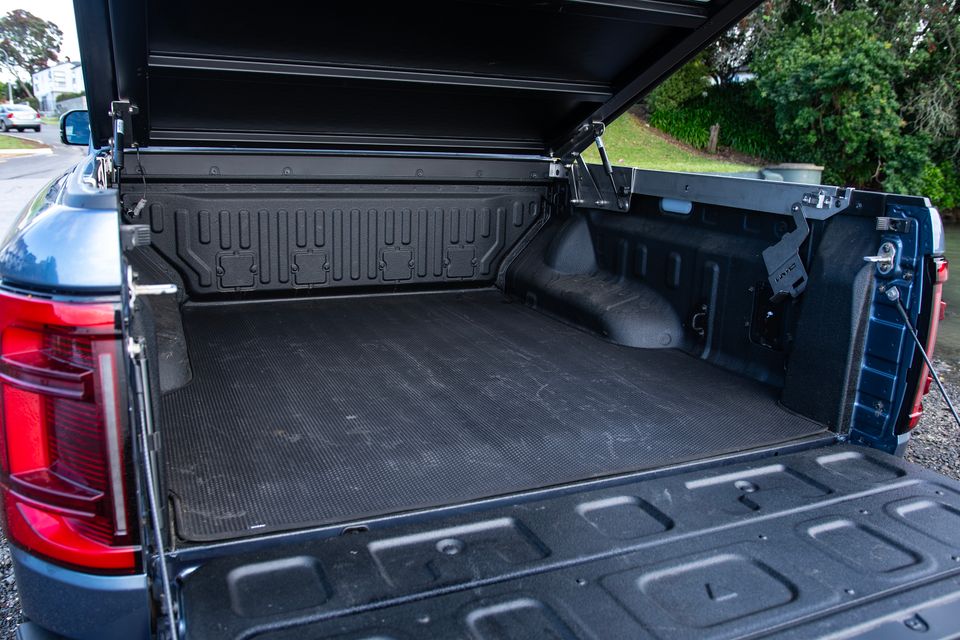
As an added extra, because it’s a plug-in hybrid with a big battery, the tray has three standard power outlets for powering external devices, like tools.
How does the BYD Shark 6 drive?
The powertrain is excellent. Under normal circumstances, it operates on electric power only, which means instant torque with smooth and silent operation. The Shark 6 is very refined at speed too, with minimal wind and road noise, while the suspension tuning is great for New Zealand roads. Some of the sharper bumps will get through, probably due to the shocks suspending 2.7 tonnes of ute, but the rest of the time things are smooth. Part of that is due to the setup being double wishbone, twintube suspension at each end, rather than the rear end having a leaf-spring system.
BYD claims an electric-only range of 100km but I found the ute to get closer to 80km before the engine kicked in to restore battery charge. Still, that’s enough to do a lot of running around, and if you’d rather not let the engine work you can plug the Shark into a DC fast charger. The Shark 6 will charge at up to 55kW, enough to go from 30% to 80% in about 20 minutes.
The active safety stuff works well too, though the lane departure gets a bit confused on gravel roads. Which is understandable to a degree, considering the dust and lack of road markings. There is a driver attention monitor, which can be annoying, but this was the best I’d experienced with glasses and sunglasses, only sounding off when I poked around the infotainment system or was looking at the driver display. It makes noise after about three seconds of looking away from the road, which doesn’t feel like long but is plenty of time to have a pretty serious accident.
Thumbing the mode wheel into Sport mode sets the Shark to its spiciest, allowing for a remarkably quick sprint to 100kph and beyond. This is the fastest ute in a straight line available in New Zealand right now, there’s no doubt. It’s not quite as characterful as the Ranger Raptor’s petrol V6 but the Shark 6 is brutal in raw pace. Of course, fuel consumption takes a hit doing this sort of thing but even at just over 10L/100km (real world), it’s still comfortably under the Raptor’s 15L/100km.
It handles well too, thanks to standard-fit Continental tyres, but remember this is a heavy, fairly tall ute, so don’t get carried away. Physics will eventually kick in, though the 4WD system does a very good job of pushing back. It’s adept off-road too, with the Shark’s brain shuffling power around to where it’s needed most. You can switch through the terrain modes to suit, including Mud, Sand, Snow and Mountain. However despite all the electric wizardry, the Shark 6’s double wishbone suspension means its on-road prowess comes at the cost of off-road capabilities. We didn’t test the Shark 6 to its limits, but overseas tests have shown it’s not quite as capable as some of its competitors.
Another knock against the Shark 6 is in its towing. BYD rates the Shark 6 at 2500kg, a full tonne lower than trad-utes like the Ranger Wildtrak and all Hilux variants, but identical to the Ranger Raptor. It also has a slightly lower payload at 790kg. If those are dealbreaking figures but the rest all sounds good to you, worry not; BYD is working on a 2.0-litre version of the Shark 6 which should bring towing back up to the industry standard of 3500kg and north of 1000kg in the tray.
What do you get?
As mentioned, it’s just the one variant in New Zealand (well, aside from the cab-chassis version which doesn’t change the specification much). Here’s the highlights of the Shark 6 Premium.
BYD Shark 6 Premium features
- LED headlights and taillights
- LED daytime running lights
- Sequential rear indicators
- Footwell lights
- Wired and wireless Android Auto and Apple CarPlace
- 15.6-inch rotating touchscreen display
- Dynaudio 12-speaker system
- Satellite navigation
- Voice assistant
- Powered front seats (8-way driver, 4-way passenger)
- Heated/ventilated front seats
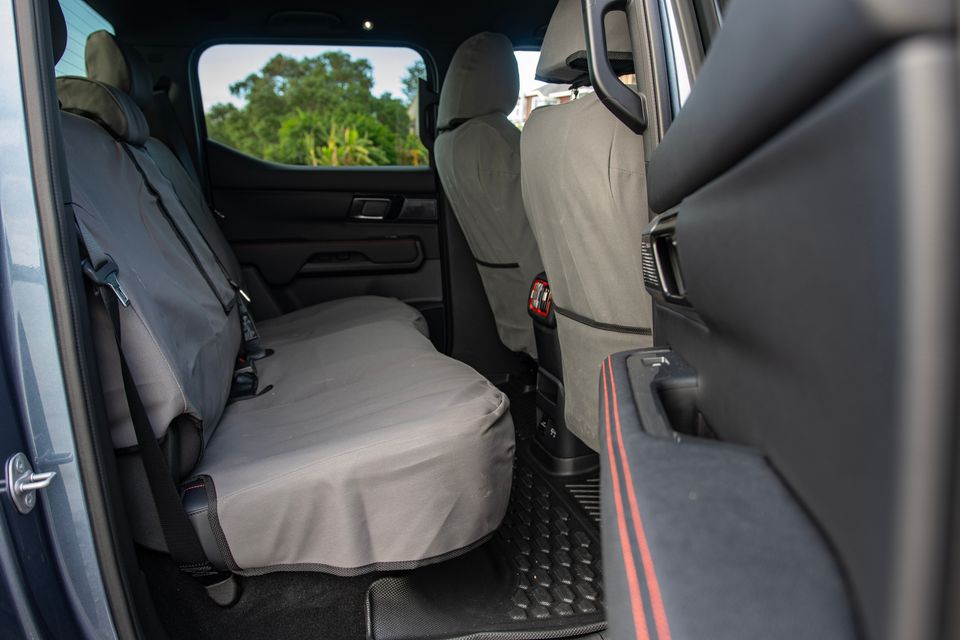
- Reclining rear bench
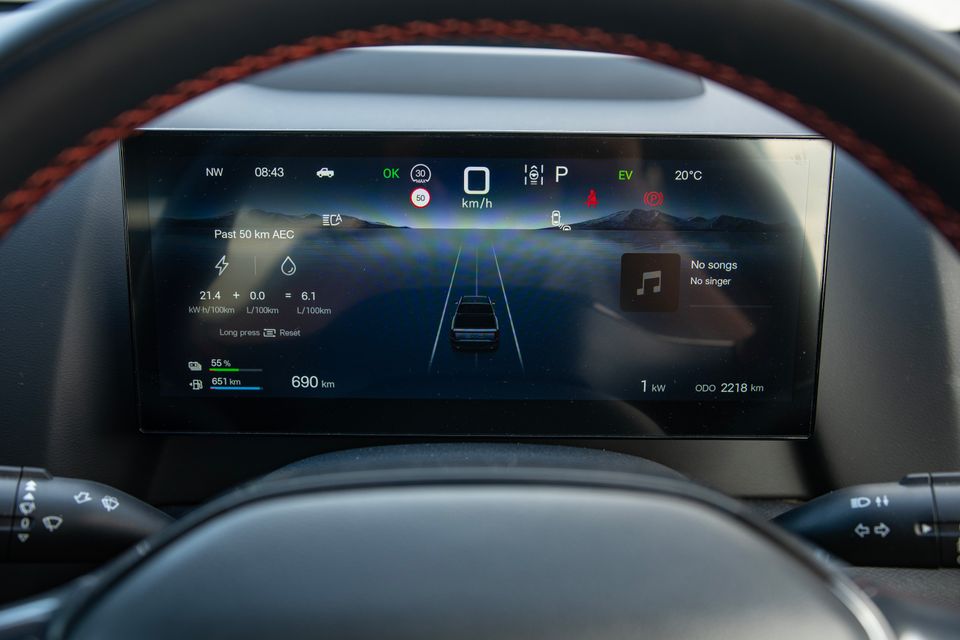
- 10.25-inch digital driver’s display
- Soundproof glass on front door
- Heating/defrosting wing mirrors
- Rain sensing wipers
- Full active safety suite including adaptive cruise control, autonomous emergency braking, lane keep assist, traffic sign recognition, front/rear collision warning, blind spot detection and driver fatigue monitor.
The cab chassis version swaps the Continental tyres for Giti rubber, ditches the rain sensing wipers, reduces the DC charging rate to 40kW from 55kW, loses the privacy glass on the rear doors and rear windscreen, and gets a faux-leather steering wheel instead of real leather. It also doesn’t offer heated/ventilated front seats and axes the large rotating touchscreen for a smaller 12.8-inch fixed screen.
CarExpert’s take on the BYD Shark 6
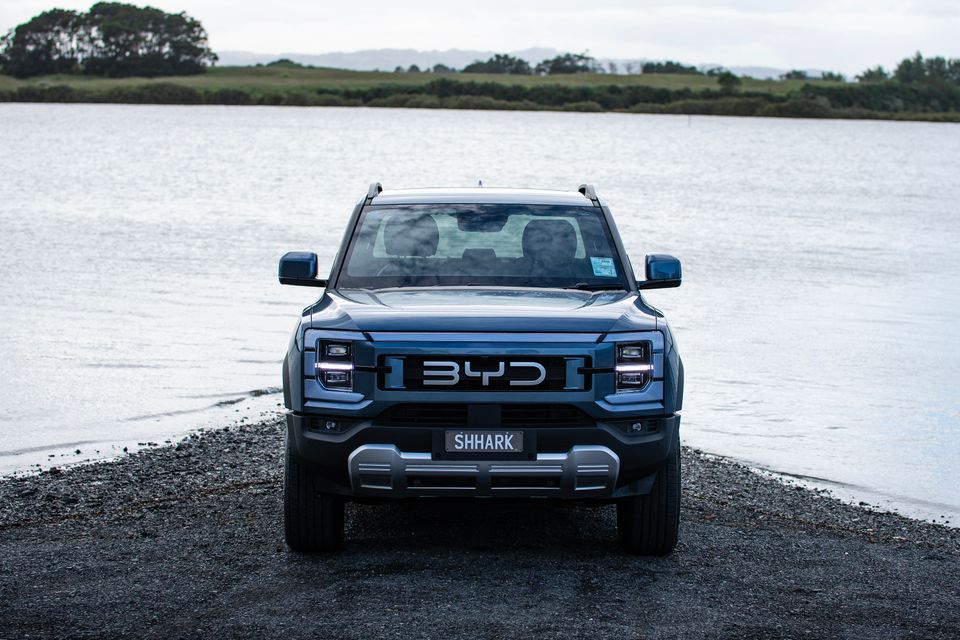
Overall, the Shark 6 is a spectacular piece of kit. It shakes up the ute game considerably, bringing genuine efficiency with huge power whilst retaining most of the capabilities of traditional diesel utes. It drives very well, drips in quality, and hits that juicy price point of under $70,000. Sure, BYD may have aped some of Ford’s styling for the Shark 6 but it still leaves its own imprint on the road.
Speaking of, Ford is certainly BYD’s biggest competitor. Not only because of the Ranger’s enduring popularity but also because Ford has just introduced its own plug-in ute. The Ranger Hybrid also uses a petrol-powered hybrid system but in a more conventional way compared to BYD’s electric-first mindset. The 2.3-litre engine pairs with a 10-speed transmission and a single electric motor. It develops 207kW/697Nm and has the same 3500kg braked towing capacity as all other non-Raptor Ranger models while electric range is rated at 43km.
As for pricing, the Ranger Hybrid is offered here in three trims - the $82,990 PHEV XLT, $89,990 PHEV Wildtrak, and $94,990 PHEV Stormtrack. That last one is an exclusive model to the PHEV range. All are notably more than the $69,990 BYD Shark 6.



 Showroom
 Car Chooser
 Compare
 Car Specifications





 Automotive Vehicle Spec Data & 4K images Powered by JATO Dynamics Ltd