


 Showroom
 Car Chooser
 Compare
 Car Specifications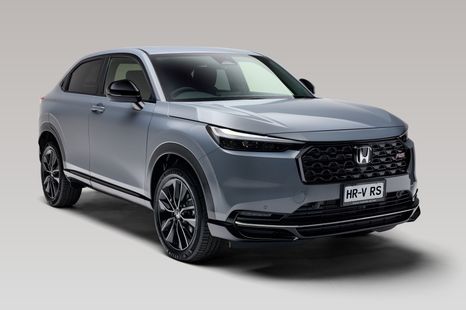

Matthew Hansen
Honda adds new Hybrid RS model to HR-V line-up
Honda's cheapest SUV gains racy new RS flagship amid range reshuffle.
24 Days Ago
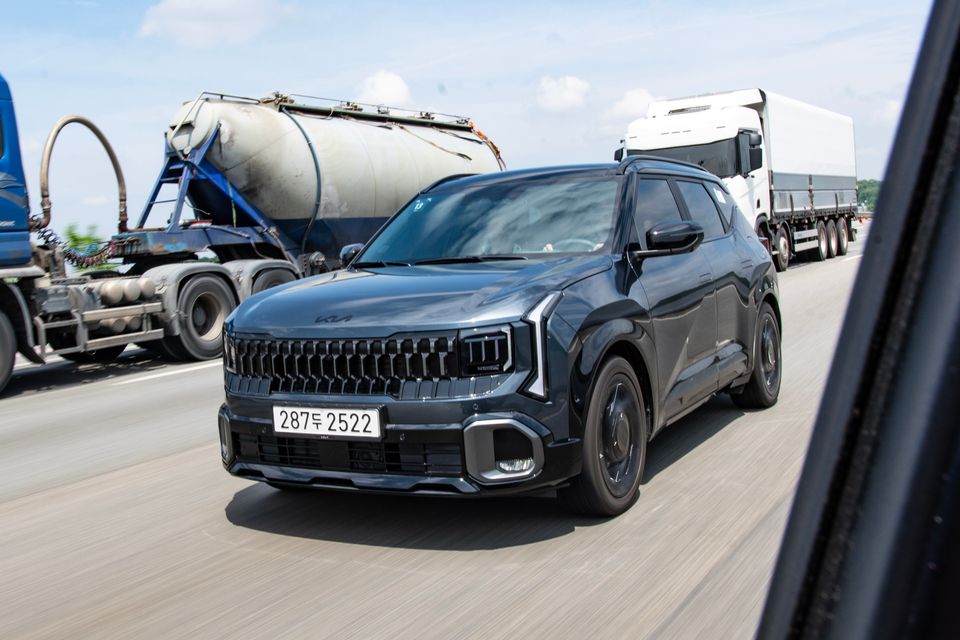
We drive Kia's all-new Seltos in South Korea. Is the brand's best-selling model the new crossover benchmark?
Where expert car reviews meet expert car buying – CarExpert gives you trusted advice, personalised service and real savings on your next new car.
It might not quite have the mainstream penetration of something like a Toyota RAV4, but you cannot underestimate the popularity of the Kia Seltos. Since it launched in New Zealand, it’s a model that’s rarely missed out on a berth in the country’s top 10 best-sellers list, positioned towards the top of its segment.
You’d think then, when it comes to giving the model an update, that Kia might be tempted to deploy an ‘if it ain’t broke’ philosophy. But, you’d be wrong. The all-new Seltos, slated to arrive in New Zealand in the fourth quarter of this year, takes several giant leaps relative to its predecessor.
Whilst it hasn’t touched down here just yet, the Seltos is on the ground in Europe and in its homeland; South Korea. It was in the capital of the latter that we got to experience our first taste.

Although we don’t yet know what the Seltos costs, that doesn’t mean there aren’t a few interesting conversations to be had on the subject.
The two biggest talking points when it comes to the new Seltos are its growth in size and its adoption (finally) of hybrid technology.
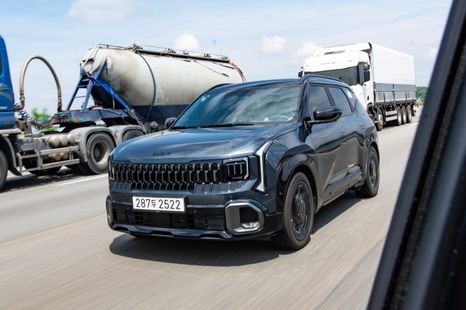
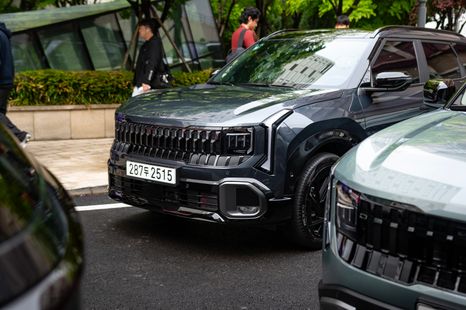
Built on Kia and Hyundai’s K3 platform, the new Seltos is bigger than its predecessor in every metric apart from its height. If you saw one of these in isolation, not knowing it was a Seltos, you could be forgiven for thinking that you were looking at the new Sportage.
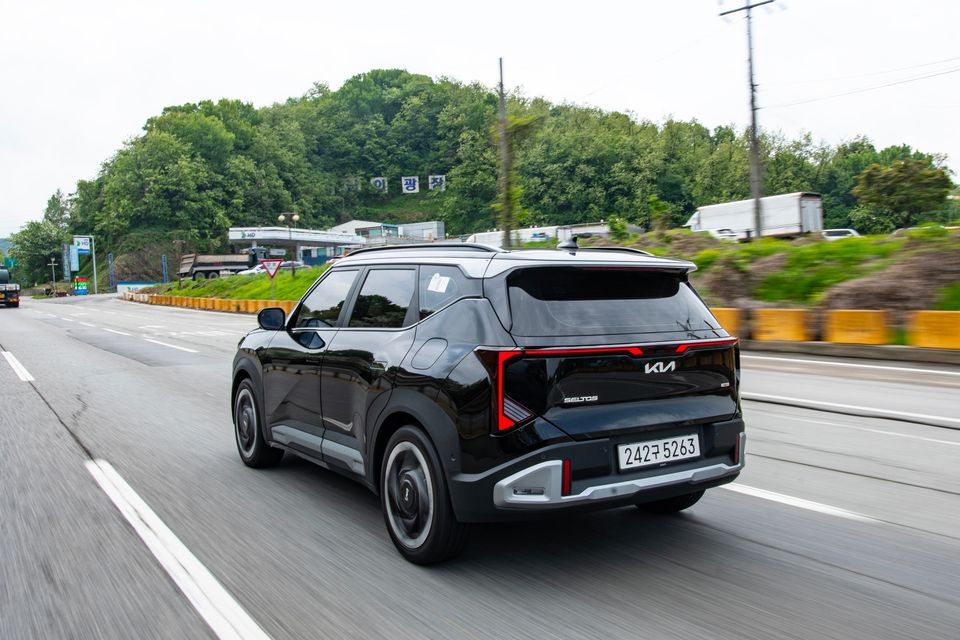
It’s 45mm longer, 30mm wider, and has 60mm of additional wheelbase. Kia says this means 12mm more headroom up front, 14mm more headroom (and 25mm more legroom) in the back, and a boot space that’s somehow grown to a gargantuan 786-litres.
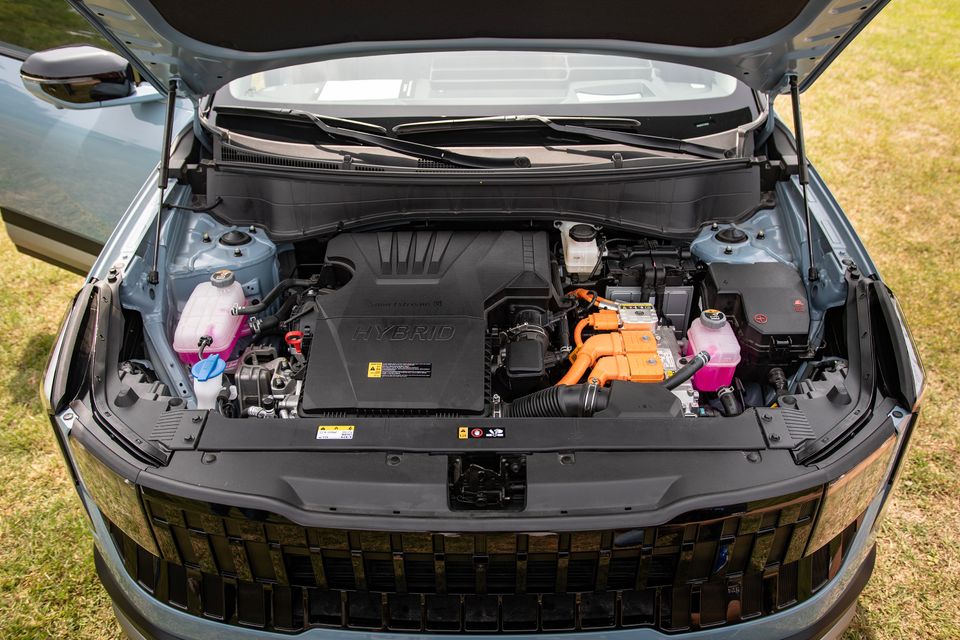
On the hybrid side, the Seltos is now powered by a 1.6-litre 4-cylinder hybrid powertrain offered overseas in either FWD or AWD formats, with outputs of 113kW and 131kW, respectively. The hybrid is the only engine option coming to New Zealand (at least for now), replacing the old pure combustion 2.0-litre.
These tweaks could see the Seltos’ price step upmarket. There were suggestions from the Australian media cohort at the model’s launch event in Seoul that the model’s pricing is expected to come close to mirroring the Hyundai Kona. This makes sense, as the Kona is built on the same K3 underpinnings.
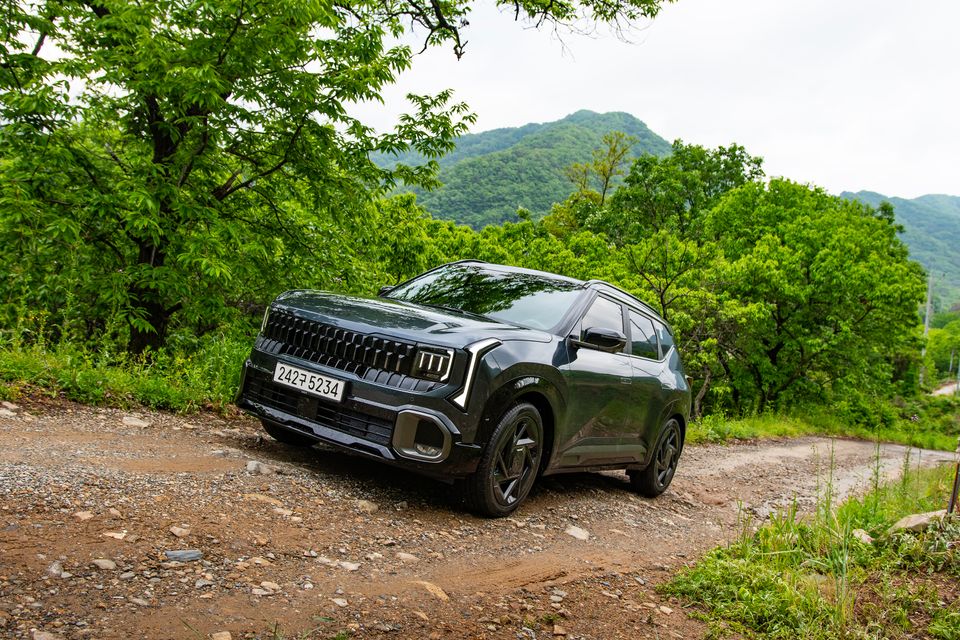
I’m not sure it’s going to be quite so simple from a New Zealand perspective. The Hyundai Kona, priced from $42,990 here, is quite a bit more expensive locally than it is in Australia. I suspect Kia’s local arm will want the Seltos to be priced quite a bit cheaper than its $43,990 Niro and $49,990 Sportage. But, time will tell.
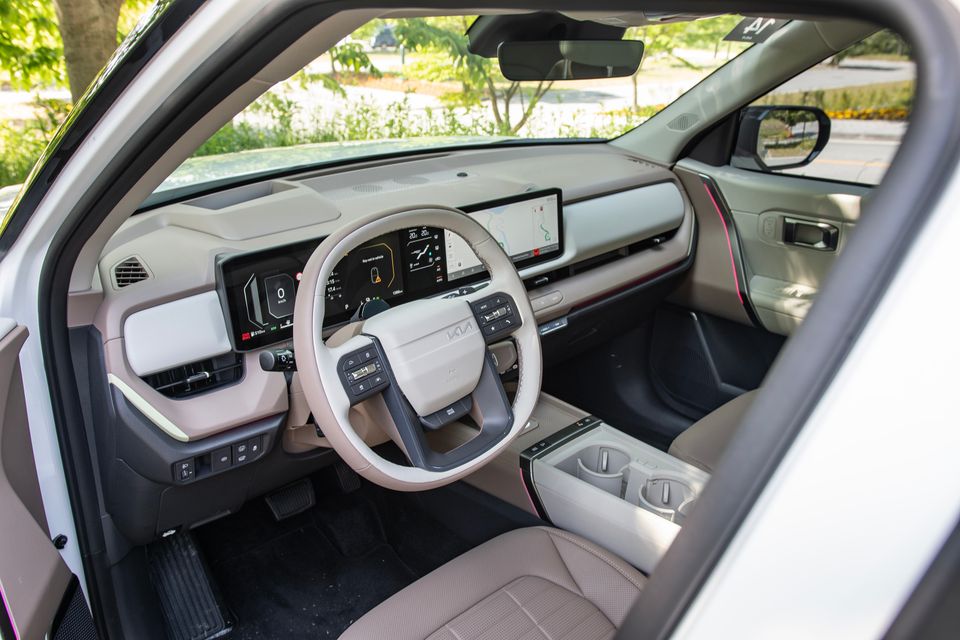
Whilst largely inoffensive and functional, the interior of the outgoing Seltos was also by far the most dated in the brand’s stable. That’s all over now, with the new model adopting much of the styling, surfacing and hardware we’ve previously seen in models like the EV3. It’s a space we’ve quickly latched onto as one of our favourites amongst the compact crossover set.
At the head of the dashboard is Kia’s familiar tri-screen display unit, featuring a 12.3-inch touchscreen, 12-inch digital cluster, and 5-inch climate control display. You also get the same column-mounted drive stalk and a D-shaped steering wheel.
There are a few differences, too, like the physical menu shortcut buttons underneath the touchscreen — replacing the more ‘space age’ (and perhaps less conventional) haptic buttons in the likes of the EV3. Material selection is typical, clinical Kia with a mixture of soft-touch and hard plastics, and it all feels very well put together.
As we’ve touched on, the new Seltos is very commodious inside. Headroom and legroom in the back is big enough for a pair of burly adults (a hearty transmission tunnel in the centre means you might struggle to cram in a third), and the boot is a ludicrous 536-litres with the seats up — more than some bonafide mid-size SUVs.
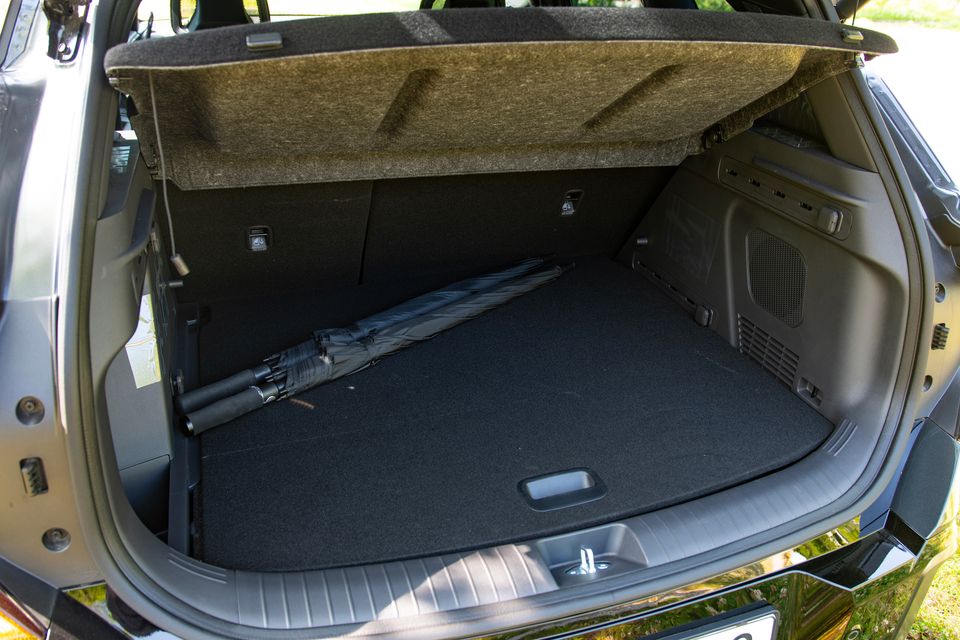
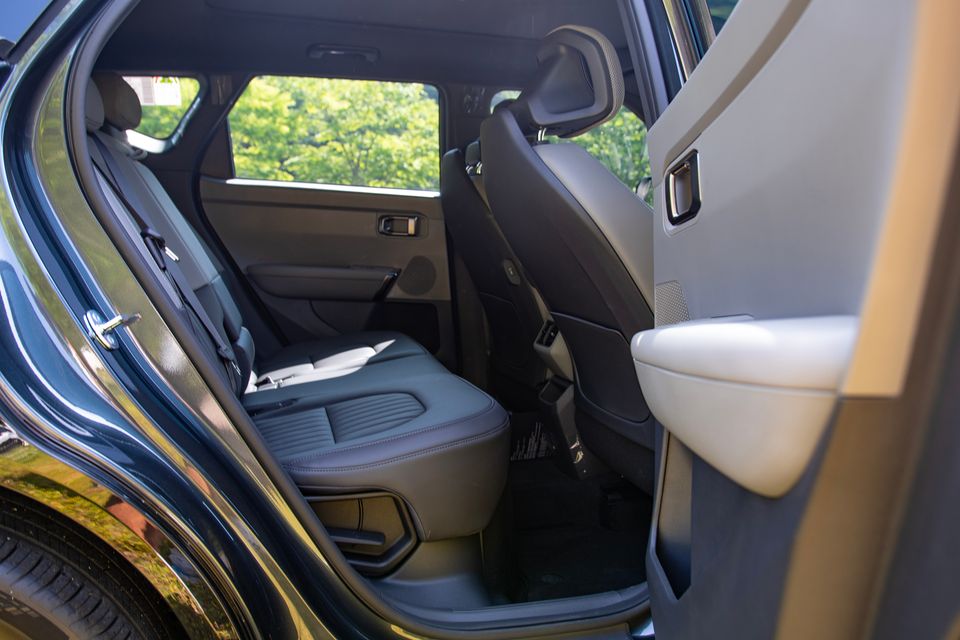

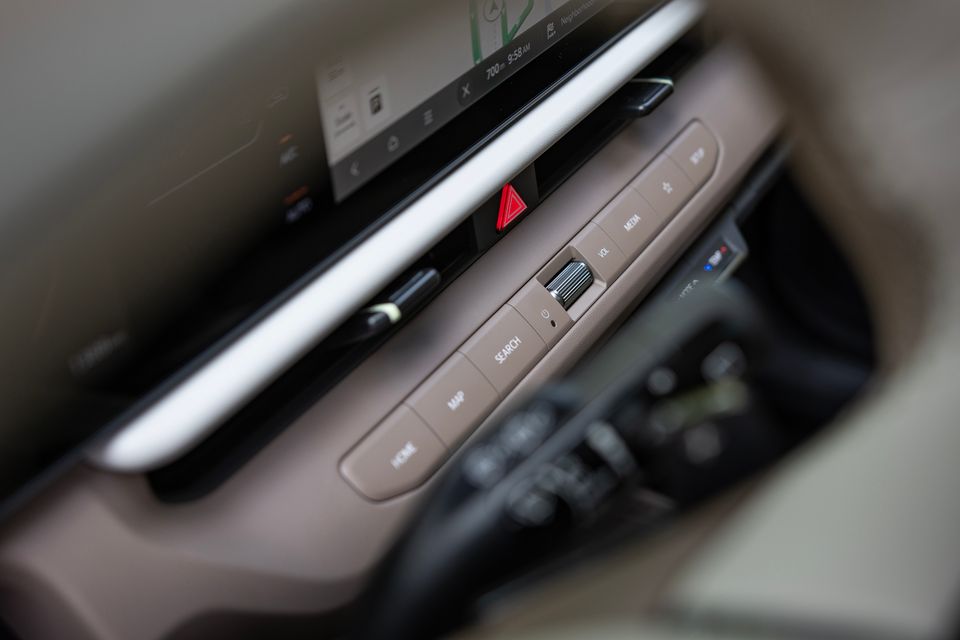
We won’t dive too deeply into specs as we don’t yet have these for New Zealand. At launch, we spent a good chunk of time driving the X-Line trim, a variant we’re unlikely to get here. And even the more conventional variants we sampled came with a beige interior, which I suspect will be swapped over for a more Kiwi-friendly black by the time the model hits our shores.
The Seltos hybrid gets the added bonus of vehicle-to-load technology in the boot, similar to that of the recently arrived Hyundai Palisade. That option has been confirmed as a non starter for Australia, meaning we likely won’t be seeing it here, either. Keep an eye out for a full rundown of the local Seltos spec at a later date.
Well technically speaking, we don’t actually know yet.
In terms of what we actually drove at the launch event, we sampled the turbocharged 2.0-litre petrol and 1.6-litre hybrid. We know that we won’t be getting the 2.0-litre, and we know that the local line-up will be exclusively hybrid. What we don’t know is whether we will get the same two-flavour hybrid line-up as seen in Europe. w
There are other gaps in our knowledge, too. For example, Kia could not tell us what battery capacity the Seltos hybrid has, although the marque noted a fairly solid efficiency figure of 4.4L/100km.
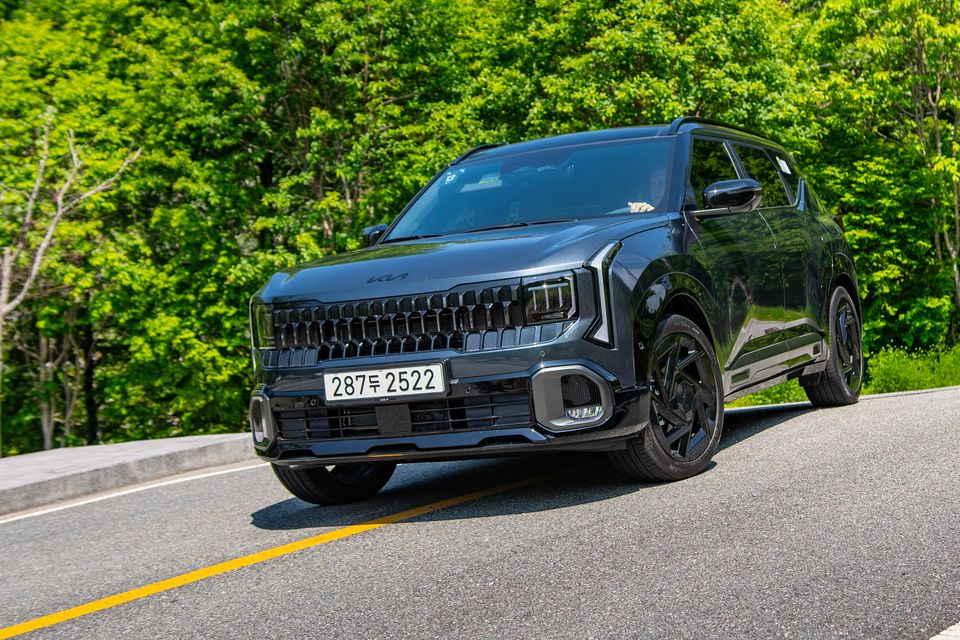
Our spin in the Seltos kicked off in Seoul with a day-long drive to Gunsan, with a drive further south to Gwangju coming the next day. The roads mostly presented a mix of motorway commuting and quiet country roads (complete with South Korea’s stringent and often changeable speed limits), with an occasional twisty patch for us to nibble on in between.
The most apparent point of improvement for the Seltos when comparing the new generation to the last is how much more grown up the platform feels from behind the wheel. The outgoing Seltos was always a handy steer (especially when compared to something like a Mitsubishi ASX), but the new one moves the needle on all the key comfort metrics.

Regardless of powertrain, it’s quieter inside than the old one. Its damping in this overseas spec feels more accommodating than the old one. And, its larger proportions help it feel more assured on the road than the old one. There’s less engagement than its predecessor (you’re guaranteed more smiles from a Ford Puma), but I suspect most customers in the Seltos’ sights would trade handling for comfort.
Something else the Seltos benefits from is healthy visibility in every direction. Kia notes that it is one of the most SUV-styled contenders in its segment — that is, it’s a more traditional SUV shape with less of a cut in its silhouette. This means a bigger rear windscreen and more logical C-pillar.
We appreciated the performance (and the surprisingly fruity exhaust note) of the 2.0-litre turbo, but obviously we put much more of our focus into the 1.6-litre hybrid. And it’s certainly a powertrain of two halves.
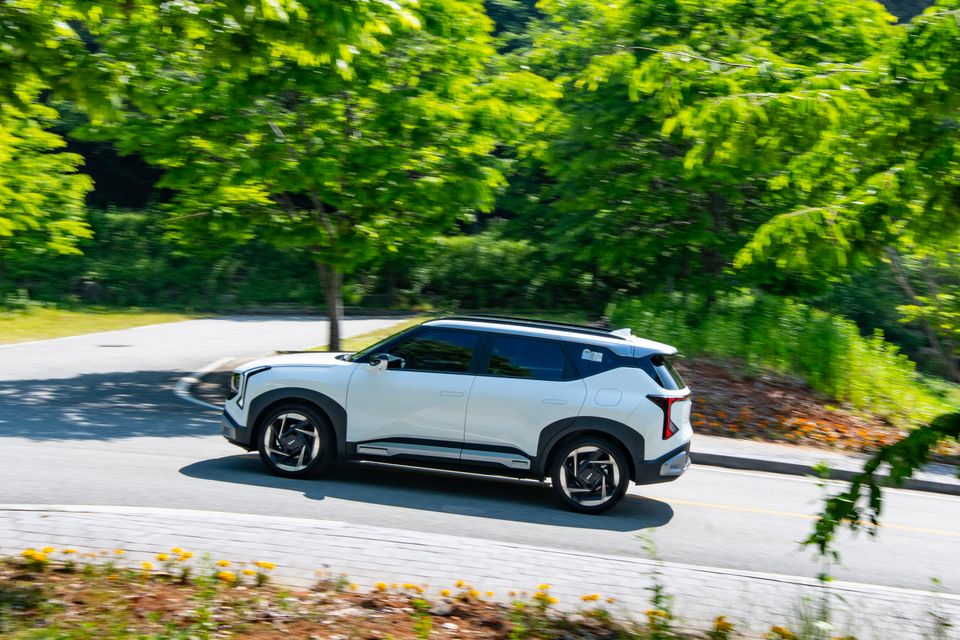
On one hand, our mostly motorway-speed drive saw us come close to equalling Kia’s fuel efficiency claims — impressive. Some of this result likely comes from the model's new regenerative braking system, which is fairly intuitive to use. I also commend the system for its smooth and refined operation. Even when operating purely under petrol power with a heavy right foot, the hybrid was hushed … Toyota could learn a thing or two here.
On the other hand, we found the Seltos hybrid to be a bit sluggish in its performance. There’s a little jolt of electric kick from a stand still, but it felt a little vulnerable when dealing with hills. I know this segment isn’t necessarily one where customers expect spine-tingling straightline abilities (the outgoing 2.0-litre Seltos isn’t exactly a firecracker, for example), but the new Seltos hybrid is lacking enough that it might be a bit of an issue for local bread-and-butter customers.
Now, we don’t necessarily know yet whether the Seltos hybrid we drove in Seoul will be exactly the same mechanically as we’ll see in New Zealand. We’re keen to get a second sample on local roads when the model finally touches down here.
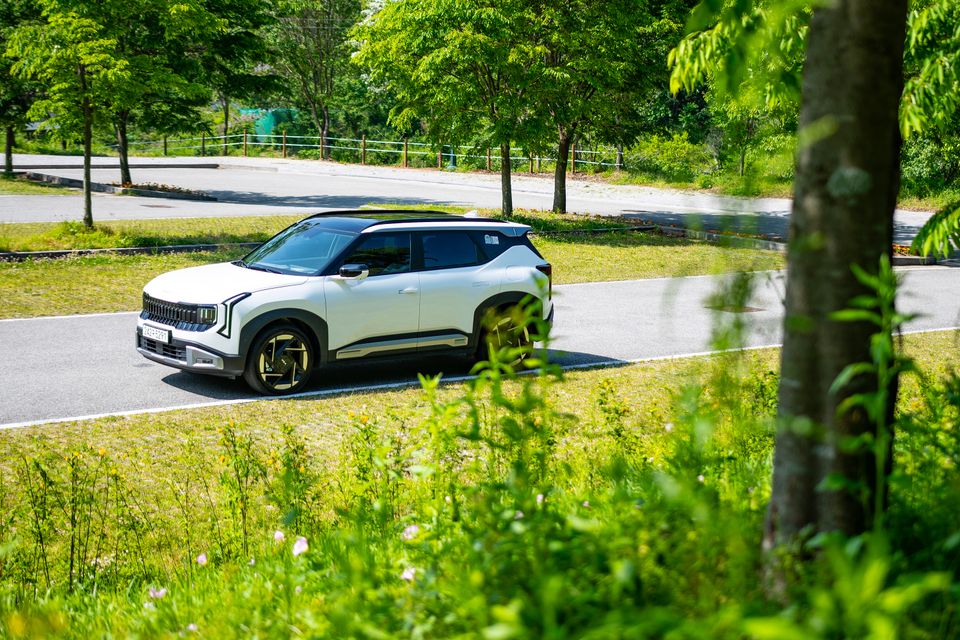
One of the country’s unsung SUV nameplates is getting one of the most radical updates of 2026, and it’s almost all good news. A gigantic boot, more current cabin, striking styling, and more grown up driving chops only add to the appeal of the Kia Seltos. And — bonus — it’s a hybrid now. Kiwis cannot get enough of those things!
But, there are some valid caveats to the otherwise very compelling new Seltos. We’re curious to see exactly how much of a price hike is in store for Kia’s best-selling model, particularly as the number of alternatives from China (some coming with a plug) continues to rise.
Where expert car reviews meet expert car buying – CarExpert gives you trusted advice, personalised service and real savings on your next new car.
2023
$33,990
2023
$36,990
2023
$40,850
2023
$44,850
Matthew Hansen co-founded motorsport outlet Velocity News, worked as a freelance photographer for various race teams, and was a specialist journalist for NZ Autocar Magazine and Driven at the NZ Herald. Most recently, he was Editor of Motoring at Stuff.co.nz.
Add CarExpert as a Preferred Source on Google so your search results prioritise writing by actual experts, not AI.
Matthew Hansen
24 Days Ago


CarExpert
1 Month Ago
Matthew Hansen
1 Month Ago
Matthew Hansen
1 Month Ago

Dave Kavermann
1 Month Ago
CarExpert
2 Months Ago
Add CarExpert as a Preferred Source on Google so your search results prioritise writing by actual experts, not AI.
† Displayed prices exclude on-road costs such as delivery charges, registration fees, number plates, insurance and applicable road taxes. These prices are subject to change without notice and may not reflect current market pricing or dealer offers.
 Automotive Vehicle Spec Data & 4K images Powered by JATO Dynamics Ltd