

 Showroom
 Car Chooser
 Compare
 Car Specifications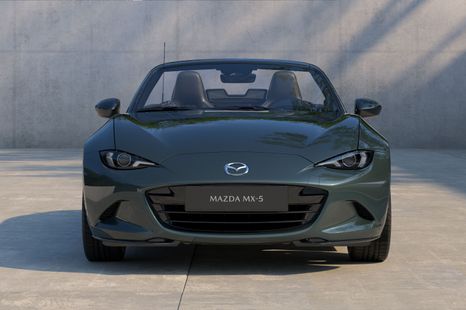

Dave Kavermann
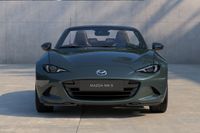
Mazda MX-5 debuts new green metallic paint for 2026 update
The Mazda MX-5 debuts a new green paint colour in Japan, the first time the fourth-generation sports car has been offered in that colour.
19 Hours Ago
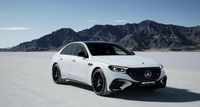
The electric Mercedes-Benz C-Class will take on the BMW i3 with a swoopy design, a screen-heavy interior, and up to 800km of range.

Deputy News Editor
Deputy News Editor
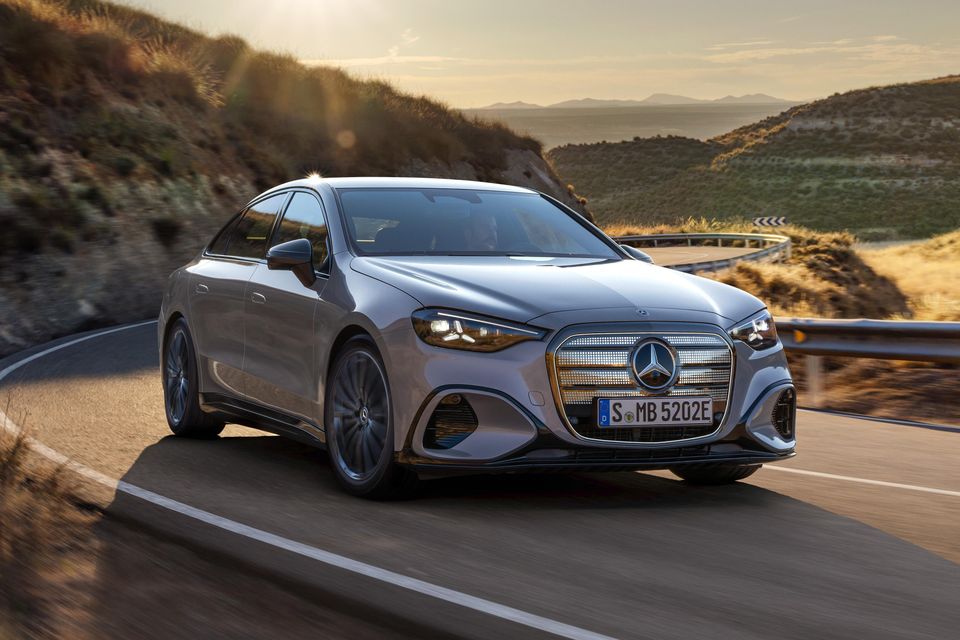
The first electric Mercedes-Benz C-Class has been revealed, featuring a different design language than its combustion-powered sibling, plus a larger interior featuring an expansive dashboard display, and an 800V architecture enabling fast charging and up to 800km (WLTP) of range.
Expected to arrive in New Zealand showrooms in 2027, the electric C-Class will rival upcoming models including the electric BMW i3.
It will be sold alongside existing petrol and plug-in hybrid (PHEV) C-Class models locally, with its 800V underpinnings shared with the GLC electric SUV due here before the end of 2026.
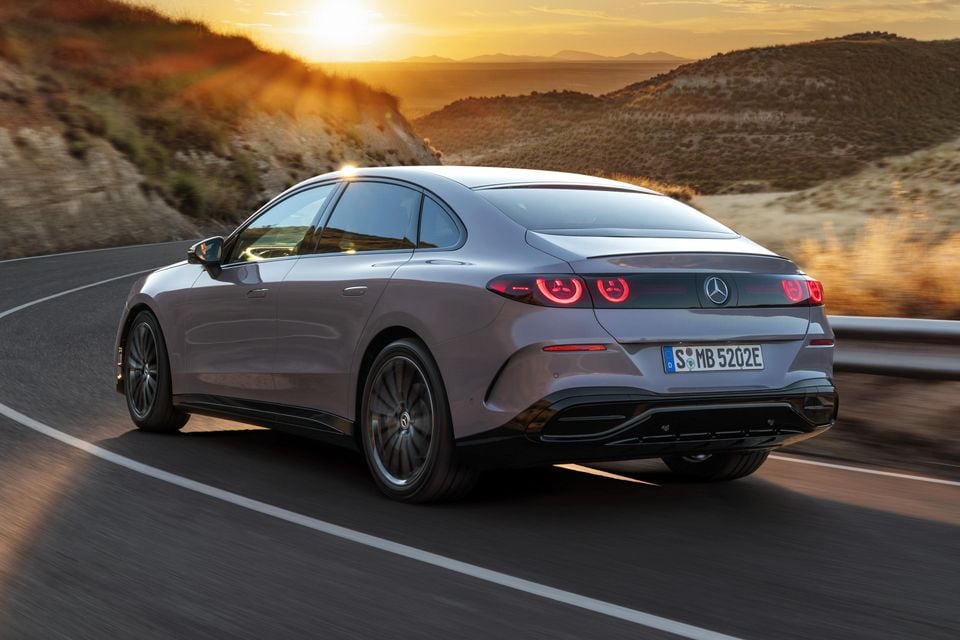
Pricing and equipment levels for New Zealand C-Class EQ models are yet to be announced. The current C-Class lineup starts from $97,799 before on-road costs in mild-hybrid C200 guise.
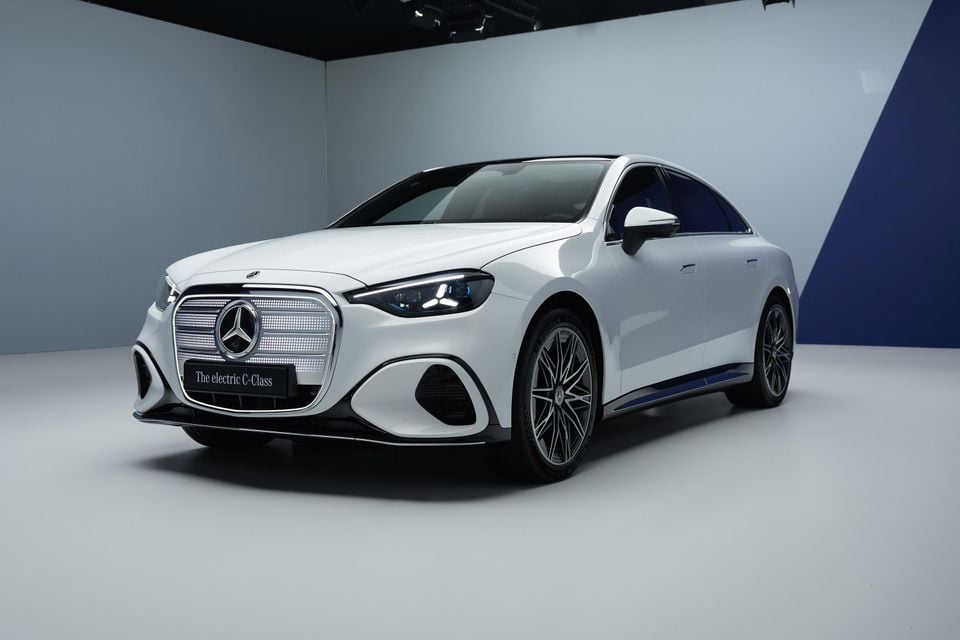
Mercedes-Benz claims the C-Class EQ brings standout quality for the segment, with a ‘coupe-like’ silhouette and upright ‘iconic’ grille previewed on earlier prototypes.
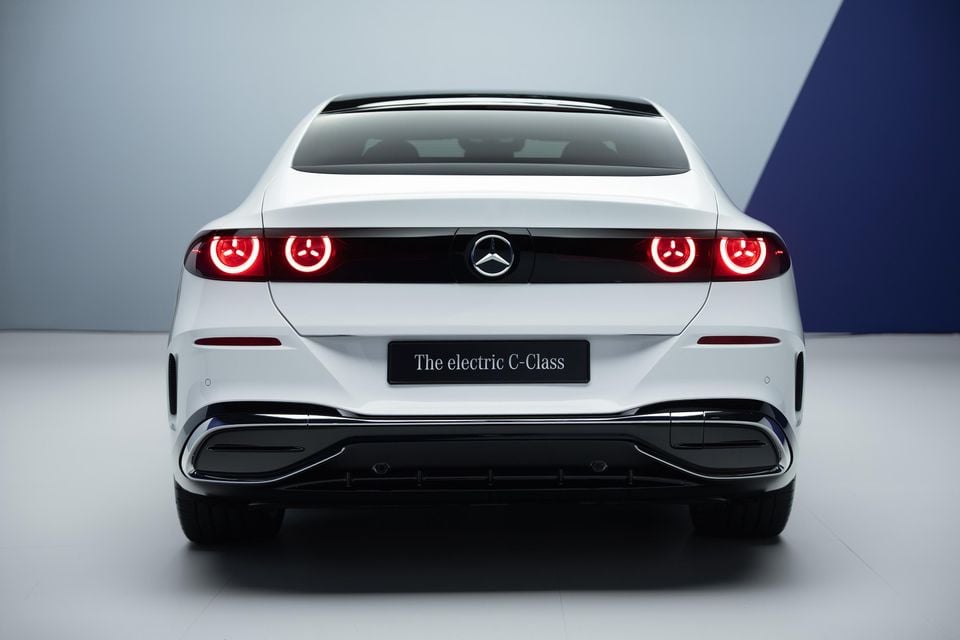
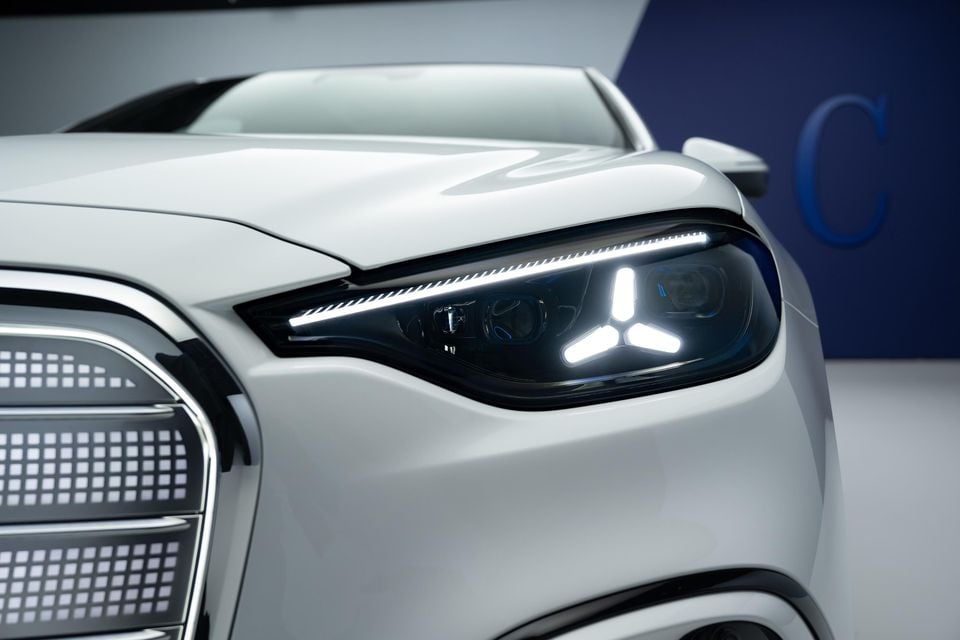
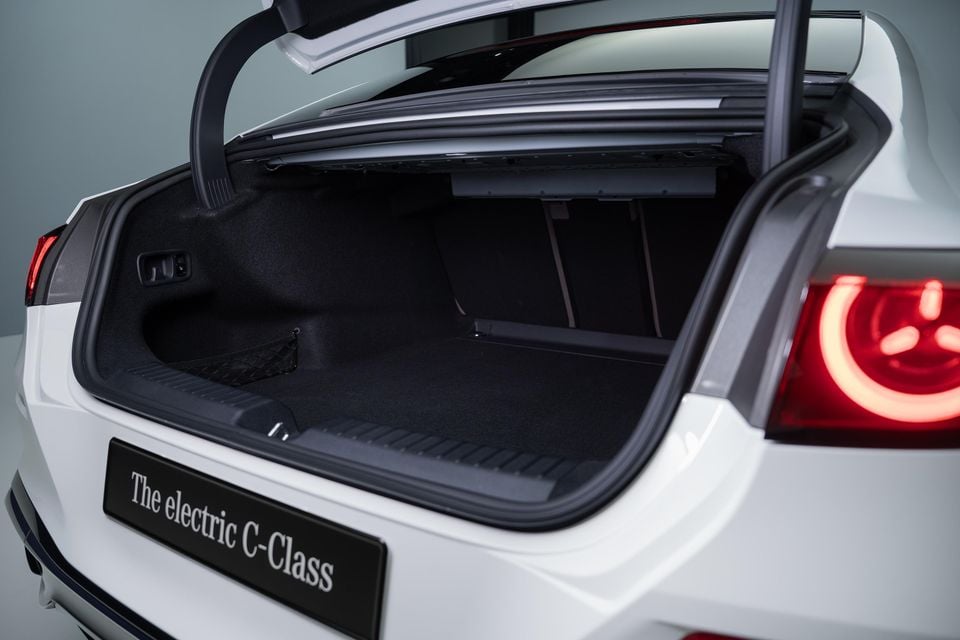
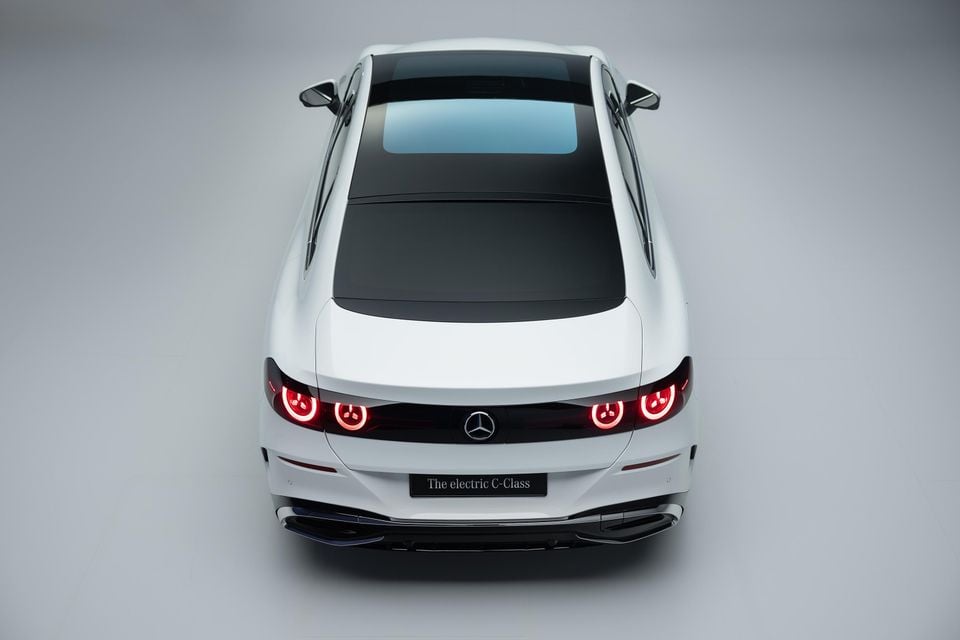
The grille features 1050 illuminated dots, while a two-tone ‘expressive GT’ rear design incorporates three-pointed star motifs within the headlights and tail-lights, blending lighting and chrome elements.
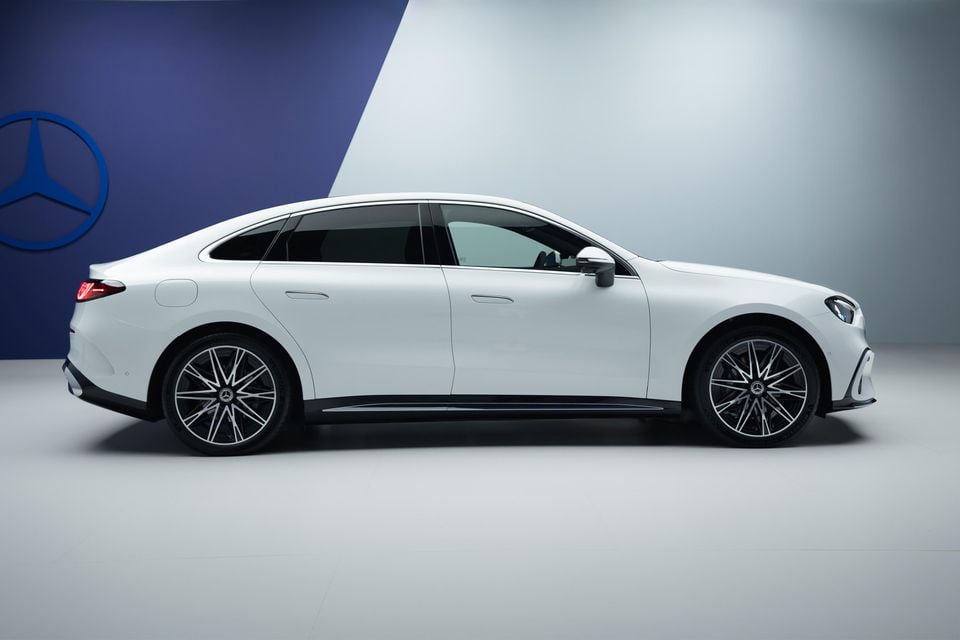
A swooping roofline and flush door handles lead to a black rear light surround reminiscent of the Nissan Z, along with a diffuser-style rear bumper.
The C-Class EQ rides on the same 2962mm wheelbase as the GLC EQ, making it 97mm longer than petrol-powered models.
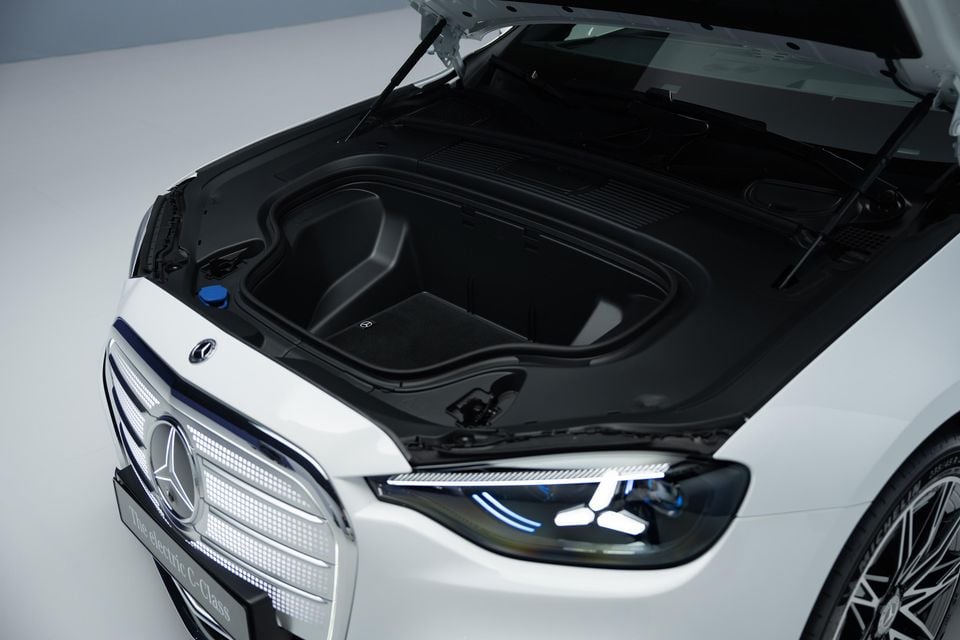
This results in increased legroom and headroom, as well as a 470-litre boot – up 15L on the regular C-Class – plus a 101L storage space under the bonnet.
Mercedes-Benz has confirmed rear-wheel drive and all-wheel drive variants, with rear-drive versions offering up to 800km (WLTP) of range – exceeding the Tesla Model 3 Long Range’s 750km, but short of the claimed 900km for the upcoming BMW i3.
While outputs for rear-drive models are yet to be detailed, the C400 will be the most powerful variant at launch.
It uses a 360kW dual-motor all-wheel drive setup, with a claimed 0–100km/h time of 4.1 seconds and up to 760km (WLTP) of range.
A two-speed transmission across the range is designed to optimise efficiency, with the first ‘gear’ suited to urban driving and the second tuned for highway use.
Dual-motor versions such as the C400 can decouple the second motor under low load to maximise efficiency.
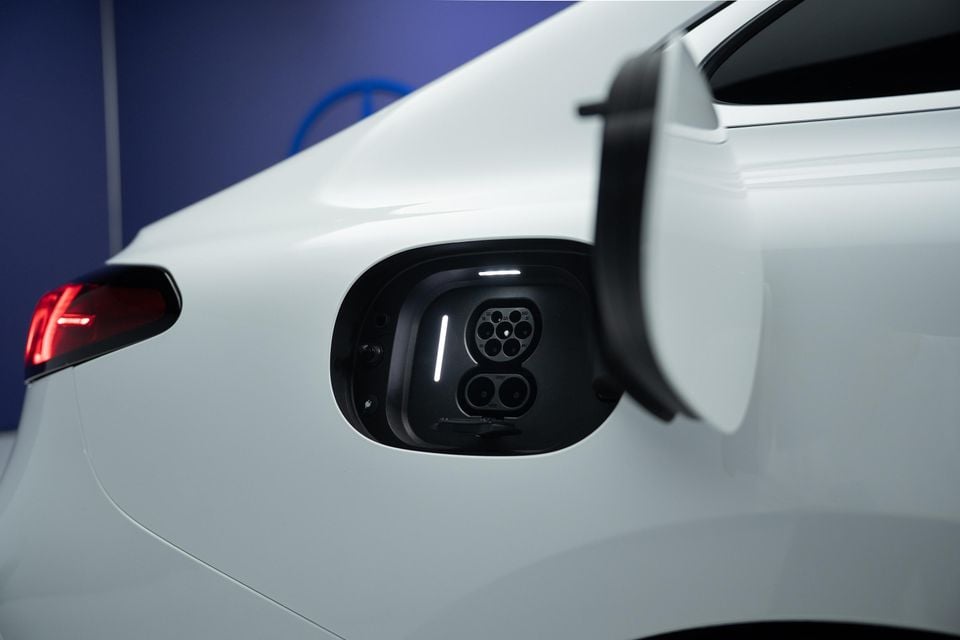
The C-Class EQ uses a 94.5kWh lithium-ion battery capable of adding up to 320km of range in 10 minutes – equating to around 42.6 per cent charge – and supports vehicle-to-load (V2L) functionality.
Additional battery options will be announced later, while kerb weight figures are yet to be confirmed.
Underneath, the electric C-Class features four-link front suspension and a multi-link rear setup. Optional Airmatic air suspension – which lowers the ride height in Sport mode – is paired with rear-axle steering.
The latter offers up to 4.5 degrees of angle to improve manoeuvrability at low speeds.
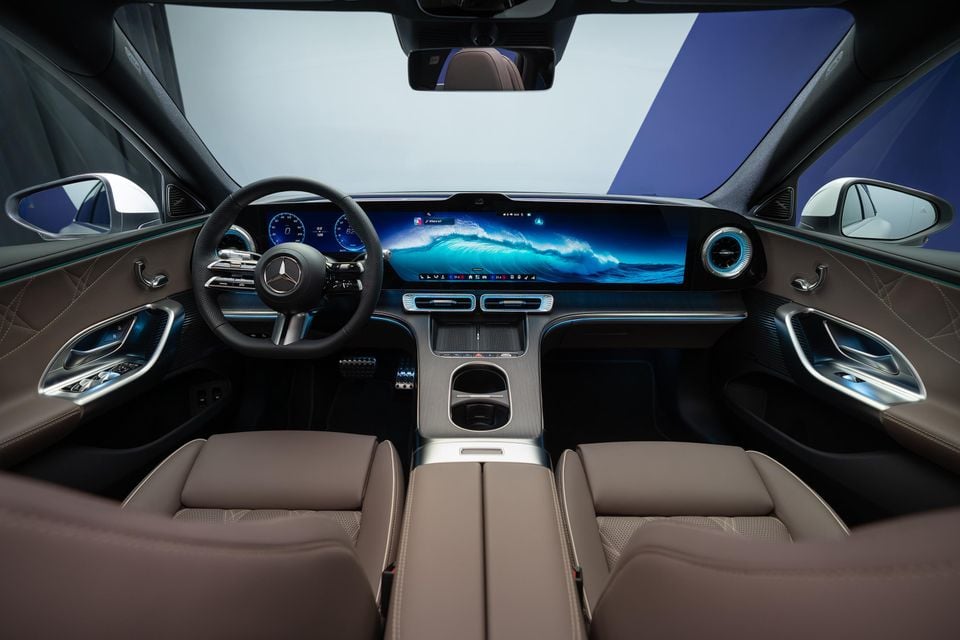
Inside, the cabin is dominated by an optional 39.1-inch (99.3cm) MBUX Hyperscreen spanning almost the full width of the dashboard.
The display integrates the digital instrument cluster and infotainment system, using more than 1000 LEDs to create individual brightness zones.
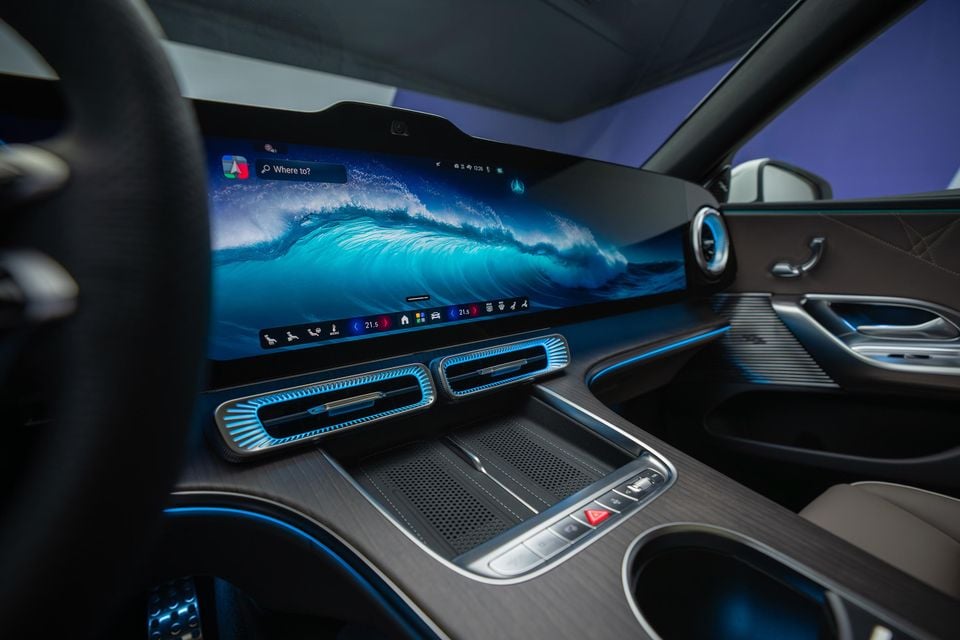
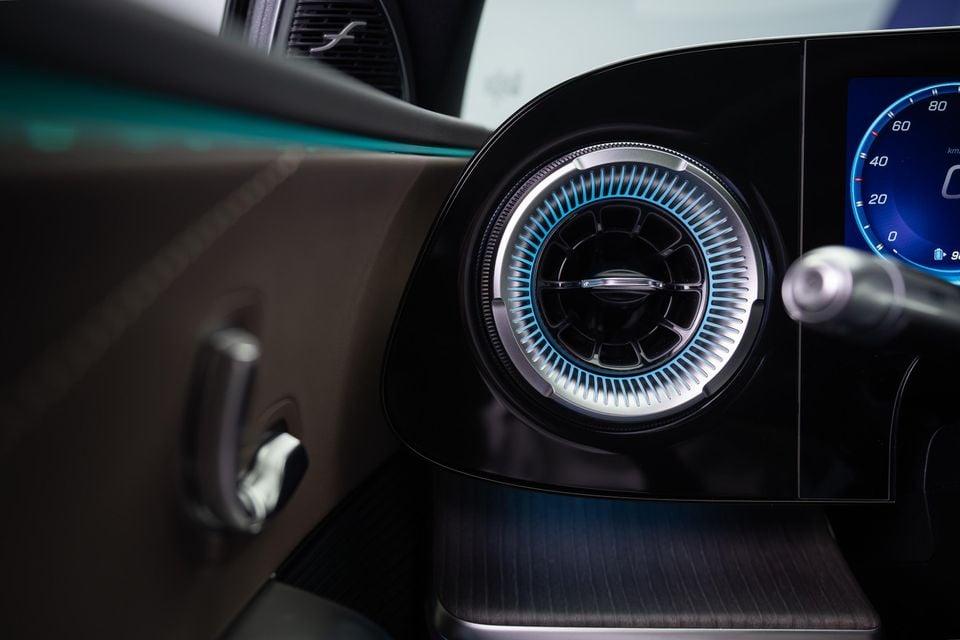
The standard setup includes a 10.3-inch driver display and 14-inch central touchscreen under a single glass panel, while an optional ‘Superscreen’ adds a third 14-inch passenger display with camera-based distraction prevention.
The system works with 27 cameras and ultrasonic sensors to enable Level 2 autonomous driving functions, including adaptive cruise control and optional features such as stop sign and traffic light recognition.
‘Surround navigation’ with ‘Electric Intelligence’ can plan optimal charging stops, while a ‘Pre-Safe curve function’ tightens seatbelts if the car detects it is approaching a corner too quickly.
Physical controls remain for key functions including seat adjustment, cameras, volume and voice commands, which are supported by artificial intelligence (AI).
Mercedes-Benz says its latest MBUX system integrates AI from Microsoft Bing’s ChatGPT-4o and Google Gemini.
The steering wheel also features physical controls, including a roller for volume and a rocker switch for cruise control, while regenerative braking can be adjusted via paddle shifters.
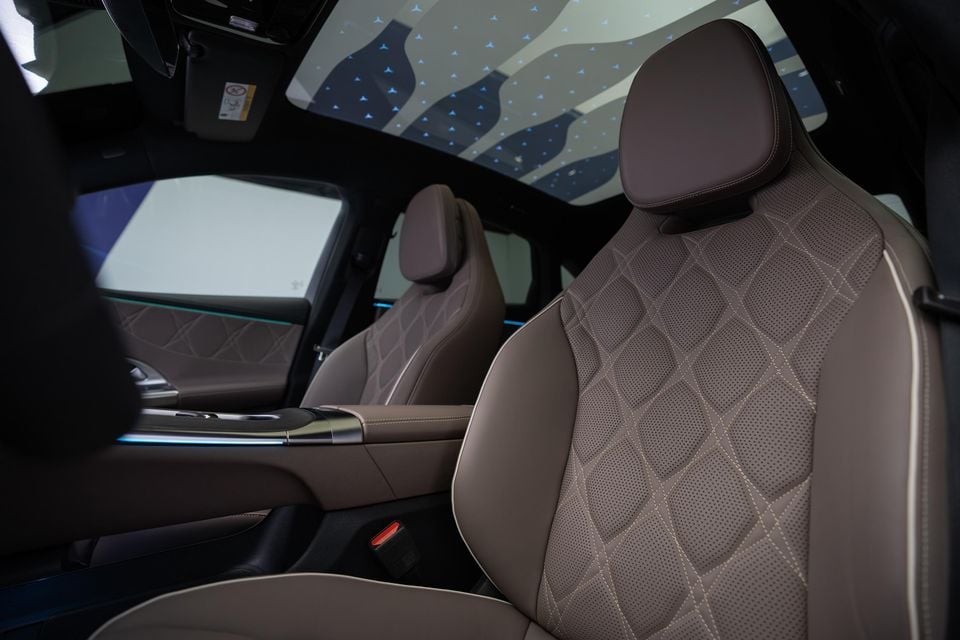
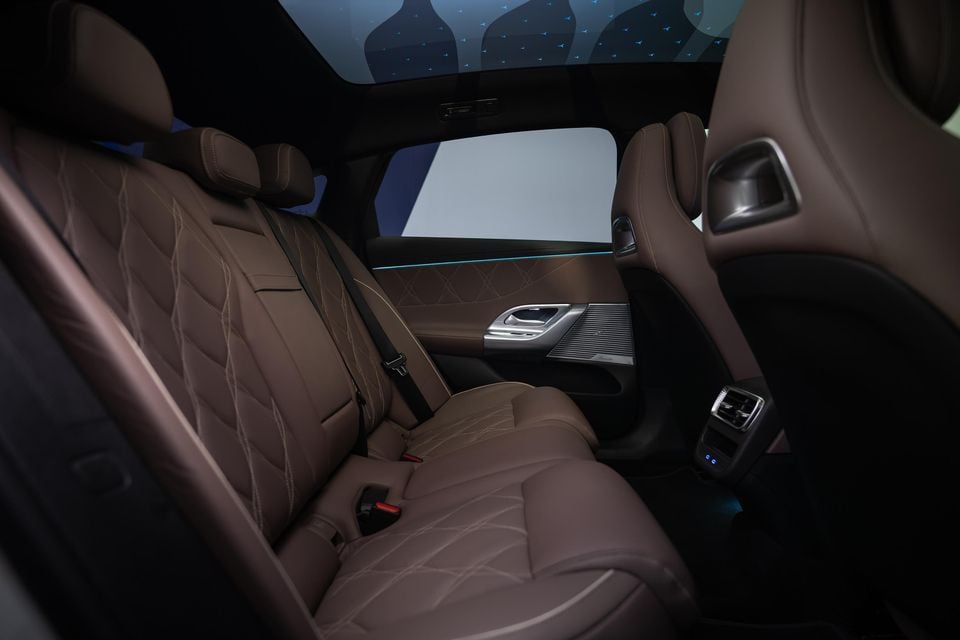
The cabin is the first from Mercedes-Benz to be certified by The Vegan Society, with soft-touch materials and newly designed seats shaped to support the occupant’s spine.
Upholstery options include ‘Softtorino’ vegan leather or genuine Nappa leather in a ‘twisted diamond’ pattern, with AMG Line models featuring red stitching.
Overseas models include standard power-adjustable front seats with heating and integrated speakers, while all five seats are certified by the German Organisation for Healthy Backs.
Mercedes-Benz says a multi-source heat pump allows the cabin to warm faster than petrol models while using less energy than existing systems.
A panoramic roof is standard, while there’s also an available Sky Control dimmable glass roof 162 illuminated stars that match the selected ambient lighting colour.
Where expert car reviews meet expert car buying – CarExpert gives you trusted advice, personalised service and real savings on your next new car.
Damion Smy is an award-winning motoring journalist with global editorial experience at Car, Auto Express, and Wheels.
Dave Kavermann
19 Hours Ago
Dave Kavermann
16 Days Ago
Dave Kavermann
28 Days Ago

Matthew Hansen
29 Days Ago
Matthew Hansen
1 Month Ago
Add CarExpert as a Preferred Source on Google so your search results prioritise writing by actual experts, not AI.